

Tai Chi master Truong Quang Ngoc is the nephew of the late martial arts master Truong Thang. From a young age, he studied martial arts with his uncle until Truong Thang's death. Although they studied under the same teacher, Truong Quang Ngoc's school of martial arts is named Thieu Lam Van An.
Shaolin Kunlun lineage
Master Truong Quang Ngoc recounted that his uncle (the late Master Truong Thang) was passionate about martial arts, and in addition to the family's traditional martial art, he also sought out masters to learn more martial arts to increase his knowledge.
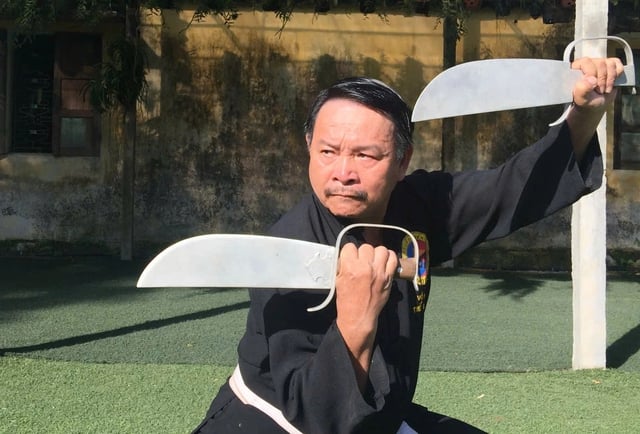
Martial arts master Truong Quang Ngoc performs the double sword routine.
PHOTO: PROVIDED BY THE SUBJECT
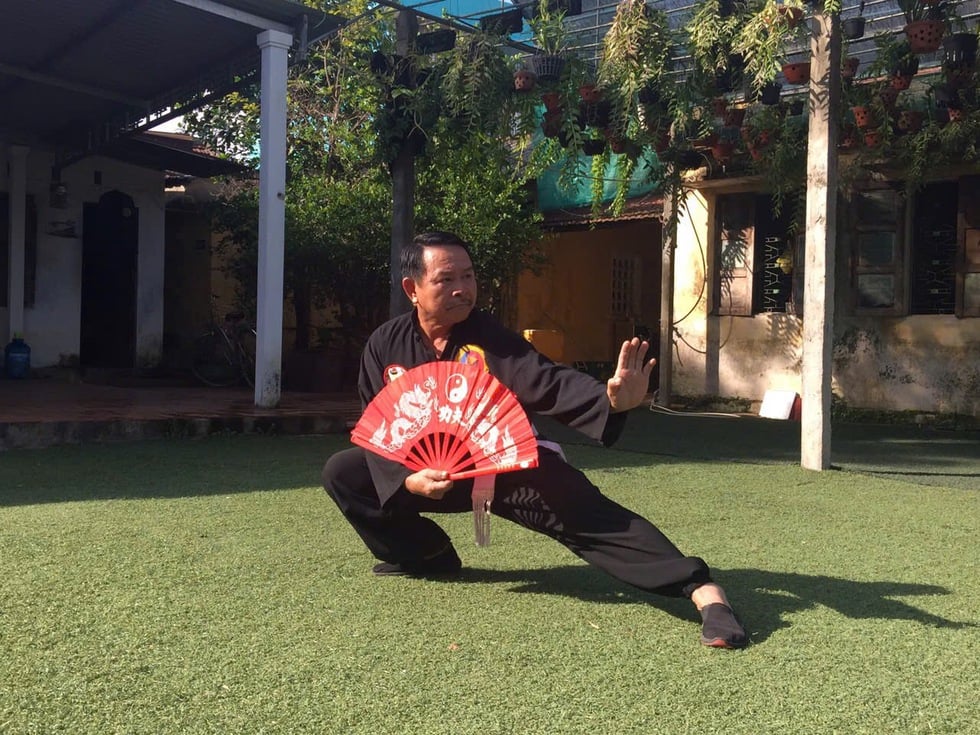
Other performances
Photo: Provided by the interviewee
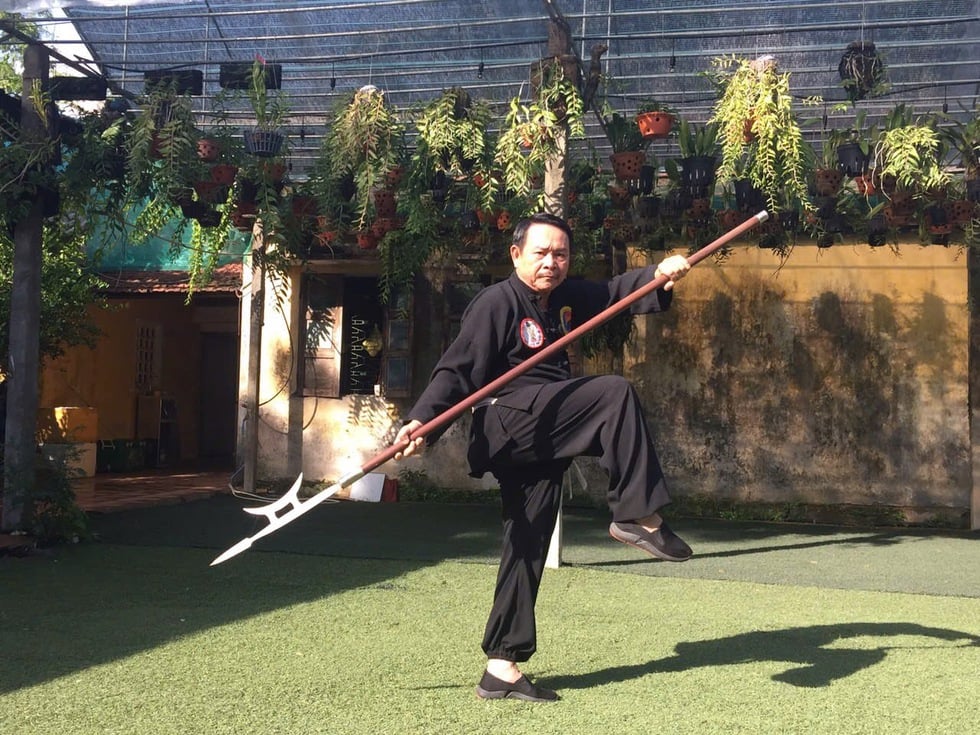
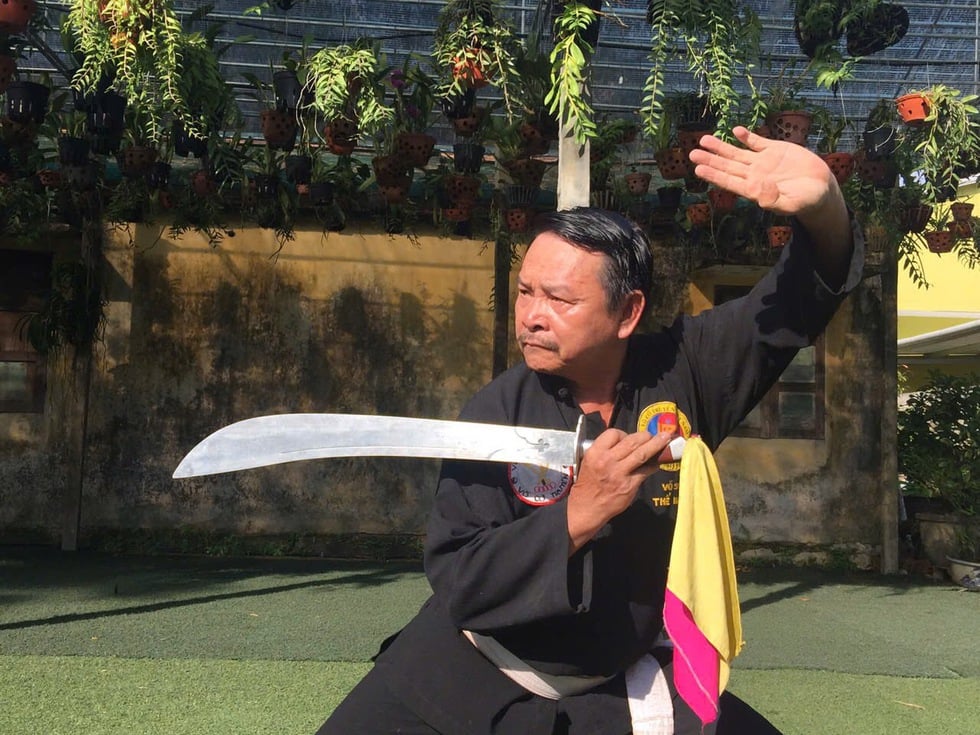
During his time teaching at the Van An martial arts school, the late martial arts master Truong Thang had the good fortune to meet a true successor of the Shaolin Kunlun school named Nguyen Thanh Thanh, from My Loi village (now part of Giang Hai commune, Phu Loc district, Hue city). At that time, Master Nguyen Thanh Thanh worked in the health sector and participated in the malaria prevention campaign, so he met Master Truong Thang, who also worked at the Thua Thien Department of Health. Both shared a passion for martial arts and found they were kindred spirits, so they shared and taught each other martial arts techniques.
Master Truong Quang Ngoc was taught Shaolin martial arts by Master Truong Thang. Shaolin's punches and kicks have distinctive characteristics, such as the Eighteen Arhats Fist and the Seventy-Two Mysterious Techniques. Although over 70 years old, Master Truong Quang Ngoc's movements remain strong and agile. Every day, he continues to practice and teach martial arts to students at the Van An Shaolin martial arts school. "I learn whatever martial art my teacher taught me; that's respecting my teacher and upholding the tradition. Although I know that the Martial Arts Classics were standardized by the Vietnamese during the Nguyen Dynasty, because my teacher only taught Shaolin, I am still a disciple and inheritor of Shaolin. The Martial Arts Classics mainly focused on combat and battle to serve in the Nguyen Dynasty army, so it emphasized the use of weapons more. Shaolin, on the other hand, focuses more on punches and kicks, and more on martial arts training," Master Truong Quang Ngoc explained.
Throughout his martial arts career, Master Truong Quang Ngoc has had many memorable experiences in the ring. In 1988, when the martial arts movement was developing nationwide, the Department of Sports and Physical Education of Binh Tri Thien Province sent a delegation of athletes to compete in traditional martial arts in Ho Chi Minh City. That year, Mr. Ngoc and another athlete from the Shaolin Nam Son school in Hue won the gold medal.
Following his success at the tournament, in 1990, he, along with many athletes from across the country, was selected to represent Vietnam at the International Martial Arts Festival in Russia (formerly the Soviet Union). That year, he defeated many opponents to reach the final match against a Russian fighter. The final was intense, with him consistently gaining the upper hand in the ring. Using his skillful Shaolin martial arts techniques, he received continuous applause from the audience. However, he was ultimately declared the loser by the referee and only won the silver medal.
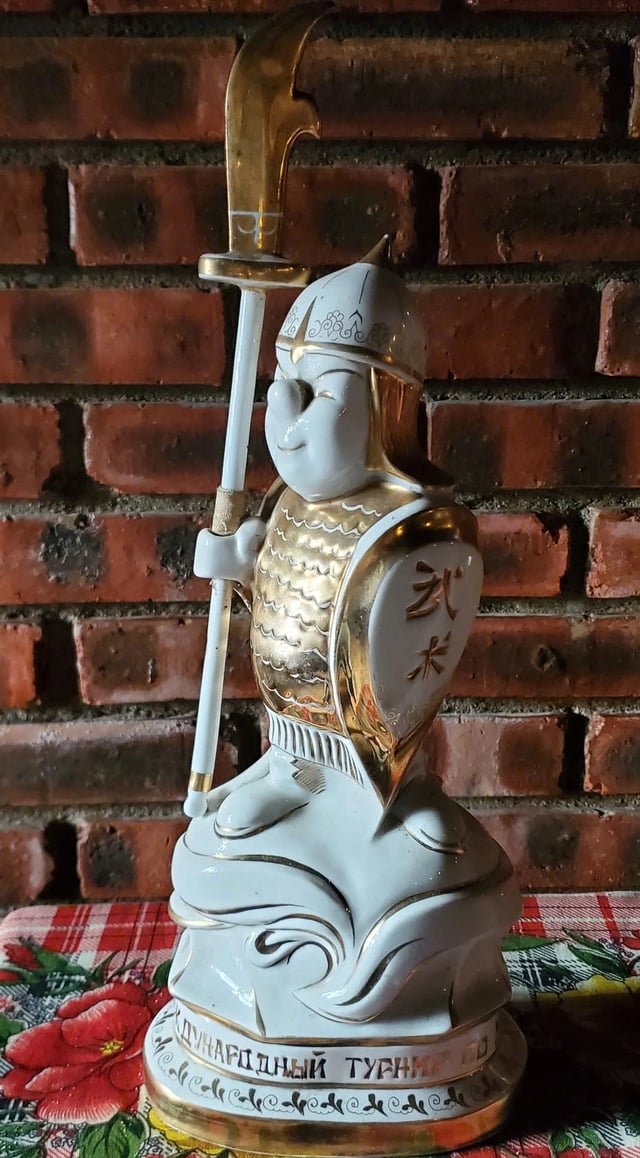
This is the championship trophy that the Russian athlete presented to martial arts master Truong Quang Ngoc at the International Martial Arts Festival in Russia (formerly the Soviet Union) in 1990.
PHOTO: BUI NGOC LONG
Surprisingly, the Russian athlete displayed exceptional sportsmanship. When both received their awards, the Russian athlete only accepted the gold medal, while giving the championship trophy to Mr. Ngoc, saying, "I received the gold medal because I won this match, but you are the true champion." To this day, Mr. Ngoc still keeps that trophy as a priceless memento of his life.
My journey into Tai Chi began.
While chatting about martial arts over a cup of fragrant tea, martial arts master Truong Quang Ngoc shared that, along with teaching Shaolin martial arts at his school, he later had the opportunity to learn Tai Chi from a martial arts master who was a "fellow student" of President Ho Chi Minh.
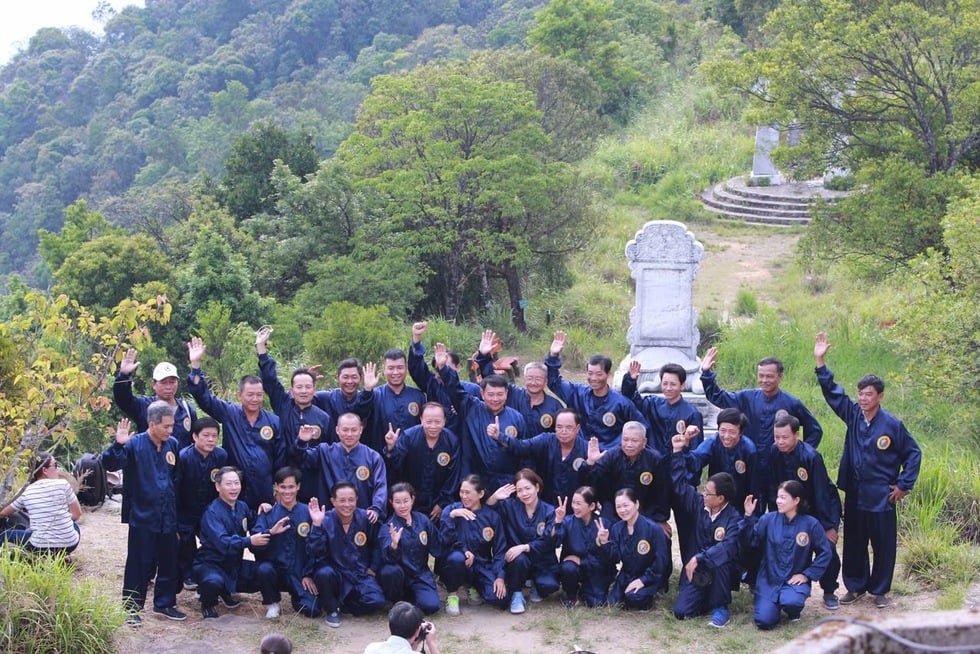
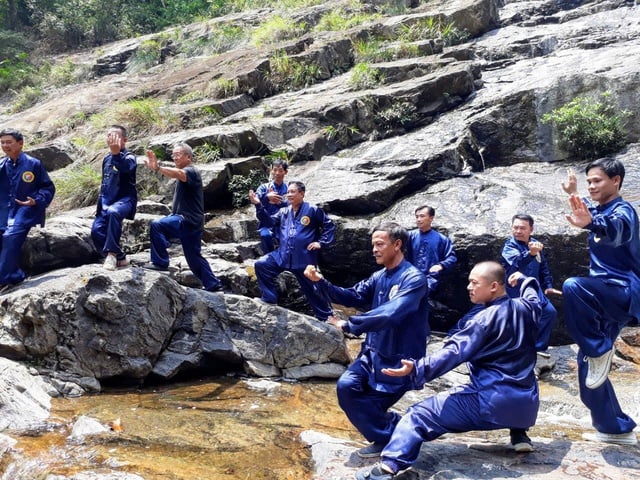
Students of the Van An Shaolin school perform martial arts at Bach Ma Mountain.
PHOTO: PROVIDED BY THE SUBJECT
Mr. Ngoc said that in 1992, Mr. Tran Dinh Tung, a leader in the sports sector at the time and a master of Vietnamese Tai Chi, came to Hue to open a Tai Chi class to develop the movement and help elderly people improve their health. Martial arts master Truong Quang Ngoc and many other martial arts masters in Hue participated in this class, playing a key role in later building the movement.
Upon first encountering Tai Chi, martial arts master Truong Quang Ngoc grasped the profound foundations of the discipline and decided to pursue it. "I think everyone gets old eventually, and at that age, what's the point of martial arts anymore? At that time, all I wish for is good health and peace," he confided.
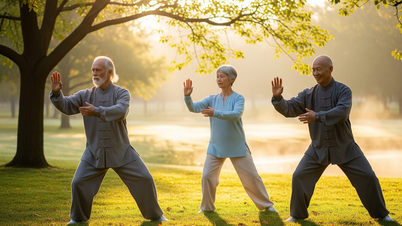
At that time, martial arts master Tran Dinh Tung only taught 24 forms of Tai Chi. Accepting Master Tran Dinh Tung's entrustment, Mr. Ngoc was determined to master Tai Chi in order to open a free Tai Chi training ground for retired officials, civil servants, and the elderly to practice and improve their health. Currently, the Tai Chi training ground at Mr. Ngoc's Shaolin Van An martial arts school has hundreds of people practicing Tai Chi for health every week.
Master Tran Dinh Tung was one of 18 people who received Tai Chi instruction from the great Chinese martial arts master Gu Liu Huynh. According to Master Tran Dinh Tung, at that time, knowing that President Ho Chi Minh was interested in martial arts for health training, the late Chinese Prime Minister Zhou Enlai sent Gu Liu Huynh to Vietnam to instruct President Ho Chi Minh in Tai Chi. Tai Chi later developed widely in Vietnam as an effective health-promoting martial art for the elderly. (to be continued)
Source: https://thanhnien.vn/tinh-hoa-vo-hoc-xu-hue-de-tu-van-an-va-co-duyen-den-voi-thai-cuc-quyen-185250626223956957.htm

















![[Photo] Prime Minister Pham Minh Chinh holds a phone call with the CEO of Russia's Rosatom Corporation.](/_next/image?url=https%3A%2F%2Fvphoto.vietnam.vn%2Fthumb%2F1200x675%2Fvietnam%2Fresource%2FIMAGE%2F2025%2F12%2F11%2F1765464552365_dsc-5295-jpg.webp&w=3840&q=75)











































Comment (0)