


Reading the title, I imagined the novel to be an epic poem of the ancient forest, with its rolling hills of red basalt soil bathed in sun and wind, vast fields of coffee blossoms, tranquil pine forests, and winds swirling tirelessly around the hillsides all day long… “Deep” – evokes a feeling of immensity, remoteness, desolation, and melancholy? And therefore, perhaps the novel is not just about stories of the forest. More accurately, it is the story of a human life – a forest.
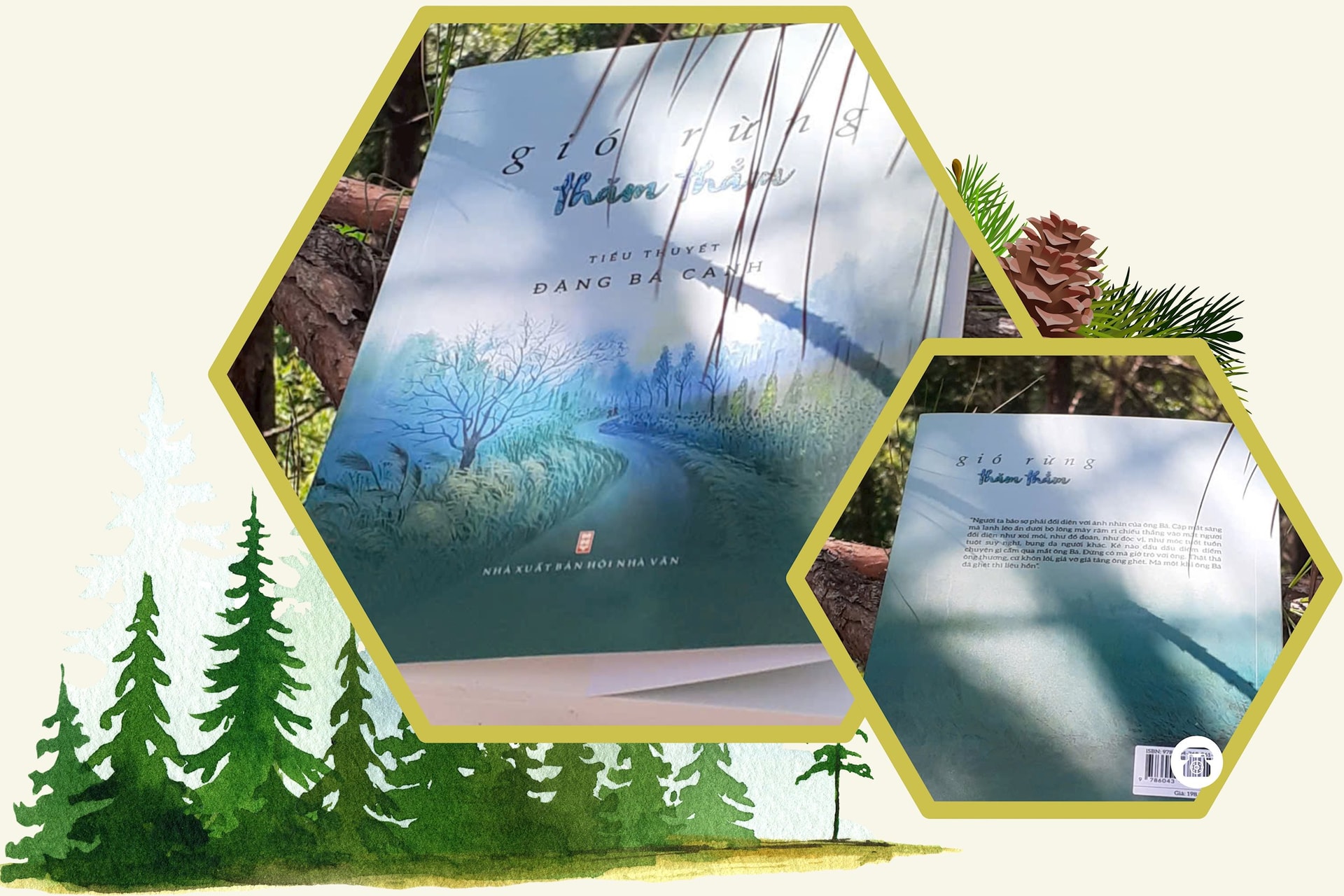
Indeed, in the novel, two worlds exist side-by-side, like two large mirrors reflecting each other: the forest and the people. Let's not talk about the forest yet – the constant yearning in Dang Ba Canh's writing. What kept me captivated until the very last page was the story of the human destinies, lives, and types of people that the author meticulously portrayed.
First, there are the figures of chairmen and secretaries like Mr. Bá and Mr. Y Lâm. Rising from humble beginnings, they struggled through life with thorny political challenges that taught them countless cunning schemes. They became powerful figures, holding positions of authority, appearing dignified and respectable yet unable to escape the primal desires of humanity. Or, there are characters from impoverished rural areas, humble beginnings, who, through opportune circumstances and cunning deception, rose to prominence among the elite, such as Trường Râu, the Captain, and the one-eyed soldier… Initially, we felt pity and sympathy for these characters, but the more we learn about them, the more disappointed and resentful we become.
The female characters in the novel are also woven together by the author with different colors. Nhan is weak and saintly. Loan is wise and sophisticated. Lua is gentle and resigned. The girl H'Han is so naive and honest that she cannot decide her own happiness. Chung Tinh and Tuyet Nhung are full of calculations…
Of course, the novel would be incomplete without the images of quintessential Central Highlands people like Ma Rut, the village elder Ma Rin... In them, the genuine, simple nature of the trees in the vast forest seems to radiate from their gait, speech, thoughts, and outlook on life.
And there is a character portrayed as someone whose life is filled with misfortune and loss, yet who always stands firm against the powerful temptation of money – journalist Cao Tam. This character, with glimpses of a writer, and his thoughts and words, perhaps represent the voice of an artist?
Strangely, the novel has over 20 characters, each with their own storyline, yet they are all skillfully interconnected. In some way, they are linked together, and thus the narrative flows seamlessly from one character to the next like a small stream. The reader doesn't feel lost in a labyrinth like when reading G. Marquez's *One Hundred Years of Solitude * or Murakami's *Norwegian Wood *. Each type of person, each life, is presented clearly.

If you're looking for a modern novel where the author enjoys experimenting with novel literary techniques such as using multiple narrative perspectives, flexible changes in tone, non-linear structure, stream of thoughts, and the iceberg method to reflect contemporary life and innovate in literature, then "The Deep Forest Wind" is just such a novel.
The author urges the reader to speed up, curious to know how the work will end. And the author does not disappoint the reader's expectations. All the characters, in one way or another, receive their just punishment or are rewarded in their own way. Absolutely no one feels any remorse for any of the characters. Those who deserved punishment stood before the judge or faced the consequences of life's laws. Those who deserved happiness found peace.
In a world where modern life places so much mental pressure on people, by choosing such an ending, writer Dang Ba Canh not only caters to the aesthetic tastes of readers but also seeks to heal and soothe the pain of the human soul. Reading * The Deep Forest Wind *, one truly feels no regret or wasted time.
The story of the forest – a lifelong companion on the pages of writer Dang Ba Canh's writings – I agree with writer Tong Phuoc Bao's observation when he spoke about Dang Ba Canh's works: "The forest haunts and evokes in his mind so much that it becomes an urge for him to keep writing, to keep giving the world more works and stories about the forest; how could he ever run out?"
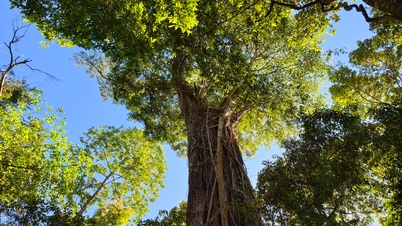
From short story collections like "Changing Seasons," "Bitter Land," and "Distant Forest " to the novel "Deep Forest Wind " and many other works, the forest is always a poignant presence in his writing. The forest is majestic and vast: "When the windy season arrives, the endless stretches of forest roar and howl in the vast, dark expanse." The forest is a common home, a source of life, a support for countless displaced people who have gathered on this plateau: "The protective forest stretches across three provinces… This is not only a line of defense for the core of the forest but also maintains the groundwater flow for the upper reaches of the Mai River flowing down towards the plains."
The forest is intertwined with human life, witnessing countless joys, sorrows, hardships, and ups and downs. As the author himself confided in the opening pages of the novel, "For the inhabitants of this vast, windswept plateau, the forest is not only a resource, not only an ecosystem, but also the source of their spiritual life." Sadly, however, the forest is bearing many wounds: "So much precious timber in the deep, treacherous forest, seemingly endless and boundless, has vanished without a trace in just ten years."
The pain of the forest permeates the writer's pages like a needle and thread: "Countless fallen trees lay scattered, many stumps oozing warm sap… Through the gaps in the withered, scorching leaves, crimson flames like blood spread across the forest, then gilded the clouds with a chilling yellow. The smoke-stained, charred stumps, crisscrossed with gaping wounds, looked like tombstones planted on a multitude of burnt-out trees." And "A few months later, every night, rows of pines fell with a roar, sprawling onto the lush green grass as the saw blade licked across their roots… One night, two nights, and then every night." The writer's sorrow and anguish sometimes erupts into exclamations of "truly heartbreaking," "truly bewildering."
Reading "The Deep Forest Wind," I suddenly remembered the beautiful lyrics of composer Tran Long An: "And I will always remember a kind of tree, whose trunks only grow straight when they grow close together."
Ms. Tran Thi Tam, M.A., Teacher at Nguyen Chi Thanh Specialized High School, Gia Nghia City.
When writing about forests, the author often uses personification, similes, strong verbs, rhetorical questions, and exclamations… This shows that, for the author, he sees the forest as a living entity with a soul, capable of romantic fantasy, capable of loving humanity, and also capable of pain, cries, and a yearning to live and flourish…
What causes the pain and wounds inflicted on the forest? Is it the dream of escaping poverty: "Nam Lar gradually became a place where people from all over the country flocked to clear forests and cultivate fields to fulfill their dream of escaping the pursuit of poverty in every village"? Or is it the mistaken belief that "If the forest is gold, then how can we exploit this precious resource to enrich society?" Each perpetrator inflicts pain on the forest through different means, but ultimately, it all stems from a mistaken perception and insatiable greed.
With his insightful perspective and sharp writing style, author Dang Ba Canh has awakened us to many philosophical insights into human life. Humans, often deluded by their intellectual prowess, believe they can build the Great Wall, construct pyramids, and build magnificent hydroelectric dams, thus granting them the right to control nature and the universe, viewing nature merely as a tool to serve their insatiable greed.
In reality, Mother Nature knows pain and anger. Somewhere we have seen tsunamis, great floods, forest fires, epidemics… These are nature's responses. For the people of the Central Highlands, losing the forest means losing their living space and their cultural identity. With *The Deep Forest Wind* , writer Dang Ba Canh joins the same stream as writers who have innovated on the subject of ecological criticism, such as Nguyen Van Hoc and Nguyen Ngoc Tu…
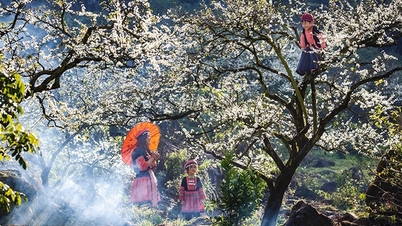
And each of his works is like a weapon to protect the forest, also protecting the cultural tapestry of the Central Highlands and awakening people's conscience. Because a human life is like a tree's life. Reading "The Deep Forest Wind ," I suddenly remembered the beautiful lyrics of musician Tran Long An: "And I will always remember a kind of tree, growing close together, its trunk straight. Where there is one tree, there is a forest, and the forest will grow green, the forest protects the homeland... Truth belongs to everyone, refusing to live a petty life." I sing about my friends, those who live for everyone. Day and night they guard the land and sky, radiant like the plum blossoms blooming in spring .
Source: https://baodaknong.vn/toi-da-thay-trong-gio-rung-tham-tham-236342.html










































































Comment (0)