

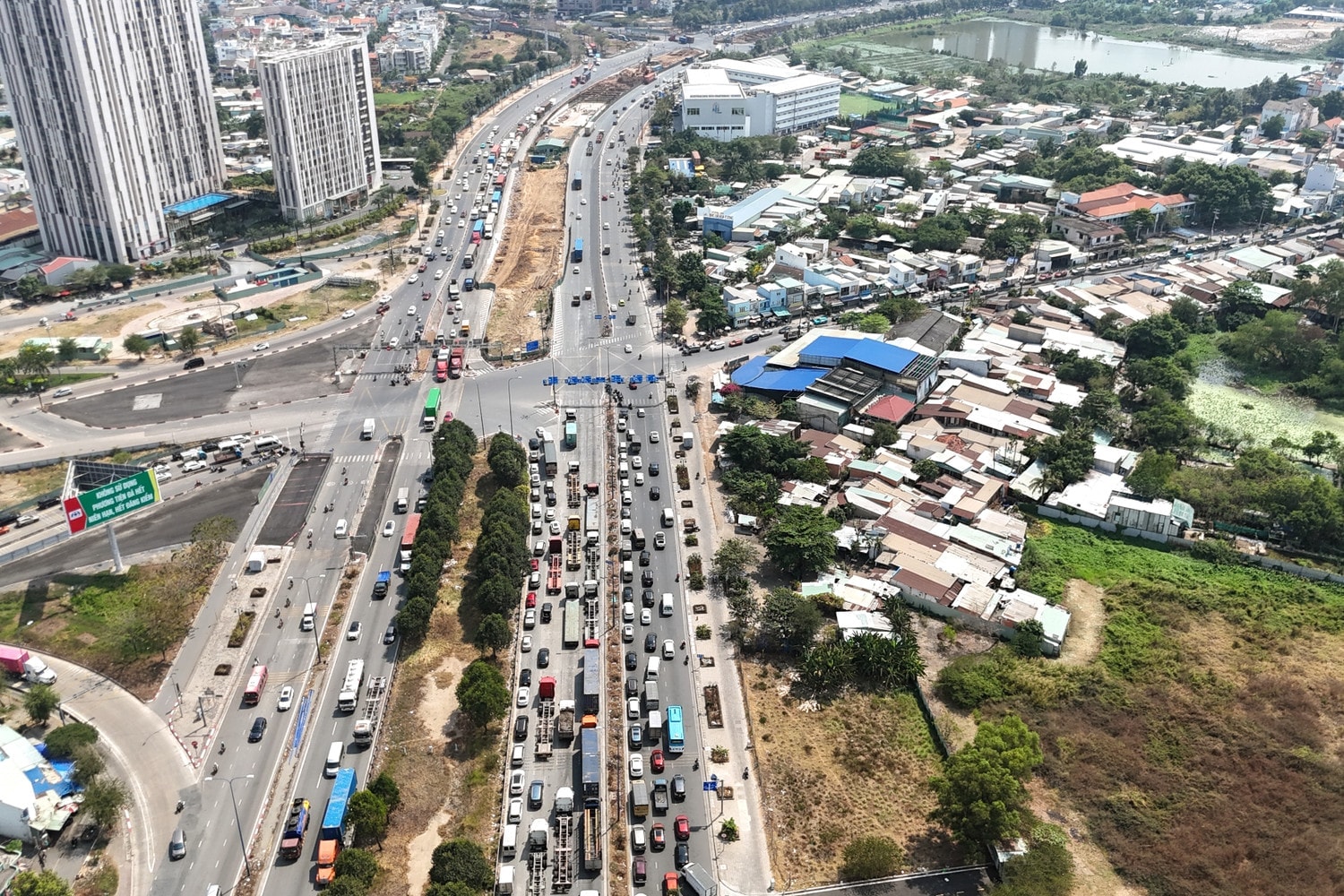
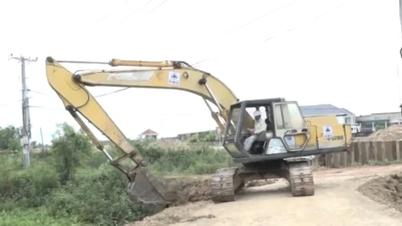
According to the Ho Chi Minh City Department of Construction, key transportation infrastructure projects in the city have continued to receive close attention and guidance from the City People's Committee and the Department of Construction. Numerous meetings and on-site inspections have been organized to address difficulties and urge investors to accelerate progress while ensuring quality and investment efficiency.
At the An Phu intersection construction project – a key project in the eastern part of the city – many important components such as the Ba Dat bridge, the Giong Ong To bridge, and the HC1-01 underpass have been completed and put into operation. According to the plan, the N2 bridge branch will be completed before December 31, 2025; the HC1-02 underpass before February 17, 2026; and the N3, N4, N1.1, and N1.3 bridge branches are expected to be completed before April 30, 2026, aiming for the entire project to be completed in 2026.
Simultaneously, the My Thuy intersection project is also receiving maximum resources for construction. The right-hand turns from Dong Van Cong Street to Vo Chi Cong Street and from Dong Van Cong Street to Nguyen Thi Dinh Street are expected to be completed before January 31, 2026; the remaining branches and Ky Ha 4 bridge will be completed in February 2026, striving to complete the entire project in 2026.
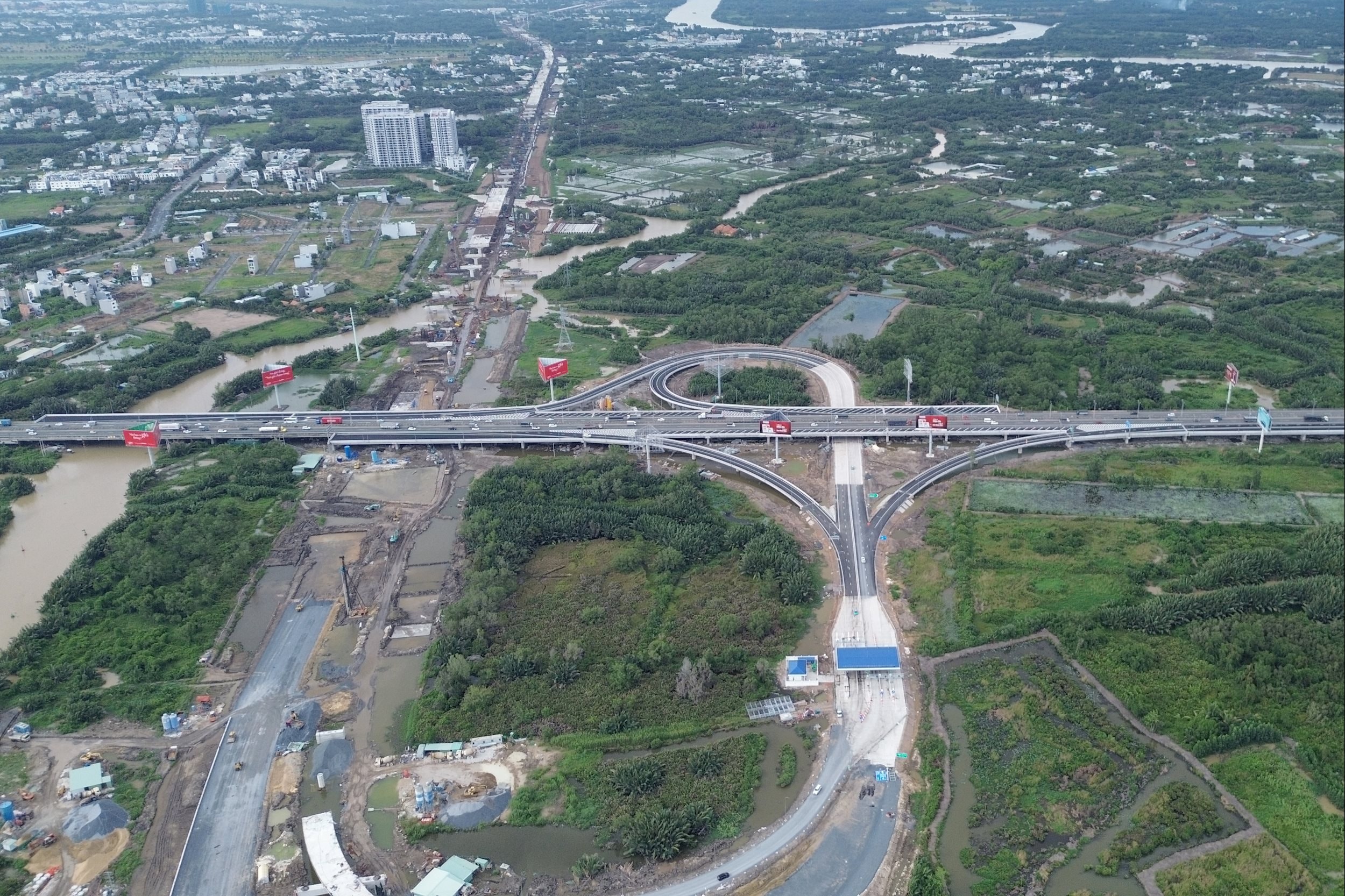
In addition to focusing on inner-city projects, the city is also closely coordinating with localities in the Southeast region, especially Dong Nai province, to develop connecting transportation infrastructure to effectively serve the operation of Long Thanh International Airport. Many important projects such as Ring Road 3, Ring Road 4, Bien Hoa - Vung Tau Expressway, Ben Luc - Long Thanh Expressway, and the expansion of Ho Chi Minh City - Long Thanh Expressway are being accelerated.
According to the plan, by 2026, the Southeast region will have completed approximately 394km out of nearly 600km of ring roads and expressways, laying the foundation for the formation of a modern and synchronized transportation network in the region by 2028.
In the railway sector, the Ministry of Construction is preparing to invest in important national railway lines, including the North-South high-speed railway and the Bien Hoa-Vung Tau line. Ho Chi Minh City, in particular, is planning three urban railway corridors connecting to Long Thanh International Airport. Metro Line 2, the Ben Thanh-Tham Luong section, is expected to be completed in 2030; the Thu Thiem-Long Thanh line aims to start construction in 2026 and be completed in 2030.
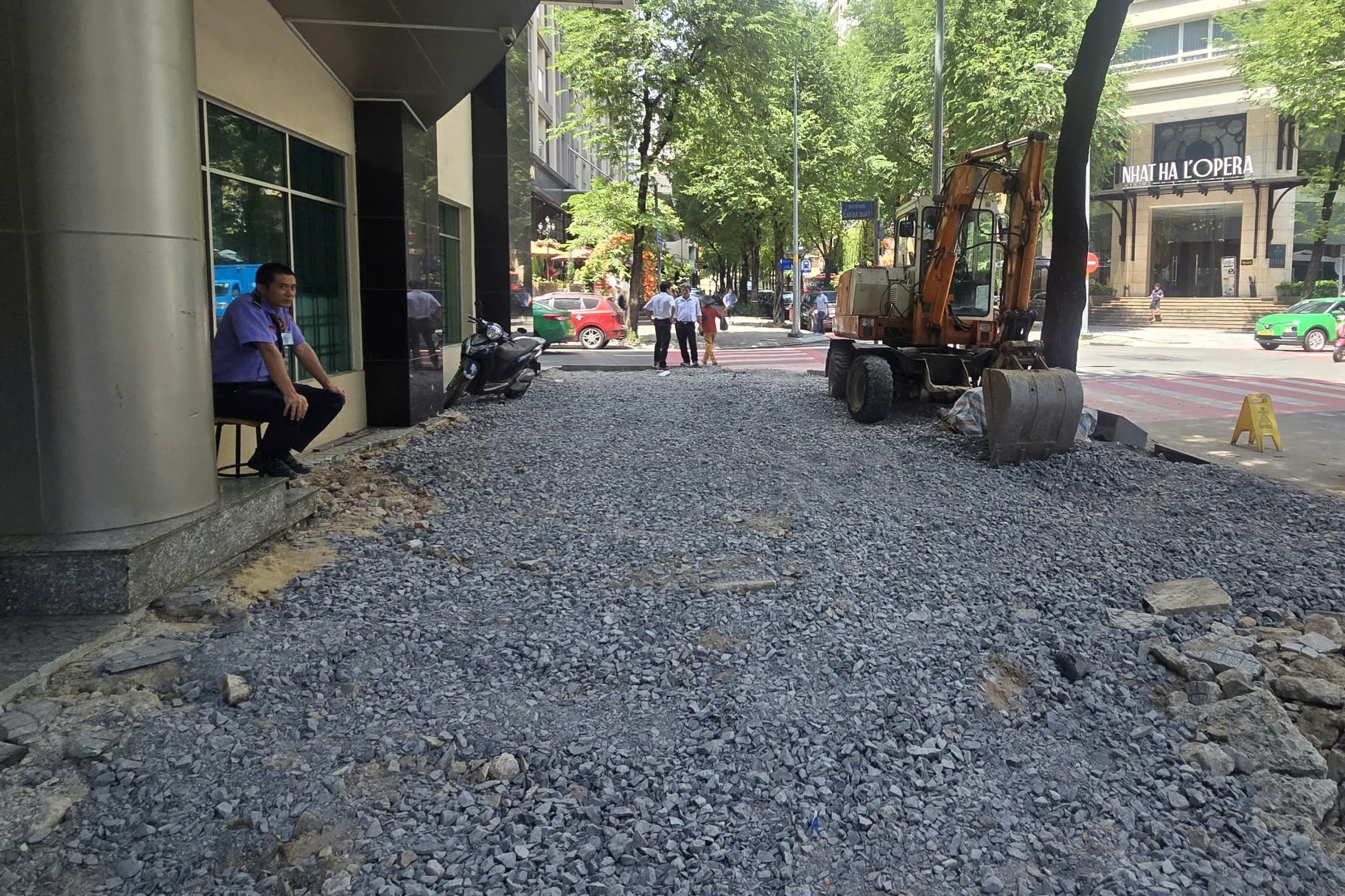
Regarding the increased road digging and sidewalk renovation work towards the end of the year, the Department of Construction stated that in 2025, it issued approximately 120 construction permits for traffic projects, including 18 sidewalk renovation projects on 54 roads, mainly in the central area. Most projects are progressing on schedule, with many completed to serve traffic needs during the 2026 Lunar New Year holiday.
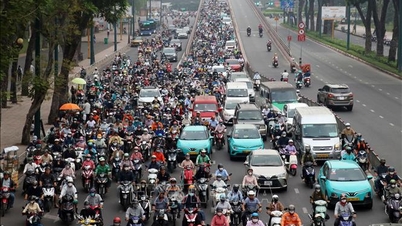
To minimize disruption to residents' lives, the city stipulates that construction projects occupying road space are only permitted between 10 PM and 5 AM the following morning; during holidays and Tet (Lunar New Year), only truly urgent cases are allowed to operate. For key projects, separate traffic management plans are developed to ensure both project progress and traffic safety during the year-end peak season.
Source: https://daibieunhandan.vn/tp-ho-chi-minh-d-ay-nhanh-tien-do-cac-du-an-giao-thong-trong-diem-10400541.html
![[Image] Leaked images ahead of the 2025 Community Action Awards gala.](/_next/image?url=https%3A%2F%2Fvphoto.vietnam.vn%2Fthumb%2F1200x675%2Fvietnam%2Fresource%2FIMAGE%2F2025%2F12%2F16%2F1765882828720_ndo_br_thiet-ke-chua-co-ten-45-png.webp&w=3840&q=75)
![[Photo] Prime Minister Pham Minh Chinh receives Lao Minister of Education and Sports Thongsalith Mangnormek](/_next/image?url=https%3A%2F%2Fvphoto.vietnam.vn%2Fthumb%2F1200x675%2Fvietnam%2Fresource%2FIMAGE%2F2025%2F12%2F16%2F1765876834721_dsc-7519-jpg.webp&w=3840&q=75)
![[Photo] Prime Minister Pham Minh Chinh receives the Governor of Tochigi Province (Japan)](/_next/image?url=https%3A%2F%2Fvphoto.vietnam.vn%2Fthumb%2F1200x675%2Fvietnam%2Fresource%2FIMAGE%2F2025%2F12%2F16%2F1765892133176_dsc-8082-6425-jpg.webp&w=3840&q=75)

![[Live] 2025 Community Action Awards Gala](/_next/image?url=https%3A%2F%2Fvphoto.vietnam.vn%2Fthumb%2F1200x675%2Fvietnam%2Fresource%2FIMAGE%2F2025%2F12%2F16%2F1765899631650_ndo_tr_z7334013144784-9f9fe10a6d63584c85aff40f2957c250-jpg.webp&w=3840&q=75)












































![[Live] Closing Ceremony and Award Presentation for the "Impressive Vietnam Tourism" Video/Clip Creation Contest 2025](https://vphoto.vietnam.vn/thumb/402x226/vietnam/resource/IMAGE/2025/12/17/1765974650260_z7273498850699-00d2fd6b0972cb39494cfa2559bf85ac-1765959338756946072104-627-0-1338-1138-crop-1765959347256801551121.jpeg)


















Comment (0)