On the afternoon of December 10th, thousands of refugees marched through the streets near Montparnasse train station in southern Paris to protest a new immigration bill that abolishes public healthcare support for undocumented immigrants who have been in France for more than three months.

Ahmada Siby, a Malian migrant, has spoken out against France's immigration reform plans. Photo: DW
The marchers held signs declaring their opposition to the "Darmanin law," named after the French Interior Minister. Other signs read, "Immigration is not the issue - racism is the issue."
The person leading the group with the loudspeaker is Ahmada Siby (33 years old, from Mali), who has been in France for almost 5 years. Taking advantage of legal loopholes, Siby used other people's documents to work as a cleaner, housekeeper, and recently, dishwasher.
"Most undocumented immigrants use this method, but it means we are paying social security fees and taxes without benefiting from services like regular public healthcare like French citizens," Siby explained.
Siby added that immigrants like him are doing all the hardest jobs, from working on construction sites, including the site for the Paris Olympics next summer, to jobs in restaurants and house cleaning.
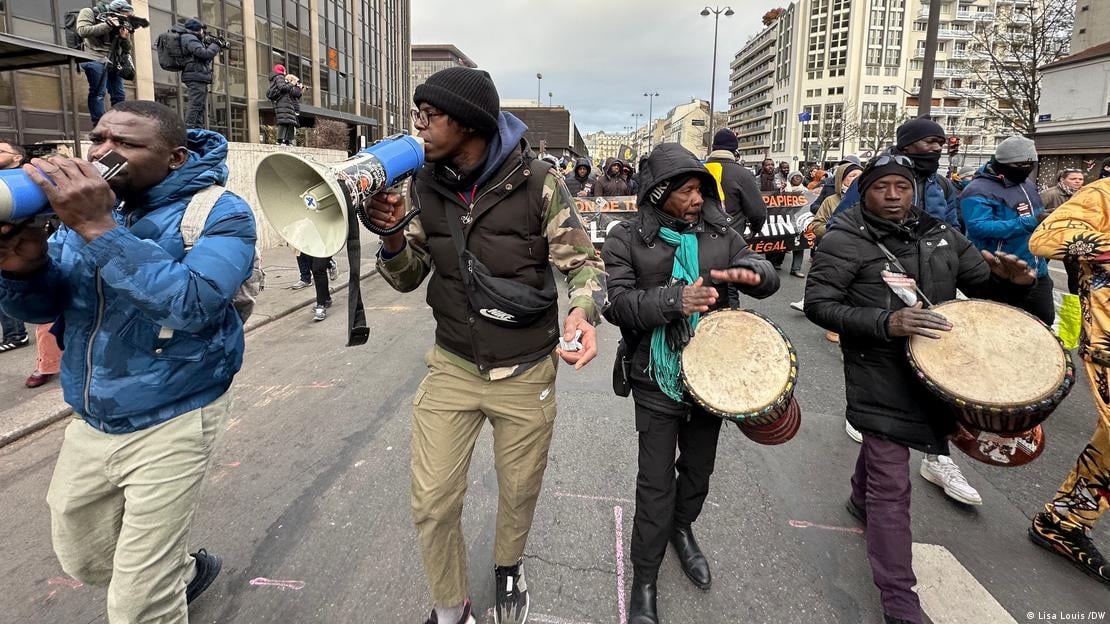
Siby and other migrants at a protest in Paris against immigration reform plans. Photo: DW
The draft law will be debated in the French National Assembly , the lower house of parliament, starting on December 11th and could come into effect early next year.
The new immigration bill could tighten the asylum system by allowing for simplified procedures and processing times for asylum applications, potentially expediting the deportation of those whose asylum applications are rejected without waiting for appeals. At the same time, the bill would make family reunification and medical assistance for migrants more complicated and restrictive.



Previously considered untouchable, such as arriving in France before the age of 13 or having lived in France for more than 20 years, individuals may have their residence permits revoked and be deported if they are on the "blacklist" of French security agencies.
That is why Siby and others have joined forces to oppose the bill, which the French government claims is a compromise encompassing both left-wing and right-wing measures.
France previously planned to issue one-year green cards to those working in sectors experiencing labor shortages. However, the decision regarding these one-year permits now rests with local authorities.

French Interior Minister Darmanin. Photo: AFP
Since the recent terrorist attack by a Russian immigrant on French teacher Dominique Bernard in the northern town of Arras, the French government introduced this law primarily as a protective measure against uncontrolled immigration and terrorism. However, migrants, refugees, and aid organizations fear the new regulations could increase stigma and discrimination.
Amidst the controversy surrounding the new immigration bill, Alexis Izard, a Renaissance-era parliamentarian from the Essonne region south of Paris, said the final bill would be more balanced.
"Every year, we need to deport around 4,000 illegal immigrants who have committed crimes, and that can also be done with this new law," he said, adding that the deportation process will take one year instead of two after the changes.
Alain Fontaine, owner of Le Messuret restaurant in central Paris and head of the French Restaurant Owners Association, expressed his hope that the originally planned one-year green card would be reinstated and even extended.
"Bars and restaurants wouldn't be able to operate without 25% of our foreign workforce," said Fontaine. Approximately 12 of his 27 employees are foreigners.
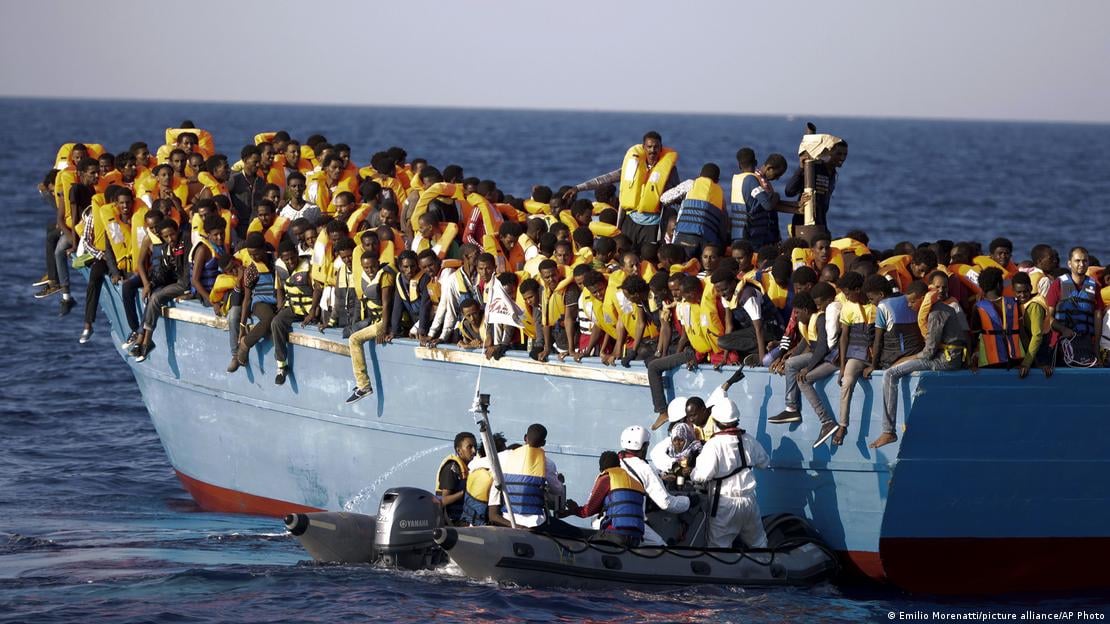
Thousands of migrants cross the Mediterranean each year hoping for a better life in Europe. Photo: AP



Ahmada Siby expressed: "We hope that the government can legalize all of us, so that we can freely choose the work we want."
Siby then looked back at photos of himself from five years ago, when he arrived in Spain from Morocco on a small inflatable boat. For him, spending almost an entire day crossing the sea was "the hardest time of my life" because almost everyone on the boat was dead.
"Once you survive this, you don't give up. I'm determined to fight for a better future," Siby said.
Hoai Phuong (according to DW)
Source



![[Image] National conference summarizing one year of operation of the overall organizational model of the political system, the three-tiered government model.](https://vphoto.vietnam.vn/thumb/1200x675/vietnam/resource/IMAGE/2026/07/01/1782882811691_ndo_br_1-jpg.webp)




![[Video] Weather forecast for tonight and tomorrow, July 2nd, 2026: Tropical depression likely to strengthen into a storm; many areas will continue to experience thunderstorms.](https://vphoto.vietnam.vn/thumb/402x226/vietnam/resource/IMAGE/2026/07/01/1782911026600_thumb-dem-png.webp)