

- What causes green nasal discharge and excessive runny nose in children?
- Should nasal suction be used for children with excessive nasal discharge?
- Is a green runny nose a sign of bacterial infection and does it require antibiotics?
- How to handle it
Whether or not to suction or rinse a child's nose is a question that many parents ponder.
What causes green nasal discharge and excessive runny nose in children?
Viral rhinitis and nasopharyngitis.
This is the most common cause in young children. When they have a cold or flu, children usually:
- Clear nasal discharge, which then turns cloudy or green.
- Nasal congestion
- Sneezing, mild cough
A runny nose turning green doesn't necessarily mean a serious infection.
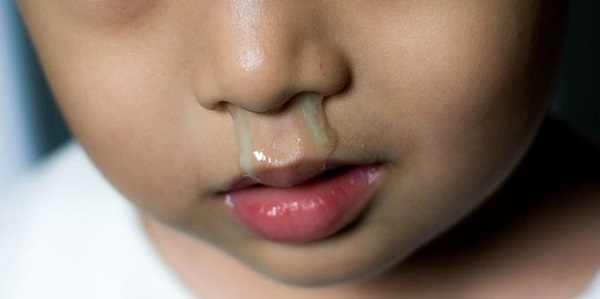
Smoke, dust, excessively cold air conditioning, or dry air can all cause increased nasal mucus production in children. (Illustrative image)
Sinusitis in children
Children over 3 years old are more susceptible to sinusitis. Common symptoms include:
- Thick green nasal discharge
- Nasal congestion lasting more than 10 days
- Bad breath or headache
Allergic rhinitis
Allergies cause children to have a constant runny nose, but the nasal discharge is usually clear, accompanied by:
- Itchy nose
- Itchy eyes
- Sneezing in long bursts
Environmental influences
Smoke, dust, excessively cold air conditioning, or dry air can all cause increased nasal mucus production in children.
Should nasal suction be used for children with excessive nasal discharge?
You should use a nasal aspirator when:
Nasal suction helps babies breathe easier when:
- Nasal congestion makes it difficult for babies to feed and sleep well.
- Thick nasal discharge, child unable to blow their nose on their own.
- It needs to be cleaned before eating or breastfeeding.
Do not use nasal aspirators when:
Using a vacuum cleaner too often can:
- Causes mucosal damage
- Nasal congestion worsens due to edema.
- Increased risk of middle ear infection.
Safe frequency: only about 2–3 times a day when absolutely necessary.
Should you rinse your nose regularly?
You should wash when:
Suitable for children over 1 year old with thick nasal discharge. Use:
- 0.9% physiological saline solution
- Nasal spray for children with gentle pressure.
Do not rinse your nose when:
Do not rinse your nose if:
- Children under 6 months old (unless directed by a doctor)
- Children with middle ear infections
- When babies cry and struggle, there is a risk of choking.
- Use a strong spray directly.
Is a green runny nose a sign of bacterial infection and does it require antibiotics?
A green nose doesn't always mean an infection. In most cases, it's just:
- The body's reaction to the virus.
- Accumulation of immune cells in nasal discharge
Children only need antibiotics when they show signs of:
- A thick, green nasal discharge lasting more than 10–14 days.
- Persistent high fever
- Pain in the face or around the eyes
- Unusual odor coming from the nose.
Antibiotics should only be used as directed by a doctor.

A runny nose with green mucus is a very common condition in children, mostly caused by viruses. Nasal suctioning or rinsing can be beneficial if done correctly and at the right time. (Illustrative image)
How to deal with a child with a runny nose and green mucus.
Helps to thin nasal mucus and reduce congestion.
- Instill saline solution into the eyes several times a day.
- Make sure your child drinks enough water.
- Use a humidifier to warm and humidify the air.
Proper nasal suctioning
- Instill saline solution before suctioning.
- Use child-safe equipment.
- Suck gently, not for too long.
- Clean the tools thoroughly after use.
Safe nasal rinsing for older children
- Tilt the child's head to one side.
- Spray from the top to the bottom.
- Do not spray with high pressure.
Supportive care
- Keep your body warm, especially your feet and chest.
- Avoid having a fan or air conditioner blowing directly on your face.
- Limit taking children to crowded places when they are sick.
A runny nose with green mucus is a very common condition in children, mostly caused by viruses. Nasal suctioning or rinsing can be beneficial if done correctly and at the right time. Parents should avoid overuse and monitor for any unusual signs to take their child to the doctor promptly.
Watch more trending videos
Source: https://suckhoedoisong.vn/tre-tho-lo-mui-xanh-va-cach-xu-tri-169251211002639437.htm






























































































Comment (0)