

Early-stage bladder cancer often has no obvious symptoms and can easily be mistaken for common urinary problems. One lesser-known warning sign of bladder cancer is leg swelling.
Bladder cancer is a type of cancer in which diseased cells develop from the lining of the bladder, the organ responsible for storing and eliminating urine. The most common type is transitional cell carcinoma, accounting for about 90% of cases, according to the health website Medical News Today (UK).

Swollen legs can be a warning sign of bladder cancer.
Common symptoms of bladder cancer include blood in the urine, painful urination, urgency to urinate, frequent urination, lower abdominal or lower back pain, and leg swelling if the cancer spreads and compresses the lymphatic system.
Bladder cancer occurs in both men and women. However, men over 55 are at higher risk, especially those who smoke, are exposed to toxic chemicals, or have a history of persistent urinary tract infections. If detected early, the prognosis is good.
Pay close attention if you have swollen legs.
Bladder cancer can cause leg swelling, especially in advanced stages. This is because the cancerous tumor affects the lymphatic system and blood circulation. Specifically, as bladder cancer spreads, the tumor will invade or compress lymph nodes in the pelvis. This hinders the drainage of lymphatic fluid from the legs, causing fluid retention and edema.
In some cases, a large tumor can put pressure on the inferior vena cava, obstructing blood flow from the legs back to the heart. This causes blood to pool in the legs, leading to swelling and potentially even deep vein thrombosis. If bladder cancer metastasizes to organs such as the liver or lungs, it can disrupt circulation and increase the risk of fluid retention, resulting in generalized leg edema.
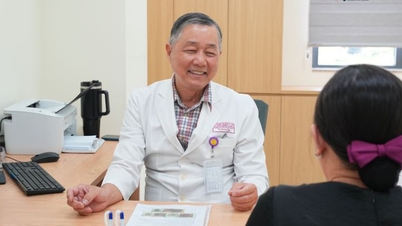
If leg swelling persists, accompanied by blood in the urine, back pain, or fatigue, the affected person should see a doctor immediately. These could be signs of advanced bladder cancer.
Treatment for bladder cancer depends on the stage of the disease, its extent of invasion, and the patient's overall health. The main methods include surgery, chemotherapy, radiation therapy, and immunotherapy, according to Medical News Today.
Source: https://thanhnien.vn/ung-thu-bang-quang-trieu-chung-o-chan-canh-bao-nguy-hiem-185250310130418428.htm


![[Photo] Prime Minister Pham Minh Chinh receives the Governor of Tochigi Province (Japan)](/_next/image?url=https%3A%2F%2Fvphoto.vietnam.vn%2Fthumb%2F1200x675%2Fvietnam%2Fresource%2FIMAGE%2F2025%2F12%2F16%2F1765892133176_dsc-8082-6425-jpg.webp&w=3840&q=75)
![[Photo] Prime Minister Pham Minh Chinh receives Lao Minister of Education and Sports Thongsalith Mangnormek](/_next/image?url=https%3A%2F%2Fvphoto.vietnam.vn%2Fthumb%2F1200x675%2Fvietnam%2Fresource%2FIMAGE%2F2025%2F12%2F16%2F1765876834721_dsc-7519-jpg.webp&w=3840&q=75)
![[Image] Leaked images ahead of the 2025 Community Action Awards gala.](/_next/image?url=https%3A%2F%2Fvphoto.vietnam.vn%2Fthumb%2F1200x675%2Fvietnam%2Fresource%2FIMAGE%2F2025%2F12%2F16%2F1765882828720_ndo_br_thiet-ke-chua-co-ten-45-png.webp&w=3840&q=75)




















































![[Photo] Prime Minister Pham Minh Chinh attends the Vietnam Economic Forum 2025](https://vphoto.vietnam.vn/thumb/402x226/vietnam/resource/IMAGE/2025/12/16/1765893035503_ndo_br_dsc-8043-jpg.webp)







































Comment (0)