

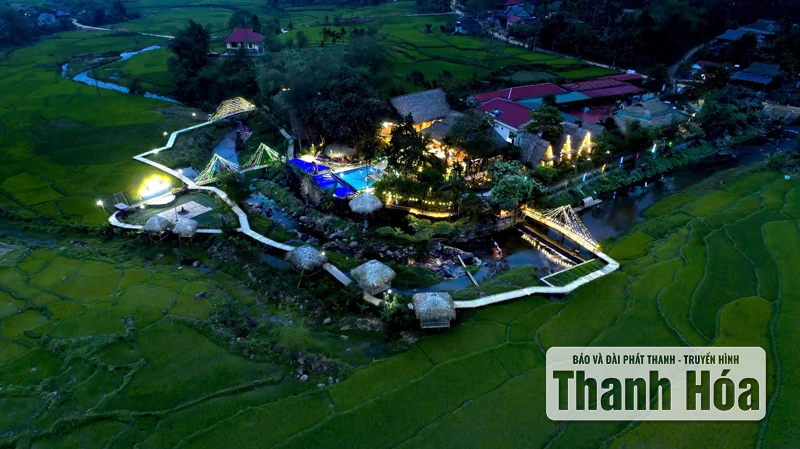
Suoi Dang Eco- tourism Area (Van Phu commune) sparkles at night. Photo: Le Cong Binh (Contributor)
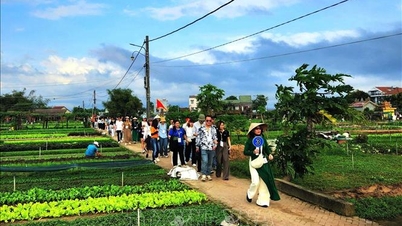
No longer just a day trip destination, the Cam Luong Fish Stream Tourist Area in Cam Tu commune has now developed many homestays combined with community tourism for visitors. As one of the first to build the homestay and community tourism model here, Ms. Bui Thi Lieu, manager of Truong Sinh Ecolodge homestay, hopes to create an ideal destination for those who love nature and want to experience unique local culture. “Initially, we only welcomed regular guests, but then the demand increased. From running a homestay rental business, we realized the growing demand from tourists, so we developed many other services such as: enjoying local cuisine , herbal sauna, folk games, bonfires, and outdoor camping.”
In the evening, under the flickering firelight, locals and tourists mingle in traditional bamboo pole dances and circle dances. The sounds of gongs and drums resound, mingling with the cheerful laughter of those trying their hand at stepping across the rhythmic bamboo poles for the first time. Traditional games like throwing the ball, tug-of-war, blindfolded goat catching, and board games have also been revived, becoming a unique highlight. Mr. Nguyen Van Tung, a tourist from Hanoi , shared: “My family and I really enjoy traveling to places that offer such a close-knit atmosphere like here. During the day, we visit the fish stream and experience the local cuisine, and in the evening, we sit by the fire and play traditional games. These experiences will help my children gain more knowledge about the culture and integrate better into the community.”
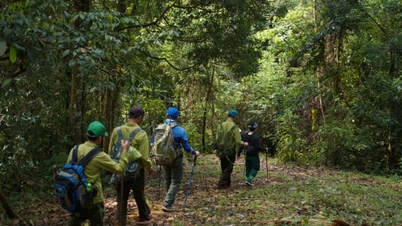
In Thach Quang commune, May Waterfall, with its nine cascading white tiers amidst pristine mountains and forests, has long been a popular destination for thousands of tourists each year. Recognizing this advantage, many local people have invested in building homestays focused on eco-tourism and community-based tourism to serve visitors. Ms. Bui Thi Ngan, a Muong ethnic minority woman and owner of the "Leaving the City for the Forest" homestay, said: "When tourists come here, they not only swim in the waterfall but also experience catching stream fish, cooking by the May stream, and relaxing in homestays built in the traditional stilt house style of the Muong people." One of the things that attracts tourists is the cuisine. The communal meals at the homestays are not elaborate, but they are a "feast" full of cultural flavors. Grilled stream fish in bamboo tubes, free-range chicken, bamboo shoots, stir-fried fern shoots, bitter leaf soup, five-colored sticky rice, etc., have become an indispensable experience.
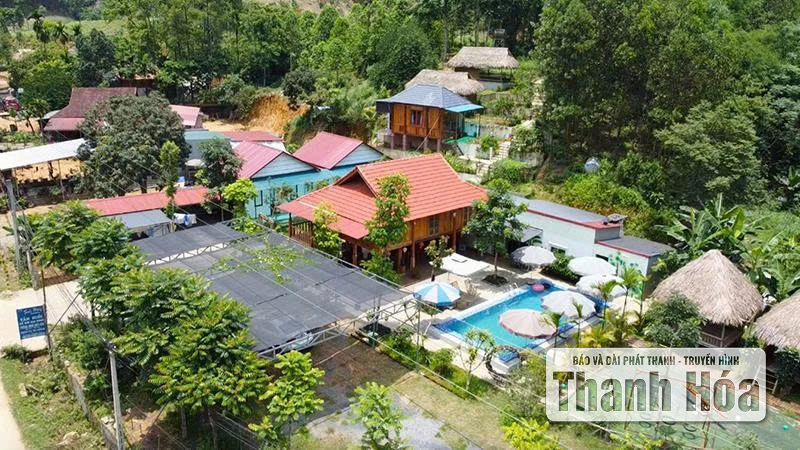
Locals in the May Waterfall Tourist Area are building homestays based on green tourism and community-based tourism principles to attract tourists.
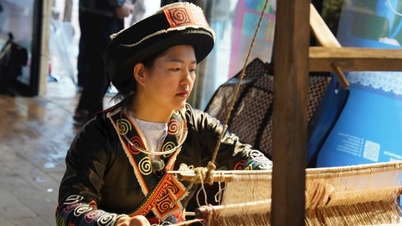
Tourism development has opened up new opportunities for the highland economy. People no longer rely solely on farming, but can now provide services, sell agricultural products, brocade, and local specialties to create stable additional income. “Since the development of tourism models, the lives of our people have improved significantly. Homestay owners like me now create jobs for 5-10 workers with salaries of 10 million VND per month. Some families, who previously relied solely on farming – good harvests meant plenty, bad harvests meant hunger – have seen their lives improve and become much more prosperous since starting tourism,” shared Ms. Bui Thi Ngan. In addition, many cultural values that seemed to have been forgotten have been “revived” thanks to tourism. From brocade weaving and bamboo pole dancing to folk games and village festivals, all have been restored and passed on to the younger generation. Through this, tourists can both experience the culture and contribute to its preservation.
Despite its great potential, tourism in the mountainous areas of Thanh Hoa province still faces many challenges. Infrastructure in some areas is inadequate, promotion is limited, and tourism products lack professionalism. Many households engage in tourism based on trends, lacking management and communication skills, especially with international tourists. Furthermore, the risk of excessive commercialization poses a challenge. If only economic benefits are pursued while cultural values are ignored, tourism in the mountainous regions will lose its unique identity.
To elevate tourism in the highlands, Thanh Hoa province is implementing various solutions such as: training human resources, supporting loan access, encouraging the development of OCOP products linked to tourism, and building tours and routes connecting destinations. Travel businesses are also beginning to show interest, bringing more tourists to experience the region. The most important factor, however, lies with the tourism stakeholders. When they become aware of the cultural value of their homeland and actively learn more systematic tourism practices, tourism in the highlands of Thanh Hoa will not only be a service product but also a sustainable cultural-economic bridge.
Text and photos: Do Phuong
Source: https://baothanhhoa.vn/van-hoa-ban-dia-la-dac-san-niu-chan-du-khach-260040.htm


![[Photo] Prime Minister Pham Minh Chinh attends the Conference summarizing and implementing tasks of the judicial sector.](/_next/image?url=https%3A%2F%2Fvphoto.vietnam.vn%2Fthumb%2F1200x675%2Fvietnam%2Fresource%2FIMAGE%2F2025%2F12%2F13%2F1765616082148_dsc-5565-jpg.webp&w=3840&q=75)










































































Comment (0)