

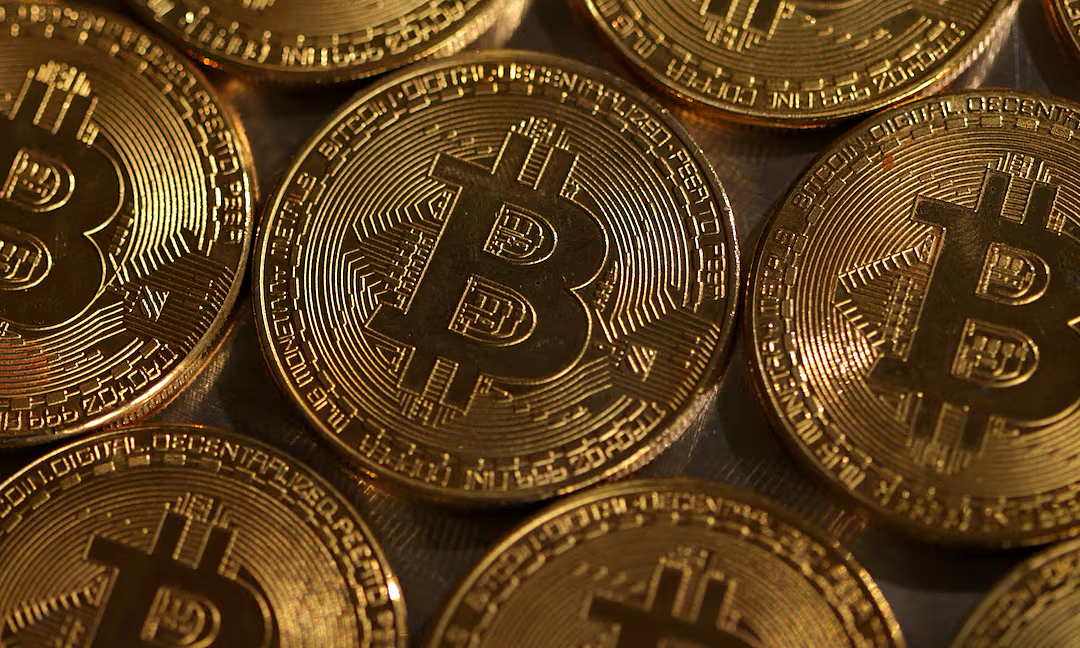
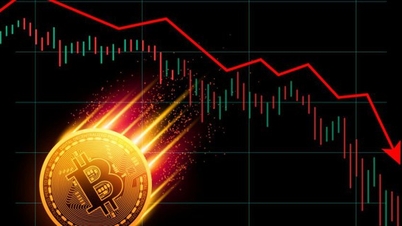
Instead of soaring like the three previous "halving" events, this year's most anticipated event did not significantly improve the price of Bitcoin.
Around 7 AM this morning, Bitcoin (BTC) completed its "halving" cycle, according to cryptocurrency data and analytics company CoinGecko. Halving, an event that typically occurs every four years, is programmed into the Bitcoin network by its creator, Satoshi Nakamoto. Every 210,000 units mined, the reward for miners is halved. Combined with a limited supply (up to 21 million units), the decreasing reward creates scarcity for BTC to ensure its supply remains controlled.
Contrary to many predictions, the price of this cryptocurrency remained relatively stable during the event, hovering around $63,700 per unit. BTC has recently experienced very few significant price surges. Yesterday, the price dropped to a low of $59,685 before quickly rising back above $65,000.
Typically, it takes several months after an event for Bitcoin's price to surge because the reduction in miner rewards takes time to sink into the market. In the three previous halving events, it took an average of about 5 months for the cryptocurrency to increase in price and could maintain that upward momentum for about 7 months.
However, analysts predict that Bitcoin's price fluctuations will be different this time around the halving, as it has already experienced several significant price surges, even reaching record highs before the event. Therefore, price expectations surrounding the halving seem to have diminished.
Brett Hillis, a fintech expert at Reed Smith, stated: "It's difficult to say whether the previous record highs will limit Bitcoin's upward momentum after the 'halving'."
Meanwhile, JP Morgan analysts wrote in a report released this week: "We do not expect Bitcoin prices to rise after the 'halving' event as it completes a valuation cycle."
Conversely, they expect the price of BTC to fall after the halving because the cryptocurrency has become overbought and venture capital investment in the cryptocurrency industry is gradually declining this year. Goldman Sachs added that for Bitcoin to rise in price like previous halving events, macroeconomic conditions need to support investors so they have a risk-taking mindset.
Another important reason for the quiet "halving" period is that the US Federal Reserve (Fed) remains quite hesitant about the possibility of cutting interest rates. This makes investors cautious about pouring money into BTC and other risky assets.
Bitcoin enthusiasts have long been eagerly awaiting this event because, following previous halving events in 2012, 2016, and 2020, the price of the world's largest cryptocurrency has always surged. Chris Gannatti, head of global research at asset management firm WisdomTree, described the halving as "one of the biggest cryptocurrency events of the year."
However, many people are skeptical and consider it merely a technical change, introduced by speculators to drive up the price of cryptocurrencies.
Financial regulators have long warned that Bitcoin is a high-risk asset with limited real-world use, although more and more people are beginning to embrace BTC-linked trading products. Andrew O'Neill, a cryptocurrency analyst at S&P Global, said he was "somewhat skeptical about the lessons that can be learned from previous 'halvings' when predicting price." According to him, that's just one of many factors that could drive Bitcoin's price.
The "Halving" occurred after Bitcoin's price surged to an all-time high of over $73,750 in March. The cryptocurrency also experienced a prolonged bull run throughout almost all of 2023, with a strong recovery after the 2022 crash.
Bitcoin and other cryptocurrencies were supported by the excitement surrounding the US Securities and Exchange Commission's (SEC) decision in January to approve spot Bitcoin ETFs, as well as expectations that central banks would cut interest rates. However, recently, these cryptocurrencies have been under significant pressure due to escalating conflicts in Iran and Israel, causing a ripple effect across all capital markets.
Xiao Gu (according to Reuters , CoinDesk )
Source link


































































































Comment (0)