

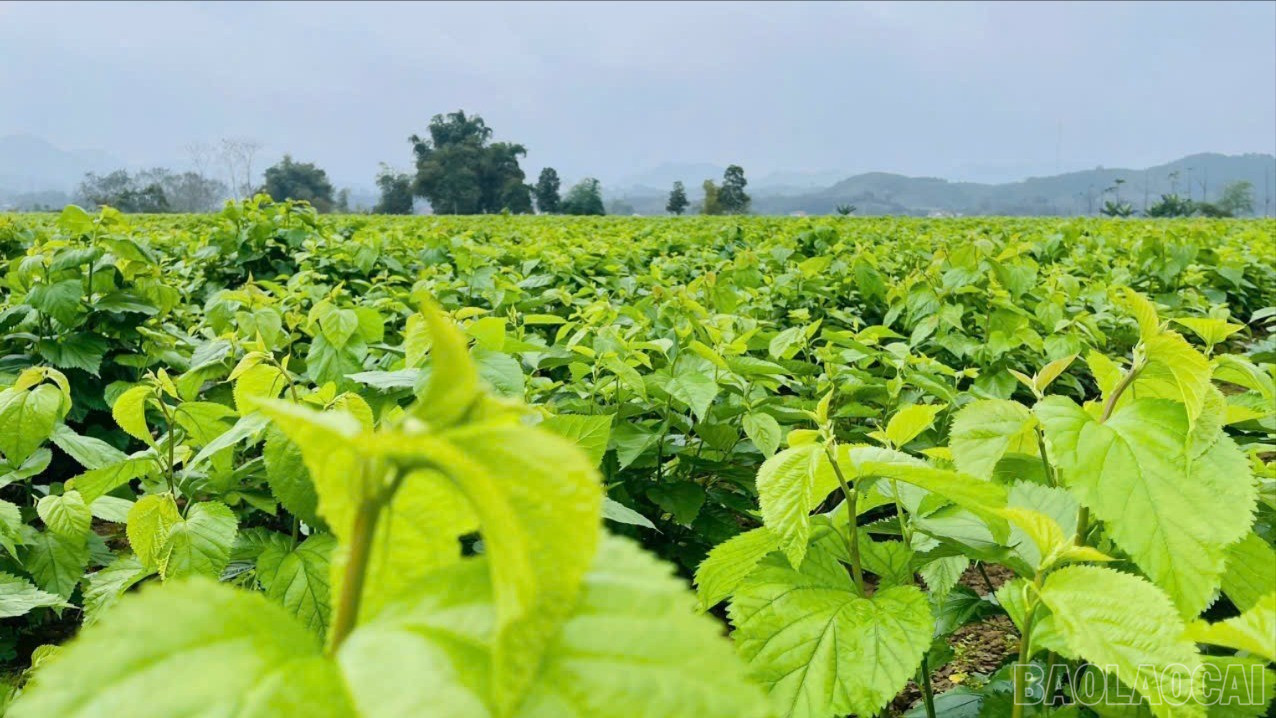
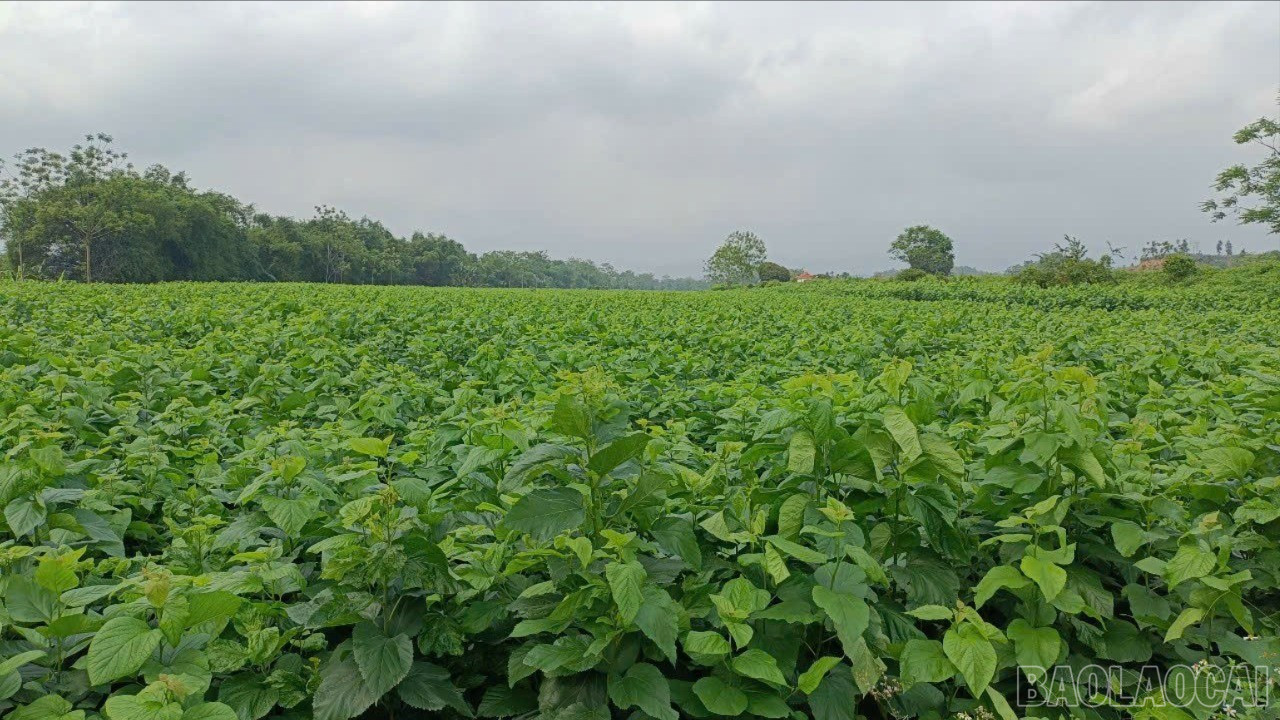
Visiting Tran Yen commune in early 2026, one encounters lush green mulberry fields everywhere, and the rhythmic clicking sound of silkworm cocoons echoing from every house. Few would imagine that this area was once a flood-prone region, severely affected by Typhoon No. 10 in 2025, which buried many mulberry plantations in mud, damaged many silkworm farms, and at times threatened the livelihoods of the local people.
Following the floods, with the timely intervention of local authorities, many programs to support disaster relief efforts were implemented. People were guided in restoring their mulberry gardens, provided with scientific and technical support, and gradually restored production so that the silkworms of the year could be raised on their frames on schedule.
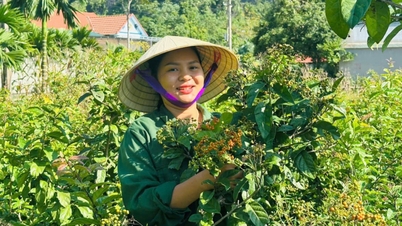
Meeting a farmer busily picking mulberry leaves in the fields of Lan Dinh village, and asking for directions to Mrs. Nguyen Thi Lan's house – a large silkworm farmer in the area – she happily pointed towards a tall house surrounded by lush green trees. From the farm, a woman around 60 years old, tall and slender, quickly emerged, carrying a basket of finely chopped mulberry leaves.
The stories about how to breed silkworms, care for silkworms, different silkworm diseases, and how to prevent them... truly fascinated us.
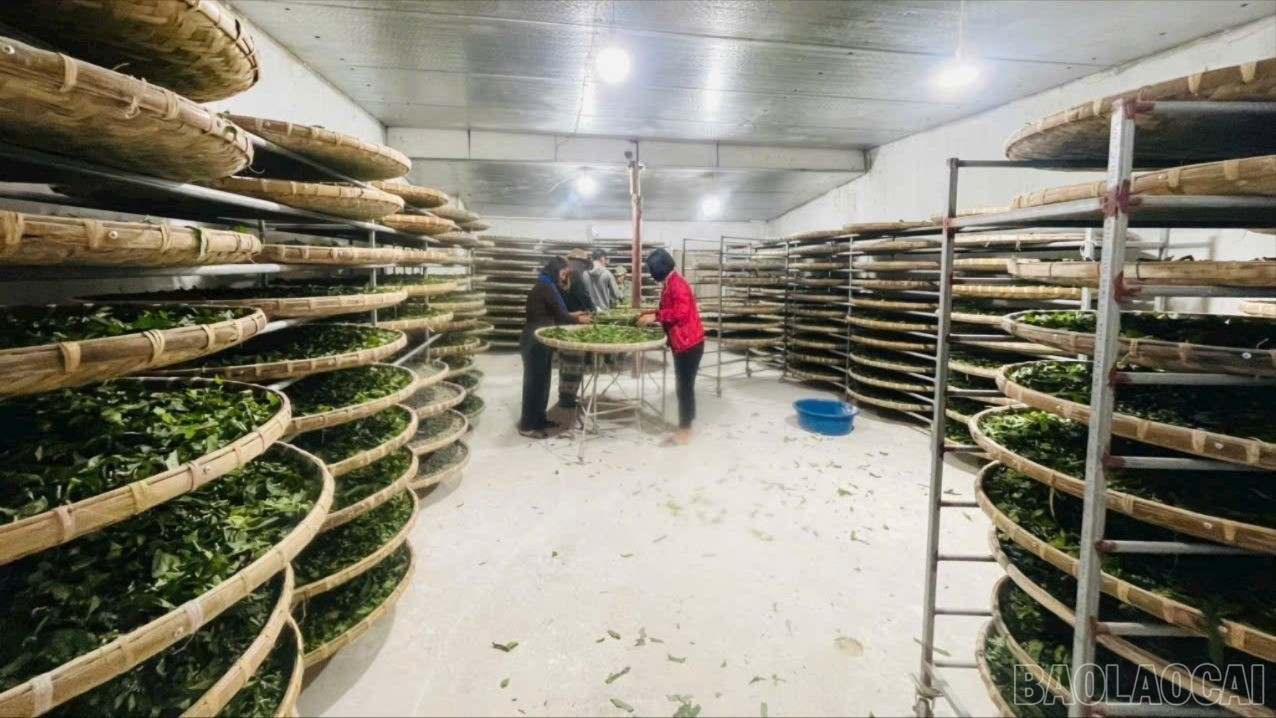
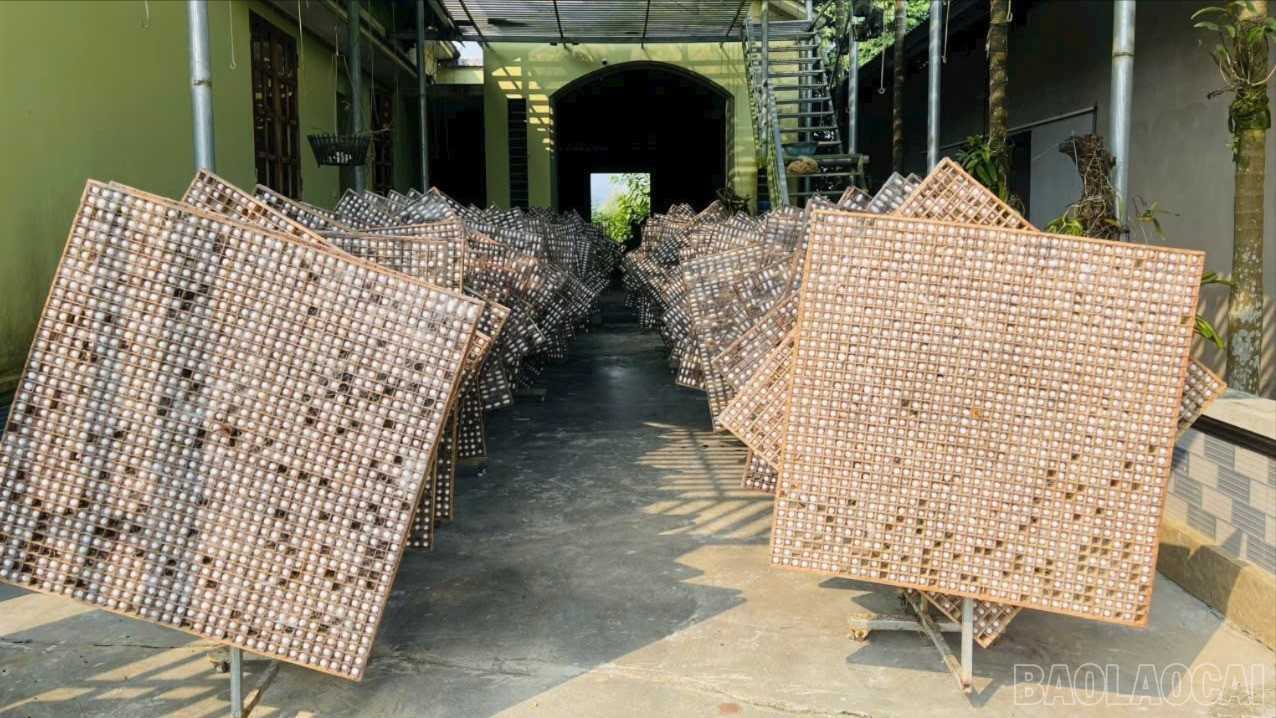
Ms. Lan explained that to prepare for the new silkworm season, her family first washes the trays and frames, cleans and tidies up the silkworm house, and sprays disinfectant on the trays, frames, and house. Previously, households mainly raised silkworms on trays woven from bamboo and reeds, then switched to raising them on the floor. However, due to the small and cramped space, the silkworms were difficult to care for and clean, making them susceptible to disease. In the last five years or so, many households have switched from raising silkworms on the floor to using a model of raising silkworms on sliding tray racks. This saves space for silkworm houses, reduces disease outbreaks, and increases the yield and quality of silkworm cocoons.
"Previously, we mainly raised silkworms on the floor, which took up a lot of space, labor, and made the silkworms susceptible to disease. Each year, we only earned about 60-70 million VND. Now, using sliding trays has reduced labor, resulted in fewer diseases, and increased cocoon yield and number of silkworm cycles. My family has 2 acres of mulberry trees and 2 large silkworm farms, harvesting nearly 1.5 tons of cocoons annually, bringing in over 250 million VND in income," said Ms. Nguyen Thi Lan.
In 2018, Ms. Nguyen Thi Phuong's family in Bao Dap village joined the Viet Thanh Silk and Mulberry Cooperative's supply chain. She and her family boldly converted their entire rice paddy and alluvial land to mulberry cultivation, and also leased additional land from other households in the commune. To date, her family has expanded their mulberry plantation to 18 sao (approximately 18,000 square meters) for silkworm farming; they harvest about 700-800 kg of cocoons annually, generating over 180 million VND in income.
Ms. Phuong shared: “To raise silkworms effectively, two key factors must be ensured: the silkworm breed and biosecurity. First, the silkworm breed must be obtained from a reputable source, with healthy silkworms free from disease; if the breed is damaged from the start, no matter how well it is cared for, it will be difficult to achieve good results. Next, the mulberry cultivation and silkworm care process must ensure safety. The silkworm house must always be covered to prevent harmful sucking insects. After each silkworm cycle, the house is thoroughly cleaned; the frame is flame-treated and then washed with disinfectant. For the mulberry garden, fertilizer must be applied about a month before harvesting to allow it to dissolve completely. If the mulberry trees are not planted correctly, with high fertilizer residue, even though the silkworms grow well, when they make cocoons, they will be easily shriveled, resulting in low yield and quality, and a low selling price.”
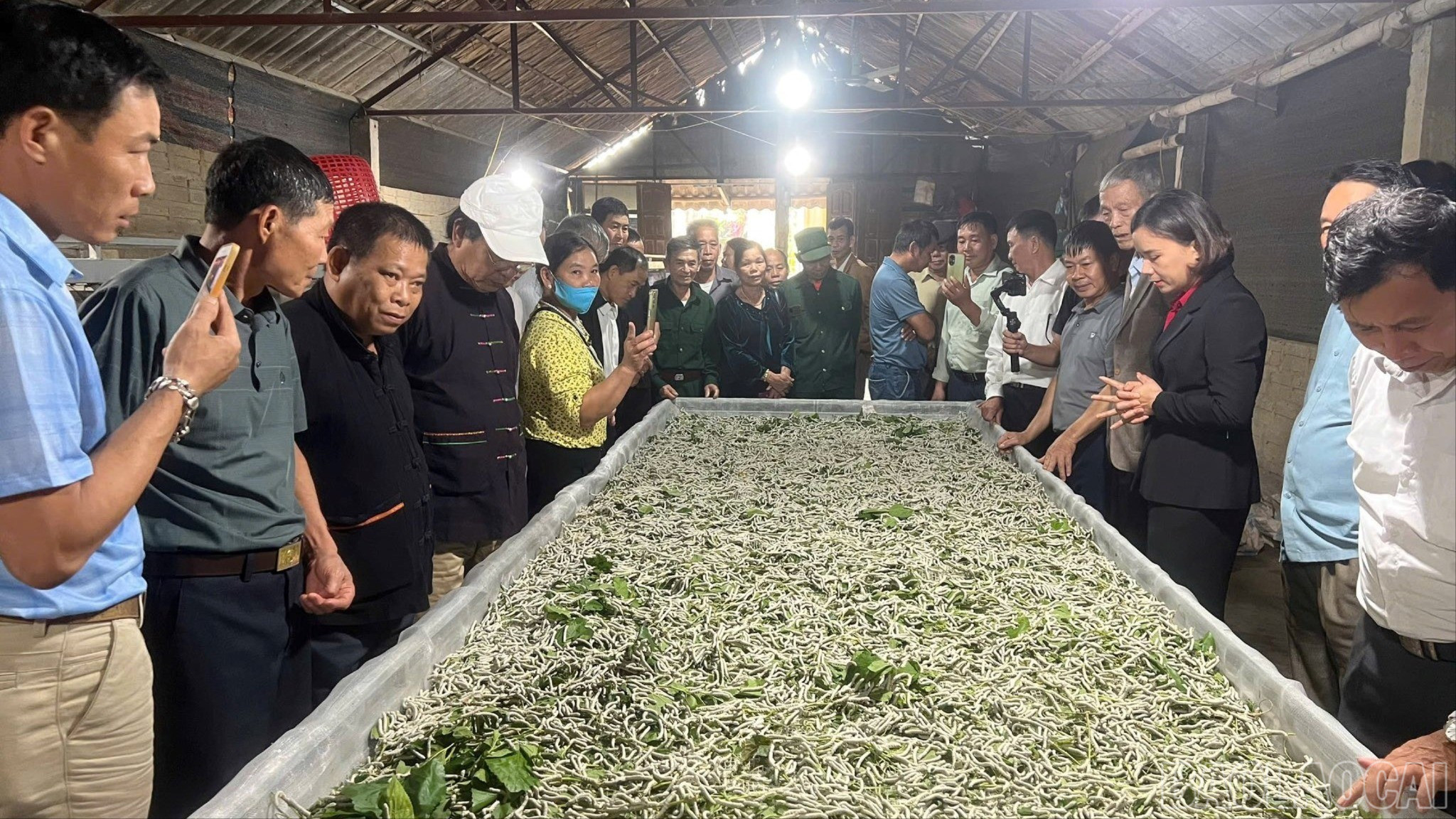
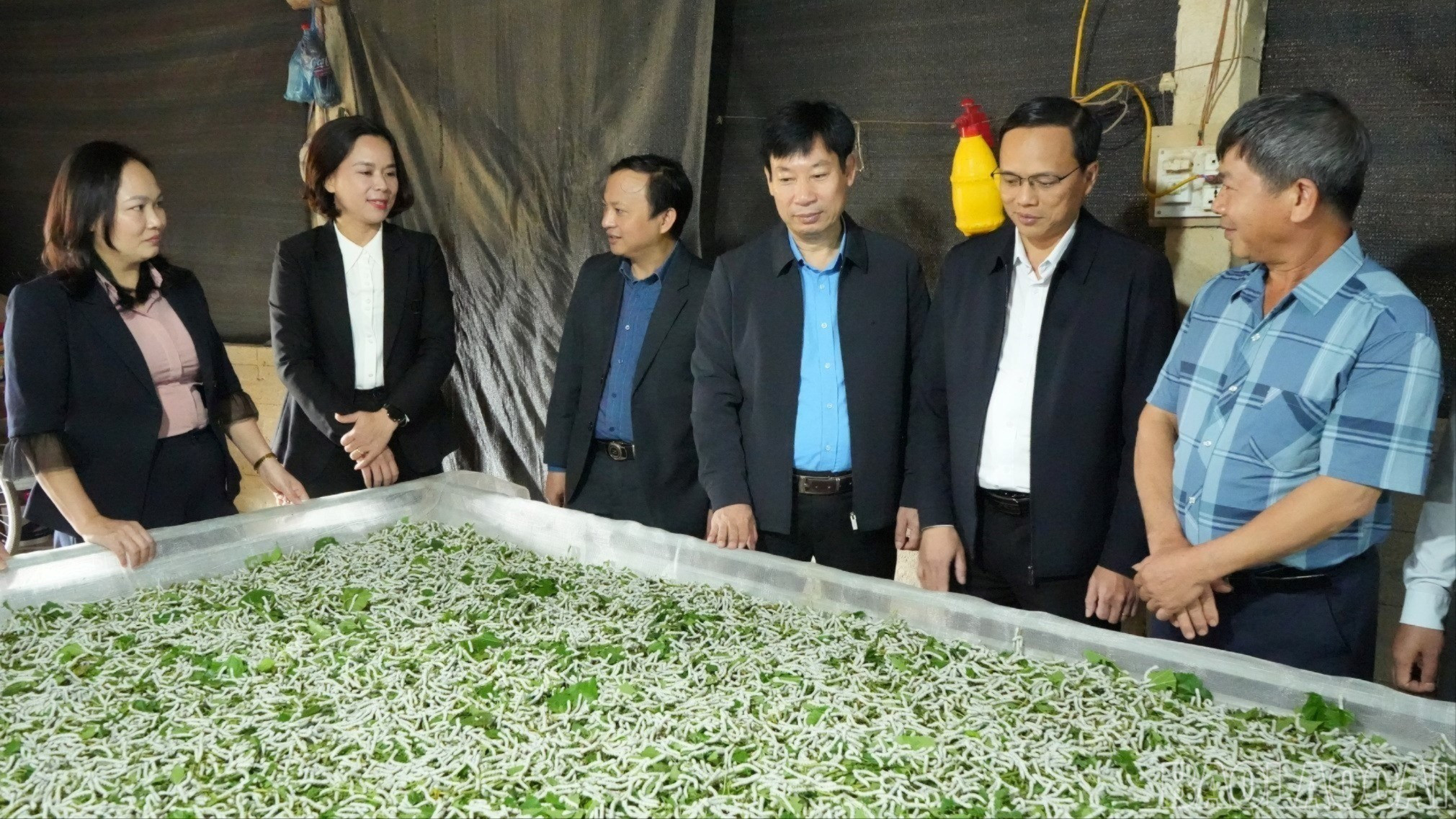
The fertile and lush mulberry fields in Tran Yen commune, stretching across the riverside areas of the Red River from Tan Dong, Bao Dap, Dao Thinh villages, etc., have now expanded to the land at the foot of mountains and hills, along the stream banks in the remote and highland villages.
With stable silkworm cocoon prices and encouragement from local authorities, including support in terms of seeds, capital, and technology, people have actively converted unproductive rice fields and hilly land to mulberry cultivation and silkworm farming.
Ms. Nguyen Thi Tuyet Nga, Permanent Vice Chairwoman of the Vietnam Fatherland Front Committee of Tran Yen commune and Chairwoman of the Tran Yen Commune Farmers' Association, shared: "The locality has over 700 hectares of mulberry trees, with the area of newly planted trees increasing by over 50 hectares annually. To date, the entire commune has over 1,085 households engaged in mulberry cultivation and silkworm rearing; 6 cooperatives and 79 cooperative groups with 617 members are operating in the field of mulberry cultivation and silkworm rearing. At the same time, the locality has 17 concentrated silkworm rearing facilities and 1,064 households with large-scale silkworm farms, generating annual revenue from silkworm cocoons exceeding 200 billion VND. Therefore, it's not just the silkworms that have 'molted and spun silk'; the lives of the local people have also been transformed thanks to this profession over the past few decades."
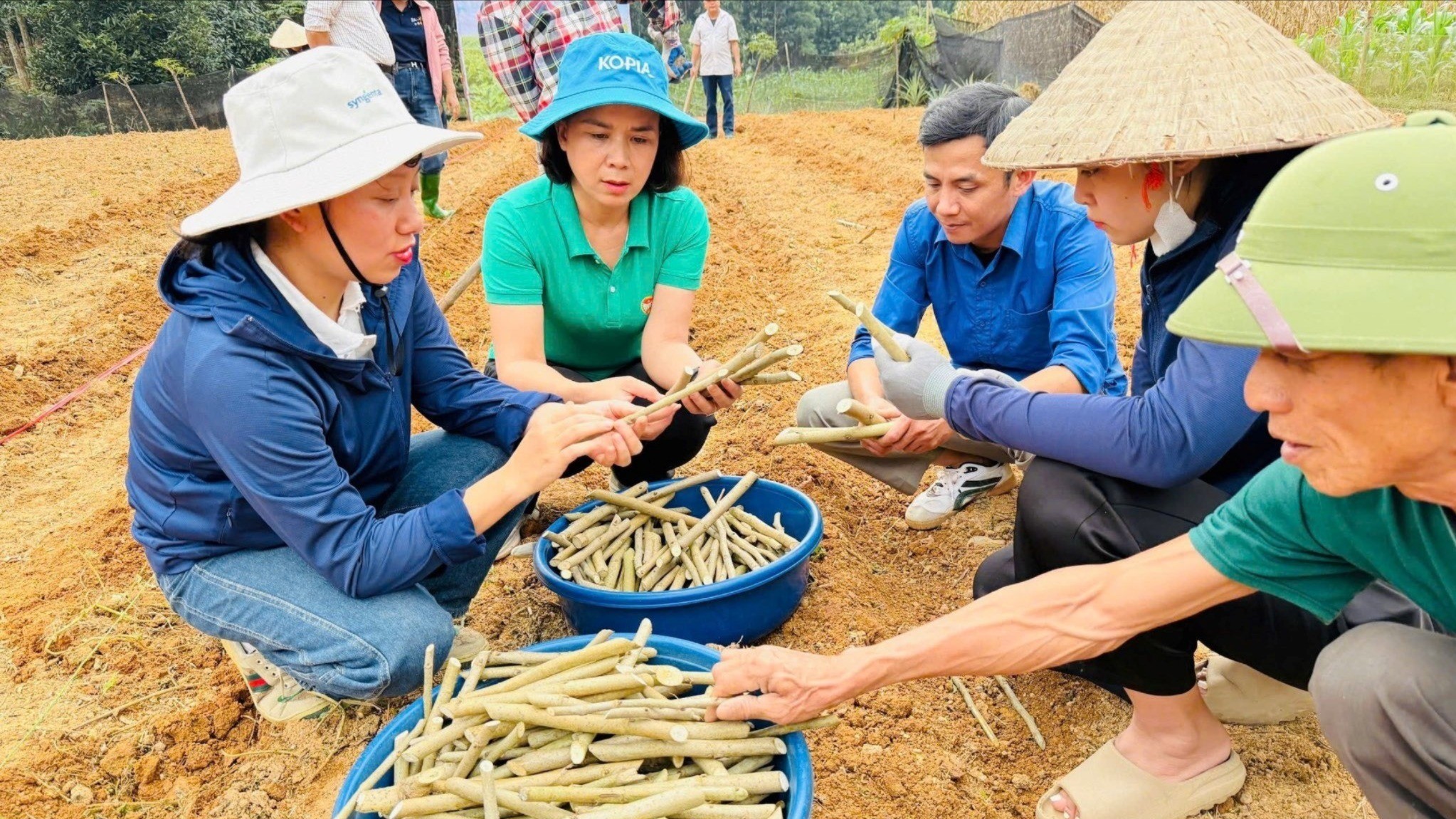
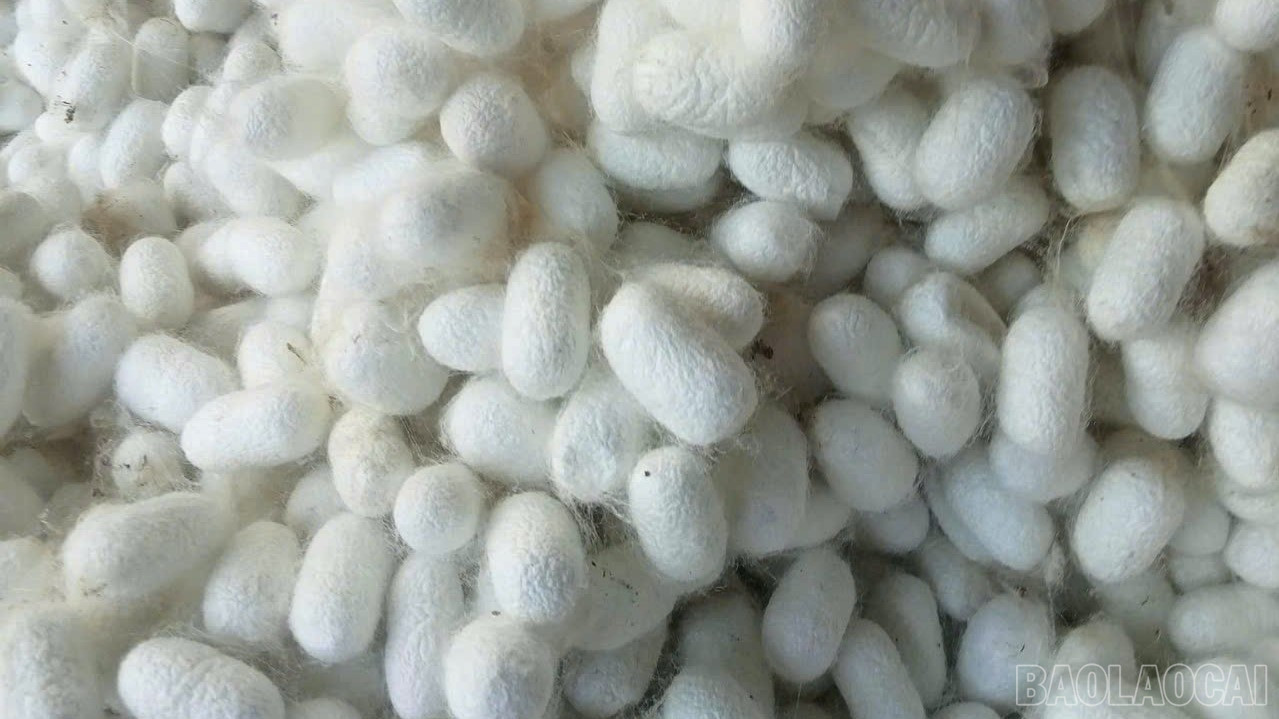
Now, mulberry trees and silkworms are making a positive contribution to the achievements of the new rural development program, bringing prosperity and abundance to the villages of Tran Yen commune.
Source: https://baolaocai.vn/vung-dat-cua-nhung-trieu-phu-an-com-dung-post891337.html













































































Comment (0)