

Soybeans, nuts, sprouts, and cruciferous vegetables can provide compounds such as phytoestrogens, which have effects similar to estrogen in the body.
Estrogen is a group of hormones that affect women's reproductive and sexual health. Long-term estrogen imbalance can lead to various health complications. Estrogen is found in food, primarily in the form of phytoestrogens. Below are some sources of phytoestrogens.
Cashew
Cashews are a rich source of phytoestrogens, containing both isoflavones and lignin. These phytoestrogens may help improve menopausal issues such as poor sleep and decreased bone and joint health. The high magnesium content in cashews may support bone health and improve sleep.
Flax seeds
Flaxseed is rich in lignans, which have antioxidant and anticancer effects, thereby reducing the risk of cardiovascular disease, breast cancer, colorectal cancer, etc. Ground flaxseed is easier to digest.
Chickpeas
Chickpeas and many other legumes contain a group of phytoestrogens called isoflavones. One of these is biochanin A, which has been shown to enhance anticancer activity and reduce the survival rate of cancer cells.
Soybeans
Soybeans and soy products such as tofu and edamame contain a large amount of isoflavones. Isoflavones can lower bad cholesterol, reducing the risk of heart disease. Other phytoestrogens found in soybeans may reduce the risk of developing breast cancer in women and control menopausal symptoms.
Soybeans and soy products help control menopausal symptoms. Photo: Freepik
Sprouts
Sprouts contain a large amount of coumestans, another type of phytoestrogen. Research on the effects of coumestans, conducted by Amity University (India) and several other institutions in 2016, showed that coumestans reduce bone breakdown and promote bone mineralization. Therefore, it can improve bone density and reduce the risk of osteoporosis.
Dried fruit
Among dried fruits, dried apricots contain the highest amount of phytoestrogens, followed by dates, prunes, and raisins. Dried fruits mainly contain lignans, isoflavones, which improve menopausal symptoms and also prevent cardiovascular disease and some types of cancer.
Cruciferous vegetables
Cruciferous vegetables such as cauliflower, broccoli, Brussels sprouts, and cabbage also provide phytoestrogens for women. They may be beneficial in reducing menopausal symptoms such as hot flashes.
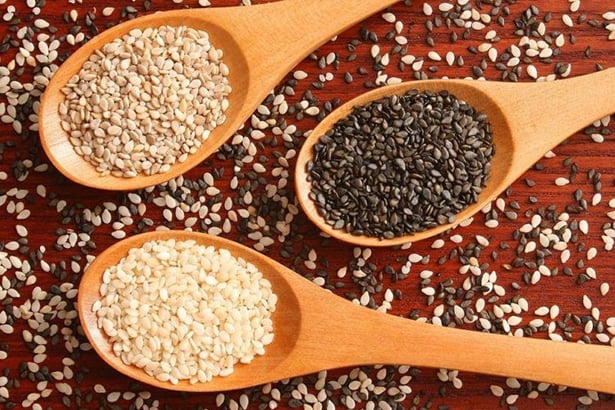
Sesame seeds
Besides improving cholesterol levels, studies show that sesame seeds also affect estrogen levels, boosting female hormones. They contain many substances with strong antioxidant activity, fighting against risk factors for chronic diseases.
Berries
Blueberries, strawberries, and raspberries are packed with nutrients that are good for overall health and help increase estrogen levels in the body. These berries are a source of antioxidants, vitamins, fiber, and lignans—a phytoestrogen beneficial for women.
Garlic
A study on the effects of garlic, published on PubMed from the National Center for Biotechnology Information (NCBI) in the US, shows that garlic is effective in treating bone loss related to estrogen deficiency. The compounds in garlic are effective in promoting and maintaining bone density.
Peach
In addition to being rich in vitamins and minerals, peaches are also an effective source of lignans. Eating peaches may help reduce the risk of certain types of breast cancer.
According to VNE
Source
![[Photo] National Assembly Chairman Tran Thanh Man takes the oath of office](https://vphoto.vietnam.vn/thumb/1200x675/vietnam/resource/IMAGE/2026/04/06/1775453300886_ndo_br_1-2229-jpg.webp)















![[Photo] Da Nang: A sea of people respectfully paying homage to the Bodhisattva Avalokiteshvara.](https://vphoto.vietnam.vn/thumb/1200x675/vietnam/resource/IMAGE/2026/04/06/1775454198203_ndo_br_lh24-jpg.webp)

































































Comment (0)