

Ninh Thuan , a land in the South Central region with its characteristic sunshine and wind, not only impresses with its pristine beaches or ancient Cham towers but is also known as a place that preserves many unique traditional craft villages.
Standing out in that diverse cultural picture is My Nghiep weaving village, located in Phuoc Dan town, Ninh Phuoc district. This is a special stop, where Cham women still maintain the rhythm of the loom every day, creating colorful brocades that embody the quintessence of a traditional craft that has existed for more than a thousand years.
Ancient origin
About 12 km from the center of Phan Rang-Thap Cham, My Nghiep village lies peacefully on the Dinh River, possessing a simple yet rich beauty. Visitors can easily get here by taxi, private car, or experience the feeling of freedom with a motorbike trip, following the sunny village roads.
According to Cham legend, the weaving profession in My Nghiep dates back to the 6th century, associated with the goddess Po Yang Inư Nagar - the mother goddess of the land who is worshiped as the founder of the weaving profession. Cham people also call her Patao Kumay - "king of women," or Stri Ratjnhi - "goddess of women." For generations, people here have always believed that weaving is not only a livelihood but also a sacred gift from the gods.
My Nghiep weaving profession flourished in 1992, when Mrs. Thuan Thi Tru's Inrahani brocade weaving facility was established, gathering many talented artisans, restoring and bringing Cham brocade products closer to tourists. Since then, the reputation of My Nghiep has spread to many other Cham regions such as Huu Duc, Chung My, Van Lam, and even to Binh Thuan province.
The weaving profession in My Nghiep village is mainly passed down to the next generations through the custom of mother to son. Cham women who want to work as weavers must meet the professional ethics standards set by Mrs. Muk Thruh Palei (ancestor of the homeland).
In addition, My Nghiep craft village also received a lot of attention and care from the local government. In 2017, the Department of Culture , Sports and Tourism of Ninh Thuan province sent petitions to the Ministry of Culture, Sports and Tourism to include My Nghiep craft village in the National List of Intangible Cultural Heritage.
The government also supports craft villages in collaborating with garment companies in Ho Chi Minh City to create beautiful products that combine industry and craft, modern and traditional.
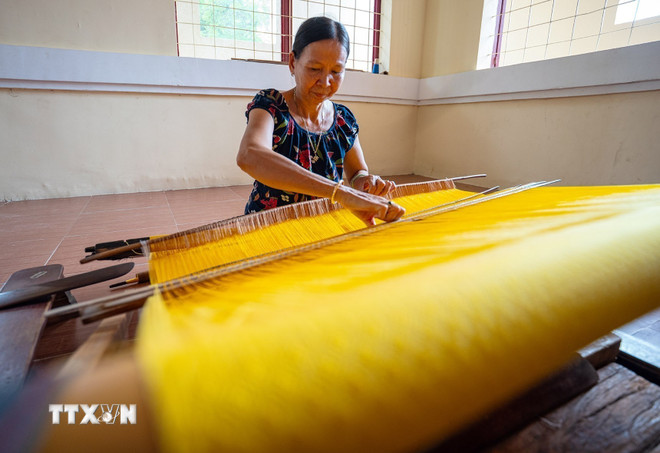
The essence of traditional looms
The special thing that makes My Nghiep village attractive is the preservation of the traditional hand-weaving technique of the Cham people. Although modern industry is constantly developing, the people here still firmly stick with the wooden loom, carefully performing each precise operation and maintaining the graceful rhythm of the shuttle, bearing the mark of a long-standing culture.
The process of creating a sophisticated Cham fabric begins with cotton plants grown right in the yard, requiring meticulousness in every step. From separating the seeds to get the cotton, soaking, dyeing, sizing, brushing to winding, every step is carried out skillfully and carefully. In particular, stages such as dyeing, brushing and winding require the utmost delicacy and attention to ensure perfect quality.
To complete a traditional brocade fabric, the artisan usually has to spend about two to three days. This is enough time for them to convey their passion and pride into each thread and stitch, turning each product into a meaningful work of art.
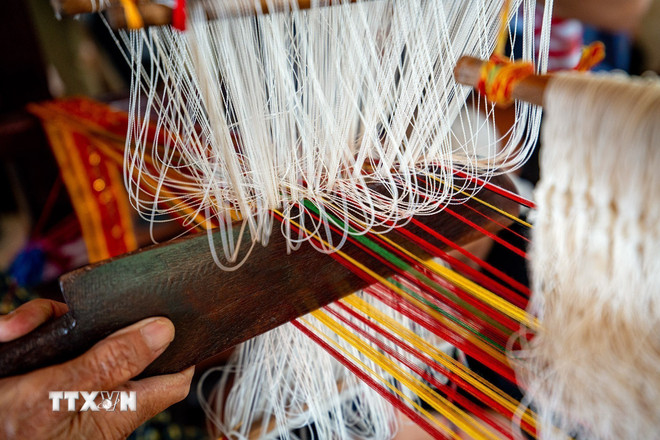
Storytelling patterns - colors of Champa culture
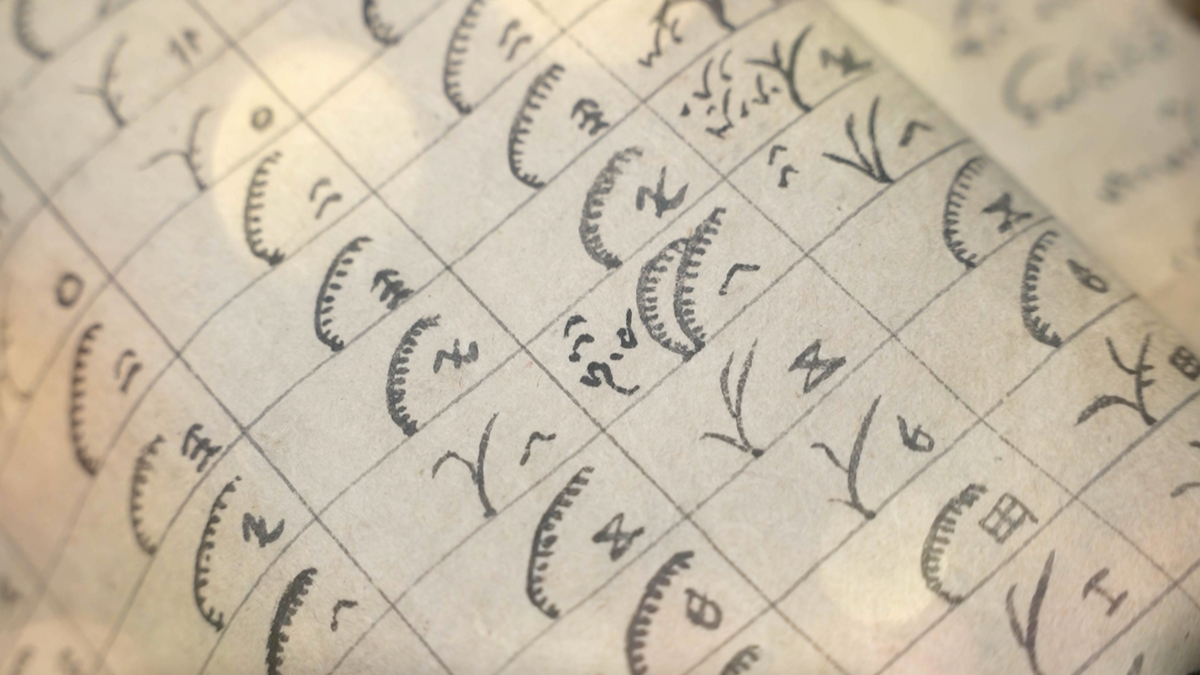
Despite using traditional handlooms, Cham textiles are by no means monotonous or lacking in design. The motifs incorporated into My Nghiep brocade products are often ancient symbols, imbued with cultural values such as the genie, Shiva, and the dragon. This is the crystallization of tradition and art passed down through many generations.
In addition, the Cham people in My Nghiep also incorporate classical patterns to create beautiful fabrics, demonstrating inter-regional cultural connections. Particularly popular patterns include elephant motifs from the Central Highlands and apricot blossoms from the Kinh people. This cross-pollination in the art of patterns has created products that are both unique and rich in symbolic meaning.
Not only using traditional cotton fibers, My Nghiep weaving villagers also skillfully combine synthetic fibers and glitter fibers to create new patterns, such as the creative rainbow motif. This combination not only enriches the material but also reflects the innovative and flexible spirit in the weaving profession of the village community. Brocade products therefore both retain traditional characteristics with natural sophistication and meet the requirements of convenience and high applicability in daily wear.
Although these products have diverse designs and patterns, it is noteworthy that they are all woven on a single loom. This demonstrates the ingenuity, talent and skilled craftsmanship of the weavers of My Nghiep village, contributing to affirming the unique and sustainable cultural values of the community here.
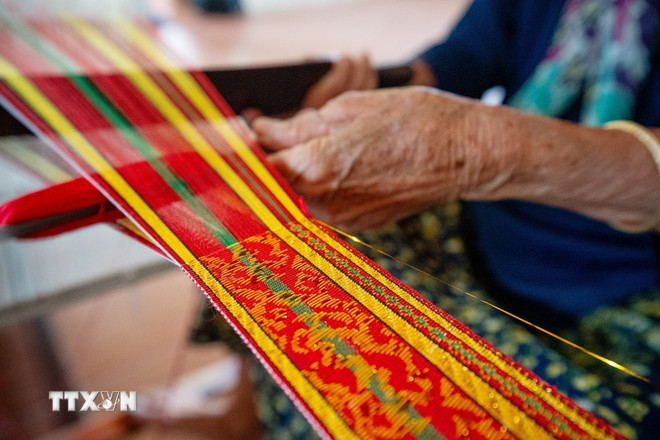
A day as a Cham artisan
Nowadays, My Nghiep weaving village is not only a production site but also an attractive cultural destination. When visiting, visitors have the opportunity to admire the skillful hands of artisans flexibly creating each line on the loom, listen to touching stories about the ancestors of the craft, about the journey of preserving the quintessence through many generations, and especially try their hand at weaving a small, beautiful product to keep as a souvenir.
The moment you hold the shuttle in your hand, listen to the rhythmic sound of the loom, and watch the threads blend together to create vivid patterns, you will understand more deeply the value of manual labor and the precious patience of the Cham people. Each brocade is not only a decorative item, but also contains a part of the soul, woven with time, perseverance and intense love for the homeland.
Preserving the heritage
With its unique and diverse cultural values, in 2017, the Department of Culture, Sports and Tourism of Ninh Thuan province proposed to include My Nghiep weaving village in the National List of Intangible Cultural Heritage.
In parallel, the locality also supports craft villages in linking with domestic and international fashion businesses to expand the market and enhance product value.
Amidst the hustle and bustle of modern life, the clattering sound of shuttles in My Nghiep weaving village still resounds regularly - like the heartbeat of an ancient culture that never fades.
Today, My Nghiep is not only a place to preserve traditional crafts, but also a place to preserve the soul of the Cham people, a heritage that lasts through the flow of time./.
Source: https://www.vietnamplus.vn/bao-ton-va-phat-trien-cai-noi-nghe-det-tho-cam-truyen-thong-cua-nguoi-cham-post1071268.vnp


![[Photo] Prime Minister Pham Minh Chinh receives President of Cuba's Latin American News Agency](/_next/image?url=https%3A%2F%2Fvphoto.vietnam.vn%2Fthumb%2F1200x675%2Fvietnam%2Fresource%2FIMAGE%2F2025%2F12%2F01%2F1764569497815_dsc-2890-jpg.webp&w=3840&q=75)































































Comment (0)