

The BRICS group, of which Russia and China are members, was formed to promote global economic integration and counter the hegemony of the US and the West in the financial sector.
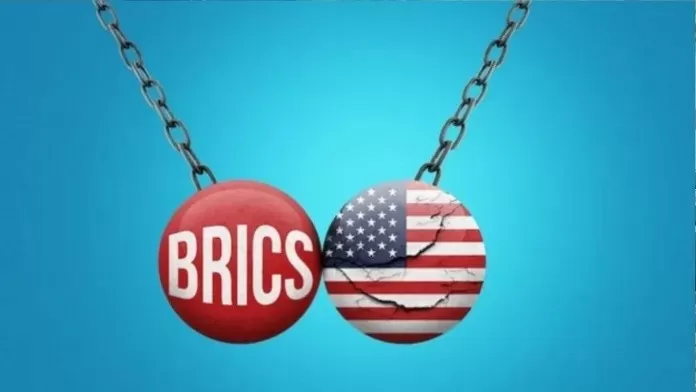 |
| In recent years, the BRICS nations have been seeking to break free from a world dominated by the US dollar. (Source: Shutterstock) |
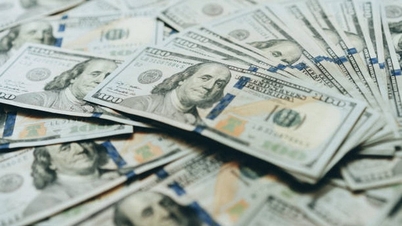
The US dollar is the world's benchmark, serving as the international reserve currency and a benchmark for global export markets. However, this dominant position is gradually being threatened, particularly with the rise of the BRICS emerging economies. Simultaneously, changes in the global economy mean a shift from a dollar-centric financial system to a more pluralistic and multipolar financial system with the emergence of BRICS.
BRICS currently comprises nine members: China, India, Russia, Brazil, the United Arab Emirates (UAE), Egypt, South Africa, Iran, and Ethiopia. Notably, the bloc includes four of the world's eleven largest economies, with China and Russia holding permanent seats on the United Nations Security Council.
The strength of BRICS is demonstrated by impressive figures. With a population of over 3.5 billion people, accounting for 45% of the world's population, BRICS far surpasses the G7, which represents only 715 million people. The combined GDP of BRICS reaches $27 trillion, accounting for approximately one-quarter of global GDP. Notably, BRICS manages 45% of the world's oil reserves, along with abundant freshwater resources and agricultural land.
The privileges of the US from its USD position.
Since the Bretton Woods Agreement in 1944, the USD has been the international currency. After the collapse of the Bretton Woods system in 1971, the US abandoned the "gold standard," but the USD still maintained its dominance. There are several reasons for this advantage of Washington, including: the current strength of the economy, the USD as the world's reserve currency, and its role in the oil trade, known as the petrodollar system.
The dominance of the USD has given the US several important privileges. The hegemony of the greenback has given the US a significant advantage. It allows the country to borrow at cheaper interest rates because the demand for foreign currency assets, especially US Treasury bonds, remains high.
Furthermore, the USD's position also gives the US leverage to exert basic control over most institutions such as the International Monetary Fund (IMF) and the World Bank (WB). However, the existence of a unipolar structure in the financial world has inevitably drawn criticism.
The main objectives of BRICS
The BRICS countries formed in the early 2000s with the fundamental goal of promoting economic integration and countering the hegemony of the US and Europe in the financial sector. Over the years, the group has grown into a major trade and investment bloc, in terms of its share of total global trade and investment.
The BRICS countries possess many strengths: China is a manufacturing giant, Brazil is blessed with abundant natural resources, Russia is a major energy supplier, and South Africa is a key country in Africa.
Another major reason the BRICS formed an alliance is that most of these countries rely heavily on the US dollar. Some countries, most notably China and Russia, have previously faced the impact of economic sanctions.
Therefore, when it was founded, BRICS focused on finding ways to limit the role of the US dollar and introduce functions that could allow trade in the national currencies of the member countries.
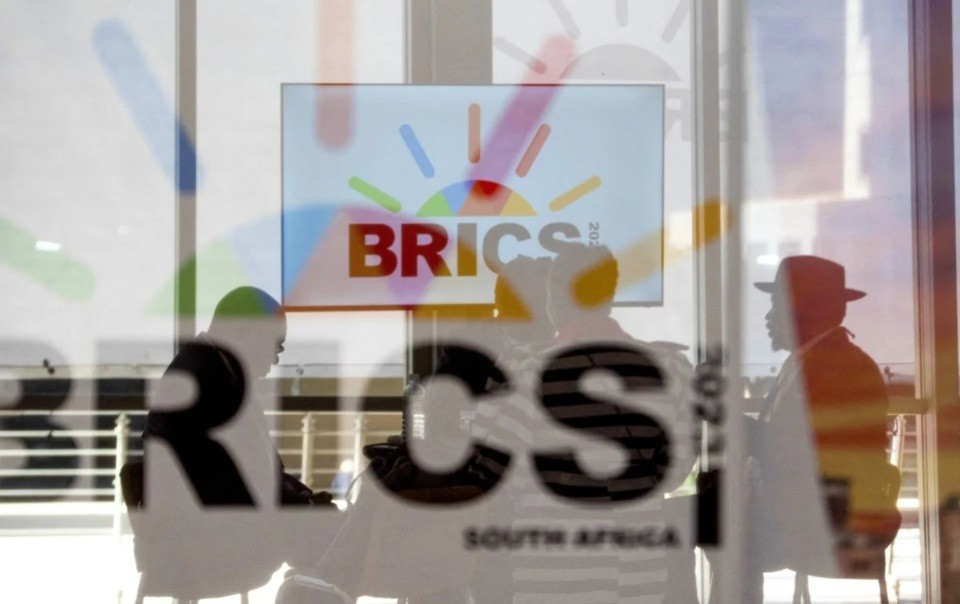 |
| The BRICS countries are beginning to diversify away from the US dollar, meaning this process will have a very significant impact on global trade and finance. (Source: Reuters) |
Specific actions
In recent years, the BRICS nations have been seeking to break free from a world dominated by the US dollar. Several factors have driven this shift, including political rivalry, economic sanctions imposed by the US, and efforts to increase control over the banking sector.
A key highlight of this shift was the establishment of the New Development Bank (NDB) in 2014, headquartered in Shanghai, China. The bank's primary objective was to provide development financing solutions in local currencies to member countries, rather than the USD-dominated systems of Western partner organizations.
The two major economies, China and Russia, have been very active in promoting de-dollarization, as evidenced by the increase in bilateral trade volumes now being settled more in yuan and rubles. India has also expressed a growing desire to use the rupee for overseas purchases, particularly for oil from Russia.
By engaging in transactions with members of this group, they hope to achieve the goal of using local currencies to avoid the dollar-based system, reduce business costs, and eliminate the volatility of the foreign exchange market.
Additionally, the countries are also considering the idea of a common BRICS currency. Although still in its early stages, this concept stems from the group's strategic thinking about creating a new global financial architecture in the post-crisis period. The addition of a common currency, or even a more robust financial architecture among BRICS countries, would help to diminish the dominance of the US dollar.
The BRICS countries are beginning to diversify away from the US dollar, meaning this process will have a very significant impact on global trade and finance. As more countries seek ways to diversify their foreign exchange reserves and consider options for not accumulating USD, the use of this currency is likely to decrease.
In recent times, during the Federal Reserve's interest rate hikes, emerging economies have not been significantly impacted because they have shifted to conducting trade in their local currencies. Meanwhile, most developing countries have suffered capital flight and inflation as the dollar strengthens, as their debt is often denominated in US dollars.
The BRICS countries' holdings of USD subject their foreign accounts to the volatility of this currency, thus requiring them to diversify further to improve their economic stability. Furthermore, global financial diversification can promote a relatively equitable distribution of power worldwide. In the past, the US has used its control over the manipulation of the USD-based international financial system as a bargaining chip with other countries, or to impose sanctions on those who did not comply.
Source: https://baoquocte.vn/bat-chap-lenh-trung-phat-tu-my-va-su-ba-quyen-cua-dong-usd-day-la-cach-nga-trung-quoc-brics-lua-chon-doi-dau-294482.html
![[Image] Leaked images ahead of the 2025 Community Action Awards gala.](/_next/image?url=https%3A%2F%2Fvphoto.vietnam.vn%2Fthumb%2F1200x675%2Fvietnam%2Fresource%2FIMAGE%2F2025%2F12%2F16%2F1765882828720_ndo_br_thiet-ke-chua-co-ten-45-png.webp&w=3840&q=75)
![[Photo] Prime Minister Pham Minh Chinh receives Lao Minister of Education and Sports Thongsalith Mangnormek](/_next/image?url=https%3A%2F%2Fvphoto.vietnam.vn%2Fthumb%2F1200x675%2Fvietnam%2Fresource%2FIMAGE%2F2025%2F12%2F16%2F1765876834721_dsc-7519-jpg.webp&w=3840&q=75)
![[Photo] Prime Minister Pham Minh Chinh receives the Governor of Tochigi Province (Japan)](/_next/image?url=https%3A%2F%2Fvphoto.vietnam.vn%2Fthumb%2F1200x675%2Fvietnam%2Fresource%2FIMAGE%2F2025%2F12%2F16%2F1765892133176_dsc-8082-6425-jpg.webp&w=3840&q=75)


![[Live] 2025 Community Action Awards Gala](/_next/image?url=https%3A%2F%2Fvphoto.vietnam.vn%2Fthumb%2F1200x675%2Fvietnam%2Fresource%2FIMAGE%2F2025%2F12%2F16%2F1765899631650_ndo_tr_z7334013144784-9f9fe10a6d63584c85aff40f2957c250-jpg.webp&w=3840&q=75)














































![[Photo] Prime Minister Pham Minh Chinh attends the Vietnam Economic Forum 2025](https://vphoto.vietnam.vn/thumb/402x226/vietnam/resource/IMAGE/2025/12/16/1765893035503_ndo_br_dsc-8043-jpg.webp)

























Comment (0)