


At its 26th session held on the afternoon of September 13th, the Standing Committee of the National Assembly reviewed the report on the results of monitoring "The implementation of National Assembly resolutions on national target programs on building new rural areas in the 2021-2025 period, sustainable poverty reduction in the 2021-2025 period, and socio -economic development in ethnic minority and mountainous areas in the 2021-2030 period".
This is the first time the National Assembly has conducted mid-term oversight, and it is being done simultaneously with three national target programs.
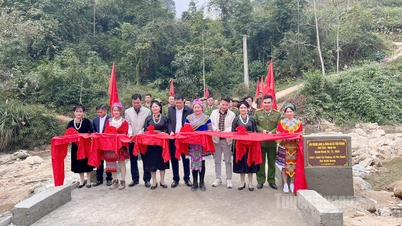
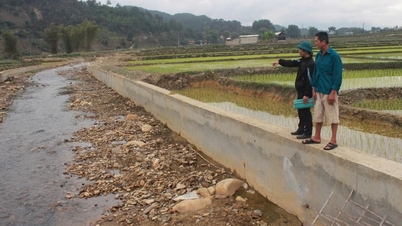
Economic and social infrastructure in rural and mountainous areas has been improved.
Reporting at the session, the Chairman of the National Assembly's Ethnic Council, Y Thanh Ha Nie Kdam, Deputy Head of the Standing Delegation of the Supervisory Delegation, affirmed that under the leadership of the Party, the support of the National Assembly, and the decisive actions of the Government and the Prime Minister, the implementation of national target programs has initially achieved some positive results, closely adhering to the goals, requirements, content, scope, and principles in the National Assembly's Resolution; economic and social infrastructure in rural and mountainous areas has been significantly improved; and inter-sectoral and individual program inspection and supervision have been strengthened.
The government and ministries have organized numerous dialogue conferences to listen to the opinions of localities. Through these conferences, they have compiled over 300 recommendations from localities, 150 recommendations from National Assembly deputies at the session, and many issues identified by the Supervisory Delegation regarding difficulties and obstacles in the implementation of programs.
Based on that, the Government promptly assigned tasks to ministries and agencies to amend, supplement, or revise all 11 important documents (including Decree 27 and guiding circulars), as well as to answer, explain, and clarify contents that were still subject to different interpretations at the local level.
The planning and allocation of funds for the implementation of programs have been assigned to localities by the Government in accordance with the Budget Law and the Public Investment Law; the content closely follows the resolutions of the National Assembly on approving the investment policies of national target programs.
Disbursement results showed progress in 2023, especially for investment capital. According to the Ministry of Finance's report, as of August 31, 2023, the disbursement of long-term development investment capital for the three national target programs reached approximately 58.47% of the long-term capital plan (calculated based on the total planned capital of 2022 disbursed in 2022 and in the first eight months of 2023, reaching 79.82% of the 2022 plan; the disbursement of public investment capital for 2023 is estimated to reach 41.9% of the plan as of August 31, 2023).
Many lessons were learned.
Based on the practical implementation of the three national target programs, the Chairman of the National Assembly's Ethnic Council, Y Thanh Hà Niê Kđăm, stated that many lessons have been learned.
That is, it is necessary to thoroughly understand and correctly, fully, and clearly grasp the resolutions of the Party and the National Assembly, closely adhering to reality to ensure that the content of the Resolutions is fully institutionalized right from the development of national target programs, concretizing mechanisms, policies, management, and implementation.
Leveraging the leadership role of Party committees and governments at all levels, especially the decisive leadership of the heads of departments, and the proactive and responsible approach of implementing agencies, are key factors in achieving the program's results. Overcoming the mentality of fear of making mistakes, avoidance, shirking responsibility, and fear of accountability is crucial.
At the same time, it is crucial to promote the leading and creative role of the people, the exemplary conduct of cadres and Party members, and the involvement of the entire political system, especially the people who are the beneficiaries of the program. This is a key factor in determining the success and effectiveness of national target programs.
To develop policies tailored to the specific characteristics of each region, the National Assembly and the Government need to continue promoting decentralization and delegation of power to local authorities in selecting and deciding on specific project and sub-project lists. Central agencies should issue framework policies, assign specific targets to localities, and build appropriate and effective mechanisms for inspection, supervision, and evaluation.
Amend and supplement regulations that are inappropriate or difficult to implement.
The supervisory delegation raised several recommendations to the Government and the Prime Minister, including a request to focus on amending and supplementing regulations that are inappropriate or difficult to implement; to implement Resolution No. 100/2023/QH15 on questioning activities at the 5th Session of the 15th National Assembly regarding the implementation of national target programs, including the development of a pilot management mechanism for district-level agencies; and to fully implement the audit conclusions on national target programs, including proposing solutions for budget funds allocated to some localities that do not meet needs and regulations (to be completed in 2023).
In addition, it is necessary to review and propose to competent authorities the prompt handling of outstanding capital due to slow disbursement; focusing on resolving definitively the difficulties and pressing issues regarding land, housing, clean water, and planning for the stable resettlement of ethnic minority and mountainous areas.
Promulgate housing support policies for poor households in rural areas for the period 2021-2025; increase social policy credit capital for the Social Policy Bank to increase loan amounts for poverty reduction support, especially loans for building and repairing houses for the poor and near-poor in rural areas (to be completed in 2023).
Assigning targets for poverty reduction and alleviation in ethnic minority and mountainous areas; for communes recognized as achieving new rural standards, it is necessary to ensure the sustainable improvement of people's quality of life, livelihoods, and income, preventing them from falling back into poverty or near-poverty.
Review and adjust rural development criteria that are not in line with reality; research and propose a plan for developing a set of criteria for new rural areas in accordance with the spirit of Conclusion 65-KL/TW dated September 30, 2019 of the Politburo (to be completed in 2023).
Research and develop websites to facilitate quick, timely, and transparent exchange and feedback on the implementation results of national target programs in each locality; digitize and develop guidance documents for the implementation of national target programs.
Directing research and guiding the development of content, structure, and policies for national target programs, preparing the conditions for implementation in the 2026-2031 period.
The National Target Program for Building New Rural Areas in the period 2021-2025 was approved in principle by the National Assembly in Resolution No. 25/2021/QH15 dated July 28, 2021, and the Program was approved by the Prime Minister in Decision No. 263/QD-TTg dated February 22, 2022. The program has a minimum total budget (rounded figure) of VND 196,332 billion (Central government budget: VND 39,632 billion, local government budget: VND 156,700 billion). The National Target Program for Sustainable Poverty Reduction for the period 2021-2025 was approved by the National Assembly in Resolution No. 24/2021/QH15 and the Program was approved by the Prime Minister in Decision 90/QD-TTg dated January 18, 2022. The program has a minimum total capital (rounded figure) of VND 75,000 billion (48,000 billion from the central budget; VND 12,690 billion from local budgets; and VND 14,310 billion from other legally mobilized funds). The program comprises 7 projects, structured into 2 independent projects and 5 projects with 11 sub-projects. The National Target Program for socio-economic development in ethnic minority and mountainous areas was approved by the National Assembly in Resolution No. 120/2020/QH14 dated June 19, 2020, and the Program was approved by the Prime Minister in Decision 1719/QĐ-TTg dated October 14, 2021. The program has a minimum budget (rounded figure) of VND 137,664 billion (including VND 50,000 billion in investment capital; VND 54,323 billion in recurrent expenditure; VND 10,016 billion in local budget capital; VND 19,727 billion in policy credit loans; and VND 2,967 billion in other legally mobilized capital). The program comprises 10 projects and 14 sub-projects, implemented in 49 provinces. |
Source

![[Photo] Prime Minister Pham Minh Chinh attends the Conference on the Implementation of Tasks for 2026 of the Industry and Trade Sector](/_next/image?url=https%3A%2F%2Fvphoto.vietnam.vn%2Fthumb%2F1200x675%2Fvietnam%2Fresource%2FIMAGE%2F2025%2F12%2F19%2F1766159500458_ndo_br_shared31-jpg.webp&w=3840&q=75)








































































Comment (0)