

The dynamics of globalization, the financial trading environment, and capital flows in the context of a volatile international relations landscape create new opportunities and challenges, requiring continuous adaptation and change in the global financial governance system.
 |
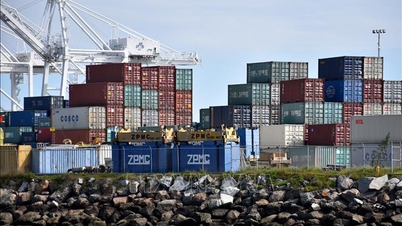
| The global financial governance system is under immense pressure to reform and address its shortcomings. (Source: Indiamart) |
The global financial governance system is a worldwide framework of legal agreements, institutions, and formal and informal economic actors that collectively establish regulations and practices related to the movement of international financial capital between countries for investment, trade, or other development purposes.
From a geopolitical perspective, the impact of five key factors on the global governance system, including: changes in the balance of power in the world economic landscape; the situation and policies of major economies; the digital transformation trend; the green growth trend; and international economic integration and linkages, has created four major governance trends in the world economy.
Strengthening the "voice" of developing countries.
Recent discussions at international forums such as the United Nations (UN), the Group of Developing Countries (G77), the Group of Twenty (G20), the International Monetary Fund (IMF), and the World Bank (WB) have highlighted the limitations of the current international structure regarding development finance, in the context of closely interconnected crises ranging from climate change to the cost of living and the debt crisis of developing countries.
In this context, developing countries have consistently called for reforms to the global financial system towards greater inclusiveness and comprehensiveness, and for strengthening the role and voice of developing countries in the decision-making processes of existing financial institutions.
At the UN, Secretary-General Antonio Guterres assessed the current international financial structure as unfair, emphasizing the need to ensure access to finance for developing countries and promote the mobilization of domestic resources. He called for increased international cooperation and public-private partnerships to address the significant decline in global economic growth, rising inflation, the looming debt crisis, and its severe impact on these economies.
The global financial governance system faces significant pressure for reform, needing to overcome shortcomings and limitations, and especially to align with the new economic and financial order and the trend of globalization. Accordingly, the voice of developing countries needs to be further strengthened. This includes increasing quotas for developing countries in Bretton Woods systems (WB, IMF, etc.); diversifying lending/withdrawal conditions to better suit developing countries; and demanding fairer credit rating systems for developing countries, taking into account their specific circumstances when applying assessment criteria.
Strengthening the role of developed countries
Within global financial governance frameworks, countries are also calling on developed nations to strengthen their role and responsibility in addressing emerging global issues and trends, such as green growth and digital transformation, promoting them as new drivers of global economic growth.
Specifically, developed countries are urged to contribute more to climate action programs to offset environmental damage caused by previous development; and to provide financial support to less developed and developing countries to bridge the digital and technological gap.
Implementing a global minimum tax rate and cooperating to combat tax revenue erosion.
Global tax cooperation has recently become more active through the implementation of a global minimum tax and the promotion of cooperation to combat tax revenue erosion.
In 2021, the G20 Finance Ministers and Central Bank Governors Meeting adopted a Declaration on Solutions, comprising two pillars to address the tax challenges arising from the digitalization of the economy.
Accordingly, under Pillar 1, countries will be allowed to impose new taxes on a portion of the profits of multinational corporations with annual global revenues exceeding €20 billion and profits exceeding 10%, and which conduct business in that country. And under Pillar 2, countries will apply a minimum corporate tax rate of 15% to the overseas profits of multinational corporations with revenues of €750 million or more.
The Global Minimum Tax (GMT) is currently implemented by 136 countries, including Vietnam, and its adoption is being accelerated. Economies in the European Union (EU), Switzerland, the UK, South Korea, Japan, Singapore, Indonesia, Hong Kong (China), and Australia will apply the GMT from 2024. Countries receiving investment in the ASEAN region with similar conditions to Vietnam (Malaysia, Indonesia, Thailand) have also planned to implement the GMT from 2024.
Meanwhile, in an effort to close legal loopholes and curb tax evasion by international businesses, many countries/groups of countries are promoting the formation of global regulations to combat revenue erosion and tax avoidance, notably two initiatives from the G20/OECD and the African group of countries.
The Base Erosion and Profit Shifting Solutions (BEPS) initiative of the G20/OECD comprises 15 actions aimed at narrowing the “tax gap,” mitigating inadequacies and shortcomings in each country’s policy system, and ensuring consistent and transparent application according to international standards and practices. BEPS was officially adopted by G20 leaders in November 2015 and currently has 141 members (Vietnam being the 100th member) through the Comprehensive Cooperation Framework between the OECD/G20.
The second initiative is the “Resolution on Promoting Comprehensive and Effective International Tax Cooperation,” proposed by a group of African countries at the UN, calling for enhanced and more inclusive tax cooperation, taking into account the role of developing countries in the decision-making process. The initiative proposes cooperation to combat illicit financial flows, tax avoidance, and tax evasion, and the establishment of a Tax Cooperation Platform involving UN agencies.
Promoting cooperation in resolving public debt and preventing debt crises.
The Covid-19 pandemic, food and energy crises, and unprecedented challenges have unfolded against a backdrop of tightening global financial conditions and rising borrowing costs, increasing the risk of public debt in vulnerable countries.
According to statistics, government debt as a percentage of GDP has increased in more than 100 developing countries. The rising public debt of these nations raises questions about the role of multilateral development finance during times of crisis.
In the immediate future, to achieve sustainable development goals, the UN and countries are calling for stronger multilateral solutions to address the public debt crisis facing developing economies. Currently, discussions on public debt within multilateral frameworks focus on two main areas: resolving public debt issues for poor, high-risk countries and cooperation in preventing public debt crises.
To address the public debt problem for poor and high-risk countries, global financial institutions (MDBs) choose to provide new sources of financing to nations by securing resources and repurposing portions of their existing investment portfolios, through mechanisms such as relending or capital injection.
In fact, the G20 countries have promoted the Debt Service Suspension Initiative (DSSI). Through this initiative, the G20 countries have completed the debt resolution process for Chad and are continuing to address the debts of Zambia, Ethiopia, Ghana, and Sri Lanka.
However, countries generally agree that, in the long term, the issue of public debt should be approached from a preventative rather than a reactive perspective, and they call on countries to implement solutions to prevent debt crises in high-risk countries.
Leaders of several developing countries have called on the G20 to agree on a more ambitious debt suspension initiative, including MDB loans for low-income countries.
The countries also called on developed nations—considered responsible for the majority of environmental damage—to free up financial space for Southern borrowers. This could include debt forgiveness, debt restructuring, replacing climate loans with grants and compensation for damages.
--------------------------------
(*) This article is a compilation of the research findings from the study "Some Major Trends in Global Financial Governance at Multilateral Forums" by authors Phan Loc Kim Phuc, Truong To Khanh Linh, Tran Dang Thanh, Vu Hong Anh, Vu Thanh Dat, Nguyen Thi Binh, and Nguyen Phuong Hoa.
Source: https://baoquocte.vn/cac-xu-huong-lon-trong-quan-tri-tai-chinh-toan-cau-291219.html
![[Image] Leaked images ahead of the 2025 Community Action Awards gala.](/_next/image?url=https%3A%2F%2Fvphoto.vietnam.vn%2Fthumb%2F1200x675%2Fvietnam%2Fresource%2FIMAGE%2F2025%2F12%2F16%2F1765882828720_ndo_br_thiet-ke-chua-co-ten-45-png.webp&w=3840&q=75)
![[Photo] Prime Minister Pham Minh Chinh receives the Governor of Tochigi Province (Japan)](/_next/image?url=https%3A%2F%2Fvphoto.vietnam.vn%2Fthumb%2F1200x675%2Fvietnam%2Fresource%2FIMAGE%2F2025%2F12%2F16%2F1765892133176_dsc-8082-6425-jpg.webp&w=3840&q=75)
![[Live] 2025 Community Action Awards Gala](/_next/image?url=https%3A%2F%2Fvphoto.vietnam.vn%2Fthumb%2F1200x675%2Fvietnam%2Fresource%2FIMAGE%2F2025%2F12%2F16%2F1765899631650_ndo_tr_z7334013144784-9f9fe10a6d63584c85aff40f2957c250-jpg.webp&w=3840&q=75)

![[Photo] Prime Minister Pham Minh Chinh receives Lao Minister of Education and Sports Thongsalith Mangnormek](/_next/image?url=https%3A%2F%2Fvphoto.vietnam.vn%2Fthumb%2F1200x675%2Fvietnam%2Fresource%2FIMAGE%2F2025%2F12%2F16%2F1765876834721_dsc-7519-jpg.webp&w=3840&q=75)




















































































Comment (0)