

 |
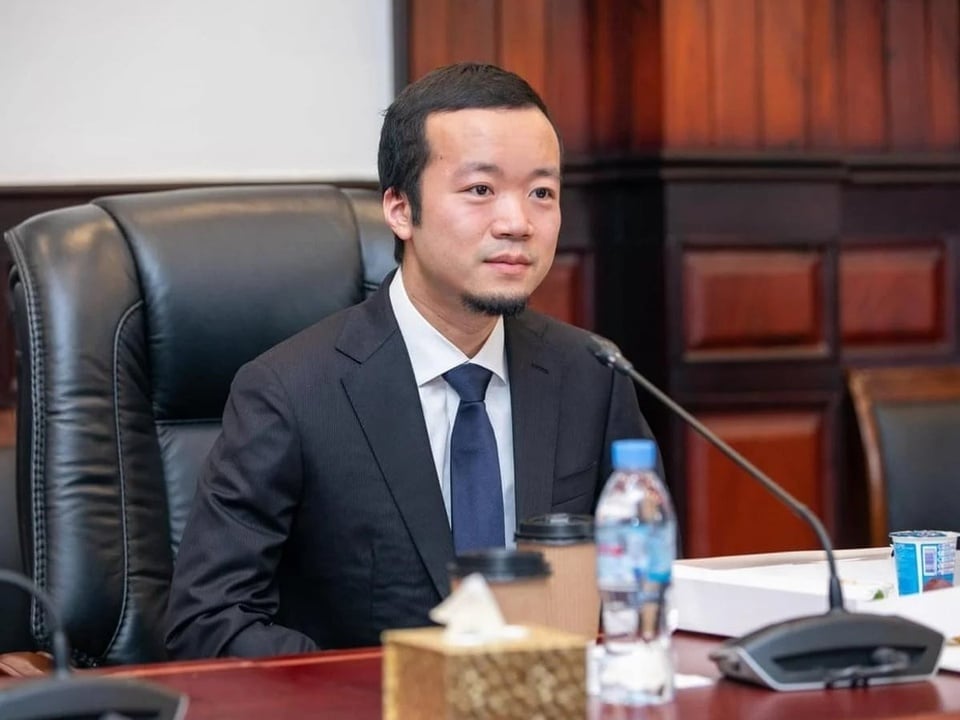
Chen Zhi. Photo: Prince Holding Group . |
The cryptocurrency community was rocked by the news that the US Department of Justice had indicted Chen Zhi, chairman of Prince Holding Group (based in Cambodia), on charges of operating a global online fraud ring, money laundering, and using forced labor.
A notable detail in the case comes from the amount of cryptocurrency seized, which totaled 127,271 BTC, currently worth approximately $15 billion . This is the largest amount of Bitcoin ever seized by prosecutors.
"This is the largest seizure of virtual assets in history," the U.S. Department of Justice emphasized in an official statement. The funds are believed to have originated from fraudulent activities such as "piggy bank" scams, which were then laundered through a complex network of legitimate businesses, shell companies, and large-scale Bitcoin mining operations.
Suspicious signs
According to U.S. Department of Justice records, Chen holds multiple nationalities including Chinese, Cambodian, Cypriot, and Vanuatu, and serves as Chairman of the Prince Group. Outwardly, it's a real estate, financial services, and consumer goods conglomerate. However, its most profitable operations stem from fraudulent complexes employing forced labor in Cambodia.
The majority of scams involve "pig butchering," a practice where fraudsters build fake relationships online, gain trust, and then trick victims into investing in fraudulent exchanges or e-wallet platforms.
The documents allege that Chen directly managed the fraudulent operations, possessing records that explicitly mentioned the "pig slaughtering" scheme. He even kept a notebook containing the scam scripts, targeting victims in various countries including Vietnam, Russia, China, and Europe.
In 2018, the "pig slaughtering" scam and other illegal activities generated approximately $30 million per day for Prince Group. The money was laundered through a sophisticated network designed to conceal its origin.
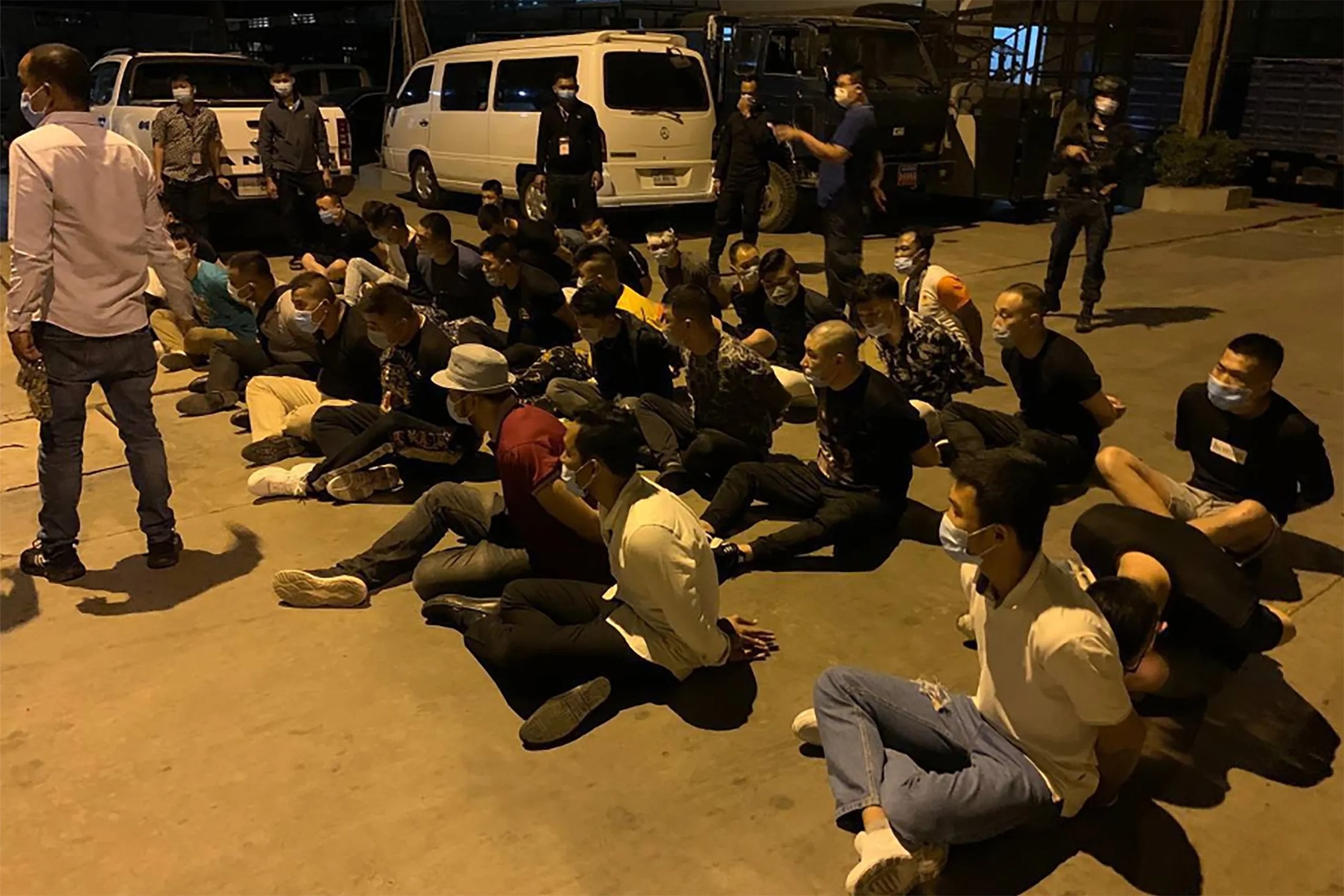 |
Prosecutors said Chen Zhi kept illustrations of Prince Group's "violent methods" to train his fraudsters (pictured above). Photo: Court records, U.S. Attorney's Office . |
According to the records, the illicit profits were used to finance large-scale cryptocurrency mining operations involving several companies such as Warp Data Technology (based in Laos) and Lubian (based in China).
“For a time, Lubian had the sixth largest Bitcoin mining operation in the world . Chen once said that the profits were enormous due to low costs, meaning that the operating capital of these businesses came from money defrauded from Prince Group victims,” the document states.
From November 2022 to March 2023, Warp Data received over $60 million from Hing Seng, a shell company used to facilitate payments, including to the CEO and his wife of Awesome Global, and to purchase luxury items worth millions of dollars, such as Rolex watches and Picasso paintings.
Chen and his accomplices also combined illicit gains with newly mined Bitcoin to conceal its origin. For example, Lubian's addresses received large sums of money from sources unrelated to mining operations, and the percentage of new Bitcoin in Lubian's wallets was only about 30%.
Sophisticated action
Most of the newly mined Bitcoin is transferred to a non-custodial wallet (held by Chen). This is also where funds unrelated to mining operations are received, originating from the Exchange-2 cryptocurrency exchange platform.
In the case, Exchange-2 was a centralized exchange used by Chen and his accomplices to transfer cryptocurrency. The money laundering activities involved transferring funds from Exchange-2, splitting them across multiple wallets, then consolidating and mixing them with newly mined Bitcoin.
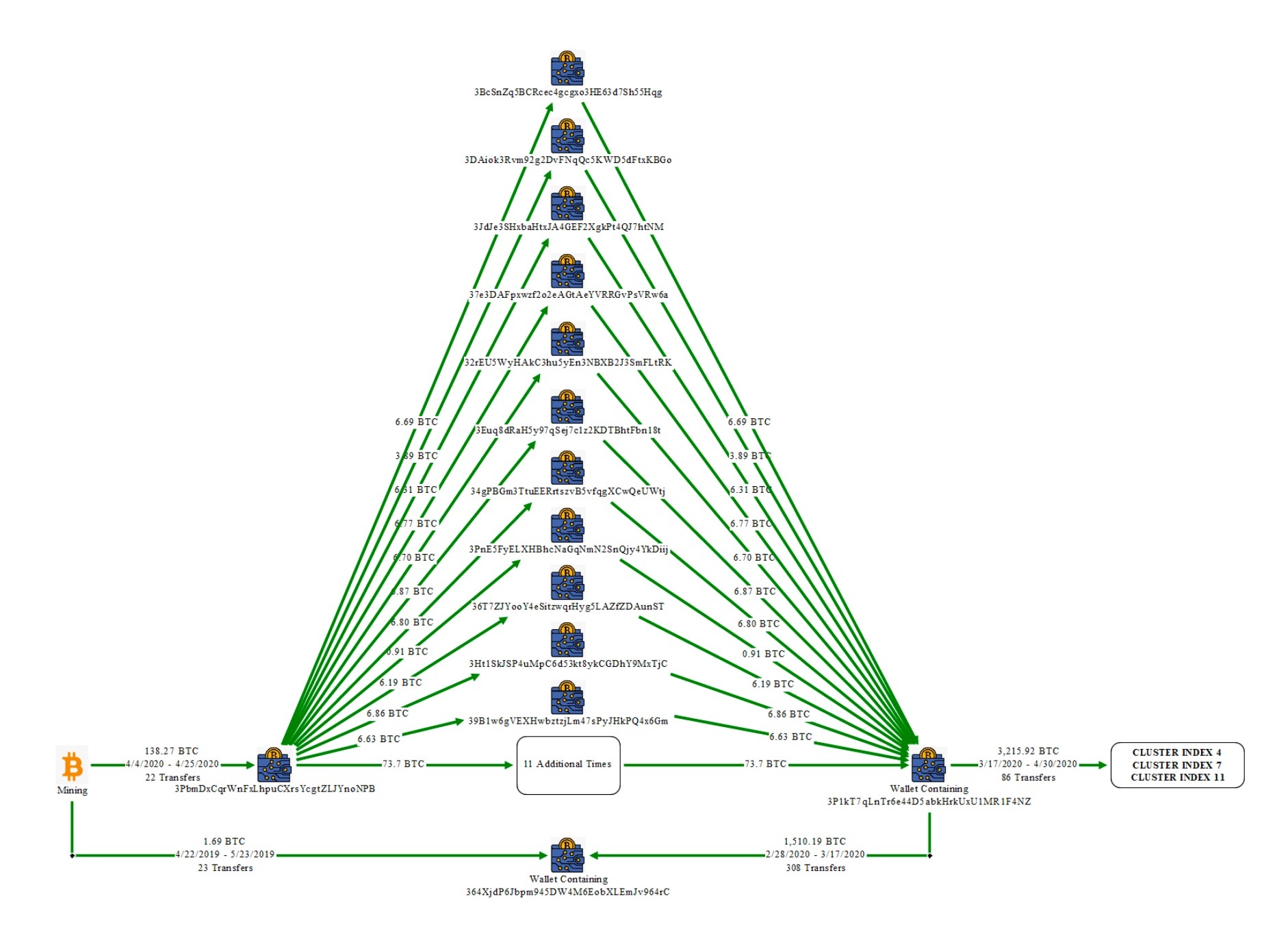 |
The diagram shows that funds from the bitcoin mining group were divided into 22 wallet addresses, consolidated into another address, and then transferred to Chen's personal wallets. Photo: US Department of Justice . |
Chen and his accomplices used multiple layers of money laundering techniques to conceal the source of their funds. Shell companies such as FTI, Amber Hill Ventures, and LBG were established, opening bank accounts in the US by deceptively presenting business activities and income sources.
The illicit funds were transferred through centralized exchanges, such as Exchange-1 and Exchange-2. Exchange-1, based in China, was described as "favored by foreign criminals" due to its lack of cooperation with the U.S. government and its ability to conceal transactions.
Based on the records, the cryptocurrency was split and dispersed across dozens, even hundreds, of wallets. These were then merged into a number of unhosted wallets held by Chen.
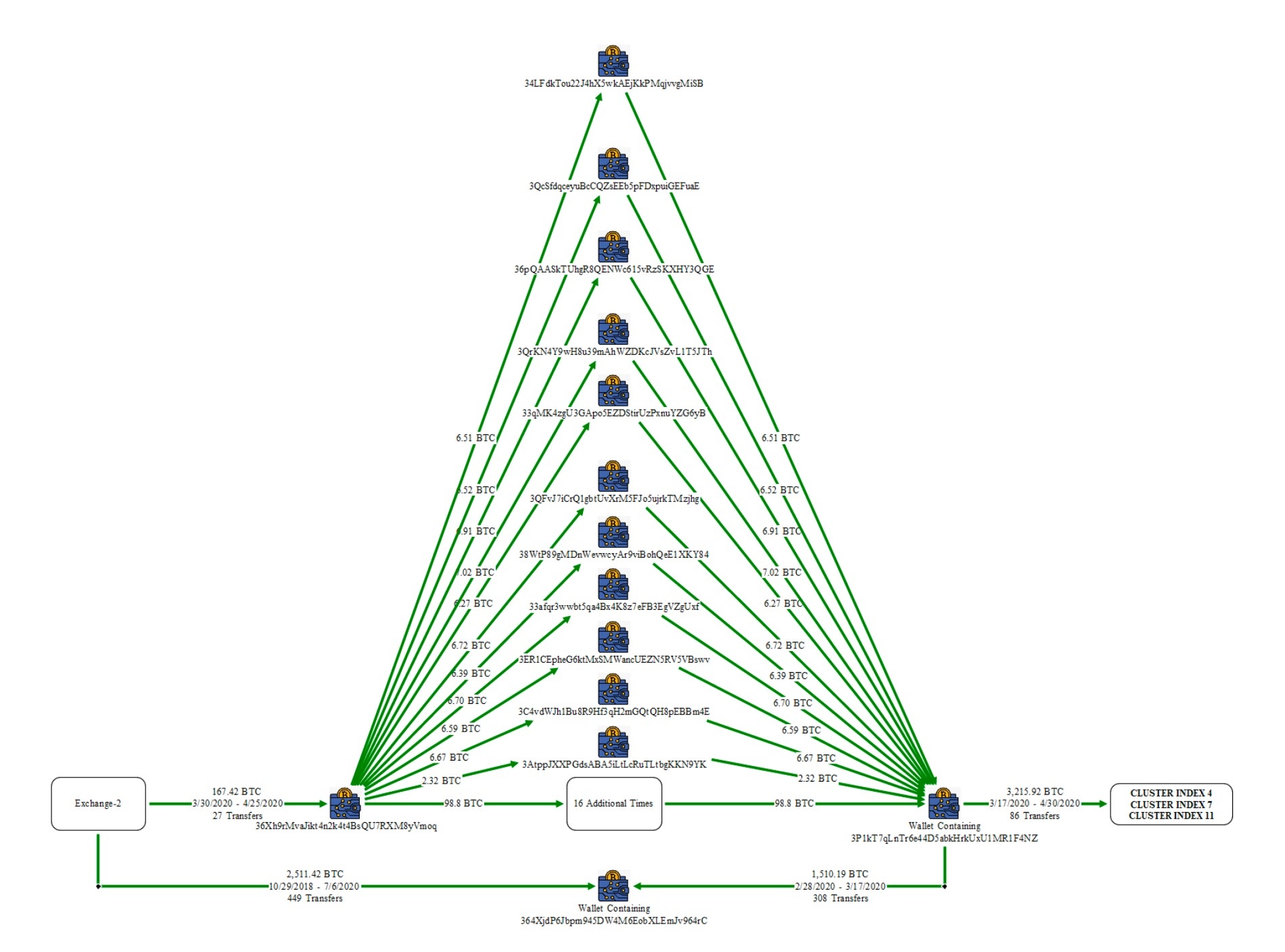 |
Money from the Exchange-2 platform was also divided among 27 wallet addresses, merged into other wallets, and then transferred to Chen's personal wallets. Photo: US Department of Justice . |
The FBI's diagram shows that money from a Bitcoin mining group was divided among 22 different wallet addresses, then consolidated into one address and transferred to Chen's wallet.
Similarly, funds from Exchange-2 were split into 27 addresses and then merged into another address, creating a complex transaction model.
Notably, the transactions were sent with nearly identical amounts and timings. This similarity suggests that the bitcoin from Exchange-2 (the scam) was intentionally transferred to mimic transactions from bitcoin mining funds, creating the illusion that the entire amount in the wallet originated from legitimate mining operations, concealing the remaining illicit funds.
How the FBI seized Bitcoin.
FBI officials emphasized that the seized funds were not on the exchange, but were stored in Chen's wallet.
To trace the funds, the agency identified the primary sources of money for Chen's 25 personal wallets. The main sources of funds were two: bitcoin mining operations (via Lubian and Warp Data), and indirect transfers from wallets on centralized exchanges to wallets controlled by shell companies.
FBI agents grouped 25 addresses into 13 clusters (Cluster Index-1 to Cluster Index-13) based on similar transaction times and values. The FBI modeled the process of splitting and consolidating funds as a network between custodial and non-custodial wallets. The agency confirmed this as "a clear indication of money laundering activity."
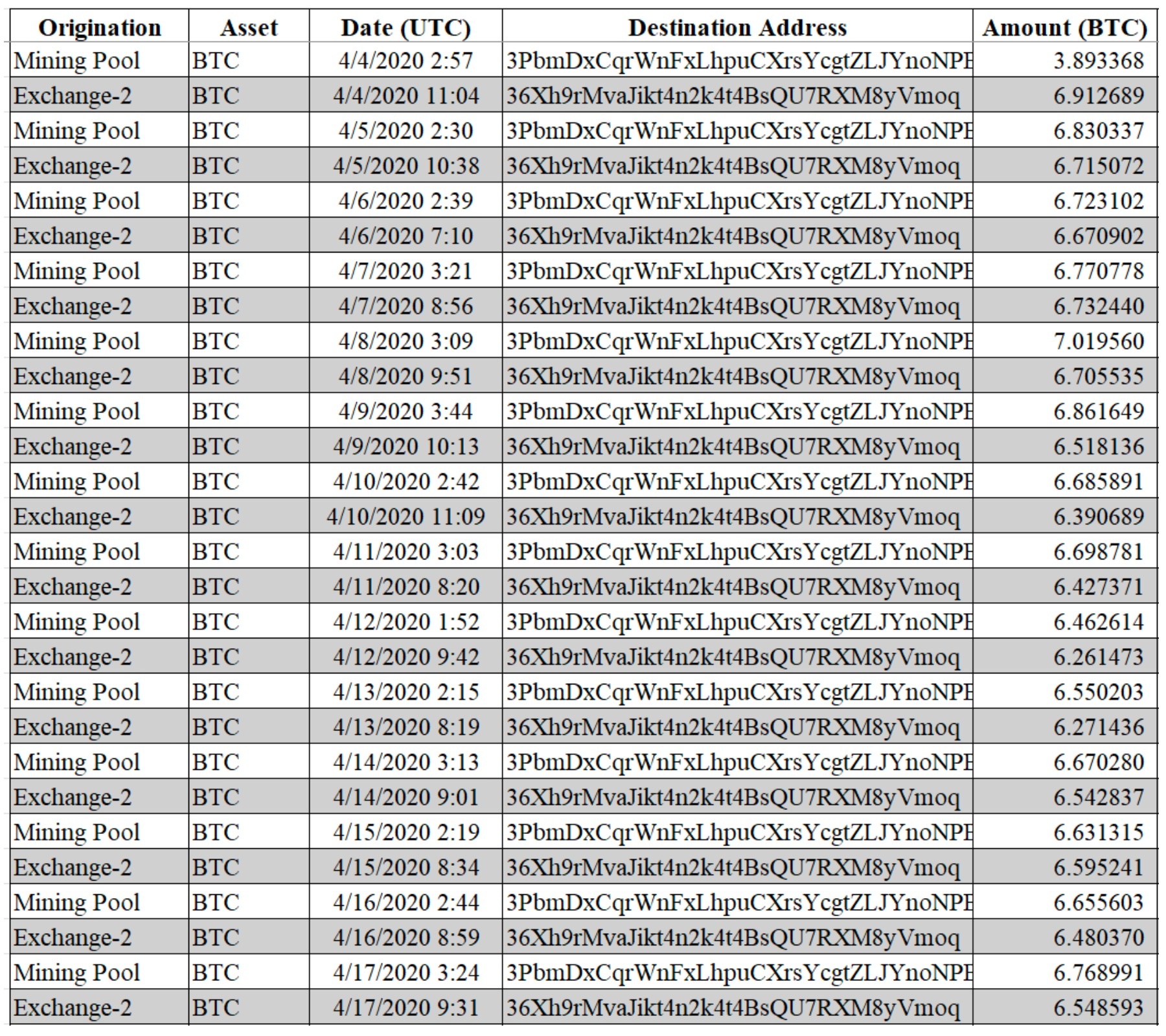 |
The timing and value of transactions receiving funds from bitcoin mining operations and Exchange-2. Image: U.S. Department of Justice . |
The FBI proved that half of the seized bitcoin (approximately 61,230 BTC) was transferred to Chen's personal wallet through three main transaction groups, including transactions involving coin splitting/consolidation techniques and mixing mined and illegally obtained funds.
Internal evidence also revealed money laundering activities by Chen and his accomplices, including documents explicitly mentioning "BTC washing".
According to the records, the seized bitcoin is no longer in Chen's 25 personal wallets, but is now stored in addresses controlled by the US government. Regarding the method of seizure, the documents state that Chen "personally stored the wallet addresses and seed phrases associated with the private keys of each wallet."
Although the method wasn't specified, during the investigation and search, the FBI could potentially physically seize storage devices such as computers, hard drives, or Chen's records containing his private key and seed phrase. With this data, the US government could transfer funds to secure locations.
Source: https://znews.vn/cach-my-thu-hoi-15-ty-usd-bitcoin-cua-tran-chi-post1594720.html
![[Photo] Prime Minister Pham Minh Chinh receives the Governor of Tochigi Province (Japan)](/_next/image?url=https%3A%2F%2Fvphoto.vietnam.vn%2Fthumb%2F1200x675%2Fvietnam%2Fresource%2FIMAGE%2F2025%2F12%2F16%2F1765892133176_dsc-8082-6425-jpg.webp&w=3840&q=75)
![[Image] Leaked images ahead of the 2025 Community Action Awards gala.](/_next/image?url=https%3A%2F%2Fvphoto.vietnam.vn%2Fthumb%2F1200x675%2Fvietnam%2Fresource%2FIMAGE%2F2025%2F12%2F16%2F1765882828720_ndo_br_thiet-ke-chua-co-ten-45-png.webp&w=3840&q=75)
![[Live] 2025 Community Action Awards Gala](/_next/image?url=https%3A%2F%2Fvphoto.vietnam.vn%2Fthumb%2F1200x675%2Fvietnam%2Fresource%2FIMAGE%2F2025%2F12%2F16%2F1765899631650_ndo_tr_z7334013144784-9f9fe10a6d63584c85aff40f2957c250-jpg.webp&w=3840&q=75)

![[Photo] Prime Minister Pham Minh Chinh receives Lao Minister of Education and Sports Thongsalith Mangnormek](/_next/image?url=https%3A%2F%2Fvphoto.vietnam.vn%2Fthumb%2F1200x675%2Fvietnam%2Fresource%2FIMAGE%2F2025%2F12%2F16%2F1765876834721_dsc-7519-jpg.webp&w=3840&q=75)




























































Comment (0)