

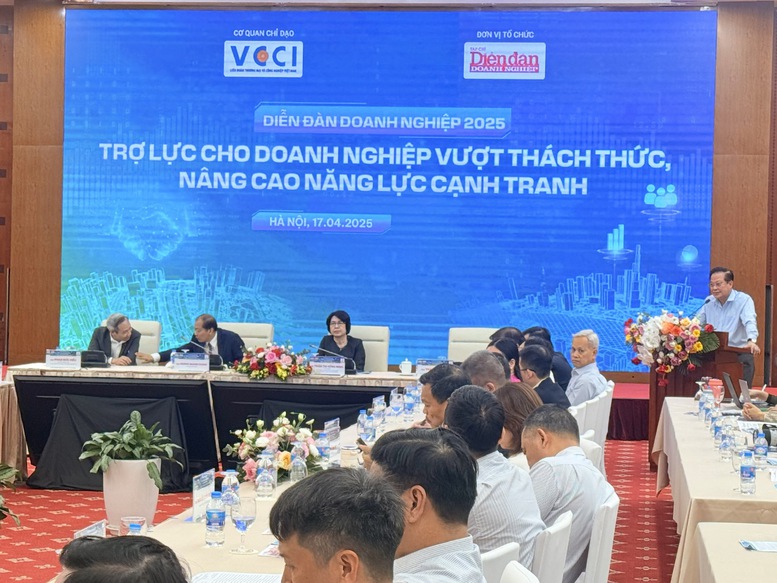
The 2025 Business Forum, themed "Supporting businesses to overcome challenges and enhance competitiveness" - Photo: VGP/HT
This was the content discussed at the 2025 Business Forum, themed "Supporting businesses to overcome challenges and enhance competitiveness," held on the afternoon of April 17th and organized by the Vietnam Federation of Commerce and Industry (VCCI).
Institutional reform – the first lever to boost business growth.
Speaking at the Forum, Mr. Hoang Quang Phong - Vice Chairman of VCCI emphasized: In the context of a rapidly changing world, from geopolitical conflicts to inflation risks and supply chain disruptions, the business community is under considerable pressure. Although Vietnam achieved a growth rate of 6.93% in the first quarter of 2025, and the number of businesses resuming operations increased significantly, only 32% of businesses indicated they would expand their operations in the next two years.
The Vice Chairman of VCCI believes that reforming economic institutions, improving the business environment, and promoting and supporting businesses will be key. Beyond simply increasing the ability of businesses to absorb capital, developing and enhancing the competitiveness of Vietnamese businesses, especially the private sector, to gradually master core technologies and integrate into global value chains is a crucial requirement for the future.
"In fact, over the past period, to support businesses in recovering and promoting growth, the Party, State, and Government have made many decisions to develop businesses, aiming to ensure the national growth target of 8% or more in 2025. However, in a volatile world, businesses also need more support from all levels of government," Mr. Hoang Quang Phong commented.
According to Mr. Phan Duc Hieu, Standing Member of the National Assembly's Economic Committee: Institutional reform should not only focus on reducing procedures but also on reducing compliance costs – a silent burden for businesses.
Large enterprises play a crucial role, acting as the core driving force behind the development of industries and the entire economy. Therefore, Mr. Hoang Quang Phong believes that, in addition to the goal of developing 2 million enterprises by 2030, the 13th Party Congress also affirmed the need to "encourage the formation and development of large, powerful private economic groups capable of regional and international competition." Resolution 41-NQ/TW also sets out the task of "developing a strong team of entrepreneurs commensurate with the goals and tasks of national development in the new era, building a national team of entrepreneurs."
"Currently, there are about 700 business associations and clubs nationwide, including about 100 associations with nationwide operations... Most operating businesses participate in one or more business associations, thereby creating an increasingly enhanced network of business linkages within these associations," said a VCCI leader.
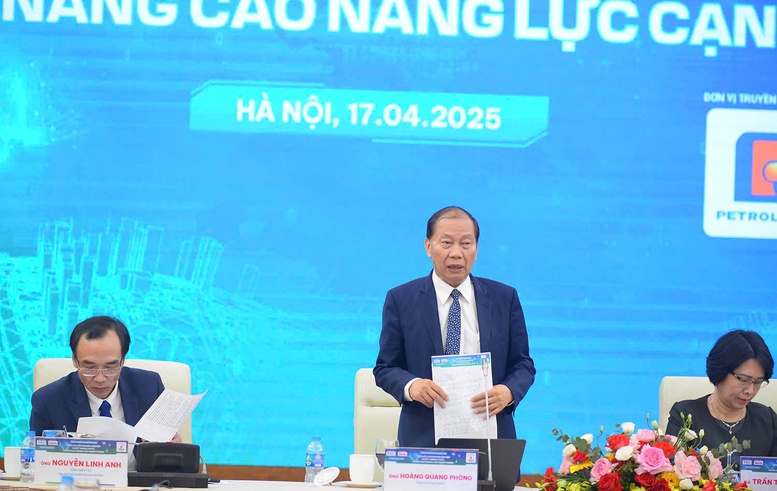
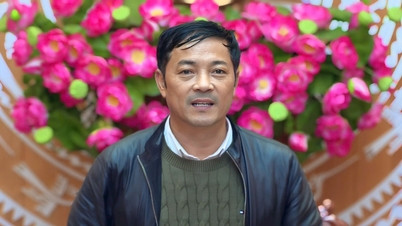
Mr. Hoang Quang Phong - Vice Chairman of VCCI, speaking at the Forum - Photo: VGP/HT
Mr. Phan Duc Hieu proposed the need to improve the quality of current regulations, enhance the effectiveness of law enforcement, and especially build a sustainable reform mechanism that is independent of individuals or single agencies.
From a business perspective, Mr. Nguyen Quoc Hiep, Chairman of the Vietnam Construction Contractors Association, stated that many current procedures still require 5-6 seals, causing businesses to waste time and money. Mr. Nguyen Quoc Hiep proposed reducing this to just one seal and improving the process of receiving feedback on lawmaking to increase transparency and practicality.
Strengthening internal governance capacity, supply chain linkages, and digital transformation.
Ms. Tran Thi Hong Minh, Director of the Central Institute for Policy and Strategy Research (CIEM), Central Policy and Strategy Committee, assessed that forms of linkage such as supply chains, capital contributions, strategic cooperation, etc., are increasing but are not yet uniform or systematic.
Currently, 97% of Vietnamese businesses have no export-related activities, and 99% do not participate in manufacturing for foreign countries. This is a situation that needs to change if Vietnam wants to integrate more deeply into the global value chain.
From the business perspective, Mr. Nguyen Duy Hung, representative of Tan Hiep Phat, stated that for Vietnamese businesses to compete effectively, in addition to technological innovation, they need to invest in national quality infrastructure and a system of standards that align with international standards. At the same time, large enterprises need to act as "leading birds" to guide the value chain and support smaller businesses.
Sharing the same view, Mr. Mac Quoc Anh – General Secretary of the Hanoi Association of Small and Medium Enterprises – suggested merging the Enterprise Law and the Law on Supporting Small and Medium Enterprises, while also reducing corporate income tax by 15% for reinvestment in green technology and digitalization, along with policies for hiring experts and providing free digital signatures and electronic invoices.
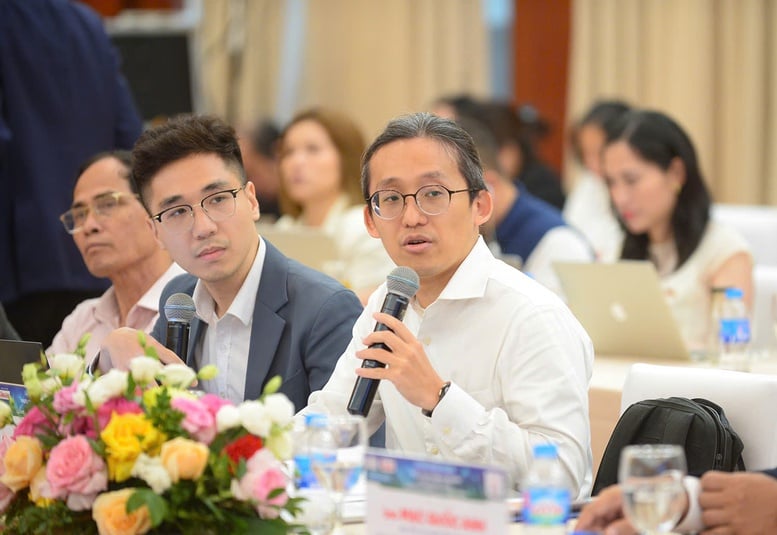
Andrew Yeh, CEO of Slasify, shares his international perspective - Photo: VGP/HT
From an international perspective, Andrew Yeh, CEO of Slasify, stated: Many Vietnamese companies, from dynamic tech startups to manufacturing and retail businesses, are looking towards international markets. However, global expansion presents challenges, particularly in global human resource (HR) management, including recruiting high-quality personnel, navigating cultural differences and compliance requirements, while controlling costs and maintaining flexibility…
"As businesses become more involved in different countries, these issues will multiply and become more complex," said Andrew Yeh.
Andrew Yeh suggested that Vietnamese businesses need to modernize their human resource management using technology. The Employer of Record (EOR) solution will help businesses expand globally more easily and flexibly, especially in managing cross-border human resources.
Emphasizing the role of integration, Mr. Trinh Minh Anh – Chief of the Office of the Inter-Ministerial Steering Committee on Economic Integration – stressed that FTAs have helped Vietnam rank among the top 20 countries with the largest trade volume in the world. However, the utilization rate of FTA benefits is only about 37%, due to a lack of information and difficulties in meeting technical, environmental, and labor standards.
To address this, Mr. Trinh Minh Anh recommended that businesses proactively learn, update, and make good use of the Ministry of Industry and Trade's FTA Information Portal. At the same time, they should link up supply chains within the bloc to increase the localization rate, reduce dependence, and enhance their ability to benefit from tax incentives.
Mr. Trinh Minh Anh recommended that businesses carefully study regulations on tariffs, rules of origin (C/O), technical standards, and non-tariff commitments (labor, environment, sustainable development) in each FTA (such as CPTPP, EVFTA, UKVFTA); attend seminars and courses organized by the Ministry of Industry and Trade, VCCI, or industry associations to grasp information and how to take advantage of preferential treatment; utilize the Ministry of Industry and Trade's FTA portal (ftaportal.moit.gov.vn) to look up tariff schedules, regulations, and FTA implementation guidelines; and stay updated on early warning information regarding trade defense cases from the Ministry of Industry and Trade…
In addition, it is necessary to optimize the rules of origin (C/O), ensuring that products meet the rules of origin to enjoy preferential tariffs, such as the localization rate or pure origin as stipulated in each FTA; linking with domestic or FTA regional suppliers to increase the proportion of domestically sourced materials and reduce dependence on imports from outside the region.
Enhancing competitiveness through improved product quality: Investing in technology, innovating designs, and meeting the technical and food safety standards of FTA markets (such as the EU's green standards); participating in industry associations; coordinating with associations to gather market information, resolve difficulties (such as transportation costs, technical barriers) and international disputes; responding to trade defense lawsuits…
In the supporting industries sector, Ms. Truong Thi Chi Binh – Vice President and General Secretary of the Vietnam Association of Supporting Industries (VASI) – stated: This sector is less affected by the US retaliatory tariffs, but needs government support to create a market for Vietnamese businesses at the beginning of the supply chain. At the same time, it is necessary to encourage startups to focus on skilled engineers to increase the number and capacity of supporting businesses.
Analyzing the potential of the tourism industry, Mr. Nguyen Trung Khanh – Director of the National Tourism Administration – stated that the industry aims to welcome 22-23 million international visitors in 2025. In addition to improving the institutional framework, the Ministry of Culture, Sports and Tourism (MOCST) will promote multi-channel tourism marketing, apply technology, manage destinations in a civilized manner, and build a safe, friendly, and smart tourism ecosystem.
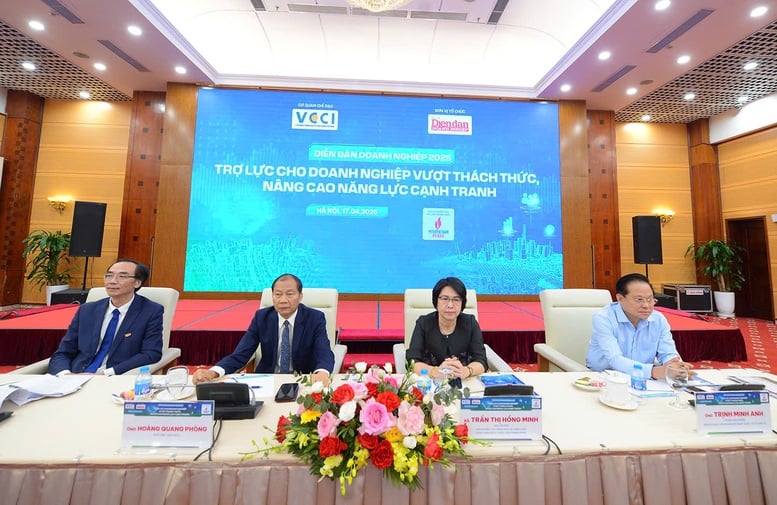
VCCI leaders affirmed that the recommendations at the Forum will be received, compiled, and reported to the Party and Government agencies - Photo: VGP/HT
In his concluding remarks, Mr. Hoang Quang Phong, Vice President of VCCI, affirmed that the recommendations made at the Forum would be considered, compiled, and reported to the Party, Government, and Prime Minister.
"It is crucial that solutions are implemented in policy and in practice to remove obstacles and support businesses in their growth and development," a VCCI representative said.
Mr. Minh
Source: https://baochinhphu.vn/cai-cach-the-che-tro-luc-de-doanh-nghiep-but-pha-102250417192230574.htm
![[Photo] Prime Minister Pham Minh Chinh receives the Governor of Tochigi Province (Japan)](/_next/image?url=https%3A%2F%2Fvphoto.vietnam.vn%2Fthumb%2F1200x675%2Fvietnam%2Fresource%2FIMAGE%2F2025%2F12%2F16%2F1765892133176_dsc-8082-6425-jpg.webp&w=3840&q=75)
![[Live] 2025 Community Action Awards Gala](/_next/image?url=https%3A%2F%2Fvphoto.vietnam.vn%2Fthumb%2F1200x675%2Fvietnam%2Fresource%2FIMAGE%2F2025%2F12%2F16%2F1765899631650_ndo_tr_z7334013144784-9f9fe10a6d63584c85aff40f2957c250-jpg.webp&w=3840&q=75)

![[Image] Leaked images ahead of the 2025 Community Action Awards gala.](/_next/image?url=https%3A%2F%2Fvphoto.vietnam.vn%2Fthumb%2F1200x675%2Fvietnam%2Fresource%2FIMAGE%2F2025%2F12%2F16%2F1765882828720_ndo_br_thiet-ke-chua-co-ten-45-png.webp&w=3840&q=75)

![[Photo] Prime Minister Pham Minh Chinh receives Lao Minister of Education and Sports Thongsalith Mangnormek](/_next/image?url=https%3A%2F%2Fvphoto.vietnam.vn%2Fthumb%2F1200x675%2Fvietnam%2Fresource%2FIMAGE%2F2025%2F12%2F16%2F1765876834721_dsc-7519-jpg.webp&w=3840&q=75)








































![[Photo] Prime Minister Pham Minh Chinh attends the Vietnam Economic Forum 2025](https://vphoto.vietnam.vn/thumb/402x226/vietnam/resource/IMAGE/2025/12/16/1765893035503_ndo_br_dsc-8043-jpg.webp)





















Comment (0)