

As the clock strikes midnight on the 30th, amidst the resounding temple bells and drums echoing from ancient ancestral halls, the people of Hue begin lighting incense sticks to offer to their ancestors, bidding farewell to the old year and welcoming the new. In that sacred space, alongside sticky rice cakes (bánh chưng and bánh tét), ginger jam, and steaming cups of sweet soup, these offerings silently appear on the New Year's Eve altar as a familiar and enduring flavor of Tet (Vietnamese New Year) passed down through generations.
For the people of Hue, sweet soup is more than just a dessert. It is intertwined with rituals, worship, and the deeply ingrained cultural rhythm of life. Sweet soup is offered to ancestors at the moment when heaven and earth harmonize, after which the whole family gathers to enjoy it, sharing stories of the past year and expressing wishes for a peaceful and prosperous new year.
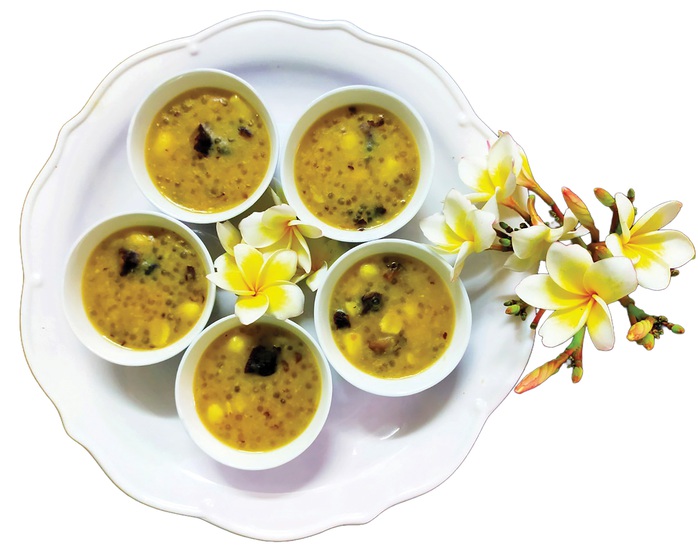
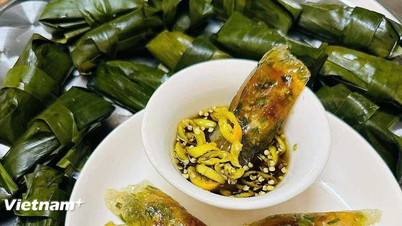
This dessert was prepared by culinary artist Mai Thi Tra. Photo provided by the subject.
Artisan and culinary expert Mai Thi Tra (92 years old) still preserves those old traditions. Every New Year's Eve, her offering tray always includes a bowl of yam sweet soup – a simple yet refined dessert, usually cooked in the spring when yams are at their best. According to Ms. Tra, yam sweet soup is not only for eating but also has the meaning of purifying the body, cooling down, and detoxifying, making it very suitable to start a new year.
To make a bowl of clear, non-bitter yam dessert, the yams must be left for a few days after harvesting to reduce the sap. When peeling and grating, absolutely no metal knives should be used; instead, a stone knife should be used, and the midrib of a banana leaf should be used to mash them finely. Yams are very sensitive to metal; even a slight mistake will cause the natural sweetness to be lost. These seemingly small details reflect the meticulousness and care given to the ingredients – a typical quality in Hue cuisine.
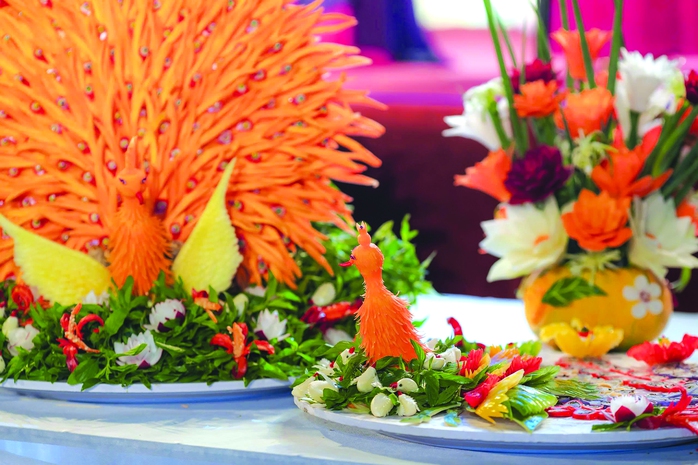
These exquisite and elaborate dishes are prepared by culinary artist Mai Thi Tra.
A perfect bowl of sweet potato dessert has the rich, creamy taste of tapioca starch, the delicate sweetness of rock sugar, and a hint of warm spiciness from ginger. It's best enjoyed warm, especially during the chilly Tet holiday, warming the body and evoking a sense of togetherness.
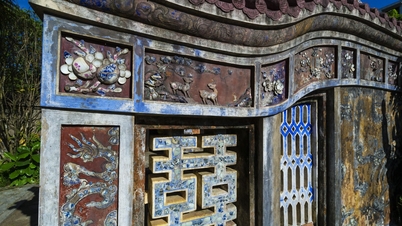
Hue's tea culture has developed alongside the history of the ancient capital. For centuries, as the political and cultural center of the Southern region, the capital of the Tay Son and Nguyen dynasties, Hue became a place where Vietnamese and Cham cultural values intersected and crystallized. Within this context, Hue's cuisine, especially its tea, possesses a unique character: refined, harmonious, and emphasizing both flavor and meaning.
Hue people value rituals and worship. Besides the Lunar New Year, sticky rice and sweet soup are indispensable offerings on the 15th day of the lunar month and on death anniversaries throughout the year. A folk rhyme goes: "Walking and murmuring / Today is the fourteenth, tomorrow is the full moon, sweet soup and sticky rice" to remind people to prepare offerings meticulously. According to artisan Mai Thi Tra, the reason sweet soup is so popular is because in the past, this region didn't have many fruits available year-round for offerings, so Hue women created simple yet meaningful sweet soups and sticky rice dishes.
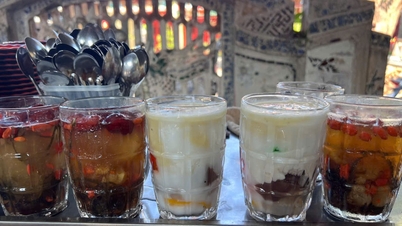
Depending on the season, the people of Hue prepare many different kinds of sweet soups: sweet soups made from vegetables, nuts, and flour, to those with medicinal properties. Almost any ingredient can be transformed into a sweet soup – some are luxurious and elegant, while others are simple yet refined and flavorful. Many sweet soups imported from other places, through the skillful hands of Hue women, acquire their own unique and unmistakable flavors.
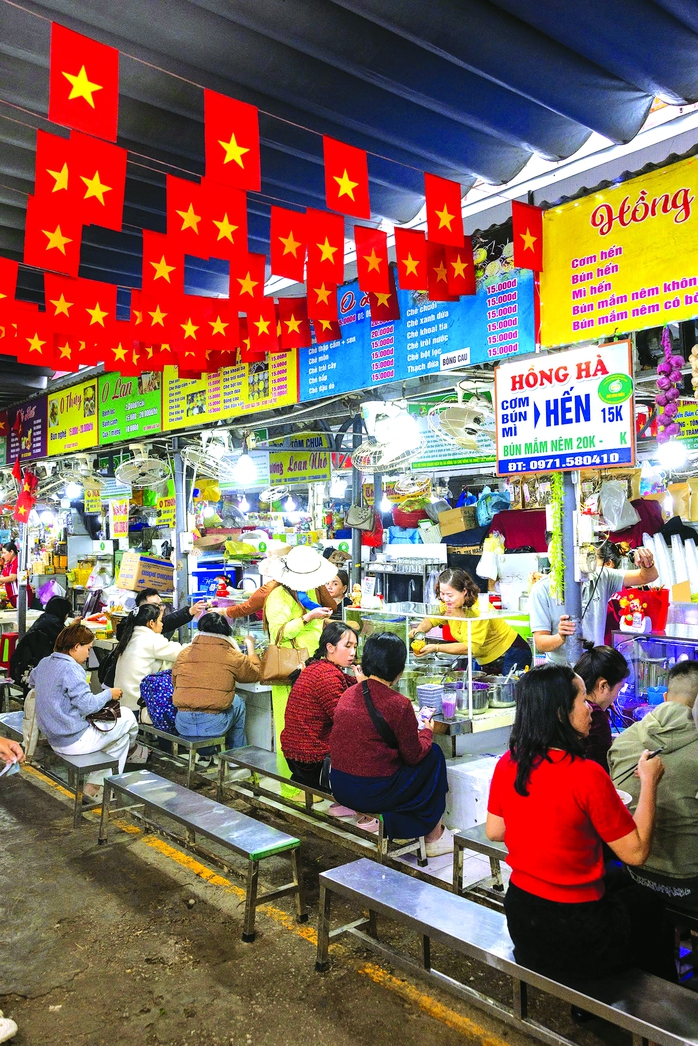
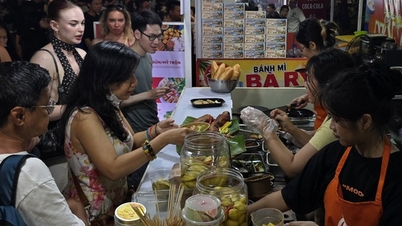
Tourists enjoy Hue cuisine at Dong Ba Market. Photo: Nguyen Phong
Not only present in folk cuisine, sweet soups also entered the royal court, becoming a familiar dessert in the royal banquets of the Nguyen dynasty. From common recipes, through the research of royal physicians, many sweet soups were elevated to the status of medicinal dishes, elaborately prepared to be offered to the king and royal family, or to be served to distinguished guests and envoys.
Of the more than 3,000 dishes nationwide, Hue accounts for over half, with approximately 1,700 dishes including royal, folk, and vegetarian cuisine. Hue's cuisine is not only outstanding in quantity and quality, but also encompasses the art of preparation, the setting and presentation, and the social and ceremonial nature of dining. This contributes to Hue's unique culinary brand. These are also the advantages Hue is using to build its application for the UNESCO Creative Cities Network. Notably, at the end of 2025, Taste Atlas ranked Hue 36th among the 100 cities with the best food in the world.
According to culinary artist Ton Nu Thi Ha, Hue is a land where culinary excellence "converges" and "spreads." Many factors contribute to the unique characteristics and value of Hue cuisine. Amidst modern life, the Tet (Lunar New Year) offerings of Hue people may be simplified in many ways, but the bowl of sweet soup (che) is still preserved. Because more than just a dish, Hue sweet soup is the flavor of memories, of togetherness, a thread connecting the past with the present during the most sacred moment of the new year.
Source: https://nld.com.vn/che-hue-hon-ca-mot-mon-an-196260211154724378.htm
![[Photo] National Assembly Chairman Tran Thanh Man working with the Standing Committee of the Law and Justice Committee](https://vphoto.vietnam.vn/thumb/1200x675/vietnam/resource/IMAGE/2026/05/21/1779378929214_ndo_br_1-4610-jpg.webp)



![[Photo] General Secretary and President To Lam presides over a working session with the Central Policy and Strategy Committee on the development of the materials industry.](https://vphoto.vietnam.vn/thumb/1200x675/vietnam/resource/IMAGE/2026/05/21/1779359935432_a3-bnd-3129-1412-jpg.webp)


























































Comment (0)