

SGGP
The Thai government is implementing various measures to encourage the development of the electric vehicle industry and promote the use of electric vehicles among the population.
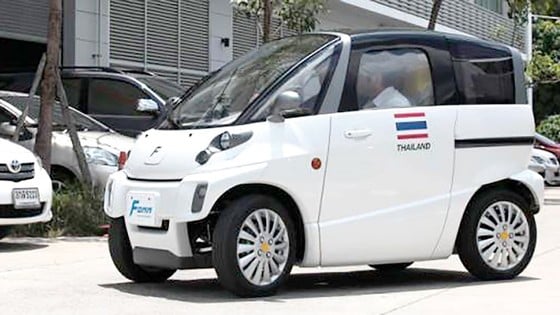 |
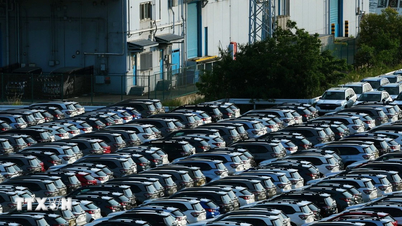
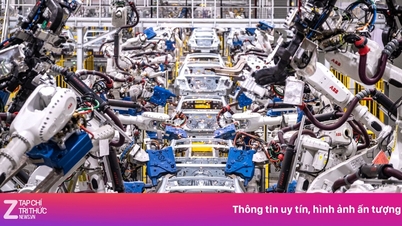
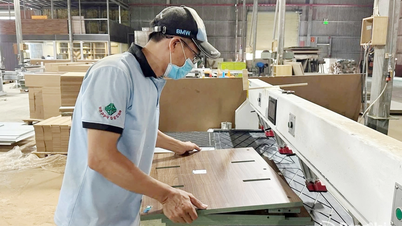
| Illustrative image |
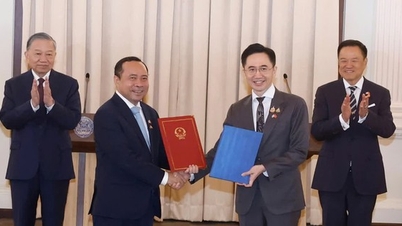
Five government agencies, along with the private sector in Thailand, signed a memorandum of understanding on July 6-7 to help the country's automotive parts suppliers prepare for the global transition to electric vehicle production and use.
The memorandum of understanding focuses on collaboration among five agencies to help startups and small and medium-sized enterprises (SMEs) develop new products for the electric vehicle manufacturing industry, with the expectation of helping Thai businesses increase their sustainable competitiveness. These agencies include the Thailand Science and Technology Research and Innovation Agency (TSRI), the Programme for Competitiveness Management Unit (PMUC), the National Innovation Agency (NIA), the Automotive Institute of Thailand, and the Electric Vehicle Association of Thailand (EVAT).
Mr. Pongpan Kaewtatip, Vice President of TSRI, affirmed that Thailand has great potential to transform from a global manufacturing base for internal combustion engine vehicles into a hub for electric vehicle production thanks to its robust automotive parts supply chain.
Meanwhile, Nattapol Rangsitpol, Permanent Secretary of the Thai Ministry of Industry, in his capacity as a member of the Board of Directors and Secretary of EVAT, stated that Thailand has a good opportunity to maintain its position as a global automotive manufacturing base due to its geographical location and numerous free trade agreements with other countries ensuring easy access to foreign markets.
Mr. Nattapol further noted that Thailand's automotive industry has an extensive supply chain, with numerous supporting industries and a skilled workforce.
However, Mr. Nattapol pointed out the increasing pressure from both domestic and international sources, stemming from higher production costs and changes in automotive technology for next-generation vehicles, such as electric vehicles or connected and autonomous vehicles. These challenges necessitate the Thai automotive industry's transformation for the future through research and innovation, as well as enhanced collaboration between businesses and researchers.
Source


![[Photo] The heat at the fireworks display site on the opening night of the Da Nang International Fireworks Festival 2026](https://vphoto.vietnam.vn/thumb/1200x675/vietnam/resource/IMAGE/2026/05/27/1779889741485_ndo_br_z7872039145157-fecaba5112f39e8352544099d7ef4738-5140-jpg.webp)
![[Photo] Life on both banks of the river returns to its bustling pace on the day the Long Bien Bridge opens to traffic.](https://vphoto.vietnam.vn/thumb/1200x675/vietnam/resource/IMAGE/2026/05/28/1779949763708_cau-long-bien-minh-duy-7-3610-jpg.webp)
![[Image] Checking the security conditions at the exam site, ready for the 10th grade exam.](https://vphoto.vietnam.vn/thumb/1200x675/vietnam/resource/IMAGE/2026/05/28/1779943458889_z7872507660648-d764421a26e8cd7b61d70d142a48a685-jpg.webp)














![[Podcast] World News May 28: US Rejects Transferring Iranian Uranium to Russia or China](https://vphoto.vietnam.vn/thumb/402x226/vietnam/resource/IMAGE/2026/05/28/1779954275220_anh-thumb-podcast-1.png)








































































Comment (0)