

Vietnamese passion fruit exported to the Australian market.
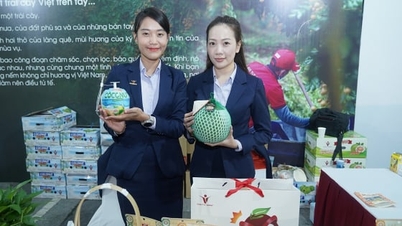
On October 19th, Blue Ocean Import-Export Trading Joint Stock Company (Blue Ocean JSC), located in Lam Ha district, Lam Dong province, officially exported a shipment of passion fruit to the Australian market. This is the first Vietnamese enterprise to export passion fruit to this market.
With over 1.5 tons of passion fruit exported to Australia, Blue Ocean JSC marks its status as the first Vietnamese company to export passion fruit to this market, following negotiations to open the market. Passion fruit has become the fifth fruit officially exported to Australia, after mangoes, longan, lychees, and dragon fruit.
 |
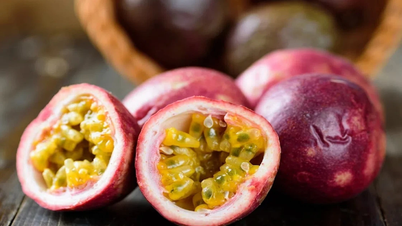
| Passion fruit has officially been licensed for the Australian market (Photo: TL) |
To export fresh passion fruit to Australia, it is necessary to establish a growing area, obtain a growing area code, and a packaging facility code approved by the Plant Protection Department – Ministry of Agriculture and Rural Development , and subject to inspection and supervision by the partner. Simultaneously, the production process must adhere to established procedures and standards, complying with biosecurity requirements.
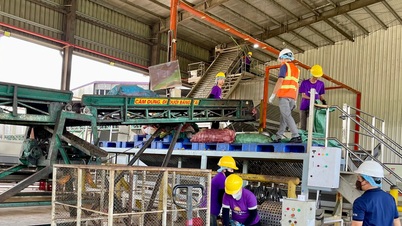
In particular, to ensure a smooth and profitable export of dragon fruit to Australia, Ocean Group has inaugurated a frozen fruit processing plant in Lam Ha district.
With a total area of 10,000 m² and an advanced technology system, the factory is capable of producing and supplying over 5,000 tons of products to the market annually. The products are processed from advantageous agricultural products of Lam Dong province, neighboring Central Highlands provinces, and the Mekong Delta region, such as durian, passion fruit, rambutan, mango, and dragon fruit. All products are processed through a quick-freezing process and packaged immediately after harvest, helping to preserve their flavor, freshness, and natural nutritional value.
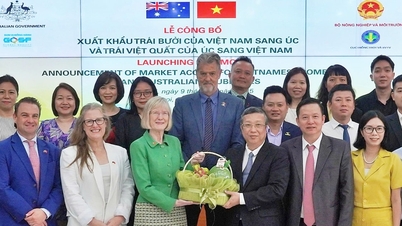
Previously, on September 9th, the Plant Protection Department (Ministry of Agriculture and Rural Development) and the Australian Embassy held a ceremony to announce the export of Vietnamese passion fruit to Australia and Australian plums to Vietnam. This is considered a new milestone in the cooperation between the two countries, especially in the agricultural sector. After mangoes, longan, lychees, and dragon fruit, passion fruit has become the fifth fresh fruit from Vietnam to be officially exported to Australia.
Opening up opportunities for Vietnamese fruits.
Thus, seven years after dragon fruit was officially allowed into the Australian market, another fresh fruit from Vietnam has finally been granted official permission to enter this market.
Vietnam has potential and advantages in tropical fruits. Currently, Vietnamese fruits are exported to more than 60 countries and territories. Passion fruit alone is exported to 20 countries, in various forms such as fresh fruit, frozen fruit, and juice.
The area planted with passion fruit is over 12,000 hectares and is trending upwards, mainly concentrated in the northern mountainous region. Currently, passion fruit is also attracting attention from many provinces in the Central Highlands, with expansion of cultivation area.
In recent years, Vietnam has focused on improving quality, producing passion fruit in a value chain, and ensuring traceability; with a focus on two varieties: yellow passion fruit and purple passion fruit.
Meanwhile, with the large Vietnamese community in Australia, the demand for Vietnamese products (fruits, spices, etc.) among Australians is also growing. Furthermore, there is no overlap in agricultural products between the two countries, unlike with neighboring countries (for example, Vietnamese fruits are tropical, while Australian fruits are temperate). In addition, Vietnam and Australia are both members of numerous bilateral and multilateral FTAs. These are favorable conditions for Vietnam to boost agricultural exports to Australia.
Australia is considered one of the most demanding markets in the world, with high product quality standards and strict import procedures. Technical barriers, labeling requirements, and food safety and hygiene standards are very stringent, with some standards even higher than those in the United States and the EU. Australia also requires many import regulations such as: tax policies and rates; packaging and labeling regulations; food safety and hygiene regulations, quarantine; intellectual property rights; trademarks; business practices, etc. It is also a market with abundant and diverse domestic agriculture. Therefore, according to the Vietnamese Trade Office in Australia, if Vietnamese export businesses want to penetrate the Australian market, they need to prioritize product quality over price. In addition, Australian consumers also pay close attention to packaging, design, and branding.
The negotiation process to export a type of fruit to Australia is often difficult and can take 5-10 years. For example, it took 12 years for lychees and over 7 years for mangoes. To date, Vietnam has officially been granted permission to export five types of fresh fruit to Australia: mangoes, longan, lychees, and dragon fruit.
Getting Vietnamese fruit into the Australian market is difficult enough, but establishing and positioning a Vietnamese fruit brand in this largest market in Oceania is even more challenging.
The Vietnam Trade Office in Australia stated that it has continuously implemented promotional activities, most notably a youth-oriented promotional program, product trials, and ongoing social media promotion activities.
The Vietnam Trade Office in Australia predicts that the volume of Vietnamese fruit entering the "land of kangaroos" will grow strongly in the near future. In fact, ensuring quality and improving packaging and design are ways for Vietnamese fruit to build a sustainable brand in an agricultural powerhouse like Australia.
Therefore, a sustainable link between farmers and businesses is necessary to create sustainable, safe, and hygienic food products that meet the technical barriers of the Australian market. Entering and establishing a foothold and reputation in Australia – one of the world's most demanding markets – demonstrates the quality of Vietnamese fruit. This is also considered a passport to help Vietnamese fruit easily enter other demanding markets and a great opportunity to diversify markets and enhance the value of Vietnamese fruit.

![[Image] Leaked images ahead of the 2025 Community Action Awards gala.](/_next/image?url=https%3A%2F%2Fvphoto.vietnam.vn%2Fthumb%2F1200x675%2Fvietnam%2Fresource%2FIMAGE%2F2025%2F12%2F16%2F1765882828720_ndo_br_thiet-ke-chua-co-ten-45-png.webp&w=3840&q=75)
![[Live] 2025 Community Action Awards Gala](/_next/image?url=https%3A%2F%2Fvphoto.vietnam.vn%2Fthumb%2F1200x675%2Fvietnam%2Fresource%2FIMAGE%2F2025%2F12%2F16%2F1765899631650_ndo_tr_z7334013144784-9f9fe10a6d63584c85aff40f2957c250-jpg.webp&w=3840&q=75)
![[Photo] Prime Minister Pham Minh Chinh receives the Governor of Tochigi Province (Japan)](/_next/image?url=https%3A%2F%2Fvphoto.vietnam.vn%2Fthumb%2F1200x675%2Fvietnam%2Fresource%2FIMAGE%2F2025%2F12%2F16%2F1765892133176_dsc-8082-6425-jpg.webp&w=3840&q=75)
![[Photo] Prime Minister Pham Minh Chinh receives Lao Minister of Education and Sports Thongsalith Mangnormek](/_next/image?url=https%3A%2F%2Fvphoto.vietnam.vn%2Fthumb%2F1200x675%2Fvietnam%2Fresource%2FIMAGE%2F2025%2F12%2F16%2F1765876834721_dsc-7519-jpg.webp&w=3840&q=75)
![[Image] The tenacious fighting spirit of Vietnamese women's football](/_next/image?url=https%3A%2F%2Fvphoto.vietnam.vn%2Fthumb%2F1200x675%2Fvietnam%2Fresource%2FIMAGE%2F2025%2F12%2F17%2F1765990260956_ndo_br_4224760955870434771-copy-jpg.webp&w=3840&q=75)
















































![[Live] Closing Ceremony and Award Presentation for the "Impressive Vietnam Tourism" Video/Clip Creation Contest 2025](https://vphoto.vietnam.vn/thumb/402x226/vietnam/resource/IMAGE/2025/12/17/1765974650260_z7273498850699-00d2fd6b0972cb39494cfa2559bf85ac-1765959338756946072104-627-0-1338-1138-crop-1765959347256801551121.jpeg)


















Comment (0)