

On the withered grass, Thoa's shadow stretched long. Her hands fumbled, alternately clenching her own fists and feeling her pockets. It was as if she had nowhere left to cling to, like a vine withered by its trellis being uprooted.
For a fleeting moment, Thoa wanted to take a picture. She wanted to tell Uncle An about the golden fields. They were so beautiful, a brilliant golden carpet. Uncle An would surely love it, because he was so captivated by this place. But who would reply if she sent it now? That thought flashed through her mind, tearing a gaping hole in her heart.
"I won't withdraw my investment. But you have to understand that the factory has been closed for too long. If we've decided not to continue, we have to shut it down and start something else…"
Mân stopped the car right next to Thoa and asked about her plans. Mân wasn't a factory worker, she wasn't in business, she only liked investing. What Mân knew was that the cash flow was dwindling after the factory temporarily closed. What else? For example, Uncle An's dedication? For example, Thoa's pain? Suddenly, Thoa desperately wanted to go back to her mother. Her mother had called her yesterday, saying that if she was sad, she should come and stay with her. It was very close from the city to where her mother lived. Yet Thoa still insisted on going back to the island first. Clearly, Thoa hated this place terribly. It was far away, deserted. Life was monotonous and depressing. The people on the island only knew how to grow rice and pomelos, relying year-round on the land that was often unpredictable with rain and sunshine. Thoa had lived 20 years of hardship and weariness, just to escape. Going would bring happiness. Lam had told Thoa that. They would go abroad. Then they would be happy together.
Throughout their intoxicating youth, Lam had promised her more than one thing. Love makes people naive and gullible. The two of them, sharing a rented room in the city, spent almost their entire youth together. But when it came time to go abroad, Lam held someone else's hand. And Thoa was left behind like a bundle of old things with nowhere to throw them away.
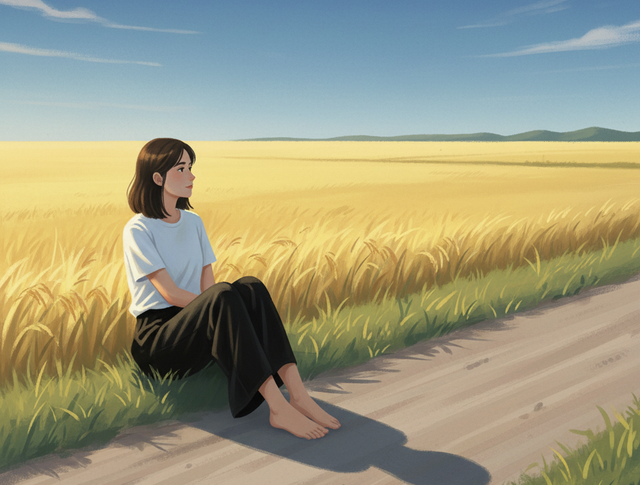
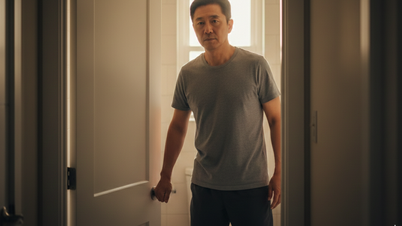
ILLUSTRATION: AI
Now, after all the detours, Thoa wants to sit before the village's gold coins. Only the gold coins remain unchanged. Neighbors change, the village changes. A new bridge spans the river, asphalt roads rumble with trucks carrying goods, raw materials to the incense factory, handicrafts, and local specialties to the city. The grapefruit orchards are transformed into ecological gardens. The entire mound of land in the middle of the river has become a promising community tourism complex.
Every time Thoa returned, she would often hear exclamations of admiration and the clicking of cameras from tourists, startling the birds in the orchard. "People in our country are so skillful! You have to do it to see how hardworking and capable everyone is!" Her husband led Thoa through the workshop, guiding her through the arduous journey of starting their business – now all the incense sticks she made are neatly displayed in glass cabinets showcasing the samples. Many villagers had followed her husband from the beginning. Everyone who saw Thoa holding her husband's hand smiled. They were so joyful and hospitable that it felt as if Thoa had taken the wrong path. She had run away from the wrong place and now returned to the wrong one.
Perhaps Thoa still preferred life in the spacious apartment near the main store in the city. Her husband would drive back and forth to the branch every week, and Thoa could simply stay home and be a housewife. Life there was easygoing for everyone. No one knew about the affair between Thoa, her husband, and Lam. Even fewer knew that Thoa's husband and Lam were close friends in the small village on the island.
No one knew that her husband had extended his arms to Thoa, with a compassion almost like that of a god descended from heaven. Thoa told herself that she would be grateful to anyone who sheltered her in that moment. Regardless. What could one find after being abandoned and past the age of marriage?
"Why don't you just sell the whole workshop to me? You've never had a hand in it before anyway. Sell it to me, and I'll build a hotel and a showroom. People like that kind of thing these days."
Finally, Mân got to the point. Mân had set his sights on Thoa's workshop for a long time. It was right on the main road, and had a long-standing reputation as a large workshop. The rooms and decorations were almost ready; all that was needed was a little renovation, and it would be beautiful and ready to open immediately. But after waiting for so long, with the wind blowing more steadily than the ticking of a clock, Thoa still didn't reply.
"Just let me see first..."
"You don't know anything about wholesale, do you? Traditional incense is outdated now. Only your husband is being stubborn. Honestly, selling it at that high price, nobody who isn't a regular customer would buy it..."
He angrily walked towards the red Dream motorbike and started the engine. The engine hummed smoothly like a series of musical notes. Thoa watched him, his face blurred even before he was out of sight. Thoa wondered what was different between him and her husband, why she wouldn't hand over the workshop to him, like her mother used to do with her husband.
Thoa remembered her husband, whose scent of cinnamon incense filled the air, as if he carried the smoke of the countryside on his shoulders. He didn't smile often; he was serious and straightforward. People valued him because he genuinely loved his homeland and his craft. As tradition is meant to be preserved, and work must be done with sincerity and dedication. Without Thoa, he probably would have spent his entire life carrying incense sticks from north to south. He had long considered Mân's ideas. To keep the traditional craft village alive, they needed to promote it and develop tourism. Tourism required more than just a workshop; it needed to provide accommodation, food, and attractions so that visitors wouldn't immediately forget the craft village. But before introducing the craft village, there needed to be a village with a craft. Only when people could make a comfortable living from incense making could they truly thrive. Taking visitors to see a craft village where only a few elderly people were left, too weak to work, filled him with sadness and shame.
Who wouldn't trust someone so cautious and meticulous?
But when he told Thoa he loved her, she thought she'd misheard. She looked towards Lam, who was stirring his coffee, his eyes glued to the football match on the TV screen hanging from the ceiling of the cafe, and shook her head, saying, "Uncle An is always joking..." Then she heard her mother say that the man, who was so young but almost a decade older than her, had been selling incense in the North for several years.
Thoa's maternal hometown is a century-old incense-making village. When her mother married into a family on the island, she brought the scent of cinnamon and bamboo with her. Every day, her mother would dry incense sticks all over the yard, each rack a vibrant red like a mat. Thoa's family made their incense using a machine, producing a large quantity, and thus had many customers. Only Uncle An remained a customer from before the machine was available. Back then, there was no bridge, so every week Uncle An would take the ferry across the river to pick up goods, filling his truck regardless of the weather. Uncle An said Thoa's incense was beautifully made, not carelessly crafted, so it smelled fragrant and burned evenly. Thoa pouted, thinking, "What kind of person is he, so clumsy at flattery?"
Even after Thoa married him, she would occasionally ask about how he had secretly bought up all the incense sticks from her house during the rainy seasons when they never dried. Seeing her husband smile but never boast, Thoa felt a pang of sadness. Why were people so willing to suffer losses for each other? Her mother hadn't suffered any losses. When her mother saw her husband buying them, she sold them off quickly; seeing that he liked them, Thoa was happy too. No one mentioned the past; the wedding was grand, and naturally, people forgot about Thoa's past success. Later, her mother handed over the entire factory to her husband and retired to the town. There, she had all the amenities; her aunts would escort her when she went out. Thoa envied her husband's generosity, and felt small and inadequate. Yet, her husband loved her? How could she possibly deserve such love? Thoa held her husband's arm, only loosely, not daring to hold on tightly.
Thoa asked Uncle An if he had ever seen people making incense sticks by hand. When she was little, in her maternal grandparents' village, Thoa had seen people making incense sticks by hand, splitting bamboo from the upstream of the Dong Nai River. From a piece of bamboo, they would smooth it into a tiny, round incense stick, then dye it red, then knead it into powder, and dry it. It was so elaborate that even holding it felt precious. When lit, there was no need for prayers; the incense stick itself carried the sincerity of her heart. Thoa's past love had also been built with such meticulous care. "For four or five years, I revolved around only one person. I thought I would be like that for the rest of my life. But in the end…"
Uncle An clearly knew Thoa wasn't ready to love again. But Thoa's mother was in a hurry, fearing that if she missed this opportunity, Thoa would be alone for the rest of her life.
So when he first returned, he took Thoa on trips everywhere. He still visited the island, but never mentioned Thoa's hometown. His love was there, but Thoa's apprehension was also there. Lam's mother still went to the market early in the morning, passing through the fields. Thoa's cousins had been friends with Lam since childhood. Her husband understood what Thoa wanted, what saddened her, but he never touched upon those private feelings. Sometimes he surprised Thoa because his love was so precious, she held it in her hands and felt nothing but fear.
Because sometimes Thoa still doesn't know if she's ever loved him. If she has, at what point? If not, why does she feel so empty now that he's gone?
Apparently, it was a peaceful day. Apparently, there was no sign of anything unusual. On Saturday, upon returning home, he suddenly clutched his chest and collapsed. That morning, he drove past the shop, kissing Thoa goodbye before leaving. He stroked Thoa's long hair, gently caressing her earlobe to whisper a promise: "Tomorrow, Sunday, I'll take you to Vung Tau!"
He left behind only promises of a legacy and countless unfinished tasks. Thoa, distraught, arranged the funeral and personally carried her husband's ashes to the temple. Meanwhile, the incense factory, without him, seemed to have lost its soul, as if it could no longer survive. Several of her husband's business friends, like Man, had advised Thoa to sell the factory. During his lifetime, he wouldn't let Thoa get involved in the hard work of trading, and now that he was gone, the workers were also unsettled. Several young people were already starting to look for other jobs.
"If you want to sell it, go ahead. I'm old now, I can't help you anymore!"
This afternoon, after listening to her mother-in-law, Thoa returned to the island. Crossing the golden fields, past the jumbled memories, and past the century-old temple gate sheltering her husband's peaceful spirit, Thoa stood alone, gazing at the incense sticks piled high in the incense burner before her husband's portrait. They were neatly arranged, still vividly red as if freshly dyed. They seemed to still hold the dampness of last year's rainy season; the storm, like a sudden, violent gust of wind, had eroded part of the temple's foundation. The corrugated iron roof of the factory had been dragged along by the wind, and water had seeped into the warehouse up to ankle-deep. For half a month, her husband had been running back and forth, not afraid of bankruptcy, only afraid of not having enough money to pay the workers' salaries. When the rain stopped, he asked his colleagues to come and clean up the factory; she felt embarrassed, but when she told her husband, more than twenty people laughed and rushed over immediately. Her husband told Thoa this with a smile in his eyes.
Sometimes Thoa wonders, are people like incense sticks, that after burning, everything turns to ashes? But something still remains. If Thoa were to burn herself, what would remain? What would Uncle An have left?
Thoa lit the incense stick, the warmth close to her fingers, the smoke rising carrying a scent that still lingered in her memory—the scent of trees, wood, bamboo, and the countryside. The scent of each night, her husband bowing before the ancestral altar. The scent of joyful and warm Tet holidays. The scent of her wedding day, hands clasped, eyes closed, yet knowing her husband stood beside her, strong and steadfast. The scent of beautiful memories brought Thoa peace of mind. Now, if she quits the craft, will anyone else be able to create that scent? Will Mân be able to produce the scent of tenderness, meticulousness, and affection? With the workshop gone, will the artisans continue the trade? And who will take the incense from the island to distant lands?
"I'm not selling the factory. I'm not going back to the city either; I'm going to get the factory running again like it was before." Thoa hung up the phone, a wisp of smoke still lingering in her breath as she walked into the evening.
That day, Thoa lit the incense and left. The next morning, when the abbot was cleaning, he realized that all the incense sticks in the censer had turned to ashes.

Source: https://thanhnien.vn/cong-khoi-qua-song-truyen-ngan-du-thi-cua-nguyen-thi-thanh-ly-185251029143417341.htm

![[Image] The tenacious fighting spirit of Vietnamese women's football](/_next/image?url=https%3A%2F%2Fvphoto.vietnam.vn%2Fthumb%2F1200x675%2Fvietnam%2Fresource%2FIMAGE%2F2025%2F12%2F17%2F1765990260956_ndo_br_4224760955870434771-copy-jpg.webp&w=3840&q=75)
![[Photo] Prime Minister Pham Minh Chinh receives the Governor of Tochigi Province (Japan)](/_next/image?url=https%3A%2F%2Fvphoto.vietnam.vn%2Fthumb%2F1200x675%2Fvietnam%2Fresource%2FIMAGE%2F2025%2F12%2F16%2F1765892133176_dsc-8082-6425-jpg.webp&w=3840&q=75)
![[Live] 2025 Community Action Awards Gala](/_next/image?url=https%3A%2F%2Fvphoto.vietnam.vn%2Fthumb%2F1200x675%2Fvietnam%2Fresource%2FIMAGE%2F2025%2F12%2F16%2F1765899631650_ndo_tr_z7334013144784-9f9fe10a6d63584c85aff40f2957c250-jpg.webp&w=3840&q=75)
![[Photo] Prime Minister Pham Minh Chinh receives Lao Minister of Education and Sports Thongsalith Mangnormek](/_next/image?url=https%3A%2F%2Fvphoto.vietnam.vn%2Fthumb%2F1200x675%2Fvietnam%2Fresource%2FIMAGE%2F2025%2F12%2F16%2F1765876834721_dsc-7519-jpg.webp&w=3840&q=75)
![[Image] Leaked images ahead of the 2025 Community Action Awards gala.](/_next/image?url=https%3A%2F%2Fvphoto.vietnam.vn%2Fthumb%2F1200x675%2Fvietnam%2Fresource%2FIMAGE%2F2025%2F12%2F16%2F1765882828720_ndo_br_thiet-ke-chua-co-ten-45-png.webp&w=3840&q=75)





![[Video] Exhibition space "Great Poet Nguyen Du - Remembered for a Thousand Years"](https://vphoto.vietnam.vn/thumb/402x226/vietnam/resource/IMAGE/2025/12/17/1765983645796_khong-gian-trung-bay-dai-thi-hao-nguyen-du-ngan-nam-nho-mai-3610-jpg.webp)





































![[Live] Closing Ceremony and Award Presentation for the "Impressive Vietnam Tourism" Video/Clip Creation Contest 2025](https://vphoto.vietnam.vn/thumb/402x226/vietnam/resource/IMAGE/2025/12/17/1765974650260_z7273498850699-00d2fd6b0972cb39494cfa2559bf85ac-1765959338756946072104-627-0-1338-1138-crop-1765959347256801551121.jpeg)













Comment (0)