 |
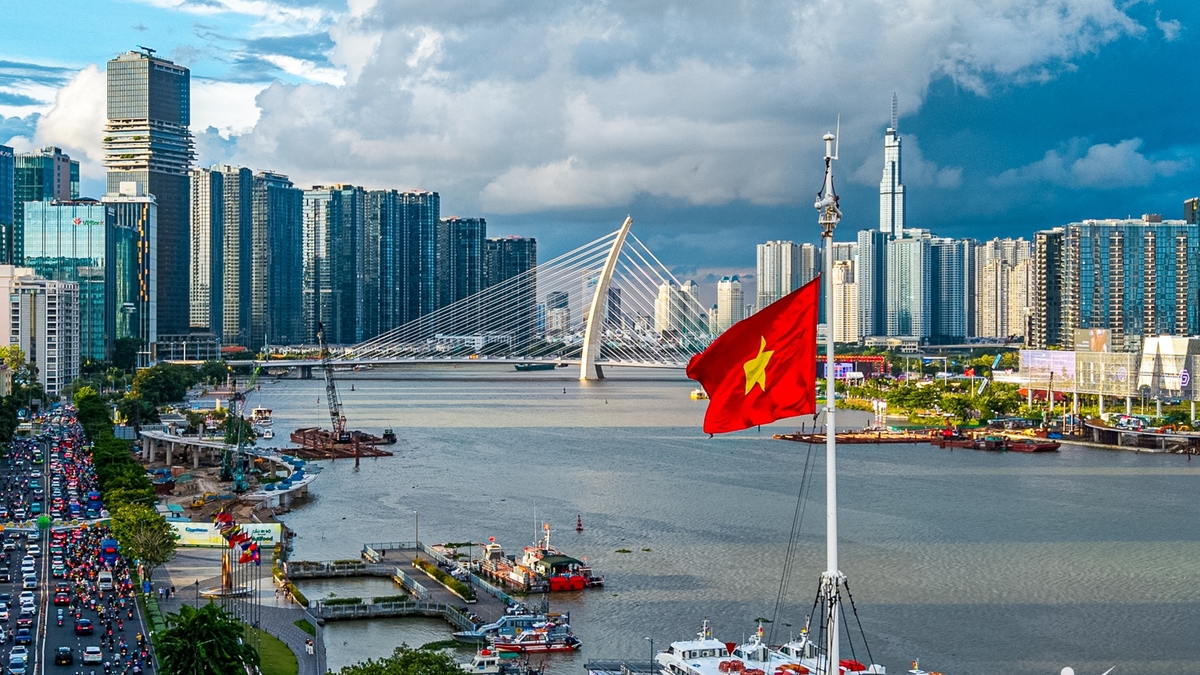
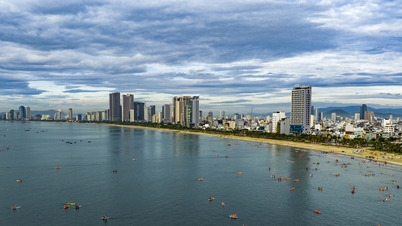
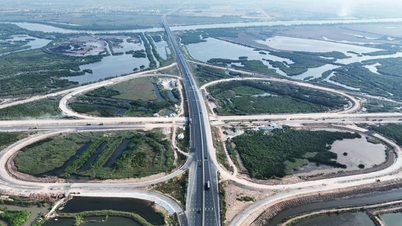
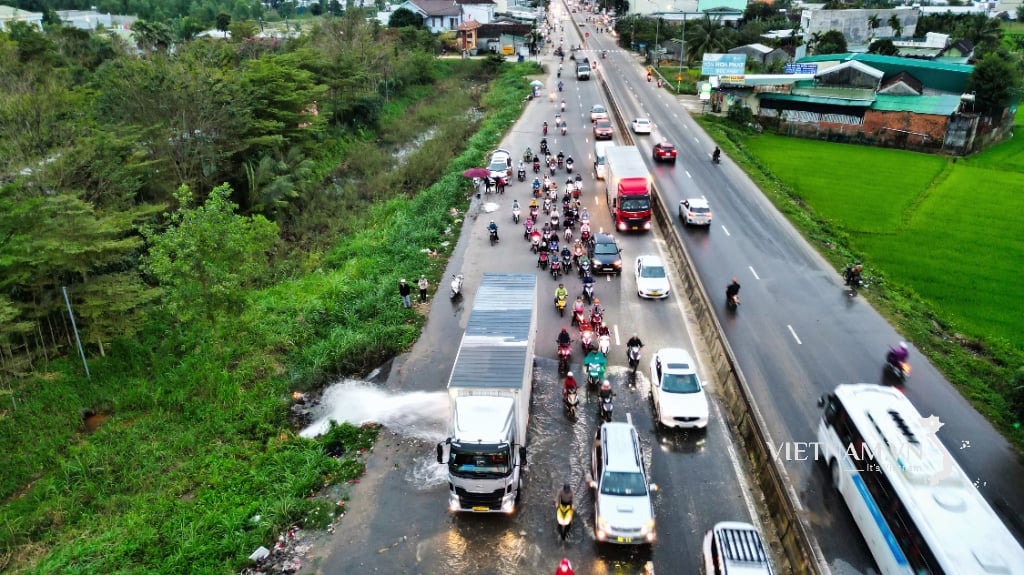
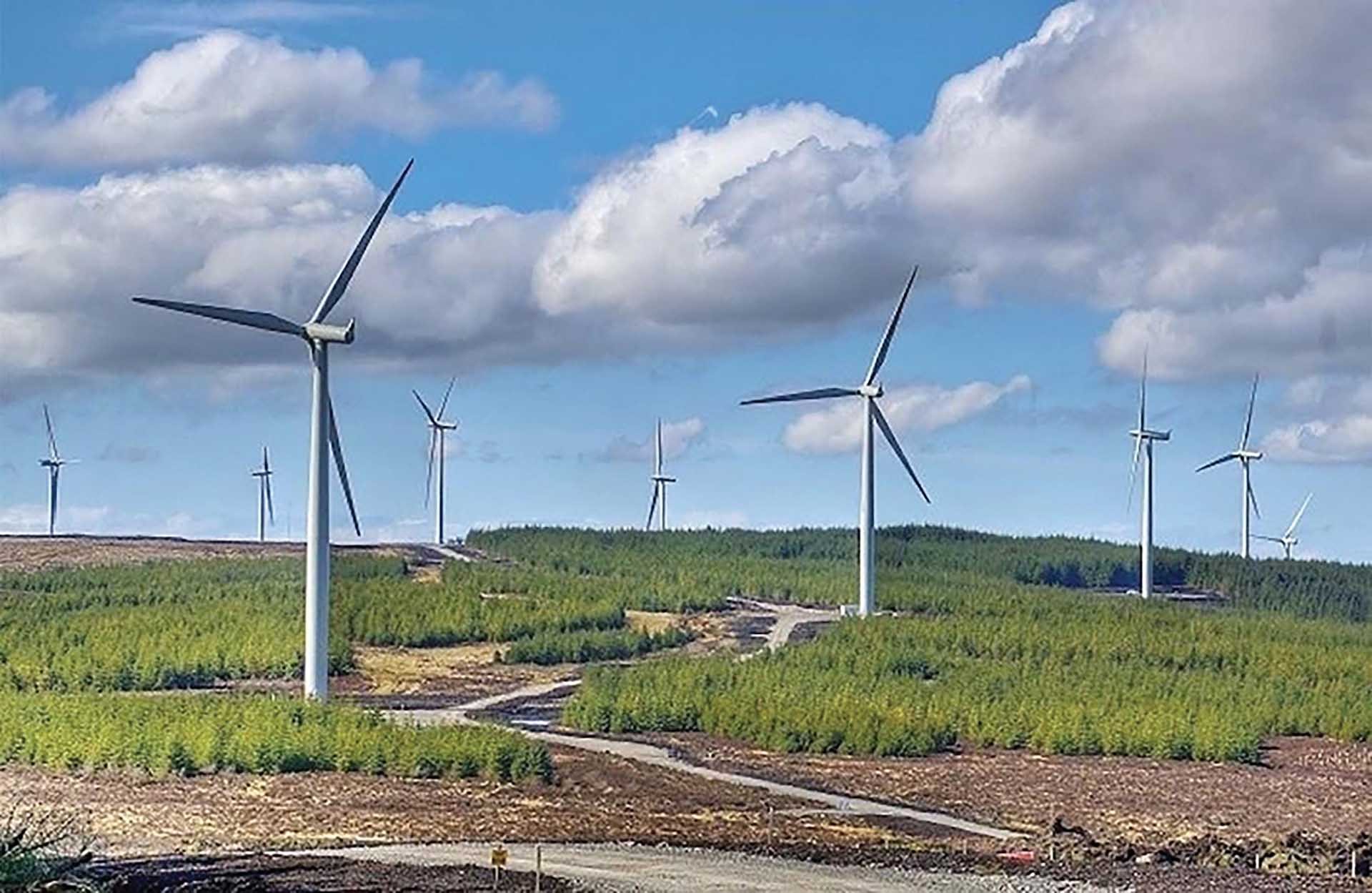
| Vietnam is actively "greening" its economy . (Photo: Vu Dung) |
In Vietnam, green growth receives special attention from the Party and the State, supported by a legal framework and guided by national strategies and action plans. The Vietnamese government committed to working with the international community to achieve net-zero emissions by 2050 at the 26th Conference of Parties to the United Nations Framework Convention on Climate Change (COP26).
At the end of November 2023, the Ministry of Planning and Investment, acting as the national focal agency for green growth, announced that it had advised the Prime Minister to issue the National Strategy on Green Growth for the period 2021-2030, with a vision to 2050, and the National Action Plan on Green Growth for the period 2021-2030.
Actively promote "greening"
Currently, Vietnam's key export markets are all preparing for specific regulations on sustainable production linked to environmental protection. For example, in Europe, there is an action plan to comply with the Border Carbon Adjustment Mechanism (CBAM) and the European Union Regulation on Deforestation Prevention and Control (EUDR). The US has also drafted a Clean Competition Act.
Vietnam's economic growth is heavily reliant on exports. The US market accounts for 30% of exports, and Europe for 10%. Therefore, the adoption of the aforementioned standards by the US and Europe will put pressure on Vietnamese businesses when trading with these two markets. Consequently, to retain market share, a green transition is the only path forward for Vietnamese businesses to expand exports, attract investment, and integrate into the international economy.
With policy and practical developments at COP26, Vietnam is actively "greening" its economy. Several key policies with widespread impact on businesses include: the Draft Decree regulating environmental protection fees for emissions; the Decree amending and supplementing several articles of Government Decree No. 156/2018/ND-CP detailing the implementation of some articles of the Forestry Law, which adds carbon sequestration and storage services; and the Draft Decision on issuing environmental criteria and certification for projects eligible for green credit and green bond issuance.
The deciding factor
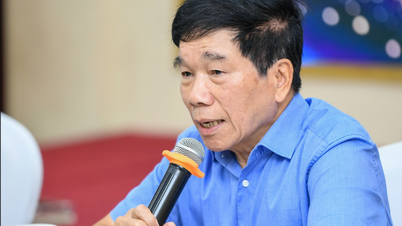
Recently, at the Conference on the Implementation of Economic Diplomacy in 2024 to Serve Socio-Economic Development held at the Ministry of Foreign Affairs, the Vietnamese Ambassador to Belgium and Head of the Vietnamese Mission to the European Union (EU), Nguyen Van Thao, stated that mobilizing resources, including financial resources, is a decisive factor in implementing the green transition process.
Concerns were raised about the financial resources needed for green transition. Ambassador Nguyen Van Thao suggested that, in the future, Vietnam could mobilize financial resources through four basic channels.

Firstly, there is Official Development Assistance (ODA). While the amount of ODA may not be large, it is readily available in bilateral and multilateral budgets. Ambassador Nguyen Van Thao believes this is a valuable resource that Vietnam should utilize in its green transition process.
Regarding the EU specifically, the Ambassador stated that the EU always has budgets allocated for green transition. However, during negotiations to increase ODA levels, the EU raised concerns about disbursement schedules. Relevant ministries and agencies need to improve this aspect to attract and mobilize more ODA from the 27-member bloc.
Secondly, there are the financial resources within EU initiatives. To receive this support, Vietnam needs suitable projects related to the bloc's initiatives.
Thirdly, direct investment from businesses is crucial. Many businesses are interested in investing in green transformation. They make quick decisions, have readily available funds, and can support sustainable development. "This is the most important, accessible, and sustainable source of capital," stated the Vietnamese Ambassador to Belgium.
Fourth, indirect investment sources. Ambassador Nguyen Van Thao suggested that Vietnam could issue green bonds. Vietnam and Luxembourg have signed a Strategic Partnership Agreement on Green Finance. The Ambassador emphasized: “Economic diplomacy can be applied in this area to promote and attract resources. Green bonds are a very good resource for us to implement green transformation, and Vietnam should not miss this opportunity.”
“Vietnam and Luxembourg have signed a Strategic Partnership Agreement on Green Finance, but there has been no further progress. Economic diplomacy can be applied in this area to promote and attract resources. Green bonds are a good resource for our green transition, and Vietnam should not miss out.” Vietnamese Ambassador to Belgium Nguyen Van Thao |
Accelerate the green transition process.
Besides concerns about financial issues, Associate Professor Vu Minh Khuong, from the Lee Kuan Yew School of Public Policy at the National University of Singapore, argues that Vietnam is facing several challenges on its path to green transformation. For example, the country's heavy reliance on traditional models.
Simultaneously, Vietnam's capacity for value creation is a matter of concern, as it possesses significant resources, capabilities, and efforts but lacks a systematic strategy and the motivation to do it well. In this context, Associate Professor Dr. Vu Minh Khuong recognizes that strategic thinking and a breakthrough vision are crucial.



Furthermore, the private sector is the main driving force in the green transformation journey. Small and medium-sized enterprises (SMEs) are the "backbone," determining the success or failure of green transformation in the economy. However, currently, SMEs face many difficulties in digital transformation; their ability to invest in green technology is limited; their awareness of environmental and resource issues is low; and their access to knowledge and finance is still limited…
A survey of 2,734 businesses conducted at the end of 2023 by the Private Economic Development Research Board under the Prime Minister's Advisory Council on Administrative Procedure Reform revealed that while the green transformation landscape has seen many changes, there are still many "grey areas." 64% of businesses were unprepared for emission reduction and green transformation; nearly 52% assessed the necessity of transformation as normal, unnecessary, or very unnecessary.
Based on research into international experiences combined with the context in Vietnam, Mr. Arnaud Ginolin, General Director of BCG Vietnam, recommends that Vietnam needs to build a green classification system that is consistent with sustainable development goals, international standards, and the economic sector system; launch green incentive and encouragement mechanisms; and support green pilot projects.
At the same time, it is necessary to promote green finance through supporting the development and application of green finance instruments such as green bonds, carbon markets, and mixed finance; strengthening cooperation among agencies, implementing multi-channel communication with national and provincial programs, and attracting the participation of stakeholders in both the public and private sectors, domestically and internationally.
"If we can achieve these things, Vietnam will accelerate its green and comprehensive transformation, moving towards green and inclusive development," Director General Arnaud Ginolin affirmed.
Source