

Restoring village wells built by our ancestors not only contributes to creating a rural landscape that is both fresh and ancient, rustic and simple, but also serves as a way to pass on the valuable cultural values of the village to the younger generation. Therefore, during the process of building new rural areas, many village wells in Ninh Binh are being carefully restored, repaired, and preserved by the people.
A place that preserves the spirit of community and neighborly love.
The village well, located within the grounds of the communal house and pagoda in Yen Thanh village, Truong Yen commune, Hoa Lu district, was built in 1890. According to local elders, the well was constructed at the "dragon's eye" position within the overall image of a dragon bowing towards the communal house and pagoda of Yen Thanh village. The well is situated in a high, airy location, near a community gathering place. For over 130 years, the Yen Thanh village well has been the main water source serving the daily lives of the villagers, providing cool, clean water for cooking, washing, and bathing. The village well is a cultural space, a symbol carrying spiritual value for many villages and communes.
Mr. Nguyen Ngoc Vi, Chairman of the Elderly Association of Yen Thanh village, Truong Yen commune, shared that in his memory, the village well not only provided water but also served as a cultural hub for the local people. The village well witnessed countless events in the village from generation to generation. As life progressed, villagers no longer used well water but switched to tap water for daily life. However, it still holds many beautiful memories of community spirit. Every afternoon, children still come here to play, and the elderly still choose the village well as a meeting place to chat, share stories of farming, and reminisce about a time of poverty and hardship. The village well remains a part of the villagers' memories and needs to be preserved and promoted in modern life.
Truong Yen commune currently has over 20 village wells. Along with those wells that are regularly maintained and used for community activities, Truong Yen commune is encouraging people to restore long-abandoned village wells to serve cultural activities, foster community bonds, and provide a place for descendants to connect with their roots. Ms. Bui Thi Thanh Nhan, a cultural and social affairs officer in Truong Yen commune, said that the commune always considers village wells as "treasures" of the countryside, along with the banyan tree and the communal house courtyard, which have been intertwined with the ups and downs of history. Therefore, the commune pays great attention to preserving ancient wells. The commune's cultural and social affairs officer has actively advised the People's Committee of the commune to develop a plan, incorporating it into annual resolutions to plan for the preservation, maintenance, and promotion of these village wells.
Preserving the cultural heritage of the countryside.
Recognizing the necessity and importance of restoring and preserving rural cultural traditions, alongside promoting rural infrastructure development, many villages in Hoa Lu district have undertaken the repair and restoration of old village wells.
In implementing Resolution No. 105/2023/NQ-HĐND dated July 12, 2023, of the Ninh Binh Provincial People's Council on a number of policies to support tourism development in the province from 2023 to 2030, Hoa Lu district has developed a plan and disseminated information, mobilizing localities, organizations, associations, and the people to participate in restoring and preserving village wells in conjunction with the development of local tourism. During the construction and implementation of the National Target Program for New Rural Development, in addition to improving rural roads, the people of Hoa Lu district have unanimously contributed labor and money to build and repair village wells using methods such as reinforcing, building brick walls around them, and constructing stone embankments to prevent the wells from collapsing.
Not only in Hoa Lu district, but many other localities in Ninh Binh province still preserve village wells. Among them, many famous village wells include Ngoc Well, located at the foot of the ancient Bai Dinh Pagoda mountain in Gia Sinh commune, Gia Vien district. According to historical records, the well dates back approximately 1,000 years. Today, with the restoration and construction of the ancient Bai Dinh Pagoda, Ngoc Well has also been renovated. Currently, the well has a crescent shape, a diameter of nearly 30m, a depth of about 6m, and a square surrounding area of up to 6,000m2. In 2007, the Vietnam Book of Records Center awarded a certificate recognizing the record for "The pagoda with the well".
According to Mr. Truong Dinh Tuong, Chairman of the Ninh Binh Provincial Historical Science Association, as a witness to history, the people have also associated village wells with stories, legends, and myths that reflect the humanistic culture and spiritual values of the entire community. As life becomes more modern and developed, village wells no longer play the same important role as before, but this does not mean that people have forgotten them. Village wells are still preserved not only to maintain a traditional beauty in rural culture but also as a way to promote the soul of the countryside. Preserving village wells is not just about maintaining a public utility but also about preserving a beautiful cultural and spiritual aspect.
In particular, implementing the new rural development movement, aiming to build model new rural areas, although the environmental landscape in the villages of Ninh Binh province has changed significantly, the unique beauty of the countryside such as banyan trees, wells, and village courtyards... are still being protected and preserved by successive generations as symbols of life and good fortune. Village wells need to be preserved and restored to remind future generations to always remember their roots.
Source


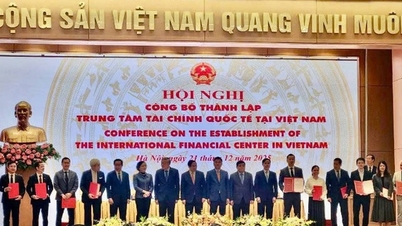
![[Photo] Prime Minister Pham Minh Chinh presides over the conference announcing the establishment of the International Finance Centre in Vietnam.](/_next/image?url=https%3A%2F%2Fvphoto.vietnam.vn%2Fthumb%2F1200x675%2Fvietnam%2Fresource%2FIMAGE%2F2025%2F12%2F21%2F1766309817714_ndo_br_dsc-3400-jpg.webp&w=3840&q=75)
![[Photo] Prime Minister Pham Minh Chinh presides over a meeting on private sector economic development.](/_next/image?url=https%3A%2F%2Fvphoto.vietnam.vn%2Fthumb%2F1200x675%2Fvietnam%2Fresource%2FIMAGE%2F2025%2F12%2F20%2F1766237501876_thiet-ke-chua-co-ten-40-png.webp&w=3840&q=75)





















































Comment (0)