

Teachers are not ready
Digital transformation in education is not simply about equipping modern equipment or management software. For preschool education, the human factor, especially the digital capacity of teachers, becomes an important "bottleneck".
A leader of a kindergarten in Ba Diem commune ( Ho Chi Minh City) shared: “Not all teachers know or are familiar with technology, especially older teachers. When the school has an inspection team, many times young teachers 'take over' and do the work of older teachers, such as drafting, health monitoring books, menu management via nutrition software, etc. After the inspection is over, the teachers return to the traditional way.”

This sharing clearly shows the reality: many preschool teachers are not familiar or proficient with software for managing students, health, nutrition and digital learning materials. Even for those who have the spirit of innovation, the skills of designing digital lessons, editing learning materials and integrating learning materials into classroom activities are still uneven.
According to Ms. Luong Thi Hong Diep, Head of the Preschool Education Department of the Ho Chi Minh City Department of Education and Training, digital competence has not been widely popularized, especially in small groups. Intensive training for teachers on digital transformation and digital data exploitation is still limited.
Similarly, Ms. Le Hong Dao, Head of the Preschool Department of the Can Tho Department of Education and Training, also emphasized: “Investment resources are still limited, the digital capacity of teachers, even managers, is not equal. This is a major obstacle when implementing smart classroom models and online management.”
Along with that, many facilities still lack a dedicated technical team to operate digital learning materials warehouses, edit learning materials and manage data. Many teachers have to take on multiple tasks, from teaching, managing to data entry and monitoring children's health, leading to insufficient time to practice and exploit technology systematically. Financial resources for digital transformation do not have a separate mechanism to develop shared learning materials, directly affecting the progress and quality of implementation.
Thus, digital capacity and human resources are the factors that determine the effectiveness of digital transformation. If teachers are not ready, smart classrooms will only be a formality, making it difficult to improve the quality of education, management and child care.
Infrastructure synchronization solution
Besides the human factor, infrastructure is also a bottleneck in digital transformation. Recent surveys show that the rate of preschools with smart classrooms is only about 30%, electronic libraries 41.7%, digital libraries 33.1% and artificial intelligence applications supporting new learning materials are only 51.3%. The level of use of these technologies in the classroom is still low and has not yet been truly effective.
Associate Professor Dr. Nguyen Thanh De, Director of the Department of Preschool Education, Ministry of Education and Training, emphasized that digital technology creates many positive changes, helping facilities build shared learning materials, plan education, monitor students' health and nutrition via QR codes... Digital transformation also helps free up teachers' labor, creating time for teachers to focus on creative thinking, improving the quality of child care and education. However, to achieve this, factors of infrastructure, teacher skills and operating mechanisms need to be deployed synchronously.
Many experts and local leaders proposed practical solutions such as investing in information technology infrastructure and modern facilities, equipping equipment and software to meet the needs of digital education; building a shared digital learning resource warehouse, synchronizing data management systems, and reducing administrative work for teachers.
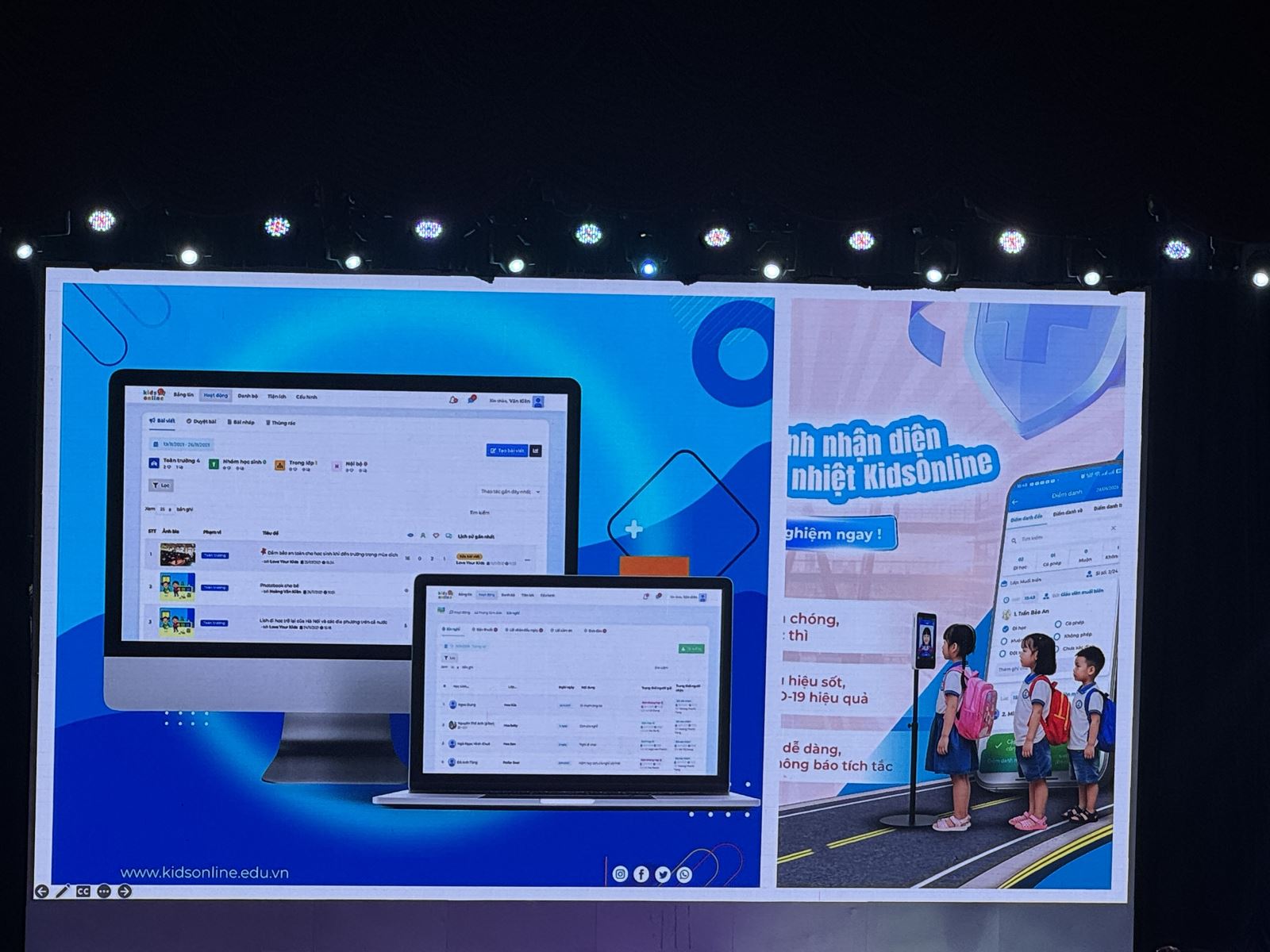
Along with that is the training and in-depth coaching for teachers and managers, especially older teachers, to help improve digital capacity and confidence in applying technology in the classroom; mobilize specialized technical resources, support operations, edit learning materials and manage data and need to have reward mechanisms and incentive policies for units that implement well, promoting motivation to apply technology.
The digital education model emphasized includes smart classrooms, online education management, school-family connection through smart applications, electronic libraries and digital learning materials, online learning combined with classroom experiences. If implemented synchronously, these models will help children develop comprehensively, reduce teachers' workload and improve the quality of care and education.
According to the Ministry of Education and Training, the country currently has more than 30,000 preschools, with about 5 million children and more than 400,000 teachers. In Ho Chi Minh City alone, with nearly 5,200 facilities and more than 500,000 children, digital capacity and infrastructure are the most urgent challenges.
It can be said that digital transformation in preschool education is not only about applying technology but also about comprehensively changing the capacity of teachers, facilities and management policies. Without synchronously solving the "bottlenecks" of digital capacity, infrastructure and resources, smart classrooms will hardly become a reality and the quality of child care and education will be difficult to improve in the digital age.
Source: https://baotintuc.vn/giao-duc/go-nut-that-chuyen-doi-so-o-bac-giao-duc-mam-non-20251127093518759.htm


![[Photo] Prime Minister Pham Minh Chinh receives President of Cuba's Latin American News Agency](/_next/image?url=https%3A%2F%2Fvphoto.vietnam.vn%2Fthumb%2F1200x675%2Fvietnam%2Fresource%2FIMAGE%2F2025%2F12%2F01%2F1764569497815_dsc-2890-jpg.webp&w=3840&q=75)



























































































Comment (0)