

In the context of Hanoi continuing to promote social security programs and improve the quality of life for its people, the periodic review of poor and near-poor households in 2025 is of particular importance. This is not only an annual task but also a fundamental step that determines the effectiveness of developing and implementing support policies in 2026 and subsequent years.
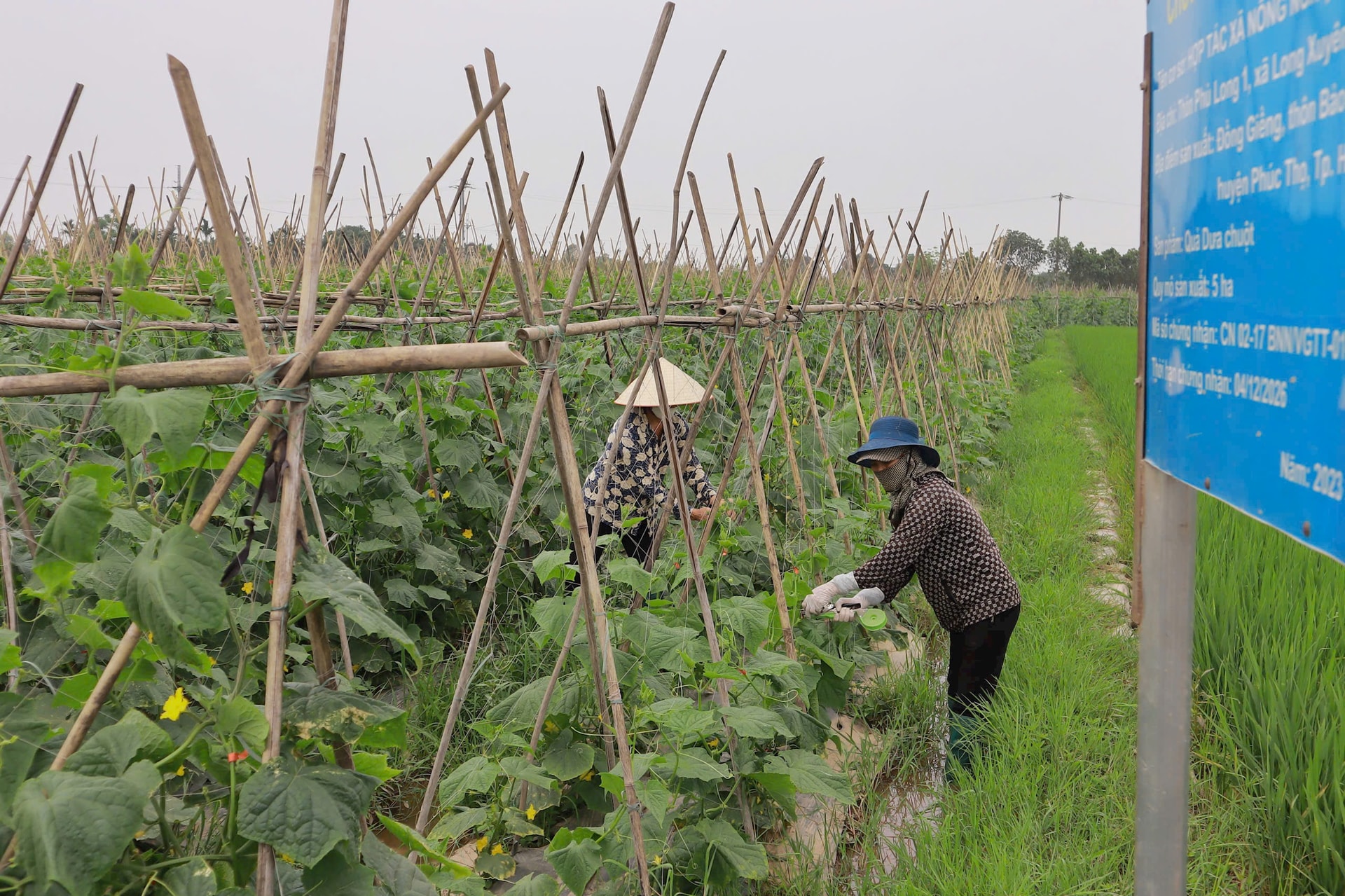
Reviewing from the grassroots level, accurately reflecting the reality of life.
In Trung Gia commune, the review of poor and near-poor households was carried out systematically and according to proper procedures. The commune People's Committee promptly established a Steering Committee for the review, clearly assigning tasks to each member and linking specific responsibilities to each residential area. Public awareness campaigns were intensified through the local broadcasting system, conferences, meetings, and neighborhood group activities, helping people understand the purpose and significance of the review.
According to Nguyen Van Binh, Deputy Head of the Economic Department of Trung Gia Commune, when people have a full understanding, cooperation with the government during the review process becomes easier. As a result, the review results accurately reflect the reality of people's lives in the area. To date, Trung Gia Commune has completed the review according to the plan of the Hanoi Department of Agriculture and Environment, ensuring it is on schedule and in accordance with regulations. More importantly, the review process was conducted openly and democratically, creating consensus among the people and minimizing concerns and questions.
Along with Trung Giã commune, Kim Anh commune is also seriously and thoroughly reviewing poor and near-poor households. According to Pham Van Binh, Deputy Head of the Economic Department of Kim Anh commune, the review is conducted directly in villages and hamlets, reaching each individual household. Local officials directly interview and collect information from households under review, including poor households, near-poor households, newly escaped poverty households, households that have escaped near-poverty, as well as households at risk of becoming poor.
This approach ensures that the information collected is accurate, complete, and reflects the true living conditions of each household. At the same time, direct contact allows local officials to gain a deeper understanding of the difficulties and obstacles faced by the people, thereby enabling them to propose appropriate support measures. A common point in the review process in communes and wards throughout Hanoi is strict adherence to regulations on transparency and openness. After the review is completed, the results are publicly posted at the commune/ward People's Committee headquarters and in village/neighborhood cultural centers for residents to monitor, supervise, and provide feedback.
Publicizing the results not only helps people understand the situation of poor and near-poor households in their locality, but also helps eliminate the "achievement-seeking" mentality, which can distort the reality of poverty. Through this, the review process becomes more objective, more realistic, and in line with the spirit of "putting the people at the center." In reality, when people participate in monitoring and providing feedback, any errors will be detected and corrected promptly. This not only improves the quality of the review but also strengthens people's trust in local government.
The foundation for social security policy in 2026.
According to preliminary statistics, most communes and wards in Hanoi have basically completed the review of poor and near-poor households as planned. To ensure the review results comply with regulations, the Hanoi Department of Agriculture and Environment has established three working groups to conduct inspections and verifications at the grassroots level. From December 10th to 13th, 2025, the working groups monitored the implementation and evaluated the review results in 27 communes and wards. Beyond inspections, the group members also directly advised and guided local officials to ensure the correct procedures, progress, and quality.
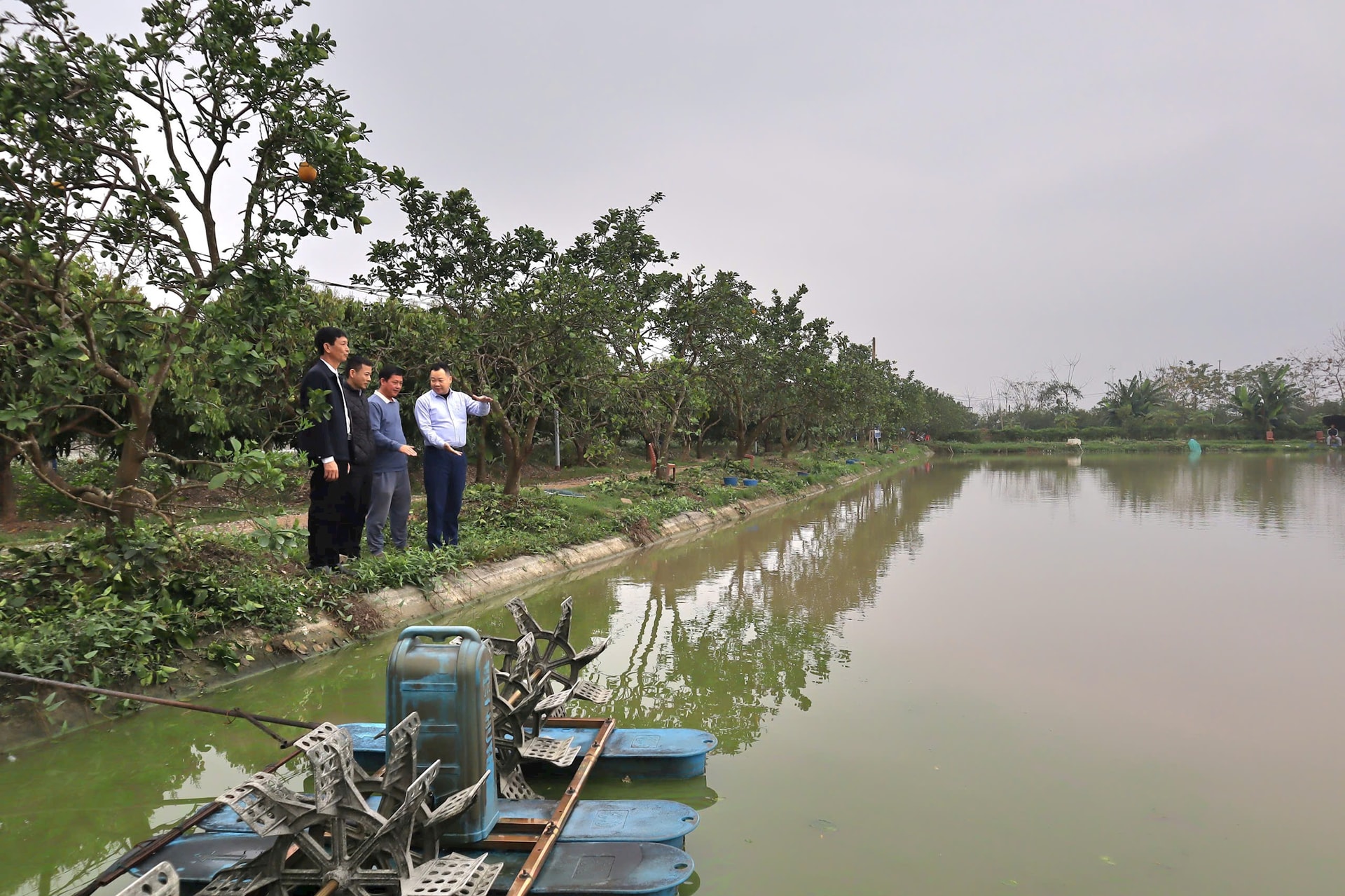
According to Hoang Thi Hoa, Head of the Rural Development Department (Hanoi Department of Agriculture and Environment), the inspection and review results show that the process of reviewing poor and near-poor households and determining the income of households engaged in agriculture, forestry, and fisheries with a basic average standard of living was carried out correctly, ensuring honesty, objectivity, openness, and transparency. These results demonstrate the decisive and coordinated involvement of the entire political system, from the city to the grassroots level, in ensuring that no poor or near-poor households are overlooked, while also preventing the inclusion of ineligible individuals in policy programs.
According to Nguyen Dinh Hoa, Deputy Director of the Hanoi Department of Agriculture and Environment, the city has always paid special attention to caring for poor and near-poor households. In recent years, Hanoi has effectively implemented many central government policies and simultaneously issued specific mechanisms, tailored to local conditions, to support disadvantaged people in improving their lives. Regarding the review of poor and near-poor households, Mr. Nguyen Dinh Hoa emphasized that the review results must accurately reflect the living conditions of the people, absolutely avoiding the pursuit of achievements or the distortion of data. This is an important basis for the city to develop, adjust, and implement support policies that target the right beneficiaries and meet their needs.
The results of the 2025 periodic review of poor and near-poor households will provide a comprehensive picture of the living conditions of vulnerable groups in Hanoi, serving as a basis for implementing poverty reduction and social security policies in 2026. Based on this foundation, support programs for employment, vocational training, preferential credit, housing, healthcare, and education will be designed to be more practical and effective. Representatives from the Hanoi Department of Agriculture and Environment also requested that communes and wards continue to maintain and improve the quality of the review process, regularly updating changes in poor and near-poor households to ensure accurate and timely data. This is a crucial requirement, contributing to the goal of sustainable poverty reduction, ensuring social security, and improving the quality of life for Hanoi residents.
It can be affirmed that Hanoi's implementation of a transparent and rigorous review of poor and near-poor households at the grassroots level helps to fully identify the causes of poverty, the risk of re-poverty, and the barriers to accessing basic social services. This forms the basis for the city to formulate realistic policies, avoid spreading resources too thinly, and ensure that support resources reach the right target groups at the right time. In the context of a still volatile socio-economic life, the review of poor and near-poor households requires the decisive, responsible, and dedicated involvement of grassroots officials, as well as the cooperation and supervision of the people. When the review results accurately reflect the reality, poverty reduction programs will be sustainably effective, helping people not only escape poverty but also achieve stable lives.
Source: https://hanoimoi.vn/ha-noi-cong-khai-minh-bach-trong-ra-soat-ho-ngheo-ho-can-ngheo-bao-dam-an-sinh-tao-nen-tang-giam-ngheo-ben-vung-726982.html


![[Image] Leaked images ahead of the 2025 Community Action Awards gala.](/_next/image?url=https%3A%2F%2Fvphoto.vietnam.vn%2Fthumb%2F1200x675%2Fvietnam%2Fresource%2FIMAGE%2F2025%2F12%2F16%2F1765882828720_ndo_br_thiet-ke-chua-co-ten-45-png.webp&w=3840&q=75)

![[Photo] Prime Minister Pham Minh Chinh receives the Governor of Tochigi Province (Japan)](/_next/image?url=https%3A%2F%2Fvphoto.vietnam.vn%2Fthumb%2F1200x675%2Fvietnam%2Fresource%2FIMAGE%2F2025%2F12%2F16%2F1765892133176_dsc-8082-6425-jpg.webp&w=3840&q=75)
![[Photo] Prime Minister Pham Minh Chinh receives Lao Minister of Education and Sports Thongsalith Mangnormek](/_next/image?url=https%3A%2F%2Fvphoto.vietnam.vn%2Fthumb%2F1200x675%2Fvietnam%2Fresource%2FIMAGE%2F2025%2F12%2F16%2F1765876834721_dsc-7519-jpg.webp&w=3840&q=75)











































![[Photo] Prime Minister Pham Minh Chinh attends the Vietnam Economic Forum 2025](https://vphoto.vietnam.vn/thumb/402x226/vietnam/resource/IMAGE/2025/12/16/1765893035503_ndo_br_dsc-8043-jpg.webp)




























Comment (0)