

Journeying into the world of his paintings, one finds a "monument" to love and family happiness; one sees a passion for exploring the simple essence of life. His life was like a dramatic play full of climaxes, and Doãn Châu used the language of painting as a stage to perform his life through each work.
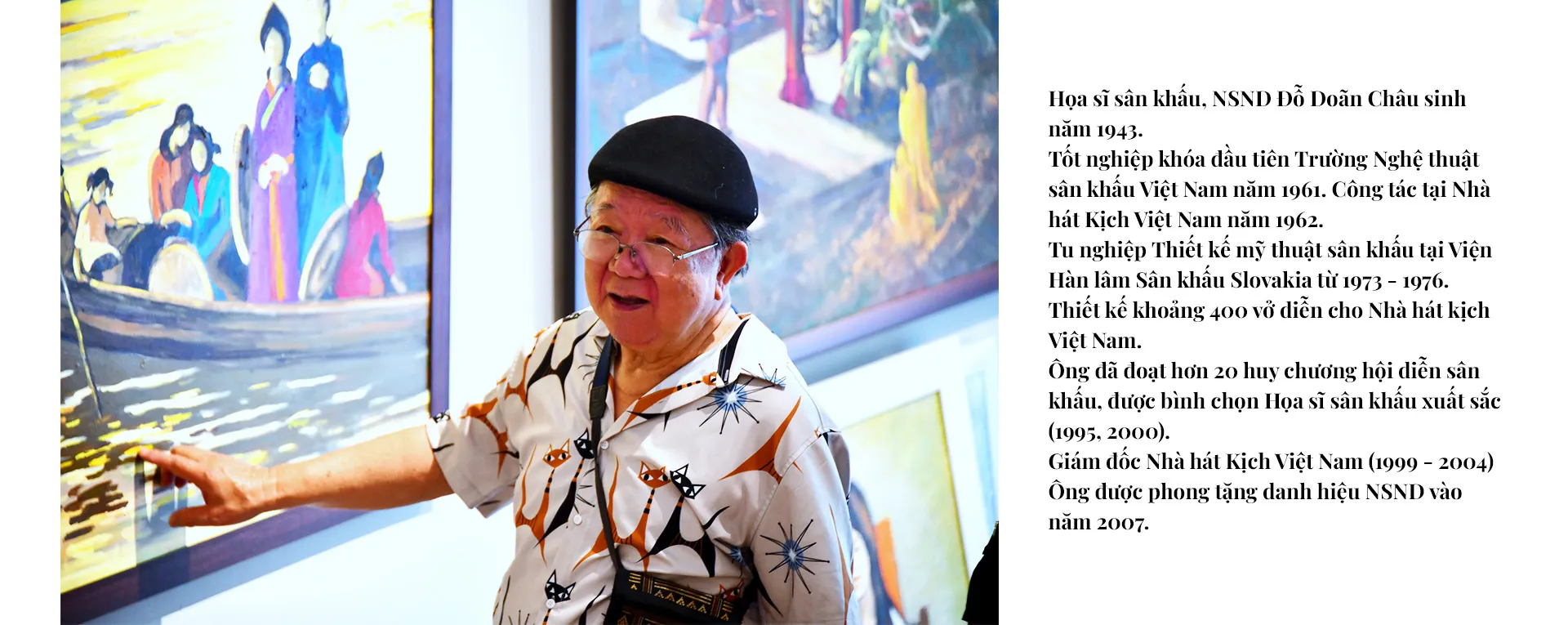
In the past, he painted stage sets to entertain the audience; now he paints to entertain himself. Is that true for him?
Stage painting is based on the script and storyline; painting is different, because they serve two distinct purposes. Painting expresses emotions, and so does stage painting, but the artist is not in control; a stage artist must serve the director. When painting, the director demands a theme, and the artist must adhere to the director's vision to deliver the play's content to the audience in the most optimal way. When I switch to painting for myself, I bring the drama of my life into my paintings.
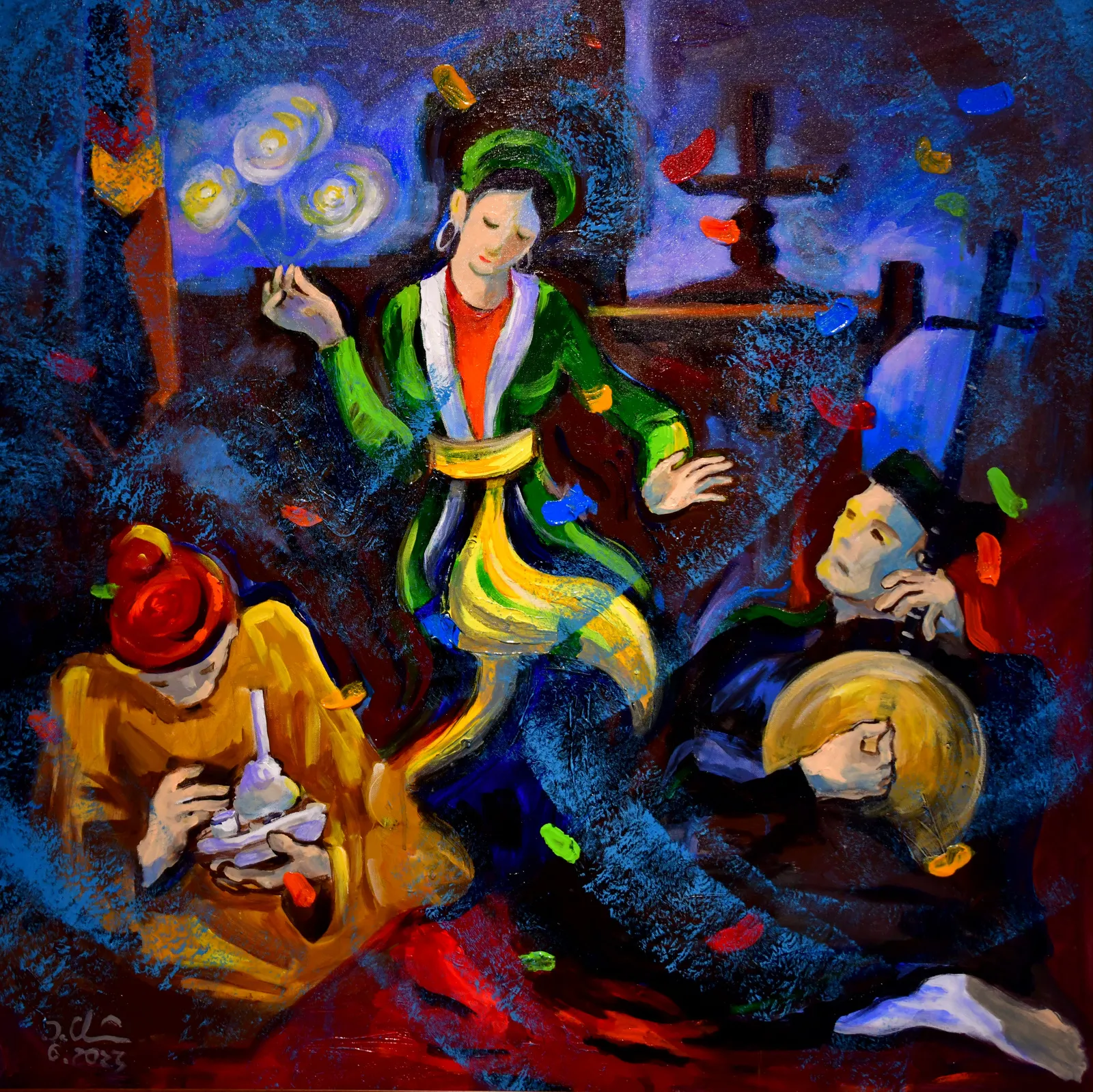
A trance-like state of mind, filled with a jumble of thoughts and feelings.
But looking at his paintings, it's truly difficult to guess. When artists become famous, they have their own language, but Do Doan Chau "performs" on a multilingual "stage." Why?
I'm not impersonating Do Doan Chau, I'm not using my name as a shield. I'm a multi-faceted artist; my paintings include landscapes, portraits, still lifes, and styles ranging from classical brushwork and artistic expression to contemporary art such as abstraction, expressionism, and surrealism… My brushwork is sometimes meticulous and serious, sometimes free-spirited and imaginative, depending on my momentary emotions. I don't limit myself to or follow any particular style. When people look at my paintings and say they're seeing seven or eight different artists, I'm delighted; that's who I truly am.
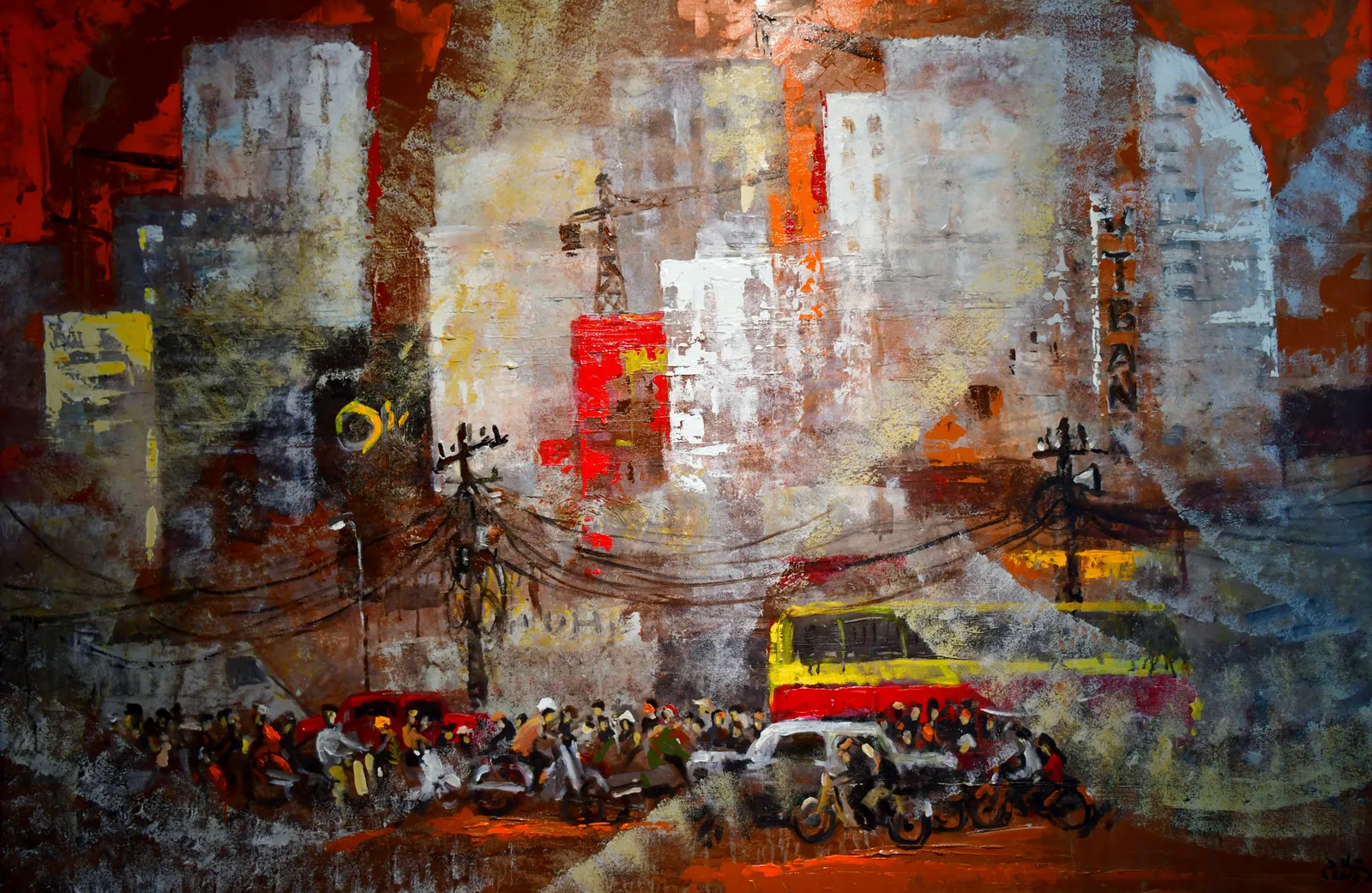
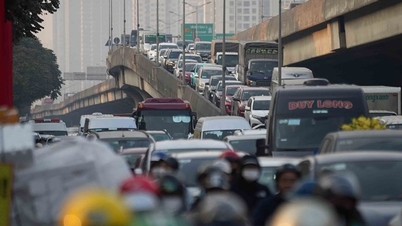
A bustling Hanoi during rush hour, yet still retaining a beauty reminiscent of Doan Chau's style.
As someone who loves Hanoi, he describes that "love" with colors that captivate many, even when accompanied by smog, frustration, traffic jams, and crowded, chaotic buildings. Can he explain why?
I've always wanted to look at life with a positive outlook. Life has to move forward; Hanoi might be like this or that, but I don't get upset about it. I'm over 80 years old now, so why be pessimistic? Most of my friends from my 20s and 50s are gone, but I'm still here. Now, I spend about 70% of my time each day painting. I consider painting a way to "show gratitude to life"—which is also the title of my solo exhibition currently taking place at E Tễu Gallery (Ecopark urban area, Văn Giang District, Hưng Yên Province ).
Discovering beauty within imperfection, perhaps that's why his use of color has changed so much over time, with a more vibrant and playful feel more evident recently?
That's my intention, my philosophy of life. I believe that no matter how chaotic life gets, one should never lose love for life. Don't let pessimism ruin your life, don't let pessimism lead to sadness and misery. Life's joys and sorrows are emotions, and we must learn to control our emotions to choose to live and think positively.
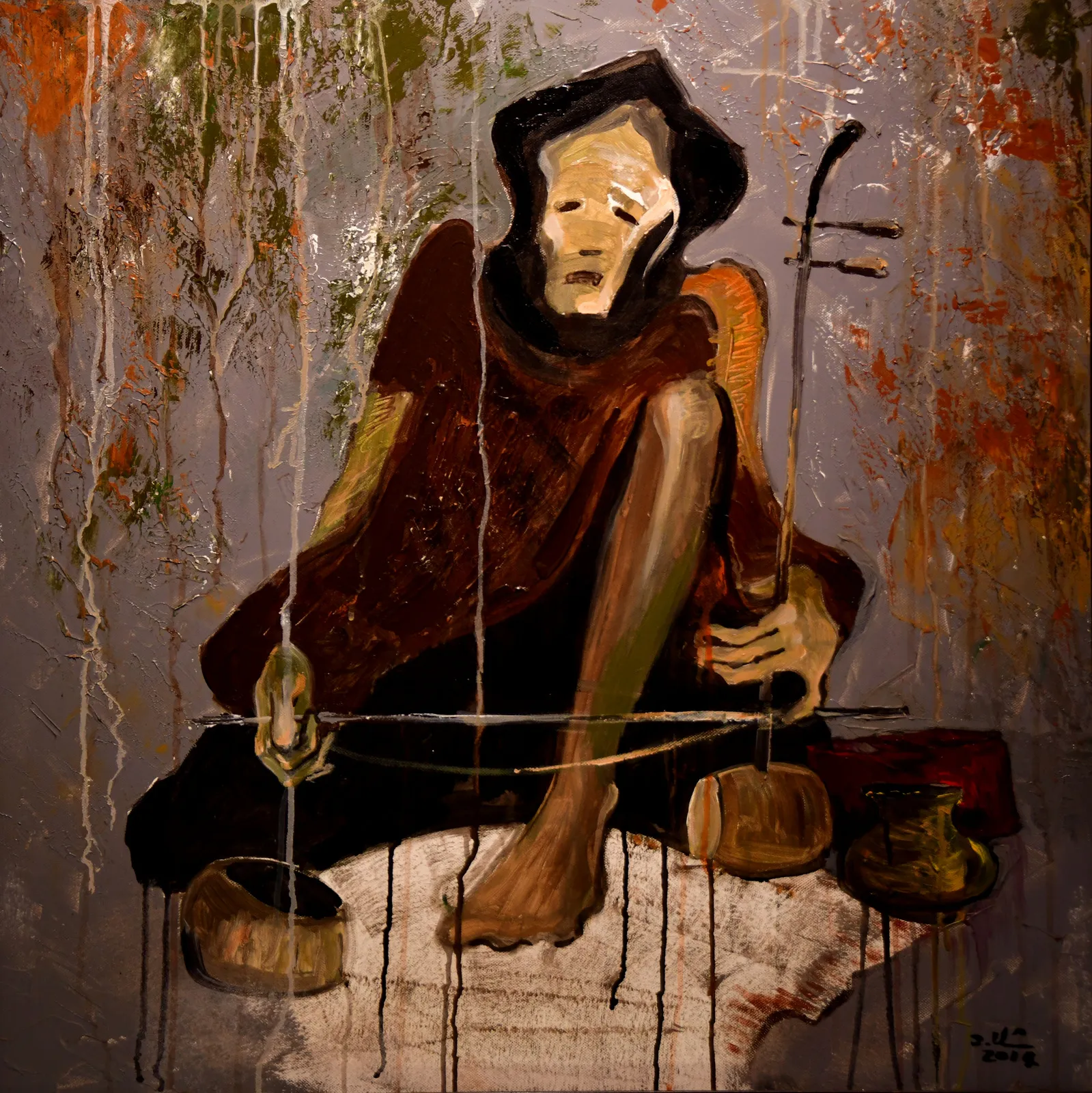
The late Xam singing artist Ha Thi Cau depicted in Doan Chau's paintings.
But as human beings, sadness is unavoidable. Have you ever painted "sadness"?
Yes, I paint the beauty of sadness, I paint sad emotions. For example, in my work about Prague (the capital of the Czech Republic), I suddenly woke up one morning and missed Prague, so I painted the sadness of the past, but it's a sadness of longing, not a pessimistic sadness.
Looking at the self-portrait of "My Today ," I notice a hint of sadness, not the joy I felt when listening to his stories. Does he have a hidden meaning in that lingering melancholy?
That's a nostalgic portrait, and also a reflection on life. I painted my thoughts; at that time, I was thinking that I wasn't living just for myself anymore, but in a way that would serve as an example for my descendants, giving life more meaning. I call it a thoughtful portrait. A portrait that raises issues—in my opinion, that's a good portrait.
He describes himself as a multi-faceted artist, perhaps due to the deep influence of stage design?
That's right, the most important thing in theatrical art is the ideological content that each play conveys to the audience. An artist isn't just someone who simply arranges and paints, or a mere assistant to the director, but someone who collaborates with the director to best convey the play's content to the viewers. Each play is different; you can't have the same decorations. For example, today I'm working on a Shakespeare play, tomorrow on Tran Huyen Tran, then on plays by Van Cao, Kim Lan… Therefore, I've created for myself the multi-faceted Do Doan Chau.
I am proud to have worked with the most directors in Vietnam, from Dinh Quang, Duong Ngoc Duc, Nguyen Dinh Nghi, Doan Hoang Giang, Ngoc Phuong, Pham Thi Thanh… to the younger generation throughout the ages, too many to count. This has created a multifaceted Doan Chau, capable of satisfying the demands of many generations of directors.
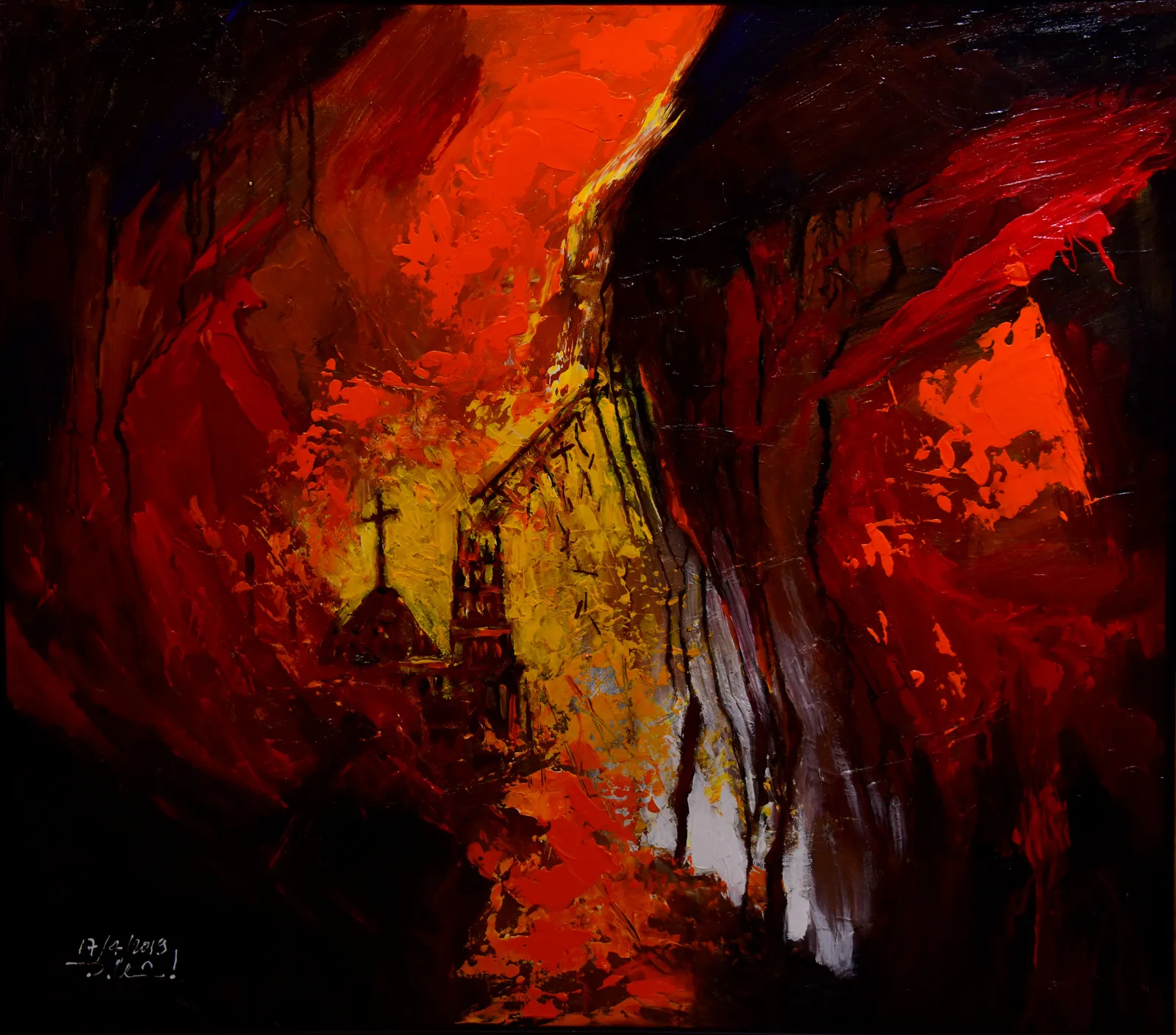
The Notre Dame Cathedral fire in Paris, emotions reached a climax, the artwork was completed in one day (April 17, 2019).
He paints many subjects; surely there must be something he likes or a particular strength that he often showcases?
What I enjoy most is drawing everyday life, depicting the personalities of ordinary people. For example, during a game of cards, I observe and describe the personality of each person as they hold their cards. Or scenes of Hanoi's Old Quarter, old people buying flowers to offer as incense, or the image of two young sisters waiting for their mother, or even women performing spirit medium rituals, barbershops, scrap metal dealers, street chess players, street vendors selling pho...; these subjects, imbued with the essence of life, fascinate me.
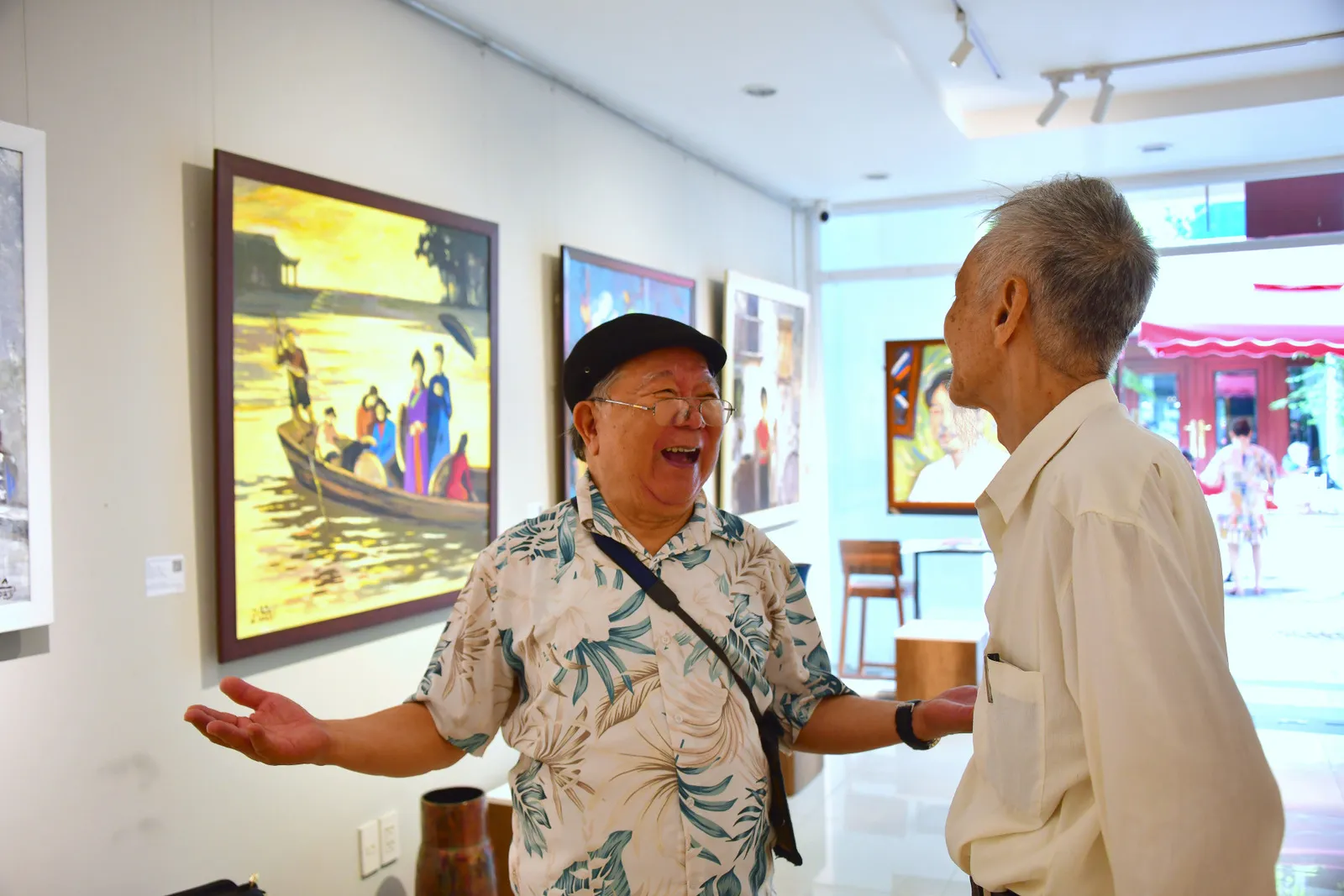
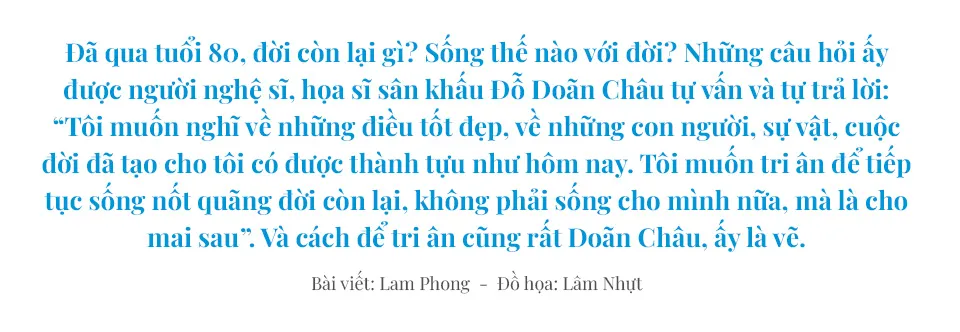
To live happily and think positively to continue on the rest of life's journey, that is Do Doan Chau.
Having traveled far and wide, only to return with an imperfect slice of life, still fraught with the complexities and anxieties of human existence, easily falling into a negative perspective, why is he so captivated by life?
Because it required me to observe, to approach, to get very close, to ponder and worry deeply, only then could I see that amidst the absurdity of life, many good and beautiful things, small but precious, shone through. Every time I realized that beauty, I felt so happy. And the essence of life also brought back many memories and emotions for me.
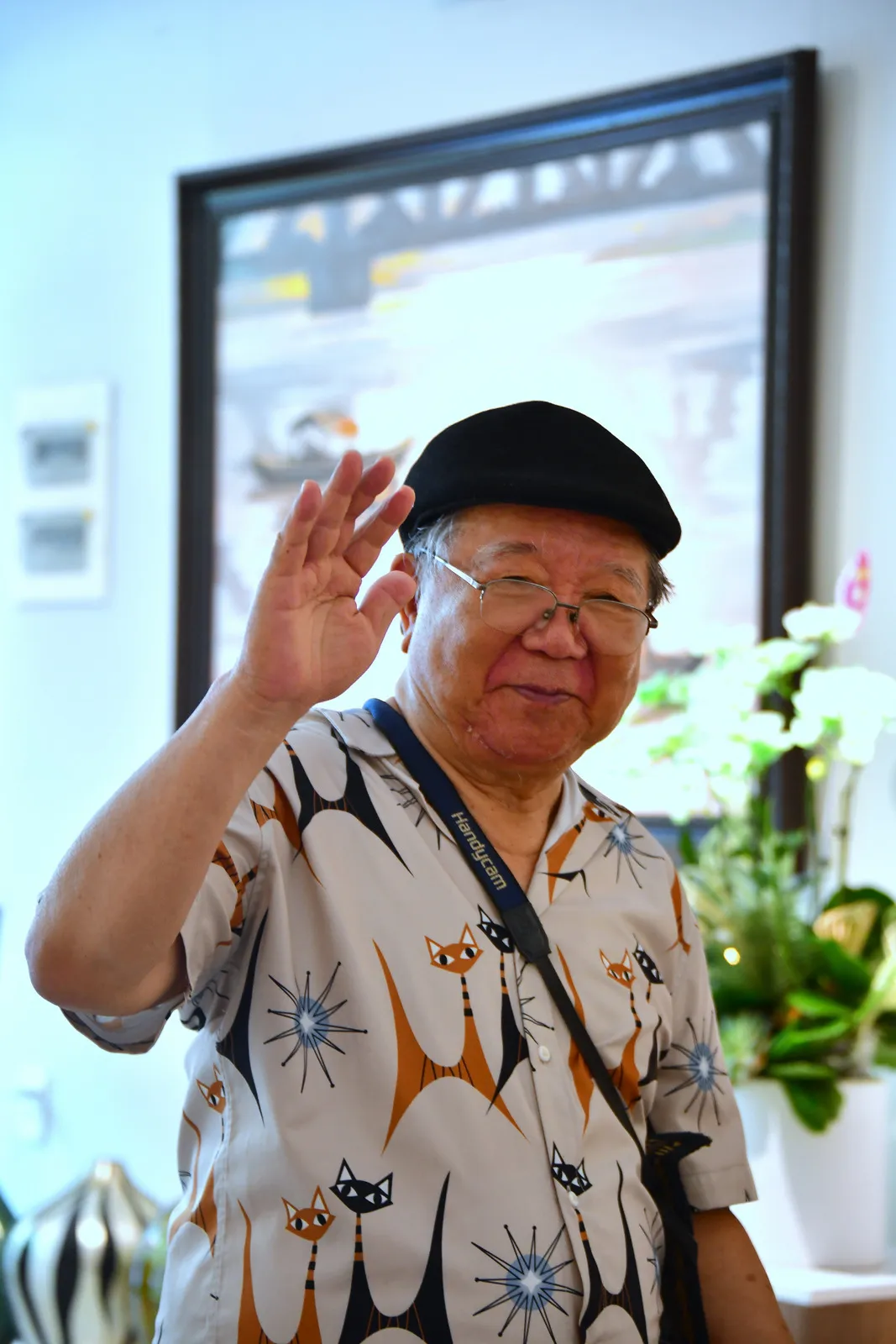
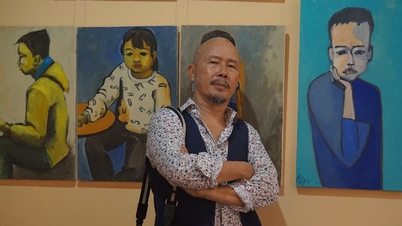
At the age of eighty, stage painter and People's Artist Do Doan Chau is still full of life and creative energy in his paintings.
Having faced the brink of life and death, having tasted both the sweetness and bitterness of life, have you ever incorporated those bitter and sweet experiences into your paintings, and if so, how would they be?
My paintings always have dynamism, language, content, and must be positive. Life has been full of ups and downs. But that doesn't mean I torment myself; when I'm sad or frustrated, I try to find joy within them.
Regarding the question of whether it's easy to detect when Do Doan Chau "embeds" messages into paintings, in the style of Do Doan Chau?
It's hard to spot, for example, when I paint life on the Red River, you have to be observant to notice the boatman, amidst the vast expanse of water, looking up at the sky, not knowing what tomorrow will bring. I like to embed a problem in my paintings, big or small. Each character follows a different path; for instance, in a shamanistic painting, everyone is intoxicated. I like things to have a problem. The canvas is like a stage; it must convey a message.
He painted many portraits, not like photographs, but as if the portraits were alive, capable of conversing with the person facing them.
I've held solo exhibitions for almost 10 years, showcasing portraits of famous artists like Dao Mong Long, Doan Hoang Giang, Phung Huy Binh, The Anh, Doan Dung… The common thread is that the portraits are very dynamic. Why dynamic? Because they constantly remind me and everyone else that I am a stage painter, and the theatrical element is expressed through my brushstrokes; the artwork must have a theatrical quality, it must be dynamic. This speaks to the inner strength or character of the person depicted in the portrait. For example, Dao Mong Long has always played roles portraying strong personalities, and so has Van Hiep…
In theatrical art, there are moments of quiet reflection and climactic details; does his painting reflect that?
Yes, there are climaxes in paintings. Many works evoke emotions in a single moment, prompting me to paint immediately. For example, on the morning of April 17, 2019, I couldn't sleep, so I woke up to watch TV and saw the Notre Dame Cathedral burning in Paris. I burst into tears because the sight was so heartbreaking, and I immediately took out my paints and started painting. The painting was completed in one day.
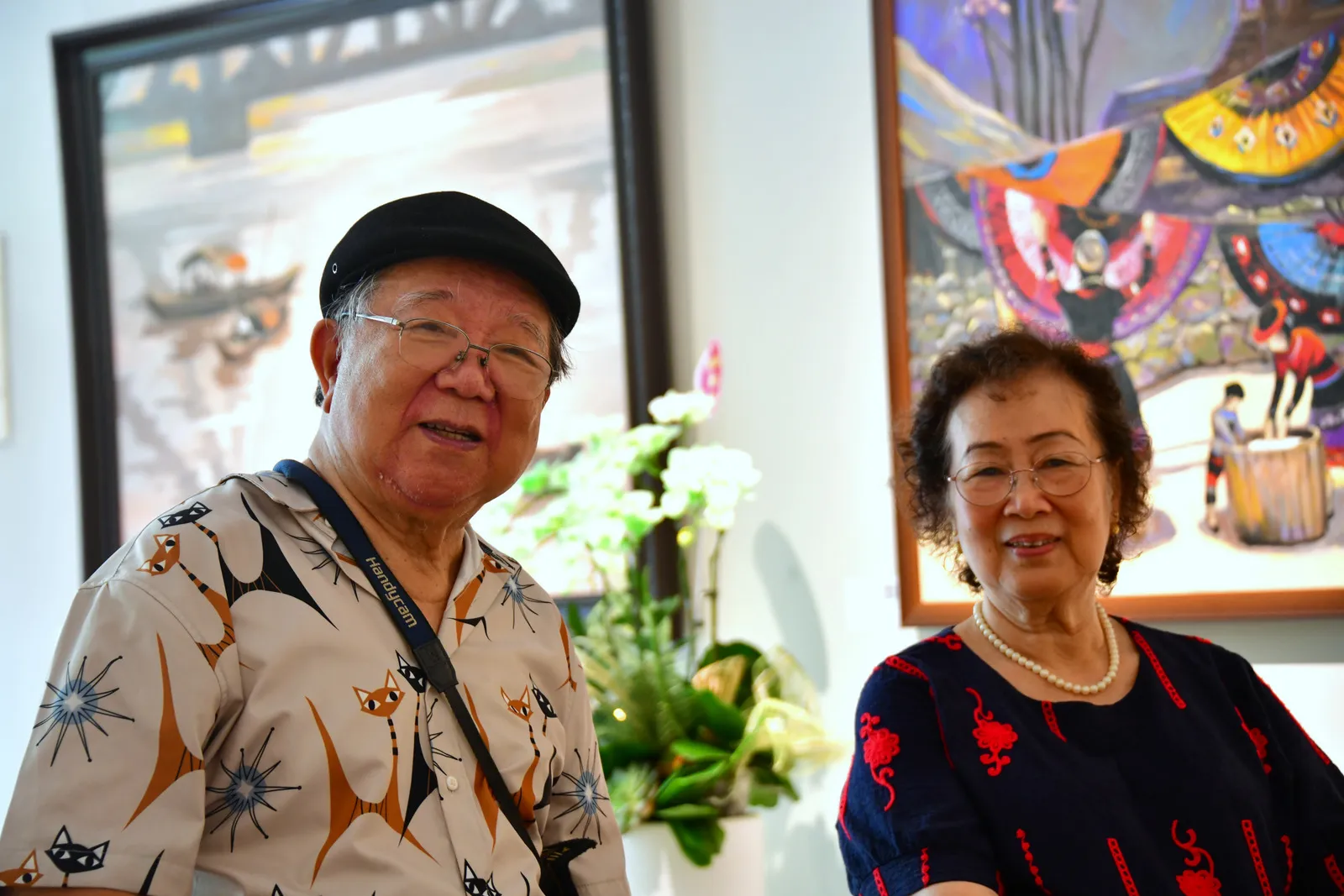
People's Artist Do Doan Chau and Meritorious Artist Bich Thu, a "symbol" of love across generations.
Stage painting is constrained by content and directed by the director, while painting allows him to express himself freely . If given the choice, what would he prefer to paint?
I like them all, because they're all great. I'm fascinated by theater because it's lifeblood, it's real life. The content is great, the essence of life is stronger than in painting, and the ideas are also stronger because they've been refined. For example, you might think of a multitude of things in disarray, but they condense into 2-3 details on stage, and the director knows how to utilize those details, which makes it even better. Painting, on the other hand, is just you and me, free, doing what you like.
Is it true that stage design is purely decorative?
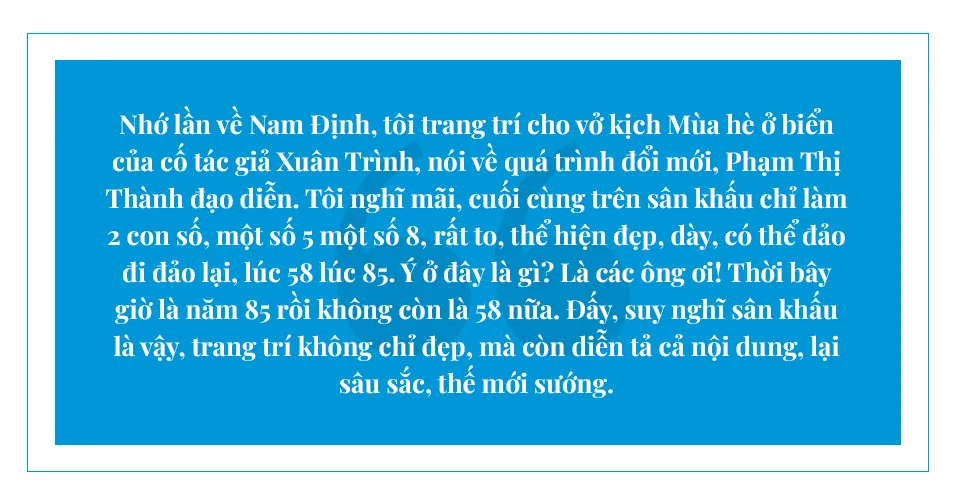
That's only partly true. I remember when I went back to Nam Dinh, I was decorating for the play "Summer at the Sea" by the late author Xuan Trinh, about the process of reform, directed by Pham Thi Thanh. I thought about it for a long time, and in the end, I only put two numbers on the stage, a 5 and an 8, very big, beautifully and densely displayed, and could be reversed, sometimes 58, sometimes 85. What was the meaning here? It was, "Hey guys! It's 1985 now, not 1958 anymore." That's the idea behind stage design; the decorations shouldn't just be beautiful, but also convey the content, and be profound at that. That's what makes it so satisfying.
In the field of stage design, especially for performances with foreign themes, have you ever combined Vietnamese and Western elements?
There are many examples, for instance, the play King Lear. Regarding the stage design for this play, it's already been done extensively in Europe; when I created it, I combined traditional puppet theater techniques with the stage design, creating a truly surprising effect, even for my foreign colleagues. I received many compliments from my colleagues, and many even tried to find evidence of plagiarism, but couldn't find any. It's not because I'm particularly talented, but simply because I've inherited and developed the "Vietnamese" quality in my blood.
Thank you, sir!
Source link
![[Photo] Prime Minister Pham Minh Chinh receives the Chinese Ambassador to Vietnam](https://vphoto.vietnam.vn/thumb/1200x675/vietnam/resource/IMAGE/2026/04/05/1775397481797_ndo_br_dsc-5512-jpg.webp)
























































Comment (0)