



Clean energy production
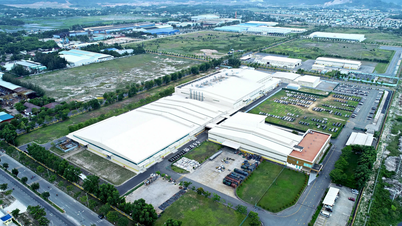
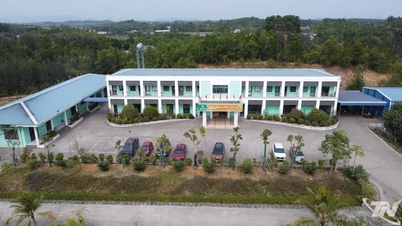
At the headquarters of CAS Energy Co., Ltd. (CAS Energy) located on Street No. 2, Hoa Cam Industrial Park (Cam Le Ward), the entire roof of the main building is fitted with solar panels; the factory is designed for rooftop solar power production combined with a small farm; the small front yard serves as an agricultural garden, and the entire premises are surrounded by shade trees.
This model utilizes the space on the roofs, terraces, balconies, or small courtyards of buildings to produce clean energy and promote urban renewable agriculture in industrial zones, urban areas, hotels, apartment buildings, residential complexes, and private homes. This model not only creates green spaces and contributes to urban greening, but also helps cool the environment and reduce the urban heat island effect, potentially lowering roof temperatures by up to 5°C.
Mr. Nguyen Ngoc Duong, Business Director of CAS Energy Co., Ltd., stated that as a business in Da Nang City, CAS Energy is always concerned with practical technological solutions that contribute to the goal of building an environmentally friendly city, especially transforming urban challenges into opportunities for green development. One of these challenges is that urban areas feel hotter than rural areas due to the urban heat island effect, with many air conditioners, vehicles, and a large number of people living and working there. Da Nang wants to realize its goal of becoming an ecological, green, and livable city, and needs to address the challenge of the urban heat island effect.
Accordingly, the city encourages residents, businesses, and agencies to install small-scale self-consumption solar power systems to take advantage of the enormous potential of solar energy, with a high average number of sunshine hours per year and strong radiation. At the same time, it promotes the development of regenerative agriculture models at households and offices to create "forests" that beautify the landscape and provide shade.
Not only CAS Energy, but also many construction project investors in Da Nang City have been applying green building solutions that are environmentally friendly and reduce the urban heat island effect, given the increasing intensity and widespread heat in recent years.
According to Mr. Nguyen Thanh Tri, M.Sc., from the Da Nang Center for Applied Science and Technology and Quality Measurement Standards (Department of Science and Technology), Da Nang has a typical tropical monsoon climate of Central Vietnam. In the context of environmental challenges and climate change, the development of green buildings is becoming an inevitable trend.
Develop a plan for urban cooling.
According to experts, the city needs to conduct research and integrate requirements for sustainable cooling, reducing the urban heat island effect, and resilience to extreme heat into provincial-level urban development programs, local climate change response action plans, provincial and master plans (urban plans), and relevant specialized plans.

Da Nang City can leverage the experience and results of the Tam Ky urban cooling action plan, implemented over the past two years by the Climate Change Department (Ministry of Agriculture and Environment) with support from the United Nations Environment Programme (UNEP) and the Global Green Growth Institute (GGGI).
Dr. Ngo Hoang Ngoc Dung, from Hanoi University of Civil Engineering (one of the experts involved in developing this plan), suggested: “Cities implementing this plan later can fully utilize the results of the urban cooling action plan for Tam Ky, Can Tho, etc., to shorten the research time. At the same time, focus on specific factors to provide recommendations on urban planning and design strategies and solutions based on nature; building design, use of cooling technology and equipment; mechanisms to support and encourage the application of cooling solutions...”.
According to Le Ngoc Tuan, Deputy Director of the Climate Change Department (Ministry of Agriculture and Environment), in 2025, the concept of sustainable cooling in construction projects and urban areas will be institutionalized for the first time in Government Decree 119/2025/ND-CP, creating a basis for issuing and implementing long-term sustainable cooling policies.
Through international cooperation, Vietnam is perfecting mechanisms and policies, while also helping localities integrate urban cooling measures right from the urban planning and design stages. Strengthening passive cooling solutions such as shading, natural ventilation, and green space development not only contributes to reducing the urban heat island effect and protecting people's health, but also helps reduce electricity demand and indirectly cut greenhouse gas emissions.
According to Dr. Ngo Hoang Ngoc Dung from Hanoi University of Civil Engineering, Da Nang, located in the sunny central region, means that construction projects, especially high-rise buildings, will be affected by sunlight and heat generated by air conditioners. To achieve sustainable cooling in the city, it needs to integrate solutions to reduce urban heat such as increasing natural cooling solutions and green infrastructure, including water bodies, right from the urban planning and design stages.
Simultaneously, reduce the cooling needs of buildings by requiring developers to design passive, climate-change-adaptive architectural cooling systems with envelopes, natural ventilation, and energy-efficient cooling. Finally, implement effective solutions to address cooling needs using smart technologies and refrigerants.
Source: https://baodanang.vn/huong-den-lam-mat-do-thi-ben-vung-3316422.html













































































Comment (0)