

Rapid growth has also exposed infrastructure limitations: Tan Son Nhat Airport has been operating above its design capacity for many years. Noi Bai Airport has reached its capacity limit, while many regional airports lack the momentum for expansion. In particular, the domestic maintenance, repair, and overhaul (MRO) system is almost incapable of meeting the needs of Vietnam's fleet of nearly 200 aircraft.
Notably, T&T Group recognized these limitations nearly a decade earlier. In 2018, while most businesses focused on the race to open new routes, Chairman Hien's group chose to approach aviation from the technical operations stage – where the infrastructure structure and system resilience are most clearly reflected. This early and different approach formed the foundation for the expansion strategy of the aviation ecosystem that the group is currently pursuing.
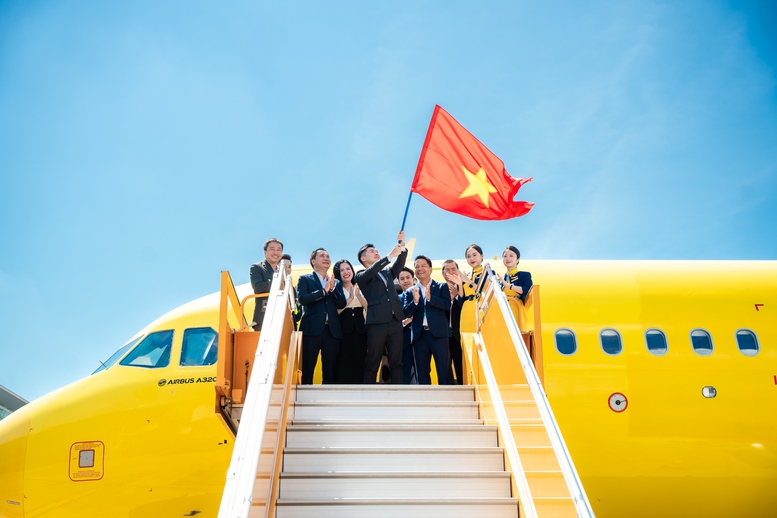
Vietravel Airlines is entering a new era of ambitious growth.
T&T Group's early vision
2018 was a golden year for the Vietnamese aviation market. Domestic passenger numbers surpassed 70 million, and airlines competed to expand their fleets. A wave of seeking new, lucrative opportunities in aviation erupted. Amidst this general climate, T&T Group quietly established T&T Airlines.
Interestingly, instead of taking a shortcut by becoming a new airline, this "newcomer" primarily operates in the fields of air transport, travel agency services, air traffic control services, and services and activities directly supporting air transport.
T&T Group's approach, focusing on infrastructure, technology, and operations, allows them to observe the booming market more closely from a distance. This includes the fact that the nearly 200 domestic aircraft fleet relies heavily on foreign MRO (Maintenance, Operations, and Repair) systems, resulting in significantly increased maintenance costs. Furthermore, Tan Son Nhat Airport handles over 40 million passengers despite its design capacity of only 28 million, while Noi Bai Airport has been facing upgrades for many years…
T&T Airlines can therefore be considered a foundational step for T&T Group's breakthrough in the next phase. From this, T&T Group realizes that the issue lies not in the number of routes or airlines, but in the foundation. The operational foundation and infrastructure – factors that determine the long-term capacity of Vietnam's aviation industry. This led Mr. Hien's company to a second, game-changing decision: investing in airports.
Infrastructure as the cornerstone
The next step in Chairman Hien's journey to dominate the skies came in 2020, when T&T Group proposed researching and preparing investment documents for the construction of Quang Tri Airport. Notably, this was a period when global air transport had decreased by up to 60% due to the impact of COVID-19. Many international airlines were forced to suspend flights. Some large investors sought to divest, or even withdraw from this unique sector.
T&T's decision to build an airport – a move that seems counter-cyclical but aligns with long-term development logic – is crucial. An airport requires 5-7 years of preparation and construction; waiting for market recovery before starting would mean Vietnam would continue to face infrastructure shortages for the next decade. T&T Group's shift towards infrastructure development came at a time when the need to upgrade aviation capacity was more evident than ever. As Mr. Nguyen Quyet Chien, Secretary General of the Vietnam Union of Science and Technology Associations, stated at a seminar on airport investment policy: "A nation that wants to fly high must first have strong wings, and the airport system is those wings."
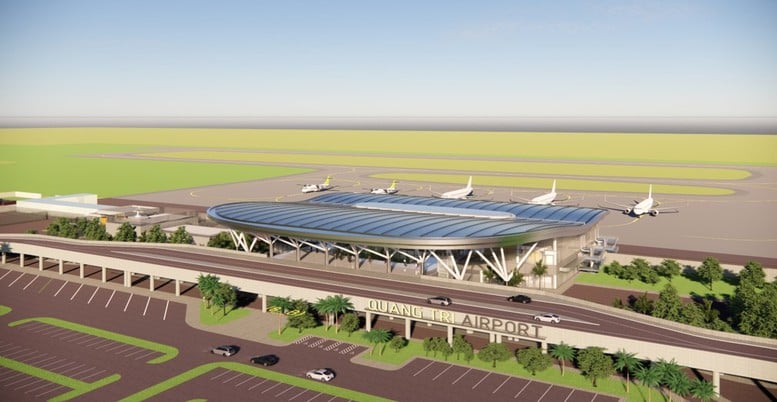
Perspective view of Quang Tri Airport.
Furthermore, Quang Tri is strategically located on the East-West economic corridor, connecting Laos, Thailand, and Myanmar with the East Sea. However, the province lacks a sufficiently large airport, leading to a paradox: a location with the potential to become a cross-border logistics hub lacks the infrastructure to fulfill that role.
The Quang Tri Provincial Planning for the period 2021-2030, with a vision to 2050, also identifies this locality as a logistics and goods transshipment center for the Southeast Asian region and transportation corridors in the ASEAN region and the Mekong River sub-region .
Besides its advantageous location and connectivity, Quang Tri also lies on one of the region's important trade routes. Currently, three major trade flows are shifting through Vietnam, most notably the East-West Economic Corridor extending from Myanmar – Thailand – Laos to the East Sea. This is a strategic transportation route in the Mekong sub-region, where high-value goods such as electronics, components, pharmaceuticals, and fresh produce are increasingly in demand.
According to the National Airport System Development Master Plan until 2050, Vietnam is expected to have 33 airports. In the North Central region, the regional plan also indicates the need to create a new infrastructure hub to support the development of industry, tourism, services, and logistics throughout the region.
In July 2024, the project, covering an area of 265 hectares with a total investment of VND 5,800 billion, was officially launched by the joint venture of T&T Group and Cienco 4. The project is being built to meet the standards of a 4C-class airport (according to the International Civil Aviation Organization - ICAO standards) and a Class II military airport. The airport is capable of handling Code E aircraft, meeting the needs of up to 5 million passengers and 25,500 tons of cargo annually. Given the limited expansion space at major airports like Tan Son Nhat and Noi Bai, the Quang Tri airport creates an untapped gap – a new "infrastructure highlight" that can support regional growth.
During the investment and construction of Quang Tri Airport, T&T Group also simultaneously proposed a plan for an aviation, logistics, service, commercial, and airport city complex with a scale of approximately 10,800 hectares. The plan centers around Quang Tri Airport and includes all the necessary functional areas for an aviation industrial complex: aircraft maintenance; manufacturing and assembly of aircraft components and spare parts; a logistics hub; and an airport city… Prioritizing the development of a large-scale aviation industrial complex and cargo transshipment center will not only bring direct economic value to the locality but also contribute to infrastructure modernization, enhancing national and regional competitiveness, in line with the sustainable development goals pursued by the Government.
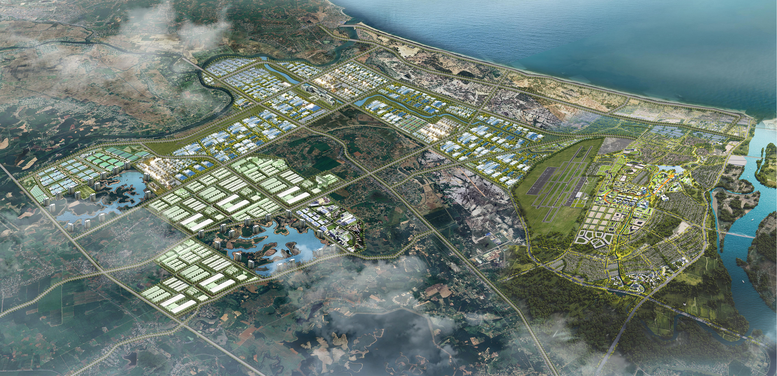
Perspective view of the aviation, logistics, service, trade and airport city complex in Quang Tri.
The master plan for the development of the airport system until 2050 also aims to establish logistics centers, aircraft maintenance and repair centers, and air traffic control equipment systems at major airports with favorable infrastructure conditions. This is not only a technical requirement but also one of the strategic pillars to enhance the self-reliance of the aviation industry.
Notably, given that the domestic aircraft maintenance and repair (MRO) infrastructure is not yet meeting demand, the formation of an aviation industrial complex in Quang Tri, with large-scale MRO hangars, is consistent with national orientation and contributes to solving the "bottleneck" in Vietnam's aviation technical infrastructure, gradually mastering the value chain from operation and maintenance to engineering and repair.
"This will be a large-scale, high-tech aviation industrial complex. T&T Group will cooperate with leading aerospace corporations from the US, Europe, and China to bring semiconductors and AI into the aviation sector; making Vietnam an important factor in the global aerospace industry," shared Do Quang Hien, Executive Chairman of T&T Group.
From a broader perspective, T&T Group's strategy shares many similarities with the development models of global giants. In the Netherlands, the ecosystem surrounding Schiphol Airport contributes approximately 30 billion euros annually to the economy.
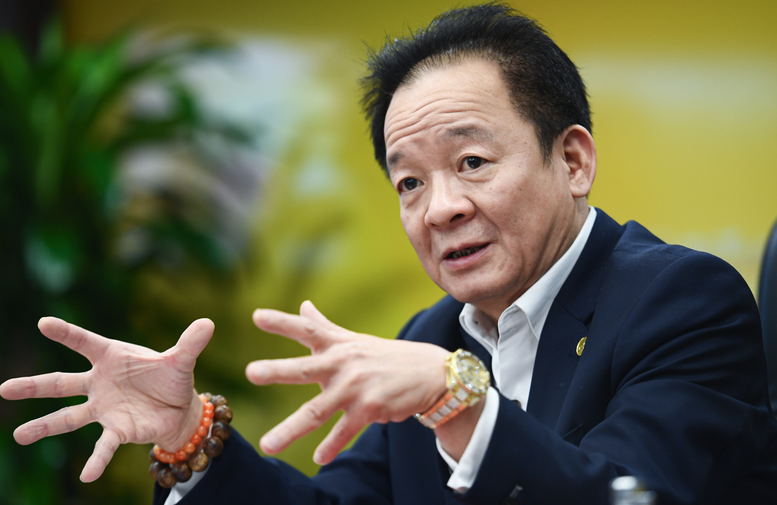
According to Mr. Hien, T&T Group's goal in the aviation industry is to bring benefits to the people, create value for the business, and contribute to the socio-economic development of the country.
In Singapore, the Changi Airport and aviation ecosystem contributes approximately 5% of GDP, creates around 200,000 jobs, and serves as a platform connecting Singapore with over 200 cities worldwide. Notably, the government has planned a 20-30 year long-term development to upgrade Changi Airport and Tuas Port, ensuring connectivity and adaptability to global changes. These two key infrastructures are connected by an integrated logistics network, making Singapore one of the world's most dynamic and flexible "global logistics hubs."
Looking at these models, Quang Tri shows similar conditions for developing into a new integrated logistics and aviation ecosystem, similar to what Singapore did decades ago. In recent years, the locality has been gradually forming a multimodal logistics chain, connecting road, border gates, seaports, and airports through expressways, National Highway 1, National Highway 9, the La Lay - Southeast Economic Zone road, along with the My Thuy and Cua Viet seaports… This is an important foundation for Quang Tri to become a transshipment point for goods in the Greater Mekong Subregion, similar to how Singapore established its position as a regional center through an integrated logistics infrastructure strategy.
The new piece of the puzzle is called Vietravel Airlines.
Back in late 2024, T&T Group officially became a strategic shareholder of Vietravel Airlines. From there, the young airline entered a new, professional, and sustainable growth cycle. In June 2025, Vietravel Airlines welcomed its first owned aircraft, officially transitioning from a leasing model to aircraft ownership. Subsequently, the airline continuously expanded its fleet, established new routes, and set a target of developing a fleet of 30-50 aircraft by 2030…
In addition to focusing on passenger transport, Vietravel Airlines' next-phase development strategy will expand into air cargo transportation to meet the growing demand of the supply chain and logistics in the region. When connected to the infrastructure and logistics ecosystem that T&T Group is building, the cargo transportation segment will become a new growth driver for Vietravel Airlines.
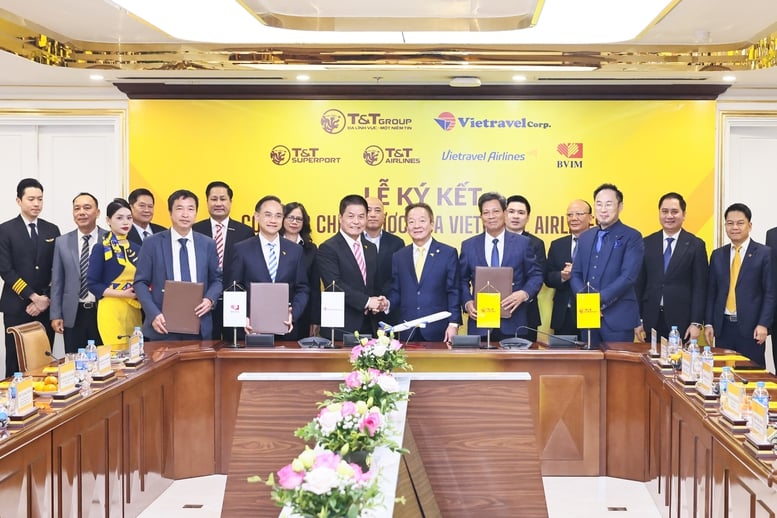
Vietravel Airlines is the perfect piece to complete the aviation ecosystem that T&T Group is pursuing.
For T&T Group, the presence of Vietravel Airlines is a step towards completing the operational structure of the ecosystem that the group is pursuing. As Mr. Do Quang Hien, Founder and Executive Chairman of T&T Group, shared: "What T&T Group aims for in the aviation industry is to bring benefits to the people, value to the business, and contribute to the socio-economic development of the country."
From a macroeconomic perspective, experts believe that as the aviation industry shifts significantly from extensive to intensive growth, businesses that focus on infrastructure and operations will have a longer-term advantage over models that rely solely on route expansion. For T&T Group, nearly a decade of preparation for its aviation dream demonstrates a consistent approach: building a foundation before entering the commercial arena.
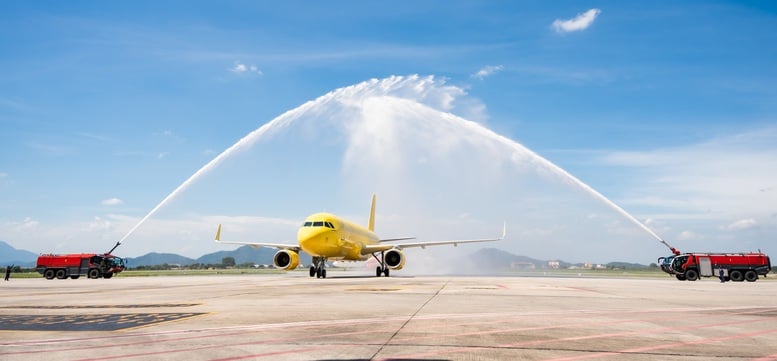
With the participation of T&T Group, Vietravel Airlines is entering a new, professional, and sustainable growth cycle.
As infrastructure bottlenecks, MRO, logistics, and regional connectivity become increasingly apparent, this approach is not only commercially viable but also aligns with the industry's restructuring needs. The aviation ecosystem that T&T is shaping – albeit in its early stages – reflects a strategic choice: Shifting Vietnamese aviation from dependence to greater self-reliance in infrastructure, technology, and value chains.
In the long term, if these pieces are put into operation in sync, the Vietnamese aviation industry will have a new growth pole: infrastructure quality – the foundation that determines the competitiveness of a modern aviation market.
Source: https://baochinhphu.vn/khat-vong-bau-troi-and-tam-nhin-cua-tt-group-10225121510042269.htm

![[Photo] Prime Minister Pham Minh Chinh receives Lao Minister of Education and Sports Thongsalith Mangnormek](/_next/image?url=https%3A%2F%2Fvphoto.vietnam.vn%2Fthumb%2F1200x675%2Fvietnam%2Fresource%2FIMAGE%2F2025%2F12%2F16%2F1765876834721_dsc-7519-jpg.webp&w=3840&q=75)
![[Image] Leaked images ahead of the 2025 Community Action Awards gala.](/_next/image?url=https%3A%2F%2Fvphoto.vietnam.vn%2Fthumb%2F1200x675%2Fvietnam%2Fresource%2FIMAGE%2F2025%2F12%2F16%2F1765882828720_ndo_br_thiet-ke-chua-co-ten-45-png.webp&w=3840&q=75)

![[Photo] Prime Minister Pham Minh Chinh receives the Governor of Tochigi Province (Japan)](/_next/image?url=https%3A%2F%2Fvphoto.vietnam.vn%2Fthumb%2F1200x675%2Fvietnam%2Fresource%2FIMAGE%2F2025%2F12%2F16%2F1765892133176_dsc-8082-6425-jpg.webp&w=3840&q=75)









































![[Photo] Prime Minister Pham Minh Chinh attends the Vietnam Economic Forum 2025](https://vphoto.vietnam.vn/thumb/402x226/vietnam/resource/IMAGE/2025/12/16/1765893035503_ndo_br_dsc-8043-jpg.webp)





















Comment (0)