

6 major bottlenecks in Vietnam's logistics
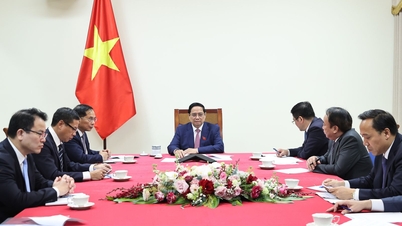
At the Vietnam Logistics Forum 2025 recently held in Da Nang , the Prime Minister affirmed that the Party and the State are paying attention to and have implemented many important policies and guidelines to develop the logistics industry.
Resolutions of the Politburo , institutions, mechanisms, and policies issued by the National Assembly and the Government on regional development all contain provisions on logistics. The implementation of these policies and guidelines has yielded positive results. However, alongside the achievements, Vietnamese logistics still faces shortcomings and limitations, with six bottlenecks.
Specifically, logistics costs in Vietnam remain high compared to other countries in the region (Singapore at only 8%, Malaysia at 12%, and the world average at around 11%). Regional connectivity and infrastructure connections are not yet synchronized, are limited, and are vulnerable to natural disasters.
Small-scale logistics businesses predominate, possessing weak competitiveness, lacking large enterprises, and failing to establish a national-level logistics center for international cargo transshipment. The industry also suffers from a shortage of high-quality, well-trained, and professional personnel suitable for an international work environment.
The logistics system still lacks specific regulations for new types of logistics services for e-commerce, green logistics, and special cargo logistics. Digital transformation and green transformation in logistics lack a shared database and unified measurement standards.
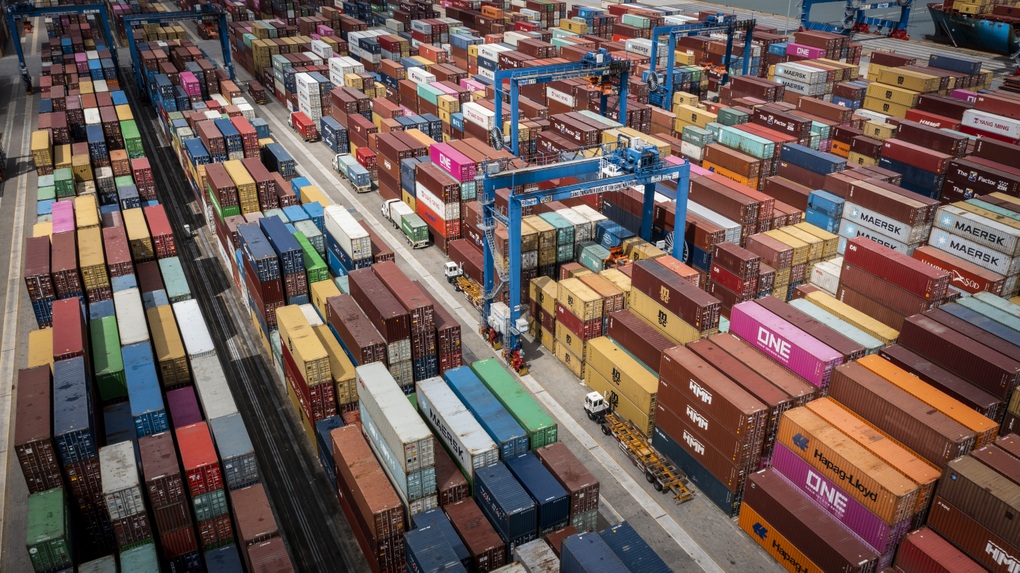
Vietnam's logistics industry is still facing many major bottlenecks (Photo: T&T).
The Prime Minister stated: “These limitations require us to innovate our development thinking, strongly shifting from ‘supporting small-scale logistics’ to ‘developing modern, smart logistics’ as a key economic sector in order to maximize the capabilities of localities…”.
According to the Prime Minister, the results achieved so far are not commensurate with Vietnam's geopolitical and geo-economic advantages, and the logistics industry still has much room for development.
How private businesses can solve the bottleneck problem.
Against this backdrop, the strong participation of the private sector, especially corporations with strong financial capabilities and development experience, is creating positive changes. Among these, T&T Group is a prime example.
Entering the logistics industry at a relatively early stage, T&T Group has established its position with a differentiated strategy. Instead of investing in small, fragmented pieces, the group aims to create a complete ecosystem with a long-term vision.
The first step was taken in 2015, when T&T became a strategic shareholder of Quang Ninh Port - a national-scale deep-water port, a crucial hub on the key economic corridor of Quang Ninh - Hai Phong - Hanoi. At that time, most goods from the North were concentrated in Hai Phong, putting pressure on the port system.
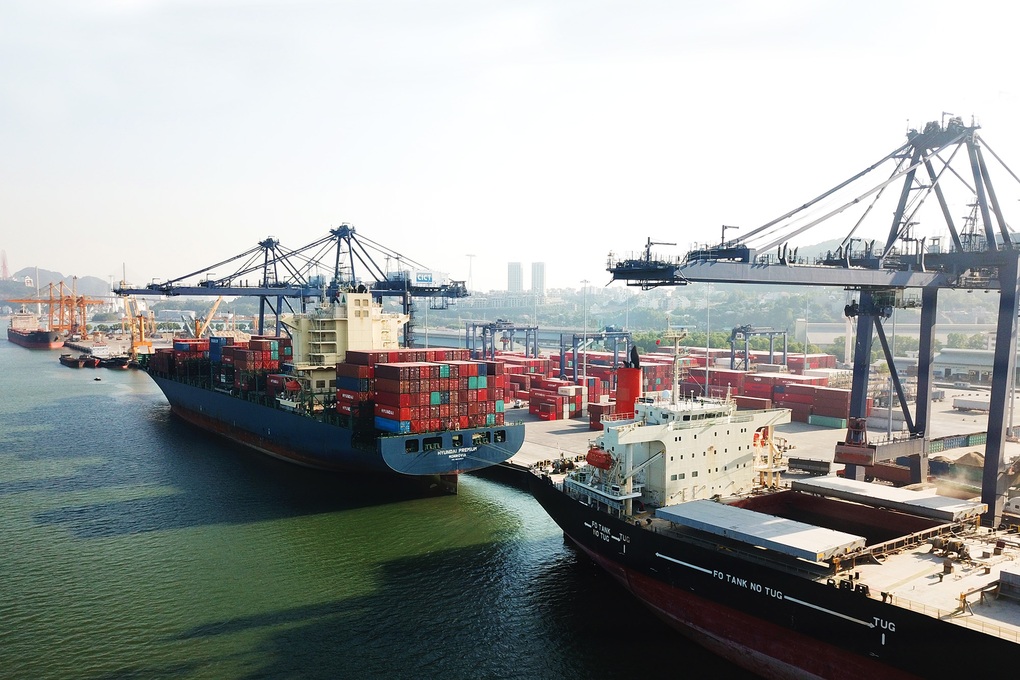
Quang Ninh Port - where T&T Group took its first steps on its logistics journey (Photo: T&T).
In just one year, cargo throughput at Quang Ninh Port increased by 30%; cargo handling volume increased by 33%. Revenue increased by 31%, and profits surged by 280%. These figures not only demonstrate financial efficiency but also indicate that Quang Ninh Port was chosen to share the burden with the Hai Phong port system.
For T&T, this was the first step in preparing for a longer-term strategy in the next decade. Three years later, T&T partnered with YCH Group (Singapore) through a strategic memorandum of understanding at the end of 2018.
At this time, YCH put forward the idea of forming a smart logistics connection chain on a regional scale, which coincided with the vision pursued by T&T Group.
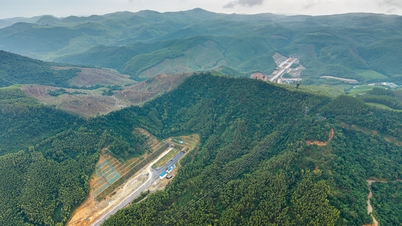
The result of this collaboration is the establishment of Vietnam SuperPort – Vietnam's largest multimodal logistics center, the first component of the ASEAN Intelligent Logistics Network. The ICD port in Phu Tho has contributed to resolving two major bottlenecks in Vietnam's logistics system: high costs and the lack of a national logistics center.
Robotic sorting systems, AI-optimized operations, AGVs (Automated Guided Vehicles), and extended-range air warehousing not only increase productivity and reduce errors but also help standardize the entire chain according to international standards. More importantly, SuperPort's connection of rail, road, seaport, and air creates a multimodal connectivity platform.
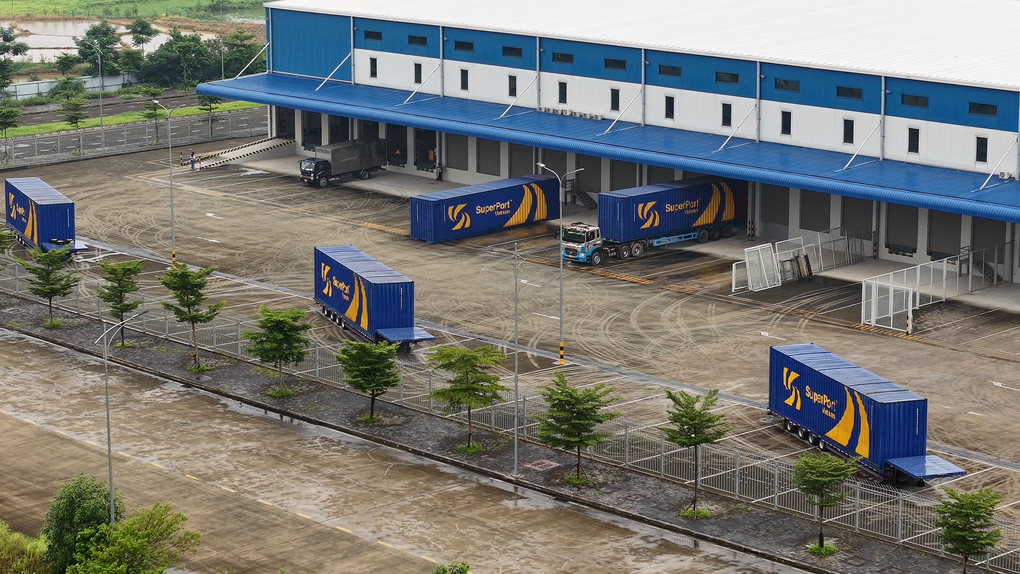
Vietnam SuperPort in Phu Tho (Photo: T&T).
In the long term, this port aims to contribute to reducing domestic logistics costs from 21% to 14% of the gross domestic product by 2025 and to approximately Singapore's level of 8-10% by 2035.
Long-term expansion plan
At a deeper level, T&T Group is also continuously expanding its investment in transportation infrastructure, contributing to resolving bottlenecks in connectivity.
In the North, the Quang Ninh Port and the Nam Phuc Tho Industrial Zone (Hanoi) combine to help distribute goods more efficiently. In the Central Highlands, the Bao Loc - Lien Khuong expressway is of particular importance. This is one of the largest agricultural export regions in the country, but transportation costs remain high.
Once completed, the connection route to southern logistics centers will be significantly shortened, reducing delivery times and thereby increasing the competitiveness of agricultural products – the group of goods currently bearing the highest logistics costs in the value chain.

Perspective view of the Bao Loc - Lien Khuong expressway (Photo: T&T).
In Central Vietnam, Quang Tri Airport is entering its final stages of development. This airport also plays a crucial role as a multimodal transportation hub, connecting air, road, rail, and seaports via the East-West economic corridor.
From a mindset focused on developing individual transportation infrastructure projects, T&T Group's vision has evolved to one of creating new development spaces. In this vision, the airport is an integral part of a large-scale aviation, logistics, service, commercial, and airport city complex. With this approach, the company expects Quang Tri Airport to become one of the largest "logistics hubs" in the region.
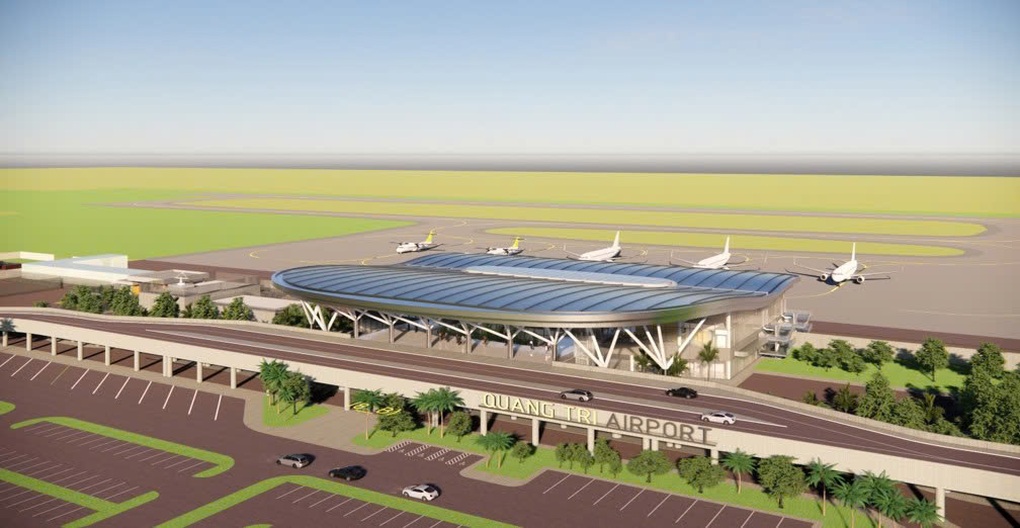
Perspective view of Quang Tri Airport (Photo: T&T).
With a solid foundation on the ground, T&T Group's logistics landscape continues to be refined with a major aviation strategy. At the end of 2024, T&T Group became a strategic shareholder of Vietravel Airlines, ushering the young airline into a new phase of development.
T&T announced that it will become more deeply involved in the air cargo sector in the near future.
"This is even more significant as air cargo is becoming an increasingly important component for export-oriented countries. Air cargo transport capacity will be key for Vietnam to raise its logistics standards, reduce dependence, and become more proactive in international supply chains," a company representative shared.
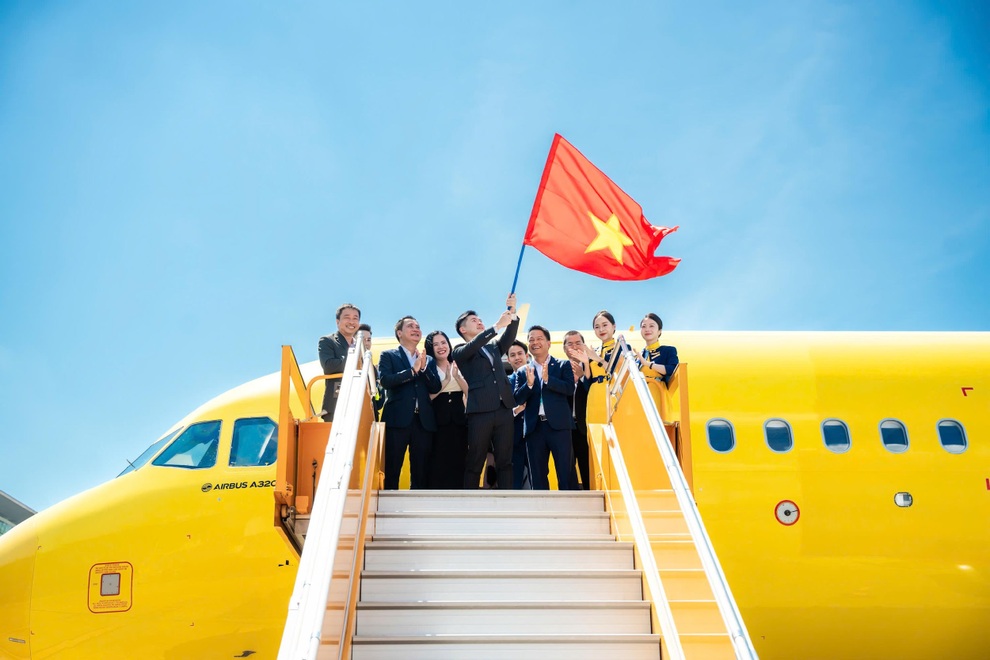
T&T Group is completing its logistics picture with major strategies in aviation (Photo: T&T).
Regarding technological and logistics human resource bottlenecks, T&T is also seeking solutions through specific plans. In terms of digital transformation and green transformation, Vietnam SuperPort is applying robotic systems and AI-powered customs clearance solutions in its operations, while also creating a logistics connectivity platform for domestic small and medium-sized enterprises.
In terms of human resource training, T&T collaborates with major partners, such as YCH, to train young Vietnamese professionals aimed at managing advanced supply chains and applying high technology.
Do Quang Hien, founder and CEO of T&T Group, once stated: "Logistics is the lifeblood of the economy, and if Vietnam wants to break through, it must become a regional distribution hub."
And the ecosystem that T&T is building is the group's answer, showing that a private enterprise model can contribute to solving key bottlenecks in this specific sector.
Source: https://dantri.com.vn/kinh-doanh/doanh-nghiep-tu-nhan-gop-phan-giai-bai-toan-diem-nghen-logistics-20251211153155155.htm


![[Photo] Closing Ceremony of the 10th Session of the 15th National Assembly](/_next/image?url=https%3A%2F%2Fvphoto.vietnam.vn%2Fthumb%2F1200x675%2Fvietnam%2Fresource%2FIMAGE%2F2025%2F12%2F11%2F1765448959967_image-1437-jpg.webp&w=3840&q=75)


































![[OFFICIAL] MISA GROUP ANNOUNCES ITS PIONEERING BRAND POSITIONING IN BUILDING AGENTIC AI FOR BUSINESSES, HOUSEHOLDS, AND THE GOVERNMENT](https://vphoto.vietnam.vn/thumb/402x226/vietnam/resource/IMAGE/2025/12/11/1765444754256_agentic-ai_postfb-scaled.png)





































Comment (0)