

To achieve that goal, U.S. Deputy Secretary of Defense (DoD) Kathleen Hicks recently approved a new policy aimed at reducing the "classification" level of some top-secret space programs and technologies belonging to the Pentagon.
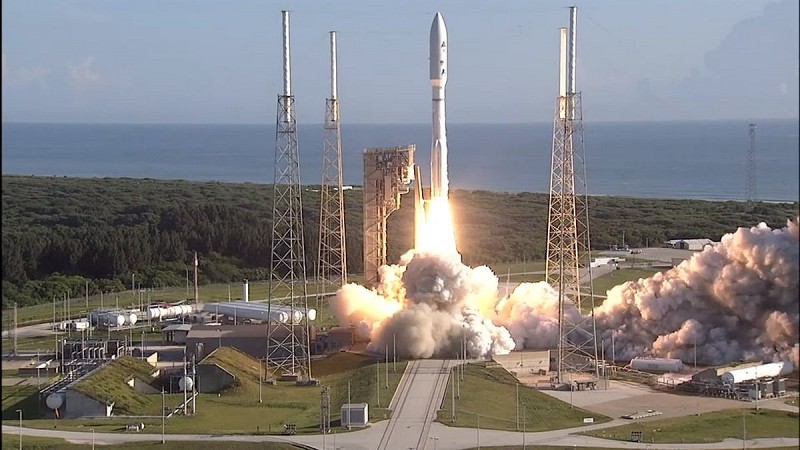 |
| Some officials at the Pentagon have called for a new declassification policy for space programs. (Source: United Launch Alliance) |
According to John Plumb, Assistant Secretary of the Department of Space Policy at DoD, these policies prohibiting information sharing are outdated and are hindering the U.S. from achieving dominance in space.
Plumb stated, "Generally speaking, some classified documents have been around for 20 years and are no longer applicable to the current environment regarding national security in space."
Of course, this new policy does not mean that American programs and technologies will be completely declassified and disclosed to the public.
Instead, the Pentagon will downgrade their classification to share some technologies and programs with private industry and international allies to help the U.S. build “an advantage that neither China nor Russia can match,” Plumb stated in a DoD statement.
This new move will also allow individual units within the U.S. armed forces to decide their own classification level for "classified" documents, rather than applying the DoD's general policy to all military programs and technologies in space.
One of the main issues driving this policy change is the use of what is known as the Special Access Program (SAP), strict security regulations related to the sharing of confidential and highly sensitive information.
Some aspects of SAP are publicly acknowledged, meaning their existence is known to the public but details remain undisclosed. However, many others are not acknowledged, meaning their existence remains a secret.
Plumb argued that the new policy would eliminate the application of SAP to some of the Pentagon's most valuable space programs, giving the U.S. military an advantage in an area that the Department of Defense now considers "the most critical area" for national security.
Some officials at the Pentagon have been advocating for such a new declassification policy for years, arguing that overly strict classifications have hampered the use of advanced military capabilities to deter enemy attacks.
In a rare disclosure, the U.S. Space Force and the Office of National Reconnaissance revealed a range of capabilities of the Silent Barker "surveillance" satellite launched by United Launch Alliance in September 2023.
Before launch, they told the public that Silent Barker was designed to track satellites and spacecraft. At the time, Lieutenant General Michael Guetlein, commander of the U.S. Space Force, noted that this disclosure was designed to help deter attacks on U.S. satellites.
However, to date, the capabilities and precise specifications of many US military and intelligence satellites remain unknown.
(according to Space)
Source


































































































Comment (0)