

The situation in Ho Chi Minh City shows the urgent need to review and adjust the minimum wage zoning to ensure the legitimate rights and stable livelihoods of workers after restructuring. A reporter from the newspaper Tin Tuc va Dan Toc (News and Nation) had an interview with Ms. Ho Thi Kim Ngan, Deputy Head of the Labor Relations Department (Vietnam General Confederation of Labor), on this topic.
The story of Ho Chi Minh City proposing adjustments to the minimum wage zoning due to a difference of up to 1,170,000 VND (over 28%) between Zone I and Zone III, despite being only a street apart, illustrates the practical shortcomings that have arisen after the merger of the two levels of local government. What are your views on this issue?
Based on feedback from the Ho Chi Minh City Federation of Labor, it is clear that the minimum wage is a particularly important policy. This is the lowest wage to be paid to workers performing simple tasks under normal working conditions, aiming to ensure a minimum standard of living appropriate to the socio-economic conditions of the locality where the worker lives.
Therefore, adjusting the minimum wage to ensure a minimum standard of living for workers is extremely important. According to feedback and findings from the Ho Chi Minh City Trade Union, the merger of localities, communes, and residential areas has changed administrative boundaries, leading to changes in wage zoning compared to previous regulations.

Compared to the previous year, the reorganization and mergers have significantly altered administrative boundaries. Therefore, in addition to adjusting the regional minimum wage, we also need to consider reviewing the regional zoning system to ensure it is reasonable. Areas bordering each other, with similar working conditions and living costs, cannot have excessively large differences in minimum wages.
In Ho Chi Minh City, the Labor Federation discovered that some communes in the former Ba Ria - Vung Tau province had significant disparities in minimum wage. This is not just a localized issue, but could occur in many other localities across the country as mergers are implemented.
Decree 293 has made certain adjustments to the minimum wage zoning and is generally positive. However, I believe that localities, trade unions at all levels, and local governments need to continue reviewing the current zoning, identifying areas within provinces and cities where there are still significant disparities, especially in border areas.
A particularly noteworthy proposal from the Ho Chi Minh City Trade Union is that for adjacent communes, the difference in minimum wage should not exceed one regional division. This means a difference between Region I and Region II is acceptable, but it should not be the case that one side is Region I and the other is Region III or IV. Based on this reality, a nationwide review could be conducted to reassess the cost of living and socio-economic conditions to ensure that bordering regions do not experience excessively large disparities in minimum wage.
Not all localities have the resources to review and adjust immediately. So, based on the real-life situation in Ho Chi Minh City, what recommendations are needed to ensure the rights of workers in newly merged areas across the country are protected, starting from the beginning of 2026?
Decree 293 has been issued and will come into effect in 2026, based on thorough assessment and review, along with input from ministries, sectors, localities, and trade unions at all levels. We have reason to believe that the decree has taken into account the fundamental principles in zoning minimum wages.
It is important to emphasize that the minimum wage is not only significant for the lives of workers but also a crucial input cost for businesses. In the current economic context, adjusting the minimum wage needs to ensure harmony and avoid putting excessive pressure on the production and business costs of enterprises.
Decree 293 has already made certain calculations and considerations in adjusting zoning. However, based on the recommendations of the Ho Chi Minh City Federation of Labor, the National Wage Council needs to continue assessing living conditions, collecting data on the minimum living wage of workers, the economic development situation, inflation index, etc., to serve as a basis for proposing appropriate adjustment levels.
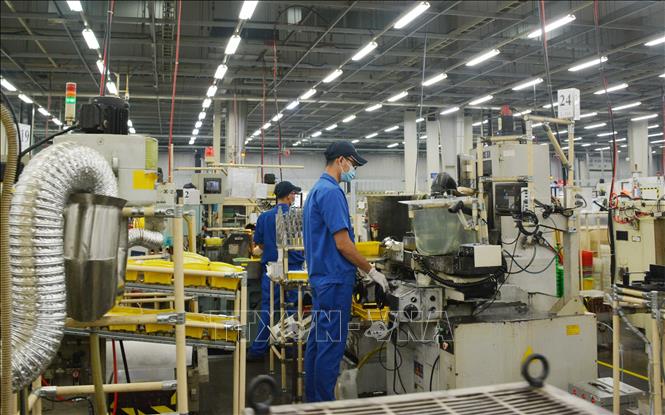
In addition, it is necessary to reassess the cost of living between different regions and areas nationwide, especially in newly merged localities. This is also an opportunity for localities to review the effectiveness of the reorganization and adjustment of regional zoning, ensuring that the lives of workers after the merger are not significantly disrupted.
If the minimum wage can vary significantly just by crossing a road or a bridge, it will inevitably create comparisons and potentially impact labor mobility. Therefore, reviewing minimum wage levels in relation to the actual cost of living is a key area that the National Wage Council and local authorities need to focus on in the coming period.
Based on this experience, what recommendations do you have for improving the minimum wage policy?
The most important thing is to listen to the opinions of the people and the workers after the restructuring and mergers are carried out. The merger process is affected by many factors, and we need to choose the most appropriate solutions.
Mergers not only affect administrative boundaries but also directly impact the lives of workers, from transportation, housing, job searching, vocational training, and schools for their children to social welfare and recreational needs. These are all fundamental conditions that need to be comprehensively assessed when developing and adjusting policies.
Therefore, minimum wage policies need to be considered within the overall context of other social security policies, ensuring consistency across localities with varying socio-economic conditions. The most important solution is to promptly identify problems and listen to feedback from the grassroots level to make appropriate adjustments.
Issues requiring time for evaluation can be categorized, prioritizing those that directly impact workers' lives, in order to ensure the ultimate goal of stabilizing their lives, creating work motivation, and promoting sustainable development.
Thank you very much, Madam!
Source: https://baotintuc.vn/xa-hoi/khong-de-nguoi-lao-dong-thiet-vi-luong-toi-thieu-sau-sap-nhap-20251215111421035.htm

![[Photo] Prime Minister Pham Minh Chinh receives the Governor of Tochigi Province (Japan)](/_next/image?url=https%3A%2F%2Fvphoto.vietnam.vn%2Fthumb%2F1200x675%2Fvietnam%2Fresource%2FIMAGE%2F2025%2F12%2F16%2F1765892133176_dsc-8082-6425-jpg.webp&w=3840&q=75)
![[Image] Leaked images ahead of the 2025 Community Action Awards gala.](/_next/image?url=https%3A%2F%2Fvphoto.vietnam.vn%2Fthumb%2F1200x675%2Fvietnam%2Fresource%2FIMAGE%2F2025%2F12%2F16%2F1765882828720_ndo_br_thiet-ke-chua-co-ten-45-png.webp&w=3840&q=75)

![[Photo] Prime Minister Pham Minh Chinh receives Lao Minister of Education and Sports Thongsalith Mangnormek](/_next/image?url=https%3A%2F%2Fvphoto.vietnam.vn%2Fthumb%2F1200x675%2Fvietnam%2Fresource%2FIMAGE%2F2025%2F12%2F16%2F1765876834721_dsc-7519-jpg.webp&w=3840&q=75)





























































![[Photo] Prime Minister Pham Minh Chinh attends the Vietnam Economic Forum 2025](https://vphoto.vietnam.vn/thumb/402x226/vietnam/resource/IMAGE/2025/12/16/1765893035503_ndo_br_dsc-8043-jpg.webp)

































Comment (0)