

With the determination to "Speed, even greater speed, boldness, even greater boldness, seize every hour and every minute, rush to the front, liberate the South, fight decisively and achieve total victory," the general offensive and uprising of spring 1975, culminating in the historic Ho Chi Minh Campaign, achieved total victory, reunifying North and South Vietnam, and celebrating national triumph.
 Liberation Army tanks advance straight into the Independence Palace, noon on April 30, 1975. Photo: archival material.
After completing preparations in both North and South Vietnam, on March 10, 1975, our troops captured and liberated Buon Ma Thuot, marking the beginning of the 1975 Spring Offensive and Uprising, advancing to liberate the entire strategic highland region and ushering in a period of rapid development in the war for the liberation of South Vietnam. Given our great victory in the Central Highlands, at a meeting on March 18, 1975, the Politburo promptly reinforced its strategic resolve: to liberate South Vietnam within 1975. Following this, on March 25, the Politburo further strengthened its resolve to liberate South Vietnam before the rainy season. On March 25, our troops and people liberated Hue City; on March 29, liberated Da Nang; and by April 3, we had swept the enemy from the coastal provinces of Central Vietnam from Da Nang to Cam Ranh. On April 1, 1975, in the face of the overwhelming offensive by our army and people on the battlefield, the Politburo further reinforced its strategic resolve: to liberate the South as soon as possible, ideally in April 1975, without delay. On April 16, our army and people shattered the enemy's distant defense line at Phan Rang, and on April 20, Xuan Loc – the "steel gate" east of Saigon – was crushed.
On April 26, 1975, the historic Ho Chi Minh Campaign began. The Campaign Command identified five key targets: Tan Son Nhat Airport, the South Vietnamese General Staff Headquarters, the Presidential Palace, the Capital Special Zone, and the General Police Headquarters. Regarding tactics, the Campaign Command advocated encircling and isolating the enemy within the city; using appropriate forces in each direction to cut off and destroy the enemy outside. Simultaneously, a significant portion of the forces were organized into powerful assault units, penetrating deep into the heart of Saigon to seize the five identified targets. From there, they would coordinate with special forces, commando units, city self-defense forces, and the insurgent masses to seize all military , political, and economic targets within the city. Several special forces, commando units, and local armed forces were tasked with capturing and controlling bridges, and participating with fire units in controlling the airfield and enemy artillery positions. The motto was close coordination, rapid attack, and minimizing casualties among troops and losses of life and property for the people.
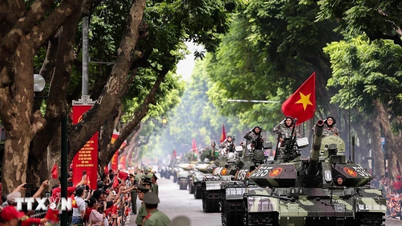
After two days of launching the general offensive, the situation on the battlefield developed in our favor. On April 29th, our troops on five fronts simultaneously opened fire, coordinating their attacks, capturing important targets, and opening a deep penetration into the center of Saigon. By 5:30 AM on April 30th, 1975, all fronts simultaneously attacked Saigon, forcing the puppet president Duong Van Minh to declare unconditional surrender. At exactly 11:30 AM on April 30th, 1975, the victory flag of our army flew over the Independence Palace. The Ho Chi Minh Campaign was a complete victory, bringing to a complete end the tenacious, indomitable, and protracted resistance war against the American imperialists that lasted nearly 21 years.
With the historic victory in the spring of 1975, our people defeated the neo-colonial war waged by the American imperialists – one of the largest, longest, fiercest, and most brutal wars since World War II. Speaking about this defeat, Marcel Taylor, former US Ambassador to South Vietnam and a renowned American strategist, admitted: "We all played a part in America's defeat in Vietnam, and there was nothing good about it. We had no heroes in this war, only fools. I myself was among them."
Speaking about the great victory of our army and people, General Van Tien Dung, former member of the Politburo and former Minister of National Defense, affirmed: “The historic Ho Chi Minh Campaign was a general offensive combined with an uprising, a combined battle of invincible strength and Vietnamese strategic brilliance, a beautiful coordination of military and political forces, a brilliant manifestation of revolutionary violence as conceived by our Party. The great victory of Spring 1975 demonstrated the unwavering will and determination to fight for independence, freedom, and socialism, considering the goal of the national democratic revolution advancing towards socialism as the consistent and unchanging political objective of the revolutionary war.”
...
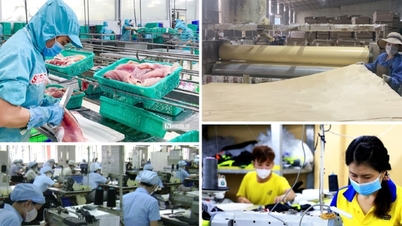
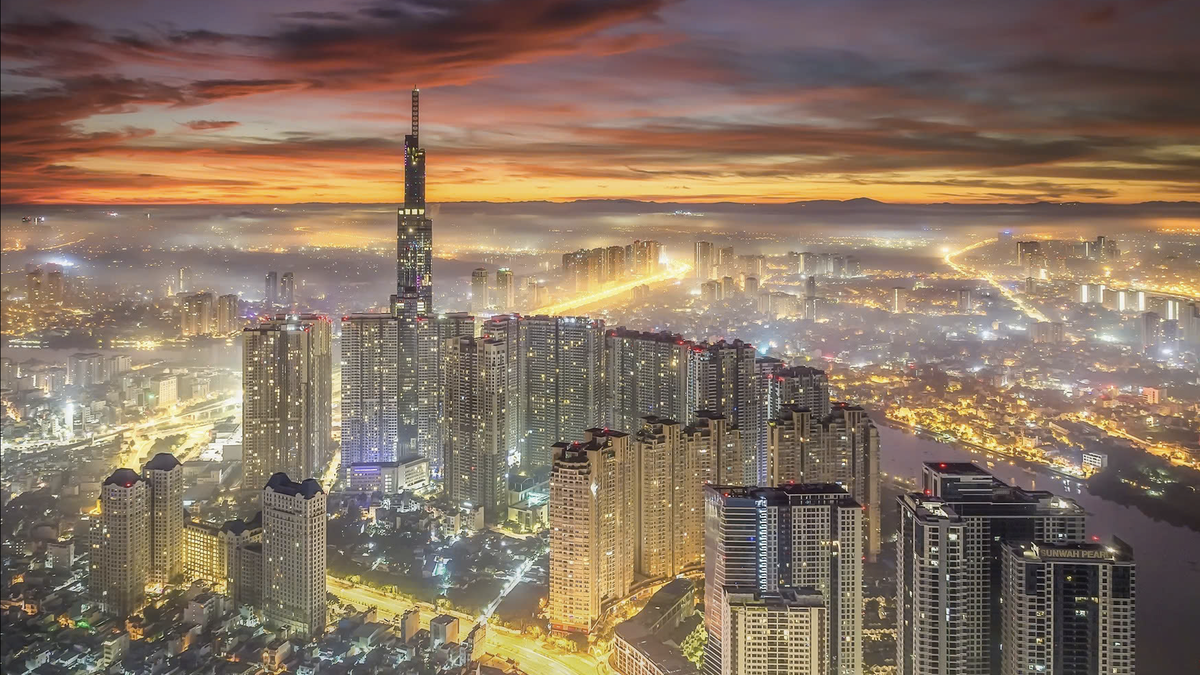
Nearly half a century has passed since that spring of reunification, and our country has undergone an extremely important transformation, decisive to the prosperity of the nation. This includes nearly 40 years of reform and over 30 years of implementing the National Construction Program during the transitional period to socialism (1991). During this process, the theory of reform, socialism, and the path forward in our country has been increasingly developed and perfected. Simultaneously, the reform, construction, and development of the country along the socialist path, initiated by the Communist Party of Vietnam from 1986 to the present, has achieved tremendous victories and achievements of historical significance. This has transformed our country from a poor nation into a developing country with a middle income. The country is being built into a more prosperous nation, the people's lives are being fundamentally and comprehensively improved, and the country's position in the international arena is being increasingly enhanced.
 Ham Rong Bridge - a "hot spot" in our nation's resistance war against the US.
The tremendous achievements of the country's renovation process have laid the foundation for a strong and prosperous Vietnam – a grand and noble goal that our entire nation is pursuing. At the same time, it once again affirms Vietnam's position and role not only as a "symbol of the spirit of struggle against oppression"; but with the glorious victory against American imperialism, and the nation's rise during nearly 40 years of renovation – with its established strength, potential, position, and international prestige – Vietnam has become "one of the factors and facts that major powers must consider when formulating their foreign policy strategies and tactics."
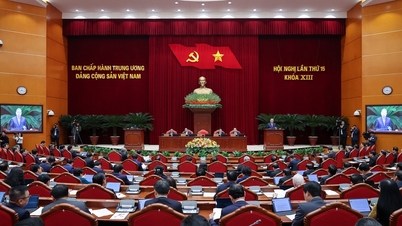
A glorious history is a crucial driving force for building a prosperous nation. Because the country has gone through countless years of arduous and fierce war, more than anyone else, we must cherish and preserve peace. In the cause of building and defending the Fatherland today, there is one vital thing – an extremely valuable lesson learned at the cost of countless lives and bloodshed – which is to firmly uphold national independence and self-reliance as the foundation for our country's steady progress towards socialism. As our ancestors taught: "In times of peace, we must strive diligently / This nation will endure for a thousand years." To achieve this, our Party has clearly stated the need for a more comprehensive and profound understanding of the driving forces and resources for building socialism with Vietnamese characteristics, especially emphasizing the role of culture as an intrinsic strength and a crucial impetus for national development. At the same time, we must focus on establishing the goals and humanistic values of Vietnamese socialism in the new context; The goal is to harmoniously and rationally manage the relationship between economic growth and the achievement of social progress and equity, and environmental protection at every stage of development. Alongside this, emphasis should be placed on developing the theory of a modern nation-state and the defense of the Socialist Republic of Vietnam to meet the increasingly heavy and complex demands and tasks of the new development stage. In particular, further development of the theory on the role and mission of the Party is crucial, especially regarding the building and rectification of a clean and strong Party and political system, in order to ensure the correct and wise leadership of the Party in the cause of national renewal, building and defending the Socialist Republic of Vietnam.
Text and photos: Le Dung
Source






















































Comment (0)