

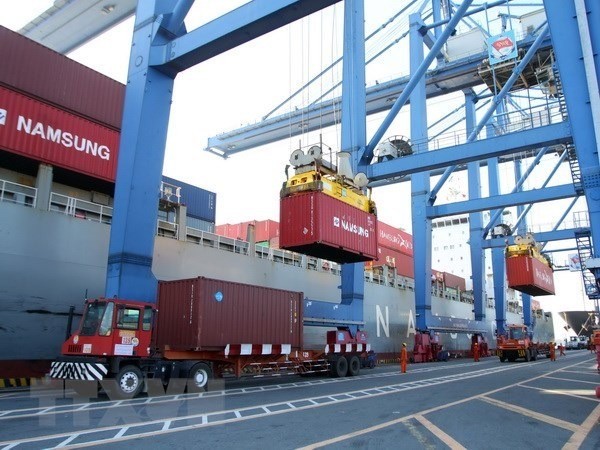
Major export markets such as the European Union (EU), the United States, and Japan are tightening carbon standards, requiring businesses to demonstrate a green supply chain from transportation to warehousing.
Meanwhile, the domestic infrastructure is still underdeveloped, transportation costs are high, and the large proportion of road transport leads to a sharp increase in emissions. Therefore, the challenge of reducing emissions has become a critical juncture for logistics businesses, forcing them to transform if they don't want to lose market share and opportunities to move up the global supply chain.
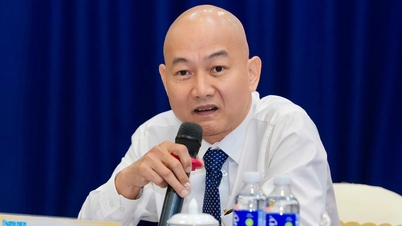
According to Mr. Truong Tan Loc, Vice President of the Ho Chi Minh City Logistics Association (HLA), although Vietnam ranks 43rd out of 139 countries in the Logistics Performance Index (LPI), it still faces inherent weaknesses in the quality of infrastructure and services, leading to unnecessary waste and carbon emissions.
Notably, Europe is establishing new technical barriers through the Carbon Border Adjustment Mechanism (CBAM), which will come into full effect from 2026. This mechanism acts as a kind of “carbon tax” on imported goods, requiring exporting businesses to purchase and submit CBAM certificates corresponding to the amount of emissions in their products.
Simultaneously, the Corporate Sustainability Directive (CSDDD) compels companies to be accountable for environmental impacts throughout their entire supply chain and to strictly adhere to ESG (environmental, social, and governance) standards. These regulations revalue global carbon, transforming green logistics from a purely social responsibility activity into a prerequisite for Vietnamese goods to access the market.
According to Mr. Loc, complying with international standards is both a challenge and an opportunity. Businesses that meet carbon standards will enhance their brand value and increase their negotiating power with international buyers. Data on low emissions will become a passport to trade.
According to experts, logistics currently accounts for approximately 16-18% of Vietnam's total gross domestic product (GDP), significantly higher than many countries in the region. It is also one of the largest sources of carbon emissions. Therefore, shifting from road transport to rail and inland waterway transport will bring about significant environmental benefits. Simultaneously, improvements in delivery processes and the application of technology are needed to optimize and reduce emissions.
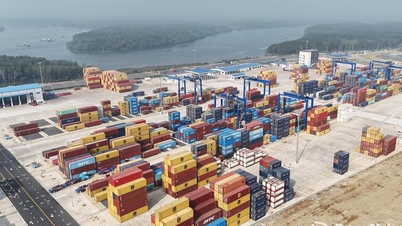
Recognizing this, Tan Cang Cat Lai Port has implemented 100% electronic transactions via ePort, reducing handling time to 15-20 minutes, saving 1.5-2 million USD in fuel costs annually, and significantly reducing emissions thanks to its electric-powered shore cranes and yard cranes.
Similarly, Vietnam Post Corporation is also a company striving to transition to green development. Specifically, Vietnam Post is the first postal enterprise in Vietnam to collaborate with Honda Vietnam to introduce electric motorcycles into its delivery operations, helping to reduce emissions into the market.
A representative from Interlog International Logistics Joint Stock Company shared: To achieve green and sustainable development, Interlog focuses on three main pillars: employee awareness, energy transition, and optimal solutions to reduce costs.
Simultaneously, Interlog focuses on internal training from leadership to staff to increase awareness of green transformation; and promotes the application of technology and digital transformation to reduce paperwork in management and operations. The company also proposes solutions to help customers reduce carbon emissions through consulting on delivery routes, helping to reduce fuel and transportation costs.
According to Mr. Dao Trong Khoa, Chairman of the Vietnam Logistics Business Association (VLA), the journey towards green logistics and rapid adaptation will contribute to the carbon emission reduction process of the Vietnamese logistics industry in particular and the global industry in general. Vietnamese logistics businesses need to leverage their advantages, making the urgent requirement for greening a driving force, enhancing competitiveness and brand image, and aiming for sustainable and comprehensive development.
However, to achieve this, businesses must keep up with global trends and standards, moving towards energy transition with energy-efficient, renewable, and green energy sources. Simultaneously, they must optimize operating costs, digitize operations, and improve efficiency and effectiveness in logistics services.
Currently, the Ministry of Industry and Trade is urgently finalizing the draft and submitting it to the Prime Minister for approval: "Strategy for the Development of Vietnam's Logistics Services in the period 2025 - 2035, with a vision to 2050"; which includes many orientations to encourage the development of the logistics service industry, especially green logistics.
Mr. Tran Thanh Hai, Deputy Director of the Import-Export Department (Ministry of Industry and Trade), commented: When promulgated, the Strategy will set the goal of developing Vietnam's logistics service industry sustainably, efficiently, with high quality and added value, competitiveness in the region and the world, and leveraging Vietnam's advantages in the global value chain.
The Ministry of Industry and Trade will coordinate with the Ministry of Construction, other ministries, localities, and associations to implement a comprehensive plan to integrate logistics into daily life, making it easier for businesses to access.
Referring to the requirements and trends of green transformation in logistics, Mr. Tran Thanh Hai said: The draft Strategy has set a goal that by 2030, logistics services will develop efficiently in the direction of reducing emissions and transitioning to green energy sources. The goal by 2035 is for logistics services to continue developing efficiently in the direction of reducing emissions, contributing to bringing the nation's net emissions to zero.
Besides improving policies, international connectivity is also being strengthened. Hai Phong is cooperating with the port of Gothenburg (Sweden) to expand its maritime transport network to Europe and build a multimodal logistics center, aiming for a green logistics model. New generation trade agreements all require reducing carbon footprints, making green transition a key to integration.
According to Mr. Nguyen Huu Tuan, Director of the Center for E-commerce and Digital Technology Development - eComDX (Ministry of Industry and Trade), developing modern, smart, and green logistics will help Vietnamese businesses reduce costs, improve productivity, increase competitiveness, and expand markets.
"With a strategic vision, synchronized policies, and the proactive spirit of the business community, Vietnam can absolutely rise to become a regional logistics hub and a crucial link in the global supply chain," Mr. Nguyen Huu Tuan affirmed.
Source: https://baolaocai.vn/logistics-truc-lan-ranh-giam-thai-post883639.html



![[Photo] General Secretary and President To Lam receives Amazon's Senior Vice President David Zapolsky](https://vphoto.vietnam.vn/thumb/1200x675/vietnam/resource/IMAGE/2026/05/22/1779466547770_a1-bnd-3513-6601-jpg.webp)












































































Comment (0)