

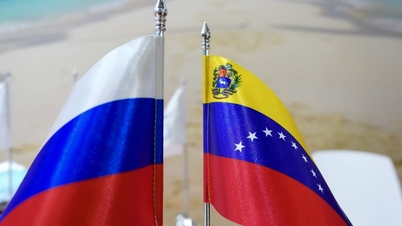
Russia and Venezuela signed several agreements on November 7 during a visit to Caracas by a high-ranking Kremlin official.
Russian Deputy Prime Minister Dmitry Chernyshenko told Venezuelan Vice President Delcy Rodriguez that Moscow is ready to support the Venezuelan armed forces with "the most sophisticated weapons and military equipment," according to AFP, citing Venezuelan state television.
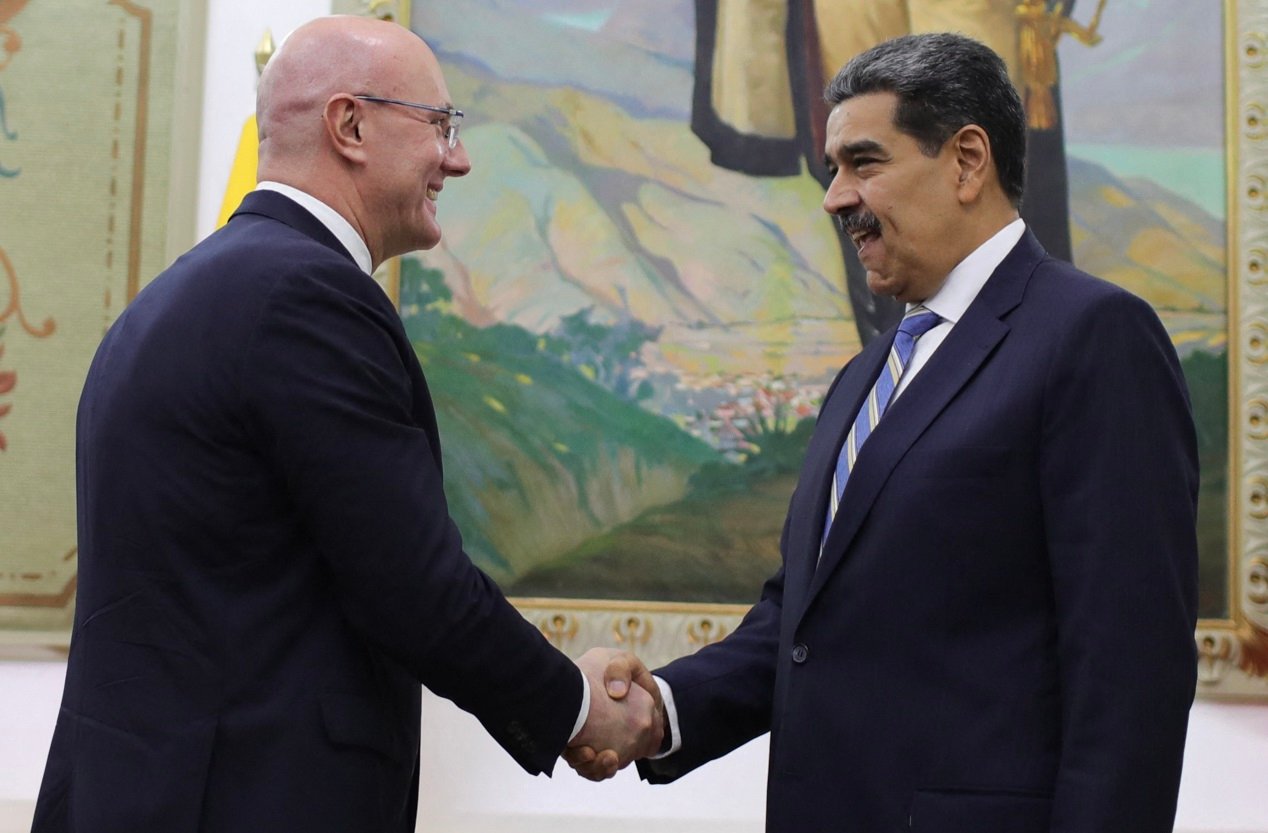
Venezuelan President Nicolas Maduro (right) and Russian Deputy Prime Minister Dmitry Chernishenko in Caracas, Venezuela, on November 7.
The two countries also agreed to cooperate in areas including "intelligence and counterintelligence issues," the use of drones, and oil and gas exploration technology, according to the coordinator of the bilateral talks.
Later, at a ceremony at the Miraflores Palace, Venezuelan President Nicolas Maduro announced that 17 agreements would be signed "to strengthen the path of cooperation and integration" between Venezuela and Russia "from now until 2030 and beyond."
Russia is one of the few countries that recognizes President Maduro's claim that he won a third consecutive term in the July 28 election. That election was opposed by the opposition and led to widespread protests afterward.
Will the European right rise after Trump's victory?
The United States and several Latin American countries have endorsed opposition presidential candidate Edmundo Gonzalez Urrutia as the legitimate winner, based on detailed election results released by the opposition.
Venezuela's electoral body, which is linked to President Maduro, has yet to announce the voting results.
Caracas moved closer to Moscow under socialist leader Hugo Chavez, who led Venezuela down a far-left, anti-American path from 1999 until his death from cancer in 2013, according to AFP.
Those relationships continued under Chavez's chosen successor, Maduro, who defended Russia's military campaign in Ukraine.
Venezuela possesses the world's largest proven oil reserves and once produced more than 3 million barrels of oil per day, which was long its only significant source of foreign exchange. However, after years of mismanagement and sanctions, production has fallen to around one million barrels, according to AFP.
Source: https://thanhnien.vn/nga-ky-nhieu-thoa-thuan-voi-venezuela-ra-cam-ket-ve-vu-khi-tinh-vi-nhat-185241108100223842.htm
![[Photo] Two flights successfully landed and took off at Long Thanh Airport.](/_next/image?url=https%3A%2F%2Fvphoto.vietnam.vn%2Fthumb%2F1200x675%2Fvietnam%2Fresource%2FIMAGE%2F2025%2F12%2F15%2F1765808718882_ndo_br_img-8897-resize-5807-jpg.webp&w=3840&q=75)
























































Comment (0)