

Emphasizing that the Information and Communications Technology (ICT) sector's success today is due to its bold decision to embrace digital technology nearly 40 years ago, when it was still used in few countries, Minister Nguyen Manh Hung urged heads of units to learn from the spirit of the "Uncle Ba Than" era.
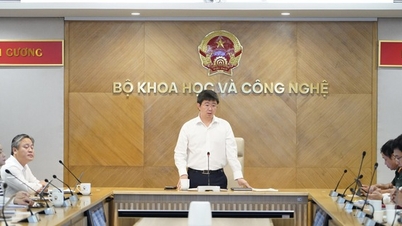
On the afternoon of May 30th, Minister of Information and Communications Nguyen Manh Hung chaired the May State Management Review Meeting between agencies and units within the Ministry.

Much of this conference was led by the head of the Ministry of Information and Communications, who focused on discussions about how heads of agencies and units within the Ministry would choose a goal for themselves over the next three years.
Suggesting that each unit and each sector consider and take on a specific task, creating value to contribute to the development of the industry and the country, Minister Nguyen Manh Hung remarked that this is also an opportunity for unit leaders to leave their mark in their operational journey, "doing something to help the industry, the country, society, and themselves."

During the conference, Mr. Nguyen Thien Nghia, Deputy Director in charge of the Information and Communication Technology (ICT) Industry Department, set a goal to contribute to the annual production of approximately 500,000 IT engineers and graduates within the next three years, thereby contributing to the development of high-quality IT human resources in Vietnam.
Regarding the Department of External Information, Director Pham Anh Tuan shared his desire to create a platform serving over 100 million Vietnamese people to promote the image of Vietnam to 8 billion people worldwide. This system will be a hub for media from the political system, localities, press, businesses, and the people, primarily Vietnamese people and then people around the world, to bring the image of Vietnam to the world. According to Mr. Pham Anh Tuan, if the media can promote Vietnam's prosperity in cyberspace, the position of the Department of External Information will also be elevated.
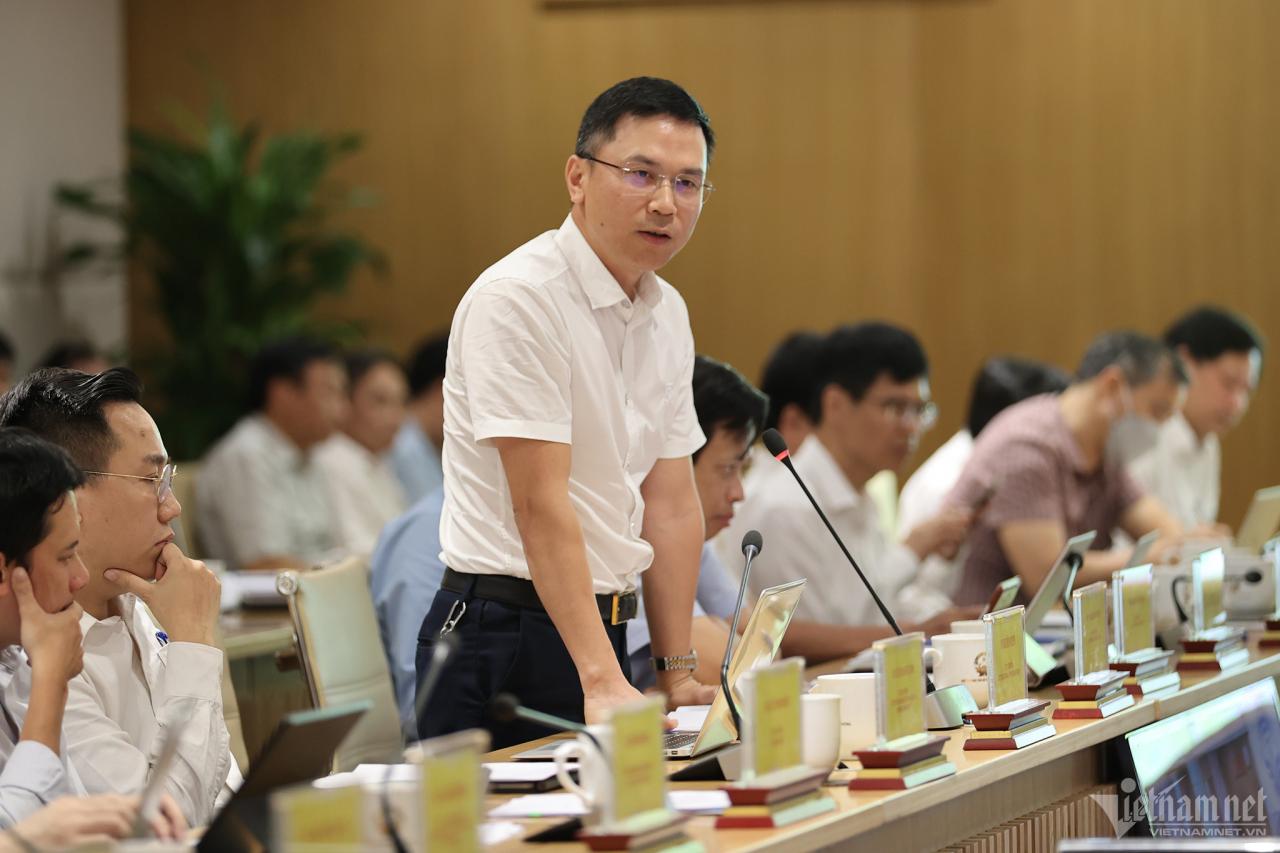
After listening to the opinions expressed by the heads of units under the Ministry of Information and Communications , Minister Nguyen Manh Hung suggested several major and meaningful projects that units and sectors could choose to undertake. For example, the National Digital Transformation Agency could transform Vietnam if it could provide every civil servant with a virtual assistant. The Information Security Agency could focus on effectively monitoring the security of hardware systems and information content, or aim for every smartphone owned by Vietnamese citizens to have a security lock.
Similarly, regarding the Press Department, the Minister suggested considering promoting the formation of state-owned media corporations with significant influence and moving the operations of media agencies to digital platforms. Or, for the ICT Industry Department, in addition to developing human resources, the head of the Ministry of Information and Communications proposed setting a specific target for the total revenue that Vietnamese digital technology businesses will earn from foreign markets by 2025.

In particular, in the conference's concluding remarks, the head of the Ministry of Information and Communications mentioned the spirit of innovation, the decision to go to the most modern places, to learn and to dare to venture and take risks by directly adopting modern technology, as exemplified by "Uncle Ba Than" during the reform period of Vietnam's telecommunications industry.
At that time, analog technology accounted for 98% of the global market share, while digital technology only accounted for 2%. However, former Director General of the General Department of Post and Telecommunications, Dang Van Than, along with the leadership team, made a bold and courageous decision to abandon analog telephone exchanges and choose digital technology, moving directly towards modernization. This decision created a revolution in the postal and telecommunications industry.
Asserting that Vietnam cannot develop without reaching the 2% growth rate, the head of the Ministry of Information and Communications proposed that unit leaders "go back to the time of Uncle Ba Than, and do things exactly as they were done back then." "This industry, this sector, has achieved what it has today thanks to the fact that nearly 40 years ago we reached the 2% growth rate," Minister Nguyen Manh Hung stated.
| Former Director General of the General Department of Post and Telecommunications, Dang Van Than, a Hero of Labor during the đổi mới (renovation) period, who made significant contributions to making the postal sector a pioneer in the country's renovation process, passed away on May 24, 2023, in Ho Chi Minh City at the age of 92. |
Telecommunications innovation The first telecommunications reform took place more than 35 years ago. It involved the transition of telecommunications equipment and infrastructure from the old, outdated analog generation to the digital generation. This first reform built a modern telecommunications infrastructure in Vietnam, solving the communication problem for the entire population. The driving force and core leader of this first reform was Director General Dang Van Than – former Central Committee member of the Communist Party, former National Assembly representative, and Hero of Labor during the reform period. Those in the industry affectionately called him "Brother Ba Than" or "Uncle Ba Than." The second wave of telecommunications innovation is the transformation of telecommunications infrastructure into digital infrastructure – the infrastructure of the digital economy. This second wave can be considered the largest-scale shift, fundamentally changing the nature of the telecommunications industry and opening up an enormous new space for it, far larger than the space for information and communication. The significance of the telecommunications industry for the socio-economic development of the country is therefore much greater. The opportunities are much greater. The market is much larger. The responsibilities are also much greater. The telecommunications industry undertakes a new mission: to build a modern digital infrastructure, including telecommunications and data infrastructure, with ultra-high capacity, ultra-wide bandwidth, universal accessibility, sustainability, greenness, openness, intelligence, and security. The lessons learned from the first wave of reforms under Director General Dang Van Than's generation will remain valuable for this second wave: Infrastructure must lead the way and develop rapidly, adopting modern technology, being among the world's leading sectors, mastering technology, making wise and far-sighted decisions, mobilizing all resources, and decisively managing operations. Through this challenge, a generation of skilled officials for the industry and the country will be formed. Minister of Information and Communications Nguyen Manh Hung |
Vietnamnet.vn
![[Image] Pleasant weather helps students enter the 10th grade entrance exam with confidence.](https://vphoto.vietnam.vn/thumb/1200x675/vietnam/resource/IMAGE/2026/05/29/1780034401612_ngay-1-thi-lop-10-minh-duy-8-5009-jpg.webp)

![[Photo] Ba Lang An Lighthouse - the "eye of the sea" amidst the "rock museum" of Quang Ngai province.](https://vphoto.vietnam.vn/thumb/1200x675/vietnam/resource/IMAGE/2026/05/29/1780038698840_anh-man-hinh-2026-05-29-luc-14-10-42.png)











































































Comment (0)