One early autumn morning, as I was walking through the train station on my way to school, carrying an adult's leather bag on my hip, wearing a straw hat, and skipping along, I saw a soldier coming out of the station. Seeing him, I shouted loudly, "Hello, soldier!" Unexpectedly, he just stared at me and asked:
- How did you get that metal plate?
I calmly replied:
My grandfather said it was left behind by my father during one of his visits home. But I don't know when my father will be back!
|
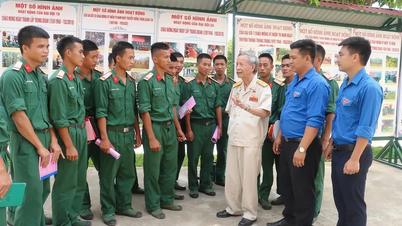
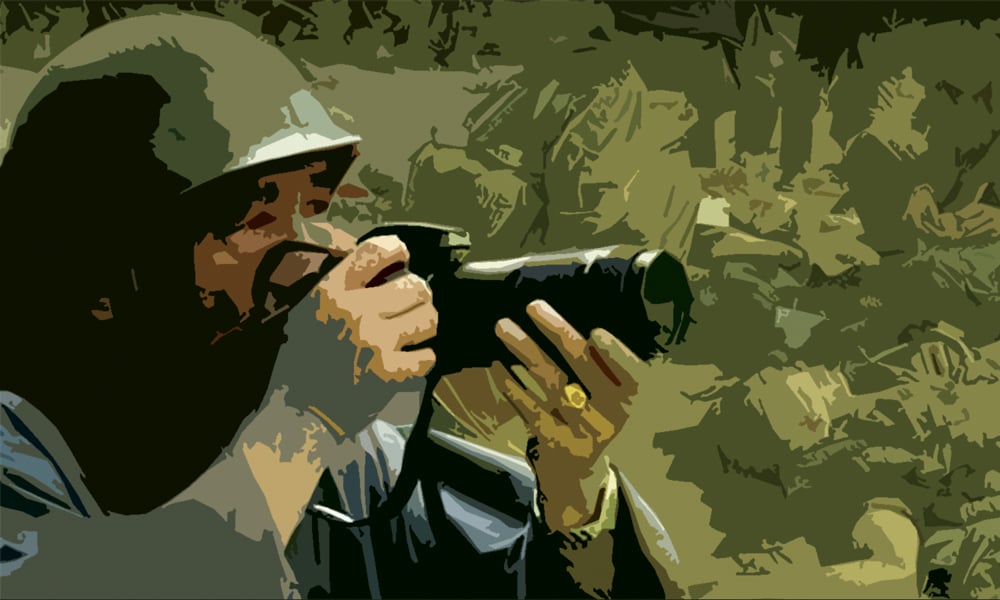
Illustrative image. |
Hearing this, my uncle, without a word, rushed to hug me tightly, sniffing me, which frightened me so much that I burst into tears. Just then, my mother, who was walking behind us, stopped to buy bread at the station entrance and rushed over, but then her handbag fell to the ground with a thud. Her knees felt like weak noodles, and only the tears from her dark circles under her eyes, from many sleepless nights, flowed like a stream… My father had returned unexpectedly like that.
That moment feels like it was just yesterday, a young family reunited after a war filled with hardship but also warmth. From then on, my father doted on me. Every morning, he would get up early to sharpen my half-finished pencil so I could take it to school. My mother stayed up late altering my cousin's white shirt to fit my thin frame. My childhood was full of laughter, but there's still a lingering regret that my father never took me to school.
“Dad is busy working. His job requires him to be away all the time.” I heard that explanation from my mother countless times throughout my childhood. Why didn’t Dad leave for work at 7 o’clock and finish at 5 p.m. like the other dads in my class? Or did he not love me, or not care for my mother? I had a thousand questions like that. Once, as my class was about to end, dark clouds gathered, the sky turned gloomy, thunder rumbled, and it rained heavily. My classmates were all picked up by their parents with umbrellas, but I sat huddled in a corner of the classroom. Scared and feeling sorry for myself, knowing my mother was on her way to the commune, I only prayed that my father would come to pick me up. He would hold up an umbrella to shield me from the rain and wind.
But my father didn't come, and I trudged home alone in the rain, soaking wet. That night I had a fever and cried because I was angry at him. My mother came home late, felt my forehead, then hurried to make a bowl of hot porridge, placed it in front of me, and said, "Your father and his colleagues are working in the isolated flood zone; we don't know if they're alive or dead." From that moment on, I took care of myself wherever I went and no longer blamed my father…
***
At the end of my senior year of high school, my whole class was buzzing about choosing majors and universities. Those who were quick to seize opportunities in fields with good job prospects, while those with weaker academic performance clung to low-scoring majors to "avoid failing." I was the most clueless, even though my grades weren't bad, and no one advised or guided me on a direction.
You may also like

BV Land commences construction of the Parc Ville social housing project in Bac Ninh.On December 19, 2025, BV Land solemnly held the groundbreaking ceremony for the Social Housing Project (Parc Ville) in the new urban area west of Dinh Tri (BV Bavella Green Park), Bac Giang ward, Bac Ninh province. This is an important event marking a new step forward for BV Land in its pioneering journey to elevate the living standards of social housing, providing modern, safe, and sustainable living spaces. The homeroom teacher quietly asked, "What does your father do for a living? I'm sorry, but I'm new to this job." I remember the day she first arrived. Someone told me she'd been wounded while in the Youth Volunteer Corps, leaving a long scar on her arm, which is why she didn't dare wear short-sleeved shirts. A shrapnel fragment had taken away a woman's simple happiness. Perhaps that's why she always showed love and affection to teenage girls like us.
I looked up at her:
- Excuse me, miss, my father is a journalist in the provincial capital.
- So, would you like to pursue that career?
- Excuse me, miss, my father is always traveling, he must be very tired!
- You see, some people complain about being tired even when they're just sitting around doing nothing. Tired because of the meaninglessness of life. We should look at life for its essence, my dear...
Unexpectedly, those words on that March afternoon changed my life. I decided to apply to study journalism, following in my father's footsteps. Time flew by, and by the time I received my diploma, my father had retired. The day I started my new job after passing the entrance exam, the Editor-in-Chief led me to a small room at the end of the building and said, "This is your father's office. If you want, I can assign you to continue his work..."
From that day on, I continued the work my father had left unfinished. The rural areas I visited were full of sunshine and wind. It turned out that to earn a living, the people had to sweat profusely, clinging to the land, gathering every grain of rice and every potato. Their feet were like tree roots clinging to the cliffs, yet smiles were always on their faces. They didn't worry about whether their cars were ugly or beautiful, whether their houses were tall or short; the doors were always open, the gates unlocked, and a cup of green tea and a packet of tobacco were offered to welcome neighbors, filling the air with laughter and the warmth of community spirit…
Once, I went to the area to write an article about the situation of inter-communal road construction. My colleagues there told me that Mr. Can was adamantly refusing to move a small stilt house to widen the road. Furthermore, the location was on a sharp bend. When we went to meet him with the officials, the homeowner was uncooperative. As we were about to leave, I suddenly noticed some writing carved on the rafters. I instinctively took a picture. Seeing this, Mr. Can seemed moved and recounted: “That year, my wife had just passed away, before even the first anniversary of her death, when a storm came and destroyed our house. I was devastated. I hid in the bushes smoking cigarettes, ignoring my children's tantrums and the pigs squealing with hunger in the sty. A journalist helped me get back on my feet, giving me the strength to overcome it. I followed him, picking up each post and piece of wood. He worked tirelessly, regardless of the weather. He put down his pen, picked up a chisel and a saw like a true craftsman, and gave me a home…”
After saying that, he opened the cupboard and took out an old backpack, inside which was just a bucket hat with a bullet hole in the brim:
- Do you see that? That's a war wound, because of it I can't remember anything...
I watched and felt the bullet wound swirling in the minds of the soldiers. Back home, while cooking dinner, my mother and I talked about my father's career as a journalist. My mother put down the vegetables, wiped the sweat from her forehead, and softly said:
- Because of a lingering sense of guilt, father and son decided to pursue that career. I heard that, in the past, the squad failed to protect a war correspondent during their retreat.
That night, when I zoomed in on the photo to look at it again, my father woke up, got up to make tea, squinted at the computer screen, and exclaimed:
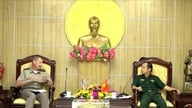
Strengthening the friendship between Vietnam and the United States.On July 3rd, as part of the Pacific Partnership - Friends of the Pacific 2026 program, the U.S. Army Pacific delegation, led by Lieutenant General Joel Vowell, Deputy Commander of the U.S. Army Pacific, paid a courtesy visit to the Quang Tri Provincial Military Command. - You've arrived already?
Yes, Father.
My intuition told me: Could it be that my father was the journalist who built the house for Mr. Can? My father put down his teacup and recounted, his voice filled with emotion:
- That year, in the darkness of night, my father and his comrades couldn't see the soldier's face. They only remember blood flowing from the back of his neck and that he wasn't moving anymore. They had to retreat, only managing to grab the journalist's notebook. Later, when my father saw that scar, he always thought it was that soldier. The wound caused him to lose a part of his memory, which is why Uncle Can always cherishes what belongs to the past.
After reuniting with my father, Uncle Can happily agreed to let us move the small stilt house. Deep down, I believe that whether or not the reporter from all those years ago was fortunate enough to survive, the path my father and I had chosen was still very happy and something to be proud of.
Short stories by Bui Viet Phuong
Source: https://baobacgiang.vn/nghe-cua-cha-toi-postid420379.bbg