

 |
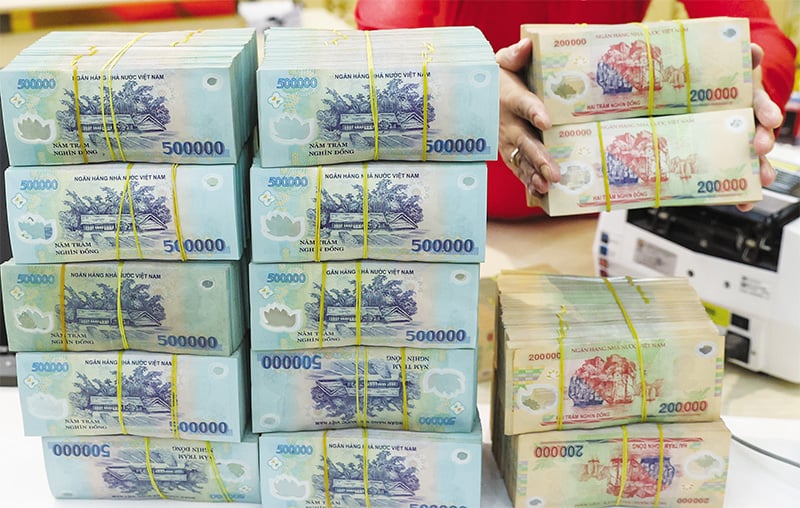
| Amend the Law on Credit Institutions to codify Resolution 42/2017/QH14, creating favorable conditions for banks to recover debts. |
Debtors no longer have the opportunity to evade repaying bank loans.
In addition to legalizing the right to seize collateral, the latest draft of the Law on Credit Institutions (amended) also abolishes the condition for seizure: "The collateral must not be a disputed asset in a case that has been accepted but not yet resolved or is currently being resolved in a competent court."
Resolution 42/2017/QH14 allows banks to seize collateral, but only if the assets are not in dispute. Representative Pham Van Hoa ( Dong Thap ) argued that this regulation encourages many customers to intentionally collude with third parties to create disputes and take the matter to court as a way to avoid having their collateral seized. Therefore, the draft Law on Credit Institutions (amended) abolishing this seizure condition is appropriate.
"Loans must be repaid, loans must be secured by collateral, and once there is a contract agreeing on collateral, if the customer fails to repay the debt, the bank has the right to seize and auction off the collateral, which is reasonable," Representative Hoa commented .
According to the Vietnam Banking Association, the total amount of non-performing loans in the entire banking system has now reached over 1 trillion VND. Since Resolution 42/2017/QH14 expired, the right to seize collateral assets has not been legalized, making debt recovery extremely difficult for banks, as many customers deliberately evade repayment and refuse to hand over assets to the banks for processing.
Mr. Nguyen Quoc Hung, Vice Chairman and General Secretary of the Vietnam Banking Association, expects that amending the Law on Credit Institutions to codify Resolution 42/2017/QH14 will not only facilitate debt recovery for banks but also serve as a wake-up call, forcing borrowers to be conscious and responsible in repaying their debts, eliminating the mindset of finding every way to avoid repayment and not handing over assets.
Lawyer Truong Thanh Duc, Director of ANVI Law Firm, also believes that the amended Law on Credit Institutions, if enacted, will not only create a legal basis for banks to accelerate the handling of bad debts, but also impact the psychology of customers. When customers know that if they intentionally delay repayment, the bank will seize their collateral, they will adjust their behavior, cooperate more in repaying debts, and not intentionally delay repayment.
Currently, the "blood clot" of bad debt has ballooned to over 1 trillion VND – a very large figure, causing a waste of resources in the context of the current capital shortage in the economy . This is not only the capital of the banks themselves, but also the capital of the people and the economy. Large amounts of bad debt affect the quality of bank assets and are a reason why interest rates in Vietnam are much higher than in many other countries in the region.
Don't let banks only "look" at collateral when granting loans.
While agreeing with the legalization of the right of credit institutions to seize collateral, many National Assembly deputies remain concerned about the potential for abuse of this power. Furthermore, there is a risk that credit institutions will focus solely on collateral when lending, thereby loosening lending conditions, neglecting credit assessment, and leading to the 발생 of bad debts.
- Lawyer Truong Thanh Duc, Director of ANVI Law Firm
 Legalizing the right to seize collateral does not mean that banks have the right to seize collateral indiscriminately, but rather that they must comply with certain regulations, conditions, procedures, and processes. Most importantly, this will send a strong message to the market about discipline, credit culture, and fair protection for both lenders and borrowers. Customers will know there is no longer any "opportunity" to delay repayment – because even if they intentionally refuse to cooperate in handing over collateral, it will be seized by the bank – thus increasing their awareness of repayment. This will also give banks more confidence in lending.
In her explanation at the National Assembly Standing Committee meeting earlier this week, State Bank Governor Nguyen Thi Hong affirmed that the seizure of collateral is not a unilateral, unconditional act, but must comply with the scope, limits, and conditions of seizure, respecting the freedom and voluntary agreement of the parties. Regulations on the procedures for seizure must be fair, public, transparent, and ensure the legitimate rights and interests of the obligated party, credit institutions, and other relevant parties.
"To prevent abuse of power, the Draft Law on Credit Institutions (amended) stipulates that credit institutions are not allowed to apply measures that violate legal prohibitions or social ethics, and must not restrict the right of appeal of the parties, especially the guarantor and the party holding the collateral. The seizure of collateral and the activities of credit institutions in general are subject to management, inspection, auditing, and supervision by state management agencies, including the State Bank of Vietnam," the Governor affirmed.
Speaking with a reporter from the Investment Newspaper, the leader of a commercial bank affirmed that banks do not consider the right to seize collateral as a "privilege," but only hope that this regulation will help customers increase their willingness to repay their debts. "Once customers show willingness to repay, the bank is ready to support them; seizing collateral is only a last resort. For us, this is seen as a psychological measure to encourage customers to take responsibility for repayment, a tool to prevent customers from defaulting, not... a magic wand," this leader stated.
According to commercial banks, the funds they lend come from deposits from the public, so they must ensure the principal and interest are paid back to the bank. Therefore, debt recovery not only ensures the bank's business results but also guarantees the safety of the system.
The draft Law on Credit Institutions (amended) is expected to be voted on and passed by the National Assembly next week and will take effect from August 1, 2025.
Source: https://baodautu.vn/nhieu-thay-doi-tai-luat-cac-to-chuc-tin-dung-sua-doi-canh-bao-do-voi-con-no-chay-y-d303048.html
![[Live] 2025 Community Action Awards Gala](/_next/image?url=https%3A%2F%2Fvphoto.vietnam.vn%2Fthumb%2F1200x675%2Fvietnam%2Fresource%2FIMAGE%2F2025%2F12%2F16%2F1765899631650_ndo_tr_z7334013144784-9f9fe10a6d63584c85aff40f2957c250-jpg.webp&w=3840&q=75)
![[Photo] Prime Minister Pham Minh Chinh receives the Governor of Tochigi Province (Japan)](/_next/image?url=https%3A%2F%2Fvphoto.vietnam.vn%2Fthumb%2F1200x675%2Fvietnam%2Fresource%2FIMAGE%2F2025%2F12%2F16%2F1765892133176_dsc-8082-6425-jpg.webp&w=3840&q=75)
![[Image] Leaked images ahead of the 2025 Community Action Awards gala.](/_next/image?url=https%3A%2F%2Fvphoto.vietnam.vn%2Fthumb%2F1200x675%2Fvietnam%2Fresource%2FIMAGE%2F2025%2F12%2F16%2F1765882828720_ndo_br_thiet-ke-chua-co-ten-45-png.webp&w=3840&q=75)

![[Photo] Prime Minister Pham Minh Chinh receives Lao Minister of Education and Sports Thongsalith Mangnormek](/_next/image?url=https%3A%2F%2Fvphoto.vietnam.vn%2Fthumb%2F1200x675%2Fvietnam%2Fresource%2FIMAGE%2F2025%2F12%2F16%2F1765876834721_dsc-7519-jpg.webp&w=3840&q=75)
![[Image] The tenacious fighting spirit of Vietnamese women's football](/_next/image?url=https%3A%2F%2Fvphoto.vietnam.vn%2Fthumb%2F1200x675%2Fvietnam%2Fresource%2FIMAGE%2F2025%2F12%2F17%2F1765990260956_ndo_br_4224760955870434771-copy-jpg.webp&w=3840&q=75)






































































![[Live] Closing Ceremony and Award Presentation for the "Impressive Vietnam Tourism" Video/Clip Creation Contest 2025](https://vphoto.vietnam.vn/thumb/402x226/vietnam/resource/IMAGE/2025/12/17/1765974650260_z7273498850699-00d2fd6b0972cb39494cfa2559bf85ac-1765959338756946072104-627-0-1338-1138-crop-1765959347256801551121.jpeg)






















Comment (0)