

On May 4, 2025, the Politburo issued Resolution No. 68 on the development of the private economy. A key aspect of this resolution is the review and improvement of the legal framework for individual businesses; minimizing disparities and creating favorable conditions in terms of organizational management and financial and accounting systems to encourage household businesses to transform into enterprises. The lump-sum tax system for household businesses will be abolished no later than 2026.
To realize the above objective and create a significant shift in the economic development strategy, on May 17, 2025, the National Assembly issued Resolution No. 198 on some special mechanisms and policies for the development of the private economy. Article 10 of Resolution No. 198 stipulates the exemption of corporate income tax for a period of 2 years and a 50% reduction in the tax payable for the following 4 years for income from innovative startup activities.
Income from the transfer of shares, capital contributions, capital contribution rights, share purchase rights, and capital contribution rights in innovative startup businesses is exempt from personal income tax (PIT) and corporate income tax (CIT). Notably, from January 1, 2026, individual business households and individuals will no longer have to pay business license fees. Small and medium-sized enterprises (SMEs) are exempt from CIT for three years from the date of their initial business registration certificate.
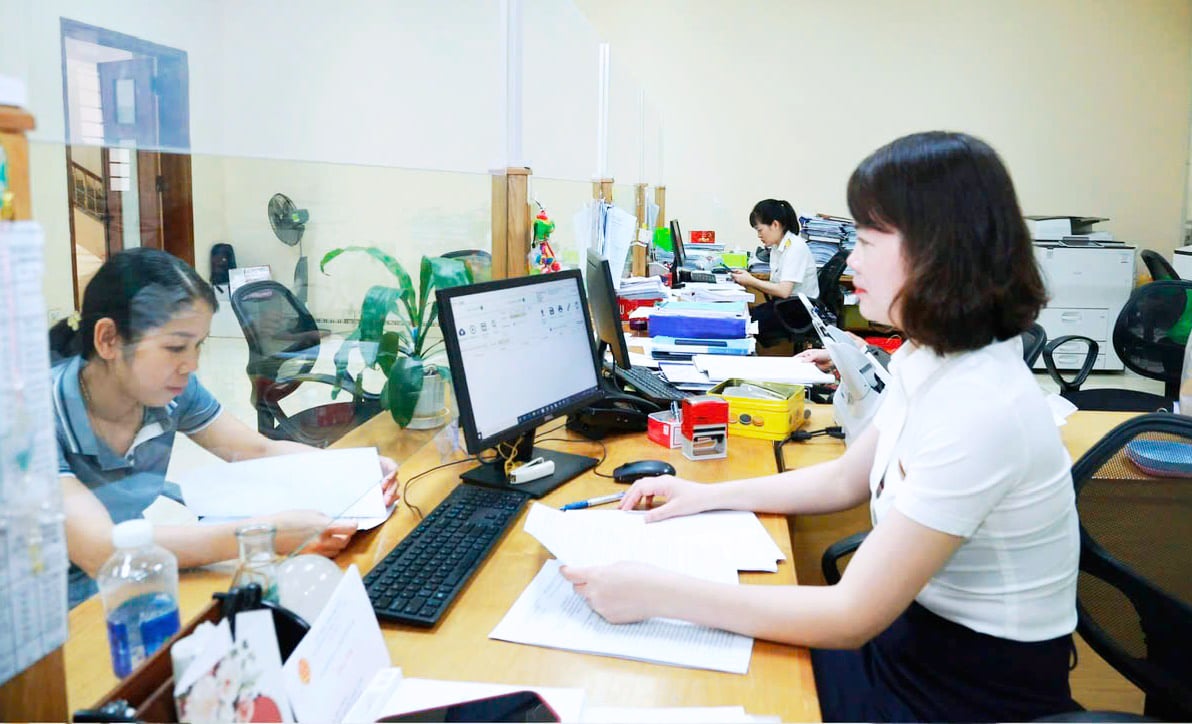
Organizations, individuals, and businesses will be exempt from fees and charges for documents that need to be reissued or replaced when restructuring the state apparatus according to the law. From January 1, 2026, household businesses and individual businesses will no longer apply the lump-sum tax method; household businesses and individual businesses will pay taxes according to the law on tax administration.
Mr. Pham Tuan Anh, Director of ION ONE Vietnam Joint Stock Company, Vinh Yen City, shared: "With many special and groundbreaking policies on tax, fee, and levy exemptions; financial and credit support; support for access to land and business premises; support for science , technology, innovation, digital transformation, and human resource training, along with the principles of inspection, examination, licensing, and certification, Resolution No. 198 not only affirms the concern and support of the Party and the State but also creates the foundation and impetus for the private economic sector to develop and make strong breakthroughs in the new era."
To ensure transparency in operations and facilitate the transition of business households to the declaration-based tax payment method and the establishment of enterprises, the Tax Department has been implementing a comprehensive set of solutions, proactively disseminating information about tax exemptions, reductions, and extensions for business households, individuals, and enterprises, providing guidance, and promptly resolving difficulties so that taxpayers can fully benefit from the government's support policies, while simultaneously improving compliance with tax laws.
On May 27th, the Tax Department of Region VIII held an online conference to disseminate the regulations in Government Decree No. 70, amending and supplementing Decree No. 123 on invoices and documents, to all taxpayers in the region. Through a livestream on the Tax Department of Region VIII's fanpage, the conference attracted over 30,000 taxpayers and received nearly 700 questions.
In addition, the Tax Department has proactively reviewed unnecessary tax administrative procedures to propose to the Tax Department to advise the Government on implementing reductions. It has also proactively researched and developed applications to enhance digital transformation capabilities, aiming to minimize the time required to process administrative procedures and reduce legal compliance costs. Furthermore, it has established dedicated sections on the tax authority's electronic portal and social media platforms to receive and promptly address issues, feedback, and suggestions from citizens, businesses, and household businesses.
The shift from the lump-sum tax payment method to the declaration and payment of taxes based on actual revenue is an essential and necessary step that contributes to promoting the transformation of business models and making operations more transparent and professional.
At the same time, it improves management efficiency and creates equality in tax obligations between household businesses and enterprises. It reduces the risk of being assessed for taxes by giving household businesses a proactive position in tax payment, as they can independently declare and determine the amount of tax payable, unaffected by previous year's revenue and the fixed tax rate determined by the tax authorities.
In particular, when transitioning to a new business model, household businesses can easily access credit sources, supply chains, and formal business opportunities to develop effectively and sustainably.
Text and photos: Hong Tinh
Source: http://baovinhphuc.com.vn/Multimedia/Images/Id/129899/“Lan-gio-moi”-cho-ho-ca-nhan-kinh-doanh



![[Photo] Tran Cam Tu, Standing Member of the Secretariat of the Central Committee, presides over the first meeting of the Central Steering Committee on the Development of Vietnamese Culture.](https://vphoto.vietnam.vn/thumb/1200x675/vietnam/resource/IMAGE/2026/03/19/1773895004549_ndo-br-bnd-1195-2-jpg.webp)

















![[Photo] The General Secretary and the Prime Minister attend the groundbreaking ceremony for multiple-level boarding schools in border areas.](https://vphoto.vietnam.vn/thumb/1200x675/vietnam/resource/IMAGE/2026/03/19/1773888999705_vna-potal-tong-bi-thu-va-thu-tuong-du-le-khoi-cong-dong-tho-dong-loat-cac-truong-noi-tru-lien-cap-bien-gioi-8649904-3885-jpg.webp)




















































Comment (0)