


BHG - In implementing the National Strategy to End the AIDS Epidemic by 2030, our province has resolutely deployed comprehensive solutions, initially achieving many positive results.
The province recorded its first HIV infection in October 1998. By the end of 2024, the cumulative number of HIV infections in the province was 1,771 cases, including 520 deaths, and 731 people living with HIV who are under management. The HIV/AIDS epidemic is tending to spread in the community with an increase in the number of infections among the young population aged 20-39 and an increase in HIV infections in remote areas with limited access to healthcare services.
Health workers are raising awareness about HIV prevention and control among women of reproductive age in Sung La commune (Dong Van district). |
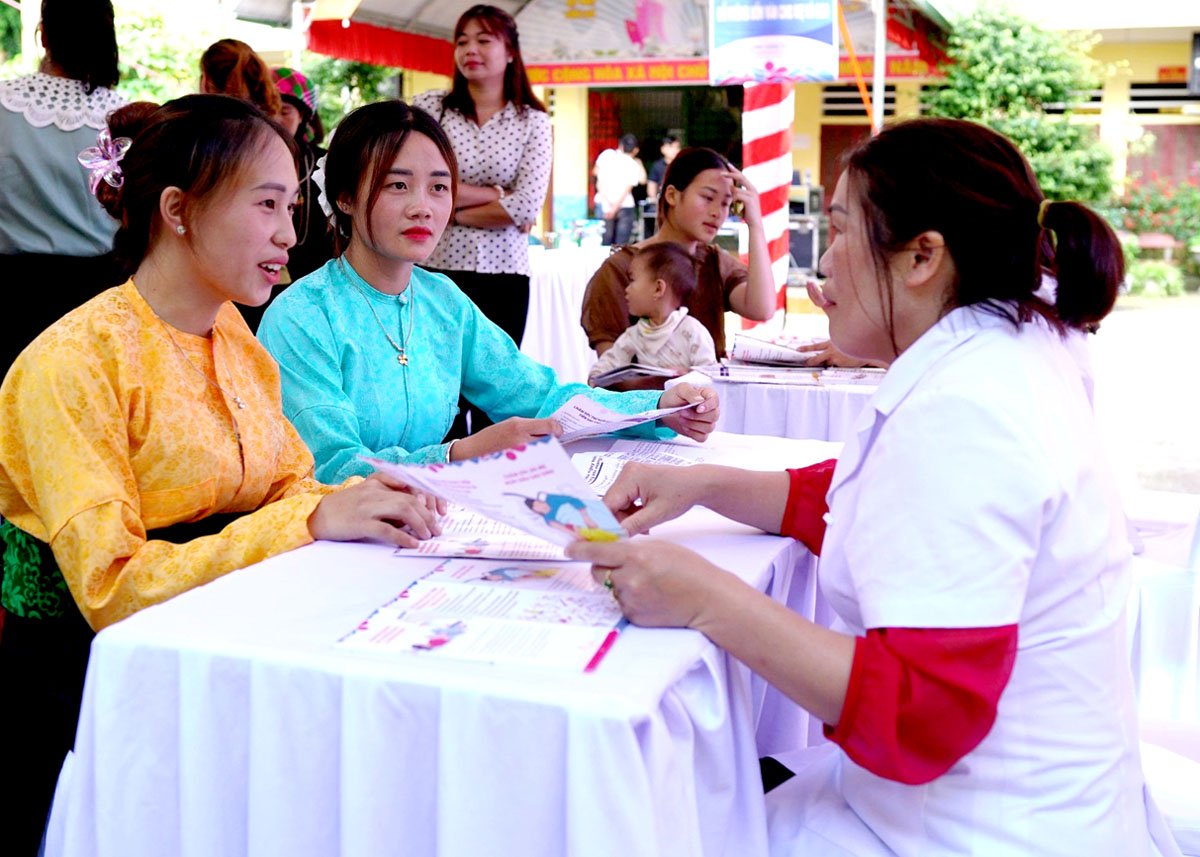
To effectively prevent and control the HIV/AIDS epidemic, the province has issued programs and action plans to strengthen leadership in HIV/AIDS prevention and control, directing Party committees and authorities at all levels to seriously implement them. The Steering Committee for AIDS Prevention and Control and the Prevention of Drug Abuse and Prostitution has developed a plan to implement activities in accordance with the actual situation; strengthening inspections and promptly resolving difficulties in the implementation process at the grassroots level. All levels and sectors closely coordinate in implementing solutions to prevent and control the epidemic; creating conditions to support education, living conditions, and employment for people living with HIV/AIDS to increase their income, improve their lives, and build a society free from stigma and discrimination. In particular, many people living with HIV have participated in activities to care for and support mothers and children living with HIV in the community.
In addition, the province has implemented many effective intervention programs, covering all 11 districts and cities with 193 communes, wards, and towns; maintaining 11 HIV/AIDS treatment facilities, 29 HIV testing and counseling centers, and 5 Methadone treatment facilities. HIV screening is widely conducted with more than 36,000 test samples per year. Harm reduction intervention programs such as free condom distribution, provision of clean syringes, and counseling for high-risk groups have also been expanded, helping to minimize the risk of HIV transmission in the community.
Regarding treatment, the province achieved a rate of 98.6% of patients with HIV viral load below the suppression threshold, ensuring high treatment effectiveness. 100% of patients co-infected with HIV/TB received simultaneous treatment, helping to reduce the risk of death and improve the quality of life for patients.
Communication activities were intensified through various forms, including campaigns to raise awareness about HIV/AIDS in the community. This included 3,675 outreach sessions for high-risk groups, 2,841 sessions for youth, and direct communication on HIV/AIDS to 11,684 people. The "All People Participate in HIV/AIDS Prevention and Control in the Community" movement was widely implemented in all localities, attracting a large number of participants, especially core groups such as: Heads of Front Committees, Party branch secretaries, group leaders, village heads, heads of mass organizations, health workers, and people living with HIV/AIDS. Over 80% of households, agencies, units, businesses, and schools signed commitments to implement HIV/AIDS prevention and control measures.
Despite achieving many outstanding results, HIV/AIDS prevention and control efforts still face numerous challenges. Awareness of HIV/AIDS among some segments of the population remains limited, leading to stigma and discrimination; pre-exposure prophylaxis (PrEP) is not being implemented; and funding for HIV/AIDS prevention and control activities at the grassroots level is limited. To ensure the goal of ending the HIV/AIDS epidemic by 2030, all levels and sectors need to focus on key solutions: strengthening communication to raise awareness and reduce stigma against people living with HIV; expanding prophylaxis and increasing HIV testing for high-risk groups; mobilizing the participation of private healthcare and social organizations in HIV/AIDS prevention and control; ensuring sustainable funding for HIV/AIDS prevention and control programs; improving the quality of treatment services; and strengthening research and application of information technology to more effectively manage HIV/AIDS patient data and enable timely interventions.
Ending the HIV/AIDS epidemic is not only a health-related effort but also about building a humane and just society where everyone has the opportunity to protect their health and integrate into the community. This is a shared responsibility of the entire society, working together towards a future free from the fear of HIV/AIDS.
Text and photos: AN GIANG
Source: https://baohagiang.vn/xa-hoi/202504/no-luc-cham-dut-dich-benh-hivaids-0252e48/




































































































Comment (0)