

Real estate lending is likely to continue increasing in the second half of the year, especially with interest rates remaining low and preferential loan packages for young people being implemented. However, to ensure sustainable market development and avoid putting pressure on the financial system, banks need to tighten capital management, preventing overheating growth from leading to credit risks.
Real estate lending accelerates
The Q2/2025 financial reports partially reveal a vibrant picture of real estate lending within the banking system. In the first six months of the year, many banks recorded positive loan growth, even reaching double-digit levels, such as Techcombank, MB, VPBank, HDBank,ACB , LPBank, etc.
Notably, Techcombank currently leads in the proportion of real estate loans, accounting for approximately 64.17% of its total outstanding credit, including both corporate and individual customers. Specifically for individual customers, the majority are home purchase loans, accounting for 72% and increasing by 24% compared to the same period last year. Techcombank's total real estate loans exceeded VND 227,450 billion by the end of Q2 2025.
At HDBank , outstanding loans to the real estate business sector reached over VND 83,125 billion, an increase of 21% in just half a year. This is part of a strategy to boost lending amidst signs of market recovery.
In addition, HDBank also focused its capital on the construction sector (VND 60,600 billion) and traditional sectors such as retail and vehicle repair (VND 93,192 billion), a significant increase compared to the beginning of the year.
MB also recorded an increase of nearly VND 20 trillion in real estate lending, bringing the total outstanding loans in this sector to VND 85,534 billion, accounting for nearly 10% of its credit portfolio.
SHB is another prominent name, with outstanding loans for real estate business activities reaching VND 163,754 billion at the end of the second quarter, an increase of 28.4% compared to the beginning of the year.
According to data from the State Bank of Vietnam, as of June 30, 2025, outstanding loans in the entire system reached over VND 17.2 million billion, an increase of approximately 10% compared to the end of 2024. Of this, real estate loans accounted for approximately VND 3.18 million billion, equivalent to 18.5% of total outstanding loans, 2.4 times higher than at the end of the previous year. Notably, credit serving real estate business activities reached VND 1.65 million billion, accounting for 52% of total real estate loans, showing strong growth in both speed and scale.
Analysts predict that if credit growth this year reaches the target of 16% and the proportion of outstanding real estate loans continues to fluctuate around 20%, the size of credit in this sector could reach 3.8 - 3.9 trillion VND by the end of the year.
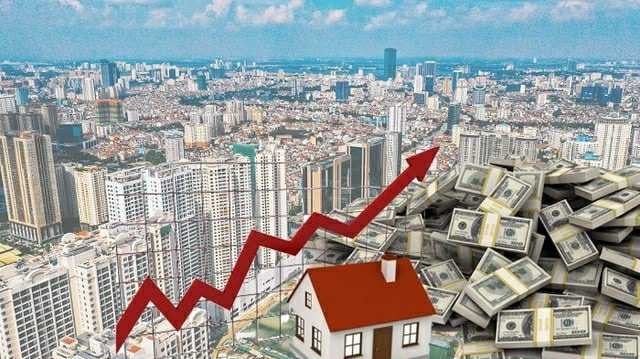
Real estate lending has increased sharply but still carries potential risks.
According to experts, the increase in real estate credit is in line with the market's recovery trend, although the recovery is not uniform. Banks are actively injecting capital amidst the restart of many projects, improved supply, and low mortgage interest rates.
However, housing prices remain high relative to people's incomes, making many hesitant to borrow money. This is one of the barriers preventing a significant surge in demand for home loans.
Data from the State Bank of Vietnam shows that as of May 31, 2025, outstanding real estate loans reached over 1.64 trillion VND, a 36% increase compared to the same period last year. Notably, credit flowing into sectors such as hotels, restaurants, and land use rights purchases increased, while credit for construction and renovation of houses for sale or lease decreased slightly.
In light of this situation, experts recommend redirecting credit to segments with real demand, such as social housing and affordable housing, to limit the risk of bad debt and speculation. At the same time, banks with a high proportion of real estate loans need to be closely monitored to ensure credit quality.
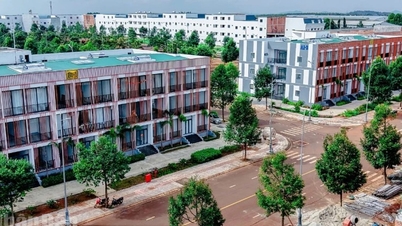
Ms. Nguyen Thi Bich Ngoc, founder of Sen Vang Group, said that capital is currently flowing mainly into three groups: residential properties near transportation infrastructure, industrial real estate, and projects with clear legal status. Meanwhile, land plots and resort properties have almost no access to loan capital.
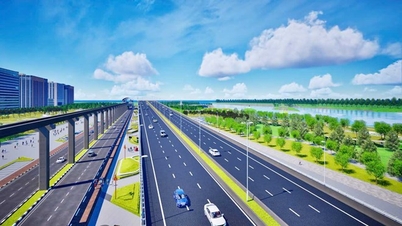
Dr. Nguyen Tri Hieu predicts that real estate and infrastructure will be the two main drivers of credit growth in the second half of 2025 and 2026. According to him, banks will prioritize lending to projects related to public transportation such as metro lines, ring roads, and satellite areas.
However, Mr. Hieu warned that if real estate credit accounts for too large a proportion, it will reduce resources allocated to priority sectors for economic development. Therefore, it is necessary to diversify the credit portfolio, strictly control loans, and ensure capital safety.
Source: https://baolamdong.vn/ong-lon-nao-dang-dan-dau-cuoc-dua-cho-vay-bat-dong-san-386335.html


![[Photo] Prime Minister Pham Minh Chinh attends the Conference summarizing and implementing tasks of the judicial sector.](/_next/image?url=https%3A%2F%2Fvphoto.vietnam.vn%2Fthumb%2F1200x675%2Fvietnam%2Fresource%2FIMAGE%2F2025%2F12%2F13%2F1765616082148_dsc-5565-jpg.webp&w=3840&q=75)





















































































Comment (0)