

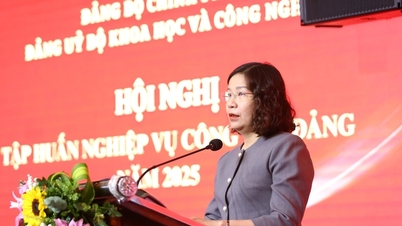
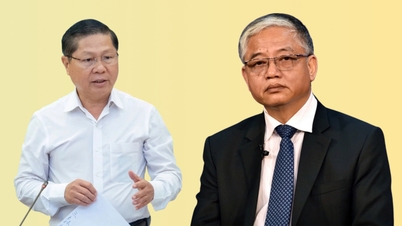
This was shared by National Assembly representative Nguyen Thi Quyen Thanh, Provincial Party Committee member and Vice Chairman of the People's Committee of Vinh Long province. The representative stated that we are implementing a new general education program aimed at fostering a harmonious development of students' physical and mental well-being; encouraging them to become active, confident learners; and to possess good qualities and necessary competencies. However, school violence is currently showing alarming signs. The heartbreaking incidents in the education sector recently reflect a lack of adequate attention to the school culture, leading to strained and broken relationships, damaging many values that were once firmly established; the causes stem from multiple sources, including families, schools, and society.
Representative Nguyen Thi Quyen Thanh does not view these cases as isolated incidents in specific localities, but rather as a major issue for education and society as a whole, requiring collective understanding and coordinated solutions to build a healthy educational environment.
Analyzing the causes, delegate Quyen Thanh emphasized: Before discussing the responsibility of individuals in school relationships, it's important to acknowledge that society bears significant responsibility for the recent events. Some behaviors were beyond the control of the school and the education sector. However, it must also be frankly recognized that the responsibility lies with the school's leadership in building relationships within the school based on compassion, tolerance, forgiveness, honesty, and responsibility, through all activities within the school, from core lessons to extracurricular activities aimed at developing life skills for students. Nevertheless, the school currently faces considerable difficulties in fulfilling these tasks effectively.
Representative Nguyen Thi Quyen Thanh proposed the following solutions: Firstly, she suggested that the Ministry of Education and Training should strengthen training programs for school administrators, especially principals, to improve their organizational skills. Administrators must possess a scientific worldview to clearly understand and grasp educational goals; be able to concretize these goals into specific objectives and values that the school aims for; and have the skills to build and organize a school culture with harmonious relationships.
Secondly, teacher training colleges should strengthen the inclusion of training and capacity building for teachers into their regular training programs, especially pedagogical communication skills and empathetic skills, to help teachers identify students' emotions and adjust their communication and behavior with students on a daily and hourly basis.
Thirdly, it is necessary to promote the organization of practical extracurricular programs, especially dialogue activities with students to listen to their sharing, opinions, and perspectives on issues of public concern. This is a beneficial activity to build relationships and create consensus among members of the school to work together towards the cultural values that the school aims to build.
Fourth, it is necessary to focus on building a good relationship between schools and families. Perhaps in the long-standing relationship between schools and families, we have demanded too much responsibility from parents while forgetting that parents need to understand the school's goals and have transparent information to build trust. This has led to underlying negative reactions instead of working together towards shared values that their children should inherit.
Fifthly, school culture must be built over a long period and have a solid foundation. Inadequate decisions will lead to changes in norms and values, and the school culture will change. Therefore, the way issues are handled regarding past events needs to be considered from a student-centered perspective to protect the legitimate rights of students. Simultaneously, special attention should be paid to the ethics and behavior of students towards teachers and peers, in order to establish appropriate regulations aimed at building positive and exemplary relationships, primarily in the three relationships between students and their teachers and peers.
Management at all levels also need to pay attention to inspection and monitoring to promptly adjust relationships within the school in order to prevent unfortunate incidents from occurring.
Educating the younger generation on moral values and cultured behavior is an issue that needs immediate attention and a long-term strategy from the education sector, alongside the support of families and society.
Source

![[Photo] Prime Minister Pham Minh Chinh receives the Governor of Tochigi Province (Japan)](/_next/image?url=https%3A%2F%2Fvphoto.vietnam.vn%2Fthumb%2F1200x675%2Fvietnam%2Fresource%2FIMAGE%2F2025%2F12%2F16%2F1765892133176_dsc-8082-6425-jpg.webp&w=3840&q=75)
![[Live] 2025 Community Action Awards Gala](/_next/image?url=https%3A%2F%2Fvphoto.vietnam.vn%2Fthumb%2F1200x675%2Fvietnam%2Fresource%2FIMAGE%2F2025%2F12%2F16%2F1765899631650_ndo_tr_z7334013144784-9f9fe10a6d63584c85aff40f2957c250-jpg.webp&w=3840&q=75)
![[Image] Leaked images ahead of the 2025 Community Action Awards gala.](/_next/image?url=https%3A%2F%2Fvphoto.vietnam.vn%2Fthumb%2F1200x675%2Fvietnam%2Fresource%2FIMAGE%2F2025%2F12%2F16%2F1765882828720_ndo_br_thiet-ke-chua-co-ten-45-png.webp&w=3840&q=75)
![[Photo] Prime Minister Pham Minh Chinh receives Lao Minister of Education and Sports Thongsalith Mangnormek](/_next/image?url=https%3A%2F%2Fvphoto.vietnam.vn%2Fthumb%2F1200x675%2Fvietnam%2Fresource%2FIMAGE%2F2025%2F12%2F16%2F1765876834721_dsc-7519-jpg.webp&w=3840&q=75)






























































Comment (0)