

Show concern for school staff.
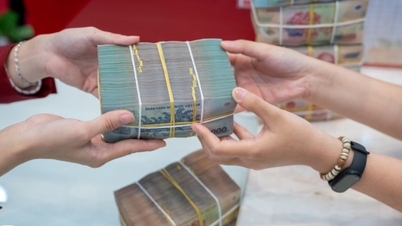
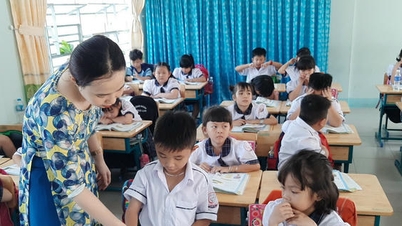
At its 10th session, the 15th National Assembly passed a Resolution on a number of outstanding special mechanisms and policies for breakthrough development in education and training; which stipulates preferential professional allowances according to a roadmap with a minimum of 70% for teachers and 30% for school staff. This is considered a positive signal for millions of teachers and staff in each school.
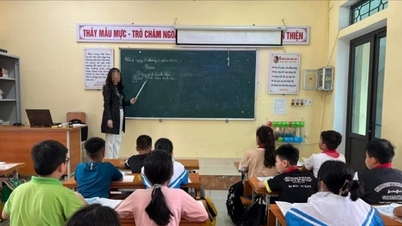
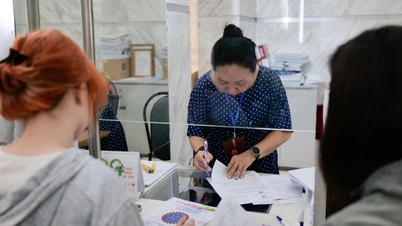
Having worked for many years at the library of Moc Hoan Secondary School (Duy Tan Ward, Ninh Binh ), Ms. Nguyen Thi Ngoc Huong shared that school staff make up a small percentage but play a crucial role in the operation of a school. However, they work full-time like civil servants but do not receive public service allowances, professional incentives, or seniority bonuses like teachers.
Currently, the names of some job positions are not truly consistent across different types of educational institutions. Ms. Huong suggested that the management agency should review and adjust them in accordance with the regulations in the guiding documents of the Ministry of Education and Training to ensure consistency and uniformity.
"I propose that all levels of government study the option of applying a general preferential allowance of 30% of the salary coefficient for all school staff starting from January 2026 to create fairness and recognize their worthy contributions, while also showing respect and encouraging long-term commitment to the profession," Ms. Huong stated.
Ms. Le Thi Lien, a medical and equipment staff member at Lac Long Quan Secondary School (Buon Ma Thuot, Dak Lak), said that this decision by the National Assembly will partially address the long-standing disadvantages faced by school staff nationwide.
The government needs to supplement responsibility allowances for school staff; mandatory mobility/overtime allowances for staff who have to work overtime or on holidays to support school activities. Priority should be given to hiring staff who have signed long-term labor contracts and are also performing additional non-specialized tasks.
In many schools, staff are assigned additional tasks beyond their main duties, but the compensation for these tasks lacks transparency and there are no specific regulations in place. This leads to unfairness and reduces work efficiency. Therefore, strict and specific regulations are needed regarding task assignment and compensation to ensure the legitimate rights of employees.
As an accountant at Son Ca Kindergarten (Nam Cuong, Lao Cai), Ms. Nguyen Thi Mai Anh suggested that a salary scale should be applied that is appropriate to the qualifications and nature of the work of professional staff; a mechanism should be implemented to increase the number of school staff based on the number of students; policies should be added to support social insurance and health insurance contributions for contract employees; and schools should be allowed to use a portion of their legitimate revenue to increase staff income, ensuring transparency and compliance with regulations.

The resolution needs to be implemented soon.
Ms. Nguyen Thi Huong, a childcare worker at Minh Ha Kindergarten (Tay Phuong, Hanoi), shared: “I started this job in 2009, and my monthly salary is currently only 6.4 million VND after deducting social insurance. My husband is ill and unable to do heavy work, so I have to be very frugal to barely make ends meet and support our two children's education. We hope the government will increase the professional allowance as soon as possible to improve our income; otherwise, many more people will not be able to survive in this profession.”
Understanding the hardships faced by childcare staff, Ms. Bui Thi Van – Principal of An Khanh B Kindergarten (An Khanh, Hanoi) – said that the National Assembly has passed a crucial policy to raise the minimum allowance by 70% for teachers and 30% for school staff. This is the youngest level of education in the national education system, and the nature of the work is unique, so a suitable compensation mechanism is necessary.
From a practical perspective, Dr. Le Xuan Trung – Chairman of the Management Board of the Institute of Educational Psychology and Training (IPET) – emphasized that the 70% preferential professional allowance is a well-deserved recognition of the efforts, work pressure, and increasing responsibilities of teachers in the context of implementing the 2018 General Education Program. This is a concrete step in realizing the spirit of Resolution 71-NQ/TW of the Politburo on breakthroughs in education and training development, considering teachers as a key factor.
The expert also suggested that the government should review and standardize other policies such as seniority allowances and regional preferential allowances to create a more attractive and comprehensive system of incentives for teachers. Educational institutions expressed confidence in the National Assembly's determination and hoped that this policy would be implemented promptly, clearly, and fairly.
“This is a major boost in salary policy, demonstrating the concern of the Party and the State, contributing to changing the face of the education sector. During the drafting of the guidance document, further consideration should be given to the workload and nature of each staff group to apply a more appropriate allowance of over 30% if the work is too stressful or involves multiple responsibilities,” Dr. Le Xuan Trung commented.
According to Ms. Bui Thi Tho, a librarian at Binh Chan Primary and Secondary School (Lac Son, Phu Tho), promotion and advancement in professional titles are a great source of motivation, encouraging school staff to improve their professional skills and contribute to the education sector.
However, the promotion policy is still limited and not truly commensurate with the actual contributions of school staff; in many places, it is not implemented consistently. Therefore, consideration should be given to expanding the scope and creating more favorable conditions for promotion to properly recognize the contributions of this workforce.
Source: https://giaoducthoidai.vn/nang-phu-cap-nghe-70-voi-giao-vien-30-voi-nhan-vien-quyet-sach-nhan-van-post760786.html

![[Live] 2025 Community Action Awards Gala](/_next/image?url=https%3A%2F%2Fvphoto.vietnam.vn%2Fthumb%2F1200x675%2Fvietnam%2Fresource%2FIMAGE%2F2025%2F12%2F16%2F1765899631650_ndo_tr_z7334013144784-9f9fe10a6d63584c85aff40f2957c250-jpg.webp&w=3840&q=75)
![[Photo] Prime Minister Pham Minh Chinh receives Lao Minister of Education and Sports Thongsalith Mangnormek](/_next/image?url=https%3A%2F%2Fvphoto.vietnam.vn%2Fthumb%2F1200x675%2Fvietnam%2Fresource%2FIMAGE%2F2025%2F12%2F16%2F1765876834721_dsc-7519-jpg.webp&w=3840&q=75)
![[Photo] Prime Minister Pham Minh Chinh receives the Governor of Tochigi Province (Japan)](/_next/image?url=https%3A%2F%2Fvphoto.vietnam.vn%2Fthumb%2F1200x675%2Fvietnam%2Fresource%2FIMAGE%2F2025%2F12%2F16%2F1765892133176_dsc-8082-6425-jpg.webp&w=3840&q=75)

![[Image] Leaked images ahead of the 2025 Community Action Awards gala.](/_next/image?url=https%3A%2F%2Fvphoto.vietnam.vn%2Fthumb%2F1200x675%2Fvietnam%2Fresource%2FIMAGE%2F2025%2F12%2F16%2F1765882828720_ndo_br_thiet-ke-chua-co-ten-45-png.webp&w=3840&q=75)









































































Comment (0)