

Investing in education is investing in the future. For the provinces and cities of the Mekong Delta region, it is a path to accumulating knowledge, opening up opportunities for each individual to enhance their status and competitiveness in the era of global integration.
From the "miracle of poverty reduction" to the challenge of "expanding the intellectual horizons" of the Mekong Delta.
Nearly 40 years of reform, Vietnam has written an inspiring story of striving for progress, recognized by the international community as a shining example. We have achieved the United Nations Millennium Development Goal on poverty reduction ahead of schedule, bringing the poverty rate from nearly 60% in the early 1990s down to below 3% according to the current multidimensional poverty standard.

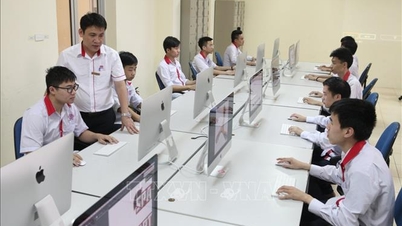
Students in the Mekong Delta during a practical session. Photo: Le Hoang Vu
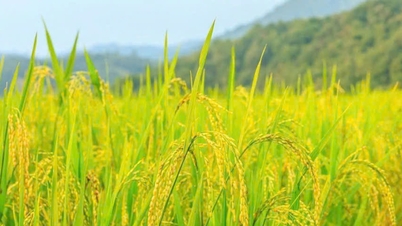
From a country plagued by famine, Vietnam has not only ensured national food security but has also become a major exporter of rice and agricultural products, contributing to global food security.
The education system has also made significant strides in scale. The network of schools covers the entire country, from the plains to the islands, and literacy rates are high. However, while concerns about "food" have eased, the concern about "mind"—the quality of human resources—remains. The demand to "expand intellectual horizons and enhance the global competitiveness of Vietnamese human resources" remains a major challenge, especially when considering the uneven development across regions. The "poverty and lack of education" is creating "low-lying areas" of development opportunities.
Despite receiving prioritized investment, the Northwest and Central Highlands remain "cores of poverty" with high poverty rates. Central Vietnam, a region known for its studious and hardworking people, constantly faces the risk of renewed poverty due to frequent natural disasters, storms, and floods. But the most worrying situation is the Mekong Delta.
The Mekong Delta is a fertile region, contributing nearly 20% of the country's GDP and serving as the rice, shrimp, and fish granary. However, the Mekong Delta still faces a paradox: despite its immense potential, its people are struggling, leaving their homes for work elsewhere, and lacking education. While the Mekong Delta doesn't have many poor districts according to criterion 30a, it suffers from widespread poverty in terms of income and precarious livelihoods.
The issue of "poverty and lack of education" is not just a statistic; it is a tangible reality in the lives of people in various regions.
It's easy to see that children in Northwest Vietnam, wearing thin clothes, walk dozens of kilometers through frosty forests to get to school, studying in classrooms made of bamboo and thatch. In the Central Highlands, there are mixed-grade classes, where teachers have to both teach literacy and encourage students to attend. In Central Vietnam, textbooks are stained with mud after floods, and the worry of food and clothing weighs heavily on the dream of going to school. And in the Mekong Delta, it's a struggle between "going to school" to nurture hopes of a better life or "working as a laborer" to solve immediate hunger.
Poverty caused by a lack of education creates a vicious cycle. When literacy rates are low and skills are lacking, workers can only rely on physical strength, engage in fragmented and outdated agriculture , or take on informal jobs with low and unstable incomes. The consequence is that future generations continue to be poor, creating "knowledge gaps" that are difficult to bridge with only investments in basic infrastructure such as electricity, roads, schools, and healthcare facilities.
The Mekong Delta and obstacles to learning in disadvantaged areas.
In the mountainous border regions of Northwest Vietnam, children often have to miss school during the harvest season. Language barriers make it difficult for them to learn, and many drop out at a very young age. In the Central Highlands, the chronic shortage of teachers forces some schools to operate in temporary or combined classrooms, reducing quality. The nomadic farming practices of ethnic minority communities also cause children to miss school to help their families with farming during the harvest season, leading to gaps in their education and ultimately dropping out of school prematurely.
In large cities and industrial zones like Ho Chi Minh City and the southeastern provinces, the main obstacle is population mobility and urbanization pressure. Millions of migrant workers bring their children with them, but the public school system cannot meet the demand. Children are forced to attend informal daycare centers, low-quality private schools, or constantly change schools as their parents seek work. This instability in their living and learning environment is the main reason why many children drop out of the education system.
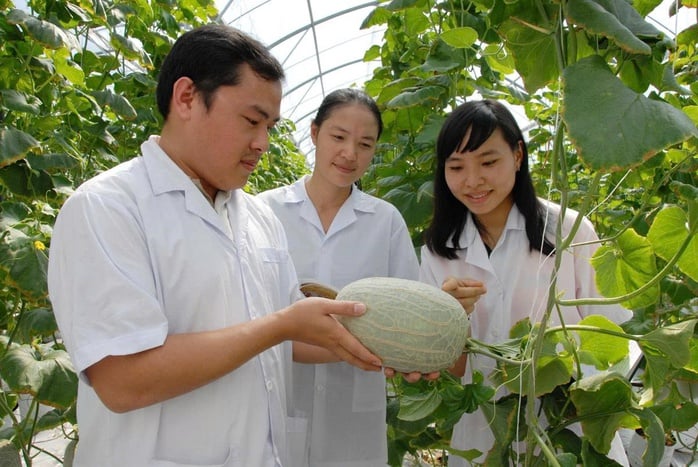
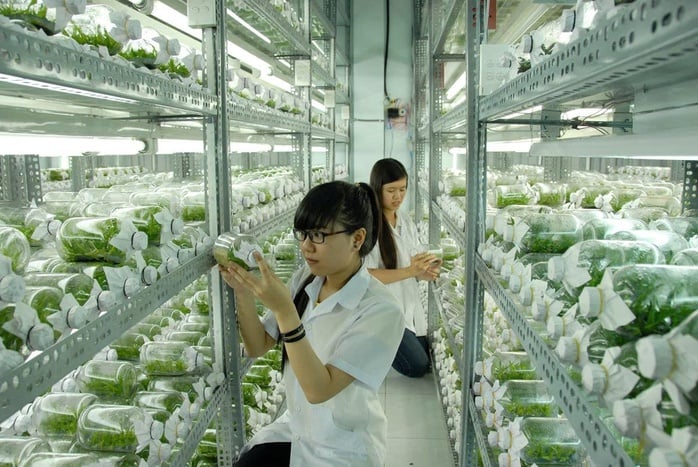
Investing in education is a core foundation for poverty alleviation in the Mekong Delta. Photo: Le Hoang Vu
In the Mekong Delta region, the biggest obstacle is short-term economic thinking and the struggle for basic necessities. Many students drop out of school to work seasonally or with their families who have migrated. The mentality that "graduation doesn't guarantee employment" leads many families to choose early employment for their children instead of long-term investment. This situation has been clearly highlighted in numerous analyses of the Mekong Delta's labor market: vocational training often leads to unemployment or unstable employment, undermining confidence in the effectiveness of education.
Furthermore, vocational education systems in many localities remain detached from reality. Programs are slow to innovate, lack equipment, and have insufficient links with businesses. Workers who complete their training often possess weak skills, failing to meet the demands of high-tech agriculture or tourism services. When "even after studying, unemployment persists," the obstacles to further education become even greater. These barriers transform education from a right into a protracted struggle to overcome poverty and prejudice.
Education paves the way for development.
Despite numerous challenges, the reality in many localities shows that wherever education is prioritized, significant progress is made. Education is the path to sustainable development and poverty alleviation.
Quang Ninh province is a prime example; it focuses on vocational training, closely linking with businesses to develop training programs for skilled workers, tourism, and clean industries. As a result, labor productivity has increased rapidly, and the poverty rate has decreased significantly. Building a transparent business environment and a well-trained workforce has helped the province lead the country in governance quality and become a highly competitive locality.
Central Vietnam has also witnessed changes in areas that have invested well in human resources. Da Nang has long recognized education and technology as drivers of development, opening up an information technology ecosystem and attracting domestic and foreign businesses. Its young, digitally skilled workforce has created momentum for sustainable growth in the city.
In the northern mountainous region, the boarding and semi-boarding school system for ethnic minorities in Son La and Lao Cai provinces has created stable learning conditions for highland students. Boarding meals, dormitories, and academic support have significantly reduced the dropout rate. Many students have become university students, technicians, and young professionals, returning to contribute to their local communities – a transformation that was once unimaginable.
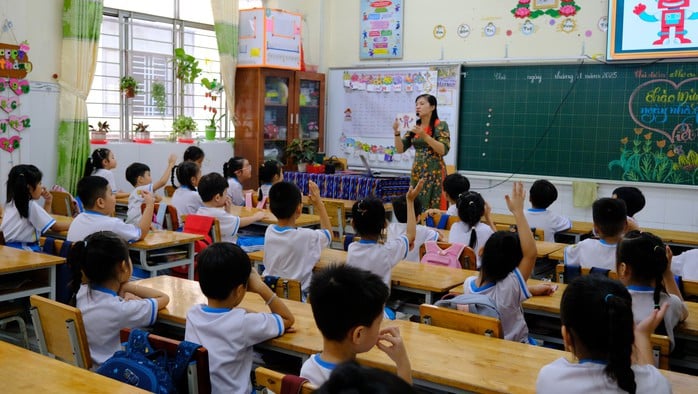
English class for students at Vo Truong Toan Primary School (Can Tho City). Photo: Ca Linh
In the Mekong Delta, the rapid growth in the number of schools and learners opens up opportunities for access to education. In the context of climate change and agricultural restructuring, education is even more urgent. The project to cultivate 1 million hectares of high-quality, low-emission rice, agricultural transformation models, the digital economy, and the circular economy, which are currently being developed, urgently need digital citizens and knowledgeable farmers who can apply technology and connect value chains, rather than just relying on experience. Universities in the region must become centers for R&D, training "what the market needs," equipping students with entrepreneurial thinking and adaptability.
Education paves the way for development when it reaches every family and becomes a shared community value. When parents believe in the value of learning; when the government invests wisely; when schools create opportunities for all students; when teachers are empowered to innovate – then knowledge becomes the most powerful driving force for life transformation.
In a volatile economic environment, education remains the "path to future development." When knowledge becomes a priority for families and a strategic investment for localities, the path out of poverty and towards wealth is opening up. The value of education lies not only in the diploma, but in the ability to withstand change – something every region and every citizen needs on their journey towards development.
Source: https://nld.com.vn/giao-duc-nen-tang-cot-loi-de-thoat-ngheo-o-dbscl-196251217115459002.htm
![[Live] 2025 Community Action Awards Gala](/_next/image?url=https%3A%2F%2Fvphoto.vietnam.vn%2Fthumb%2F1200x675%2Fvietnam%2Fresource%2FIMAGE%2F2025%2F12%2F16%2F1765899631650_ndo_tr_z7334013144784-9f9fe10a6d63584c85aff40f2957c250-jpg.webp&w=3840&q=75)
![[Image] Leaked images ahead of the 2025 Community Action Awards gala.](/_next/image?url=https%3A%2F%2Fvphoto.vietnam.vn%2Fthumb%2F1200x675%2Fvietnam%2Fresource%2FIMAGE%2F2025%2F12%2F16%2F1765882828720_ndo_br_thiet-ke-chua-co-ten-45-png.webp&w=3840&q=75)
![[Photo] Prime Minister Pham Minh Chinh receives the Governor of Tochigi Province (Japan)](/_next/image?url=https%3A%2F%2Fvphoto.vietnam.vn%2Fthumb%2F1200x675%2Fvietnam%2Fresource%2FIMAGE%2F2025%2F12%2F16%2F1765892133176_dsc-8082-6425-jpg.webp&w=3840&q=75)


![[Photo] Prime Minister Pham Minh Chinh receives Lao Minister of Education and Sports Thongsalith Mangnormek](/_next/image?url=https%3A%2F%2Fvphoto.vietnam.vn%2Fthumb%2F1200x675%2Fvietnam%2Fresource%2FIMAGE%2F2025%2F12%2F16%2F1765876834721_dsc-7519-jpg.webp&w=3840&q=75)


























































![[Live] Closing Ceremony and Award Presentation for the "Impressive Vietnam Tourism" Video/Clip Creation Contest 2025](https://vphoto.vietnam.vn/thumb/402x226/vietnam/resource/IMAGE/2025/12/17/1765974650260_z7273498850699-00d2fd6b0972cb39494cfa2559bf85ac-1765959338756946072104-627-0-1338-1138-crop-1765959347256801551121.jpeg)


















Comment (0)