

This result reflects the persistent and serious efforts of the locality in raising the intellectual level of the people, training human resources, and creating a foundation for industrialization and modernization.
Behind these figures lies a synchronized and systematic implementation process of numerous fundamental and effective policies, plans, and solutions, carried out down to the grassroots level.
A synchronized policy from the provincial level to the grassroots level.
Achieving Level 3 universal secondary education is one of the important goals in the roadmap to improve the quality of general education and ensure the right to education for all children.
To successfully achieve the goal of universalizing lower secondary education at level 3, Ha Tinh province clearly identifies the crucial role of unified and consistent leadership and management from the provincial level to the grassroots. Instead of following trends or chasing achievements, the province is persistently building a strong and sustainable "policy framework," creating a long-term foundation for maintaining and improving the quality of universal education.
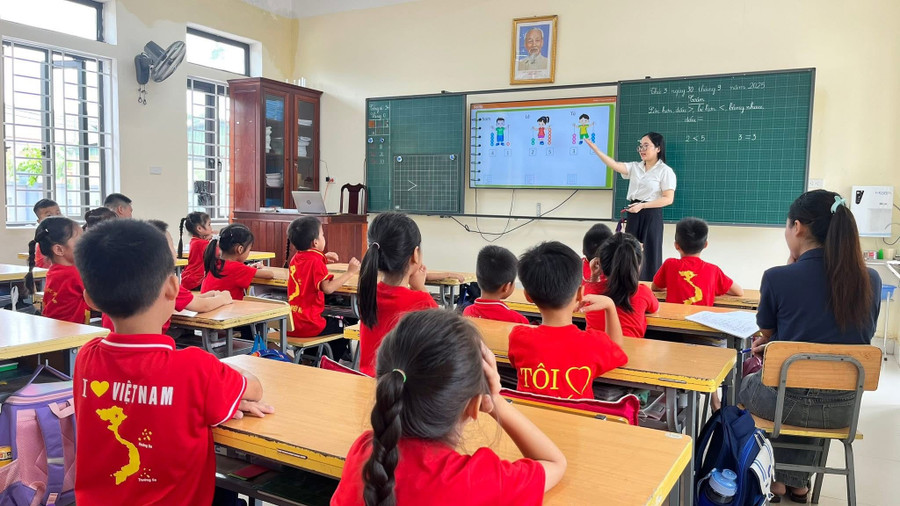
A highlight of the universal education and literacy campaign in Ha Tinh is the unified and consistent direction from the Party committees and government at all levels. The Provincial Party Committee promptly issued Resolution No. 05-NQ/TU and Conclusion No. 39-KL/TU (2022), creating a clear political foundation for sustainable educational development. Based on this, the Provincial People's Council issued many resolutions related to preschool and general education, disadvantaged areas, tuition fees, textbooks, and building a learning society, forming a comprehensive legal framework and limiting the mindset of focusing on achievements rather than mass movements.
The Provincial People's Committee regularly strengthens the Steering Committee for Universal Education and Literacy Eradication at all levels; the 2021-2025 period is organized according to Decision No. 2236/QD-UBND, ensuring clear assignment of responsibilities and tasks. The plan and roadmap for implementing Level 3 universal lower secondary education are implemented uniformly from the provincial level to the grassroots, linked with annual inspection, monitoring, and recognition of results.
Notably, Ha Tinh province places great importance on inter-sectoral coordination: from investing in infrastructure, allocating funds, resolving teacher staffing issues to student healthcare, inclusive education, and protecting vulnerable children. As a result, universal education has become a shared task of the entire political system, not just the education sector.

Alongside guidance and coordination, Ha Tinh province is focusing on fundamental solutions. One of the key conditions for maintaining and improving the quality of universal secondary education is the school system and the teaching staff. In Ha Tinh, the network of preschool and general education schools is arranged in a streamlined and rational manner, with relatively even distribution, suitable for students' commuting and learning conditions.
Currently, the province has 538 schools meeting national standards, accounting for 80.7% of the total number of public schools; the rate of solid classrooms is over 85%. Specifically for lower secondary schools, in 2022, the province had 147 schools (100% public), including 17 multi-level schools organized according to the inter-communal model. The classroom-to-class ratio is 1.01; 99.08% of classrooms are solid. The system of functional rooms, libraries, subject rooms, computer rooms, and foreign language rooms basically meets the requirements of teaching and curriculum reform.
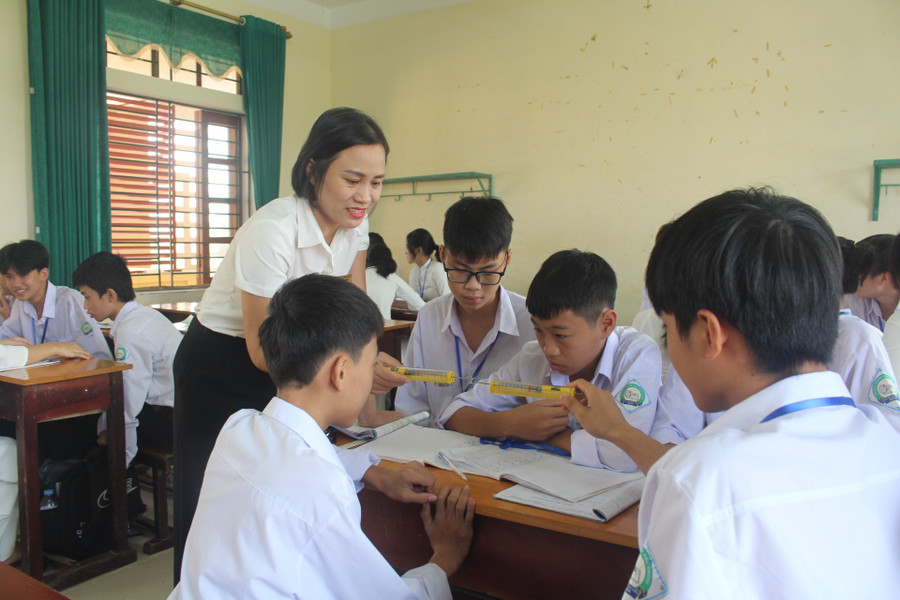
The teaching staff is identified as the "pillar" of universal education quality. In 2022, the province had 4,729 secondary school teachers, 100% of whom met the required training standards; of which 95.43% exceeded the standard. The percentage of teachers meeting professional standards was almost absolute, reaching 99.96%. In addition, 100 secondary schools were recognized as meeting national standards, accounting for 68% of the total number of schools, contributing to the sustainable consolidation of educational quality.
Through this systematic, coordinated, and persistent approach, achieving Level 3 universal secondary education in Ha Tinh is not just a short-term goal, but is gradually becoming a sustainable outcome, linked to improving the quality of education and developing the local workforce in the long term.
The result of a persistent process.
2022 marked a significant milestone for education in Ha Tinh province when the entire province achieved the goal of universalizing lower secondary education at level 3 across 100% of its administrative units. This was not the result of a short-term period, but rather the accumulated achievement of persistent leadership, synchronized implementation, and unwavering commitment to maintaining standards at all levels, from the grassroots to the provincial level.
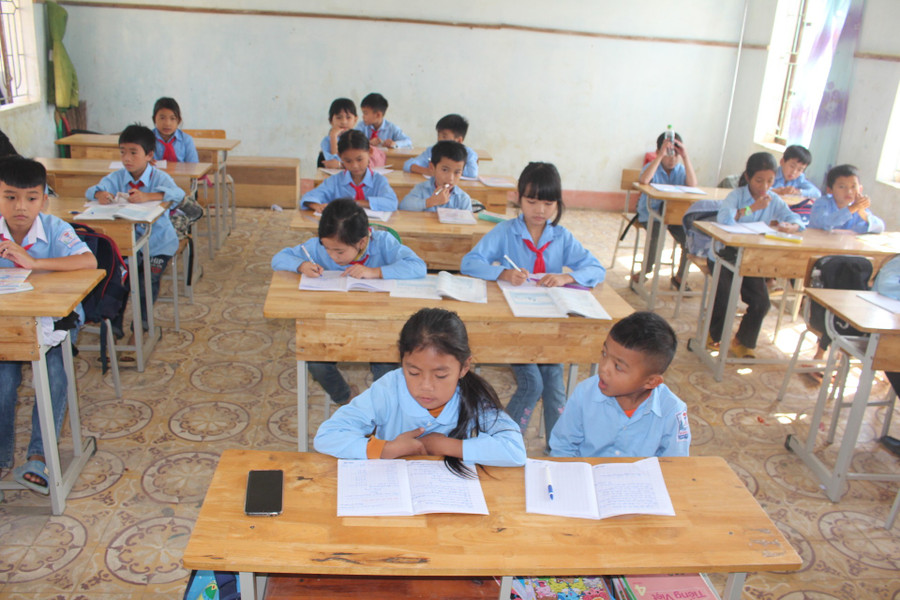
According to the results of the 2022 review and recognition of universal education and illiteracy eradication, all 216 communes, wards, and towns in the province have met the standards for universal preschool education for 5-year-old children, level 3 universal primary education, level 3 universal lower secondary education, and level 2 illiteracy eradication. All 13 districts, towns, and cities have also fully met the criteria. The simultaneous achievement of these goals at both the commune and district levels demonstrates that the quality of universal education in Ha Tinh is not localized but is maintained relatively evenly across regions.
The effectiveness of universal education is clearly demonstrated by indicators related to student enrollment and retention. As of the 2021-2022 school year, the province had 73,300 young people aged 15-18 who had graduated from lower secondary school, achieving a rate of 97.84%. Of these, 70,362 continued their studies in general education, continuing education, or vocational education programs, accounting for 93.92%. Notably, the dropout rate among those aged 11-18 was reduced to a very low level, with only 1,312 students, equivalent to 0.0082%.
Along with mass education, inclusive education continues to receive attention. The province has 1,808 children with disabilities aged 11-18; of which 957 are capable of learning and 883 have access to education, achieving a rate of 92.26%.
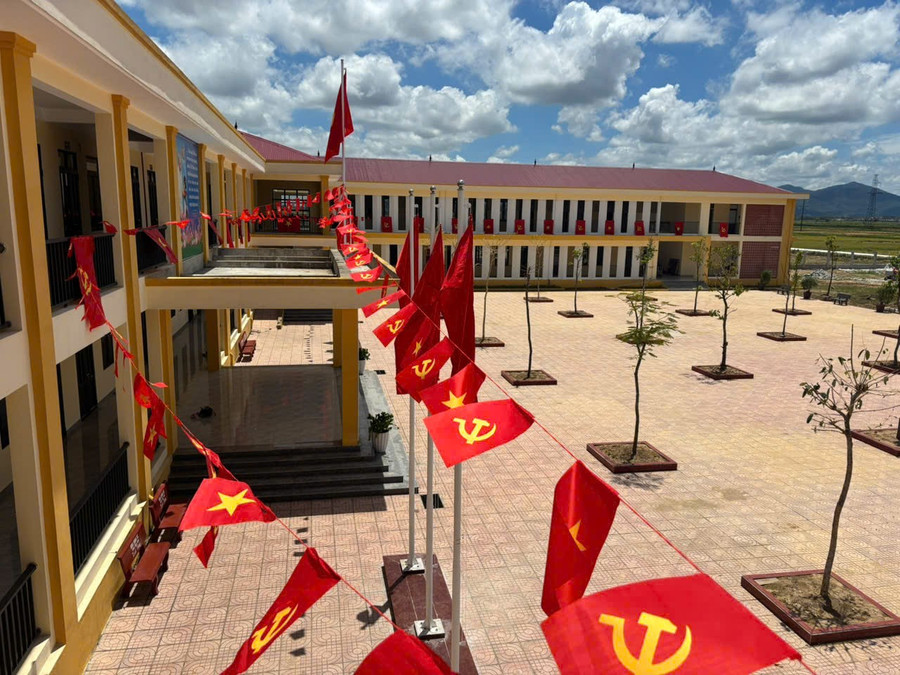
The conditions for ensuring universal secondary education have also been firmly consolidated. In 2022, the province had 147 secondary schools, 100% of which were public schools; of which 17 schools were organized according to the multi-level, multi-commune model, suitable for the students' travel and learning conditions. The ratio of classrooms to classes reached 1.01; 99.08% of classrooms were structurally sound. The system of functional rooms, libraries, subject rooms, computer rooms, and foreign language rooms has been invested in quite comprehensively, basically meeting the requirements of teaching and curriculum reform.
The teaching staff continues to be the cornerstone of universal education quality. The province has 4,729 secondary school teachers, 100% of whom meet the required training standards; of which 95.43% exceed the standard. The percentage of teachers meeting professional standards is 99.96%. In addition, 100 secondary schools have been recognized as meeting national standards, accounting for 68% of the total number of schools, contributing to the sustainable improvement of educational quality.
Based on the full criteria stipulated in Government Decree No. 20/2014/ND-CP, on May 28, 2024, the Ministry of Education and Training issued Decision No. 1503/QD-BGDĐT recognizing Ha Tinh as having achieved Level 3 universal secondary education and Level 2 literacy eradication standards as of December 2022.
“Building on the achievements already made, Ha Tinh continues to prioritize maintaining and improving the quality of universal education and eradicating illiteracy as a central and continuous task. The goal is not only to maintain standards, but also to gradually improve quality in a sustainable and substantive manner, closely linked to socio-economic development and the quality of human resources in the province in the next phase,” a representative of the Ha Tinh Department of Education and Training shared.
Source: https://giaoducthoidai.vn/bi-quyet-giup-ha-tinh-dat-chuan-pho-cap-thcs-muc-do-3-xoa-mu-muc-do-2-post760835.html


![[Live] 2025 Community Action Awards Gala](/_next/image?url=https%3A%2F%2Fvphoto.vietnam.vn%2Fthumb%2F1200x675%2Fvietnam%2Fresource%2FIMAGE%2F2025%2F12%2F16%2F1765899631650_ndo_tr_z7334013144784-9f9fe10a6d63584c85aff40f2957c250-jpg.webp&w=3840&q=75)
![[Image] Leaked images ahead of the 2025 Community Action Awards gala.](/_next/image?url=https%3A%2F%2Fvphoto.vietnam.vn%2Fthumb%2F1200x675%2Fvietnam%2Fresource%2FIMAGE%2F2025%2F12%2F16%2F1765882828720_ndo_br_thiet-ke-chua-co-ten-45-png.webp&w=3840&q=75)
![[Photo] Prime Minister Pham Minh Chinh receives the Governor of Tochigi Province (Japan)](/_next/image?url=https%3A%2F%2Fvphoto.vietnam.vn%2Fthumb%2F1200x675%2Fvietnam%2Fresource%2FIMAGE%2F2025%2F12%2F16%2F1765892133176_dsc-8082-6425-jpg.webp&w=3840&q=75)
![[Photo] Prime Minister Pham Minh Chinh receives Lao Minister of Education and Sports Thongsalith Mangnormek](/_next/image?url=https%3A%2F%2Fvphoto.vietnam.vn%2Fthumb%2F1200x675%2Fvietnam%2Fresource%2FIMAGE%2F2025%2F12%2F16%2F1765876834721_dsc-7519-jpg.webp&w=3840&q=75)





































































Comment (0)