

Modern battery technology is not simply about charging devices; it's a field of innovation with incredible advancements, where intellectual property rights play a central role in protecting investments and driving development.
Batteries have become an indispensable part of modern life, going far beyond their traditional energy storage role. From powering phones and electric vehicles (EVs) to grid-tied energy storage systems, innovations in battery technology are changing how we use and manage energy.
Over the past decade, billions of dollars have been invested in research and development (R&D) to improve batteries, with the goal of extending lifespan and enhancing reliability. Intense competition has made battery technology one of the most attractive fields, not only for technology companies but also for investors. In particular, from large-scale energy storage systems to renewable energy vehicles, battery innovation has become a crucial driver of sustainable energy transition.
Intellectual property rights play a vital role in protecting these innovations. Patents are often the preferred option for protecting technology. Last year, more than 170,000 patents and applications related to battery technology were published globally, with China accounting for more than half. This number is projected to continue to rise as the battery industry thrives in major markets such as China, Japan, South Korea, the United States, and Germany.
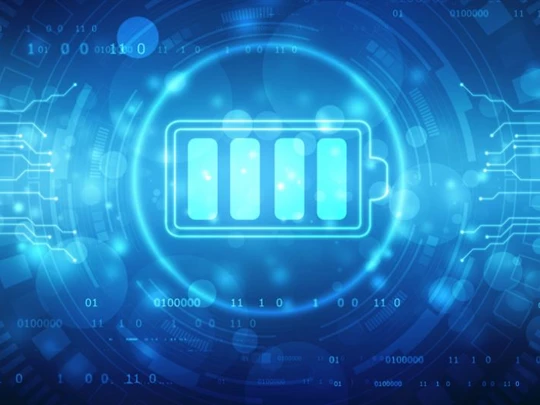
However, inventions are not always the optimal method of protection. Trade secrets also play a crucial role in intellectual property rights strategy. Unlike inventions, trade secrets do not require public disclosure, helping businesses protect proprietary manufacturing processes or technologies. Particularly in the battery manufacturing industry, where production processes are often complex and difficult to replicate, trade secrets become a significant competitive advantage.
However, relying solely on trade secrets also carries risks. Employees could switch to working for competitors, taking crucial technological knowledge with them. A prime example is Tesla's lawsuit against two former employees accused of stealing trade secrets to establish a battery company in China. Such cases highlight the importance of using a combination of patents and trade secrets to comprehensively protect technology.
Furthermore, new regulations are also impacting how companies protect intellectual property in the battery industry. The European Union's Battery Regulation requires increased transparency in the industry. For example, a "battery passport" forces manufacturers to publicly disclose some information about their products to support repair, reuse, or recycling. This could reduce the effectiveness of trade secrets, as companies are forced to share data that was previously considered proprietary.
Collaboration between companies in research and development also presents many challenges regarding intellectual property rights. In collaborative projects, ownership and licensing of intellectual property rights need to be clearly defined from the outset to avoid future disputes. When intellectual property is jointly developed, complex issues such as ownership, use, and licensing can reduce the commercialization potential of products in the future if not strictly managed.
Beyond protecting technology, intellectual property rights can also become a revenue-generating tool. Companies can license technology to third parties or use intellectual property rights to sue for infringement, recover damages, or reach commercial agreements. This trend is becoming increasingly common in the battery industry. For example, LG Energy Solution and Panasonic Energy have formed the Tulip patent pool, with over 5,000 patents from 1,500 patent families. This pool makes it easier for smaller companies to access technology without facing legal risks from multiple parties.
However, the increase in the number of patents also brings the risk of infringing the intellectual property rights of third parties. Companies need to regularly monitor and analyze the patent landscape to ensure their products do not infringe on the intellectual property of others. Performing a "freedom-to-operate" test before launching a product is a necessary step to mitigate this risk.
Standardization in the industry is also a crucial issue, particularly in the field of electric vehicle charging. Standards such as the Combined Charging System have established a basic foundation, but there is still much potential for further synchronization across the industry.
If the industry moves toward unified global standards, related inventions will need to be licensed under fair, reasonable, and non-discriminatory (FRAND) terms. This allows intellectual property rights to be integrated into industry standards, but at the same time requires owners to license fairly. The management of FRAND licensing, already central to the telecommunications industry, is now emerging in the automotive and battery sectors as well.
The battery technology industry is developing rapidly, presenting both opportunities and challenges regarding intellectual property rights. To lead in this race, companies need to build comprehensive intellectual property strategies that both protect innovations and leverage them to create value. Simultaneously, closely monitoring changes in regulations and standards will help businesses maintain a competitive edge in a volatile market.
According to Intellectual Property
Source: https://doanhnghiepvn.vn/cong-nghe/quyen-so-huu-tri-tue-trong-linh-vuc-cong-nghe-pin/20250130110141169
![[Live] 2025 Community Action Awards Gala](/_next/image?url=https%3A%2F%2Fvphoto.vietnam.vn%2Fthumb%2F1200x675%2Fvietnam%2Fresource%2FIMAGE%2F2025%2F12%2F16%2F1765899631650_ndo_tr_z7334013144784-9f9fe10a6d63584c85aff40f2957c250-jpg.webp&w=3840&q=75)

![[Image] Leaked images ahead of the 2025 Community Action Awards gala.](/_next/image?url=https%3A%2F%2Fvphoto.vietnam.vn%2Fthumb%2F1200x675%2Fvietnam%2Fresource%2FIMAGE%2F2025%2F12%2F16%2F1765882828720_ndo_br_thiet-ke-chua-co-ten-45-png.webp&w=3840&q=75)
![[Photo] Prime Minister Pham Minh Chinh receives Lao Minister of Education and Sports Thongsalith Mangnormek](/_next/image?url=https%3A%2F%2Fvphoto.vietnam.vn%2Fthumb%2F1200x675%2Fvietnam%2Fresource%2FIMAGE%2F2025%2F12%2F16%2F1765876834721_dsc-7519-jpg.webp&w=3840&q=75)
![[Image] The tenacious fighting spirit of Vietnamese women's football](/_next/image?url=https%3A%2F%2Fvphoto.vietnam.vn%2Fthumb%2F1200x675%2Fvietnam%2Fresource%2FIMAGE%2F2025%2F12%2F17%2F1765990260956_ndo_br_4224760955870434771-copy-jpg.webp&w=3840&q=75)
![[Photo] Prime Minister Pham Minh Chinh receives the Governor of Tochigi Province (Japan)](/_next/image?url=https%3A%2F%2Fvphoto.vietnam.vn%2Fthumb%2F1200x675%2Fvietnam%2Fresource%2FIMAGE%2F2025%2F12%2F16%2F1765892133176_dsc-8082-6425-jpg.webp&w=3840&q=75)



































































![[Live] Closing Ceremony and Award Presentation for the "Impressive Vietnam Tourism" Video/Clip Creation Contest 2025](https://vphoto.vietnam.vn/thumb/402x226/vietnam/resource/IMAGE/2025/12/17/1765974650260_z7273498850699-00d2fd6b0972cb39494cfa2559bf85ac-1765959338756946072104-627-0-1338-1138-crop-1765959347256801551121.jpeg)


















Comment (0)