

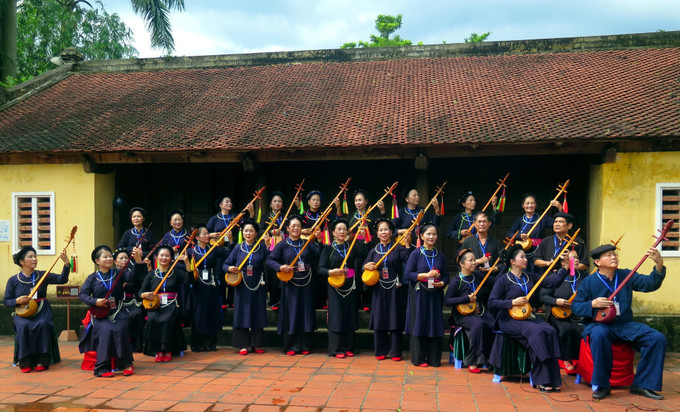
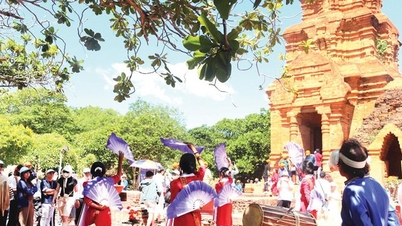
Then singing is now performed in many cultural spaces and at cultural and tourism events. Photo: VNA
The resonant sound of the Tinh lute, harmonizing with the sacred Then chants, has transcended the boundaries of the village, becoming a symbol deeply ingrained in the souls of the Tay, Nung, and Thai ethnic groups. More than just a ritual practice, Then is a link between people and the divine, an echo of aspirations for peace, bountiful harvests, and community cohesion.
The Then heritage nurtures the national cultural identity.
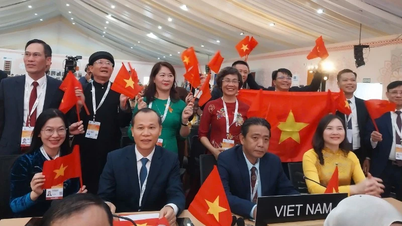
In 2019, the Then ritual practice was officially inscribed by UNESCO as a Representative Intangible Cultural Heritage of Humanity, becoming a source of national pride and a reminder of the responsibility to preserve, protect, and promote the cultural heritage that has nurtured many generations. Since then, Then has continuously been renewed and spread, becoming a "refreshing stream" that flows on in contemporary life.
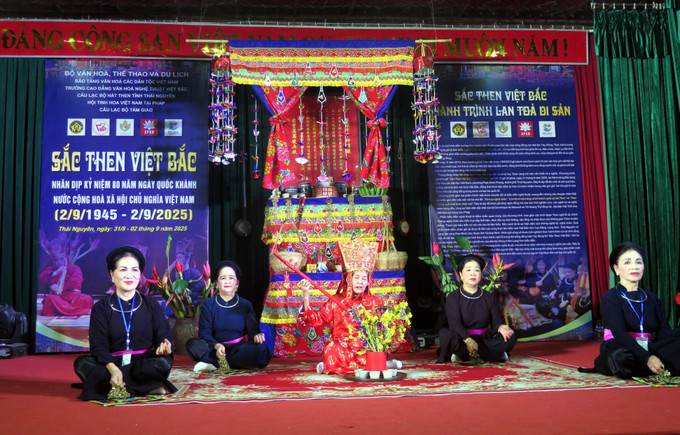
People's Artist Nong Thi Lim from Lang Son province (wearing red attire) performs an excerpt from the "Luom coc bjooc - flower-planting ceremony," a traditional ritual of the Tay ethnic group. Photo: VNA.
In the lives of the Tay and Nung ethnic groups, Then is not simply a collection of songs. It is a ritual closely intertwined with each person's life cycle, such as: the first-month celebration, the prayer for peace, the coming-of-age ceremony, the longevity celebration... Each Then verse is a blessing, a belief, both sacred and intimate.
People's Artist Nong Thi Lim, 85 years old, from Lang Son province, shared that whenever she sings Then, she is not only singing for her village, but also singing to connect with her ancestors and the heavens. Therefore, Then carries within it the power to unite the community, helping people overcome the hardships of life.
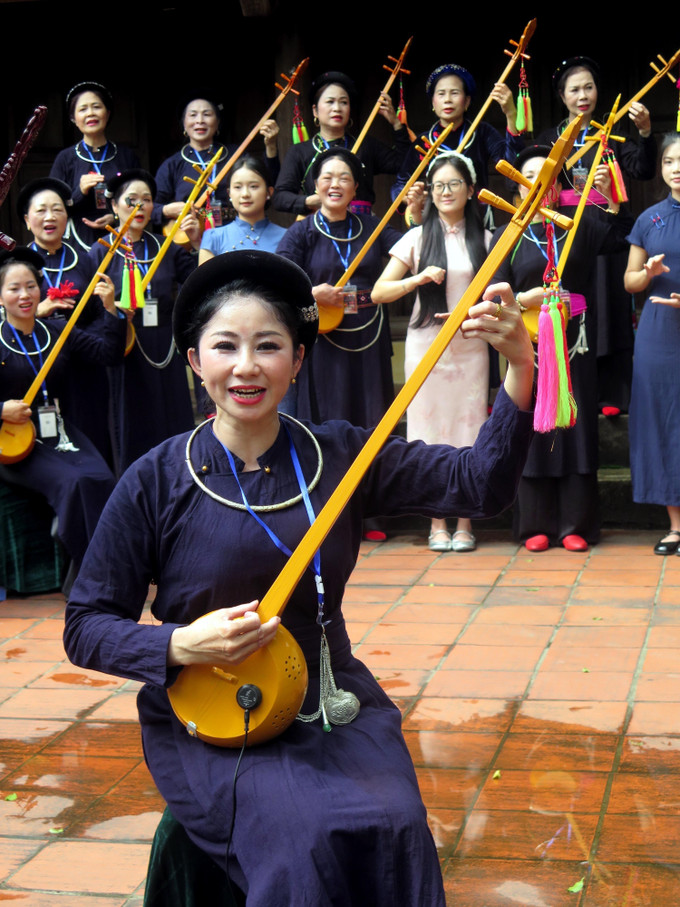
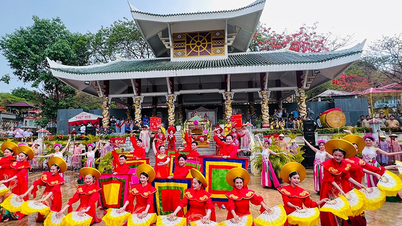
Then singers from Thai Nguyen province at the "Viet Bac Then Singing Heritage" performance event. Photo: VNA.
Artistically, Then is a delicate blend of music, poetry, dance, and traditional costumes. The melodious sound of the Tinh lute sets the rhythm, the lyrics both tell stories and offer prayers, and the graceful dance movements mimic nature and the universe. Each performance is a synthesis of many folk art forms.
People's Artist Hoang Thi Bich Hong from Thai Nguyen province shared: "Then not only has aesthetic value, but also comprehensively reflects the spiritual life, history, and society of the Tay and Nung ethnic groups. It is a mirror reflecting their identity and a place to preserve community memories."
Then is a cultural activity associated with spiritual rituals, performed to worship deities for peace, ward off misfortune, bestow blessings, wish for a happy new year, cure illnesses, or used in ceremonies for a good harvest, moving into a new house, or initiation rites. Therefore, Then forms a fundamental part of the spiritual life of the Tay, Nung, and Thai people; reflecting the relationship between humans and the natural world and the universe, expressing the national cultural identity from customs to musical instruments, dance, and music. Then contributes to moral education and a way of life that guides people towards the values of "truth, goodness, and beauty," and protects the customs and cultural traditions of Vietnam. These songs are not just music, but also a connecting thread between cultures, between the individual and the collective within the great family of Vietnamese ethnic groups.
The journey of preserving and spreading the Then heritage.
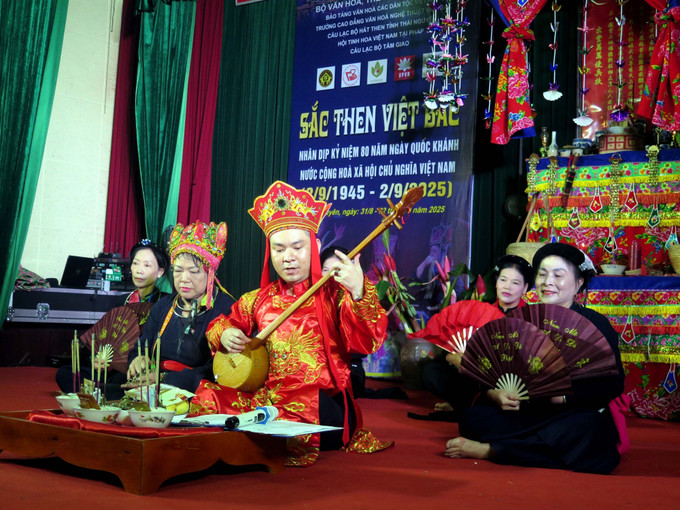
Then singer Ma Dinh Ngoc from Thai Nguyen province performs an excerpt from the "Loan En Ngo Can" ritual, a traditional Tày ethnic Then ritual from Thai Nguyen province. Photo: VNA.
For centuries, Then has been passed down and preserved within the community. Generations of veteran artisans such as People's Artists Hoang Thi Bich Hong, Nong Thi Lim, Meritorious Artist Nguyen Van Tho, and People's Artist Trieu Thuy Tien… are the ones who “keep the flame alive,” bringing Then from the stilt houses to the stage, from ceremonial spaces to art classrooms.
Young artist Xuan Bach, a lecturer at the Viet Bac College of Culture and Arts in Thai Nguyen province, shared: “Growing up surrounded by Then melodies, I want to bring Then into the classroom, so that students not only learn the techniques but also understand the spirit of this heritage.” According to artist Xuan Bach, the root and core value of Then lies in resolving people's spiritual anxieties. From this perspective, two basic roles of Then can be seen: meeting the need for cultural and artistic enjoyment and meeting the need for balance in people's religious lives. This inevitably leads to the formation of two forms of Then that we often encounter in life today: theatrical Then (meeting the need for cultural and artistic enjoyment) and ritualistic Then practice (meeting the need for balance in religious life).
Alongside the teaching and transmission of Then, many localities have integrated Then into contemporary life, such as in Quang Ninh and Lang Son provinces, where community-based tourism tours linked to Then performances have contributed to creating livelihoods for the people. Visiting these tourist destinations, visitors can both experience local culture and contribute to the preservation of the heritage.
Notably, in 2017, Then was introduced to the world for the first time through a performance program in Paris (France), organized by the World Culture Institute (a non-governmental organization in France), with the participation of many domestic artists. Through the introduction of the Viet Bac Folk Music and Dance Theatre, the program connected with and invited artist Xuan Bach and many other Then singers from Vietnam to participate.
“The French audience received us and the ‘cultural gift’ we brought with great enthusiasm. Perhaps the language of art and the language of heritage have overcome all barriers of language, culture, beliefs… to together lead the souls of the audience and us artists to a common goal of truth, goodness, and beauty,” artist Xuan Bach confided.
Dr. Hoang Thi Hong Ha, who works at the French Cultural Heritage Center and is known as the "midwife" of Then in France, recounts her experience of taking Then performances abroad: When the sound of the Tinh instrument resonated in Paris, the European audience fell silent, then applauded incessantly. They saw in Then a different, authentic, and captivating beauty. This is proof that Then has the power to spread beyond borders.
It is evident that the Then tradition has transcended the boundaries of a folk ritual to become a symbol of Vietnamese identity and cultural pride. The journey of preserving and spreading Then today relies not only on the dedication of artisans and artists, but also on the companionship of the younger generation, the community, and cultural managers. In modern life, Then continues to resonate like a "refreshing stream," nurturing the soul, connecting communities, and opening cultural bridges with international friends. Preserving Then is not only a responsibility, but also a way for us to affirm Vietnamese identity in the journey of global integration.
Source: https://dantocmiennui.baotintuc.vn/sac-then-viet-bac-vien-ngoc-quy-lan-toa-gia-tri-di-san-post361501.html

![[Live] 2025 Community Action Awards Gala](/_next/image?url=https%3A%2F%2Fvphoto.vietnam.vn%2Fthumb%2F1200x675%2Fvietnam%2Fresource%2FIMAGE%2F2025%2F12%2F16%2F1765899631650_ndo_tr_z7334013144784-9f9fe10a6d63584c85aff40f2957c250-jpg.webp&w=3840&q=75)
![[Photo] Prime Minister Pham Minh Chinh receives Lao Minister of Education and Sports Thongsalith Mangnormek](/_next/image?url=https%3A%2F%2Fvphoto.vietnam.vn%2Fthumb%2F1200x675%2Fvietnam%2Fresource%2FIMAGE%2F2025%2F12%2F16%2F1765876834721_dsc-7519-jpg.webp&w=3840&q=75)
![[Photo] Prime Minister Pham Minh Chinh receives the Governor of Tochigi Province (Japan)](/_next/image?url=https%3A%2F%2Fvphoto.vietnam.vn%2Fthumb%2F1200x675%2Fvietnam%2Fresource%2FIMAGE%2F2025%2F12%2F16%2F1765892133176_dsc-8082-6425-jpg.webp&w=3840&q=75)
![[Image] Leaked images ahead of the 2025 Community Action Awards gala.](/_next/image?url=https%3A%2F%2Fvphoto.vietnam.vn%2Fthumb%2F1200x675%2Fvietnam%2Fresource%2FIMAGE%2F2025%2F12%2F16%2F1765882828720_ndo_br_thiet-ke-chua-co-ten-45-png.webp&w=3840&q=75)





























![[Photo] Prime Minister Pham Minh Chinh attends the Vietnam Economic Forum 2025](https://vphoto.vietnam.vn/thumb/402x226/vietnam/resource/IMAGE/2025/12/16/1765893035503_ndo_br_dsc-8043-jpg.webp)

















Comment (0)