


Tourism and service highlights
During the period 2021-2025, the total number of guests served by accommodation establishments in the city is expected to reach over 54.4 million, an average increase of 32.2% per year. Of this total, international guests are projected to reach 20.1 million, an increase of 59.6% per year, while domestic guests are estimated at 34.3 million, an increase of 22.3% per year. Revenue from accommodation, food and beverage, and travel services during the 2021-2025 period is estimated at 195.4 trillion VND, an average increase of 27.7% per year.
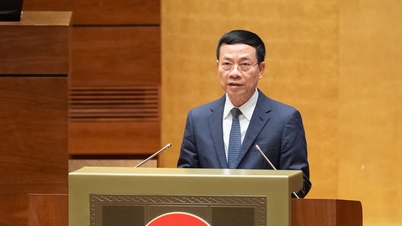
According to information presented at the 5th session of the 10th term of the Da Nang City People's Council last week, the Standing Vice Chairman of the Da Nang City People's Committee, Ho Ky Minh, stated that despite being severely affected by the COVID-19 pandemic in 2021-2022, Da Nang's tourism sector has recovered and is a bright spot in economic development. The city focuses on investing in and developing tourism infrastructure and products in a comprehensive manner; prioritizing public investment capital for tourism development.
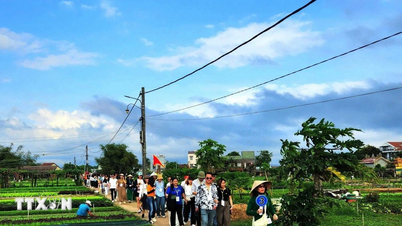
While in the past, Da Nang was primarily a destination for beach tourism, it has now established an internationally recognized beach tourism brand, expanding its tourism products to target high-end clients such as MICE tourism (resort combined with conferences, seminars, and exhibitions), wedding tourism, golf tourism, culinary tourism, education, medical tourism, railway tourism; and heritage tourism, especially cultural heritage, which is receiving increased attention.

Notably, in both the 2022 and 2024 editions of the "Provincial Tourism Competitiveness Index" and the "VTDI Provincial Tourism Development Index," Da Nang topped the rankings. This is an important indicator showing that the local tourism industry has a well-planned and comprehensive development strategy.
A notable highlight during this period is the strong development of the digital economy. The information technology industry has experienced high growth rates (averaging over 10% per year), gradually establishing itself as one of the city's important economic sectors. According to statistics, the digital economy accounted for approximately 24% of the city's GRDP in 2024 and is continuing to increase, demonstrating the shift and restructuring of the local economy linked to the development of science and technology.
According to Mr. Nguyen Thanh Hong, Director of the Department of Science and Technology, Da Nang has implemented many activities to promote the development of microchips, semiconductors, and artificial intelligence, such as: establishing the Da Nang Center for Research and Training in Microchip and Artificial Intelligence Design; and developing a plan for the development of microchips, semiconductors, and artificial intelligence in the city. In addition, the city has connected with more than 55 large corporations and relevant partners to implement cooperation on microchips, semiconductors, and artificial intelligence in Da Nang and to develop policies to support the development of microchips, semiconductors, and artificial intelligence in the city.
Establishing a new growth model
Da Nang's key orientation for the 2026-2030 period is to establish a new growth model, restructure the economy, and promote industrialization and modernization with science and technology, innovation, and digital transformation as the main driving forces, creating a strong breakthrough.
According to Ms. Tran Thi Thanh Tam, Director of the Department of Finance, based on the planning, potential, and policies approved by the Central and local governments, Da Nang prioritizes investment resources according to the spatial development orientation of the city into two regions, East and West. At the same time, the focus is on accelerating restructuring and promoting investment in six key sectors linked to six growth drivers. In particular, the development of high-quality tourism and services is identified to make Da Nang an attractive destination for the world.
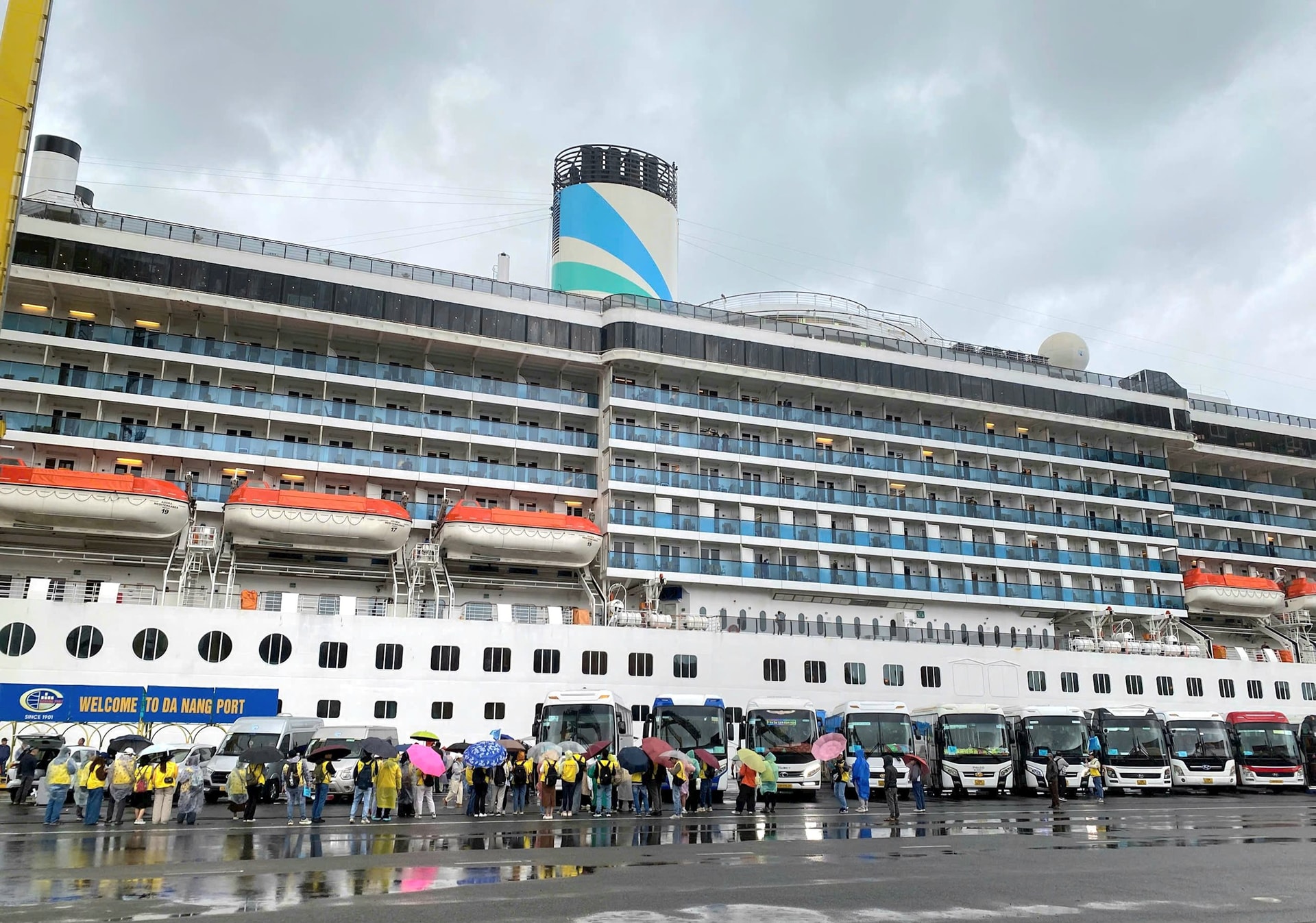
The city aims to develop high-quality cultural and historical heritage tourism by maximizing the potential of world cultural heritage sites and world biosphere reserves. Ba Na and Son Tra will be developed as world-class tourist areas, and Tien Sa Port will be transformed into a tourist port after 2030. In addition, investments will be made in a marina and service complex, and the construction of an international-standard entertainment and shopping center.
During the period 2026-2030, Da Nang will establish and develop a duty-free zone and industrial parks linked to the Da Nang International Airport, Chu Lai Airport, Lien Chieu Port, and the city's seaport system. Along with the development of Chu Lai Port, linked to a container logistics center and a logistics center in the Nam Giang International Border Gate Economic Zone connecting goods in the Central and Southern Laos regions, the goal is for the logistics sector to account for approximately 15% of the city's GRDP by 2030.
During this period, Da Nang will also develop concentrated information technology zones and a chain of software parks, with digital technology businesses capable of global competitiveness. The goal is to achieve an annual revenue growth rate for the entire industry that is 2-3 times the city's GRDP growth rate.
In the southern region, research will be conducted on developing a software park in Tam Ky; focusing on developing the Central Vietnam Combined Cycle Gas Turbine Project I-II, linked to energy-intensive industries and downstream gas products in the Chu Lai Open Economic Zone, creating new development momentum for this area and the entire region.
Source: https://baodanang.vn/tai-co-cau-doi-moi-mo-hinh-tang-truong-3314919.html
![[Photo] Prime Minister Pham Minh Chinh receives Lao Minister of Education and Sports Thongsalith Mangnormek](/_next/image?url=https%3A%2F%2Fvphoto.vietnam.vn%2Fthumb%2F1200x675%2Fvietnam%2Fresource%2FIMAGE%2F2025%2F12%2F16%2F1765876834721_dsc-7519-jpg.webp&w=3840&q=75)
![[Photo] Prime Minister Pham Minh Chinh receives the Governor of Tochigi Province (Japan)](/_next/image?url=https%3A%2F%2Fvphoto.vietnam.vn%2Fthumb%2F1200x675%2Fvietnam%2Fresource%2FIMAGE%2F2025%2F12%2F16%2F1765892133176_dsc-8082-6425-jpg.webp&w=3840&q=75)
![[Live] 2025 Community Action Awards Gala](/_next/image?url=https%3A%2F%2Fvphoto.vietnam.vn%2Fthumb%2F1200x675%2Fvietnam%2Fresource%2FIMAGE%2F2025%2F12%2F16%2F1765899631650_ndo_tr_z7334013144784-9f9fe10a6d63584c85aff40f2957c250-jpg.webp&w=3840&q=75)
![[Image] Leaked images ahead of the 2025 Community Action Awards gala.](/_next/image?url=https%3A%2F%2Fvphoto.vietnam.vn%2Fthumb%2F1200x675%2Fvietnam%2Fresource%2FIMAGE%2F2025%2F12%2F16%2F1765882828720_ndo_br_thiet-ke-chua-co-ten-45-png.webp&w=3840&q=75)


































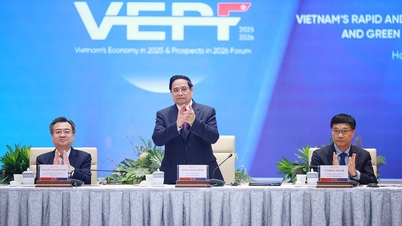
![[Photo] Prime Minister Pham Minh Chinh attends the Vietnam Economic Forum 2025](https://vphoto.vietnam.vn/thumb/402x226/vietnam/resource/IMAGE/2025/12/16/1765893035503_ndo_br_dsc-8043-jpg.webp)

















Comment (0)