

Of the 34 provinces and cities nationwide, 21 have coastlines, and nearly half of the population lives in coastal provinces and cities. Notably, the sea area under Vietnam's sovereignty , sovereign rights, and jurisdiction covers approximately 1 million km² of the East Sea (three times the area of the mainland), with about 3,000 large and small islands and two offshore archipelagos, Hoang Sa and Truong Sa, fairly evenly distributed along the length of the country's coastline, serving as a forward defense line protecting the eastern flank of the country.
However, in the 1980s, the country's economic situation became extremely difficult, and many seminars and presentations by domestic and international economists were organized to find solutions for the economy.
People turned to classical theories such as Kant, Adam Smith, and Keynes, hoping to find a way out of Vietnam's stagnant, backward, and deeply mired economy.
But a very poor and backward economy at that time needed not only classical theories but also individuals and groups with aspirations, who dared to innovate and act in real life. Furthermore, it needed visionary leaders and managers who dared to think, dared to act, and dared to take responsibility.
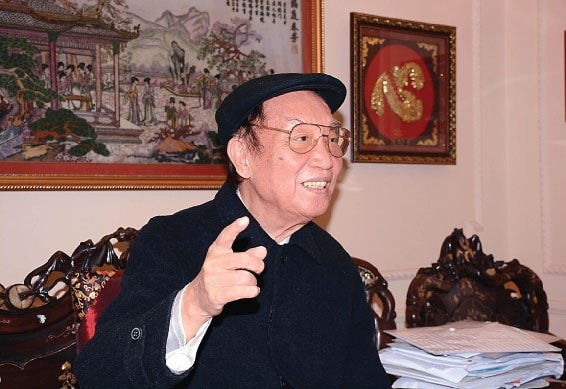
At that crucial historical moment for the nation, the poem by revolutionary poet Tố Hữu resonated like a bell heralding the beginning of national renewal in the forefront of change – the port city of Hải Phòng , led by its Party Secretary Đoàn Duy Thành: “…Digging canals and reclaiming land from the sea to build a new future…”.
Thus, one of the pages of history in the country's economic reform has been given to the Con Dao soldier Doan Duy Thanh, who was also one of the leaders of the prison break on December 12, 1952, from the hellish prison of Con Dao.
This daring sea voyage, which shocked the world, was also reported by major French newspapers at the time, such as Le Figaro, Paris-Marth, L'Echo, and L'Humanité.
Perhaps the spirit of those prisoners in the dark, hellish prison of Con Dao, driven by the desire to escape by sea in search of the only way to reach the light and freedom, shaped the transatlantic vision of former Con Dao prisoners like Secretary Doan Duy Thanh.
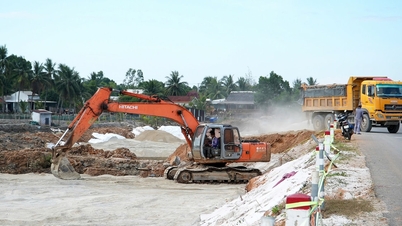
In the years before the country's reform period, with the vision of "getting rich and winning" by reaching out to the sea, Secretary Doan Duy Thanh and the leaders of Hai Phong implemented a project to build dikes along Highway 14, reclaiming land from the sea in Do Son an area equivalent to that of the former Tien Lang district. The construction of the dikes along Highway 14 in Do Son alone resulted in the establishment of two new communes. To commemorate Mr. Doan Duy Thanh's contributions, the new communes were named Hai Thanh and Tan Thanh.
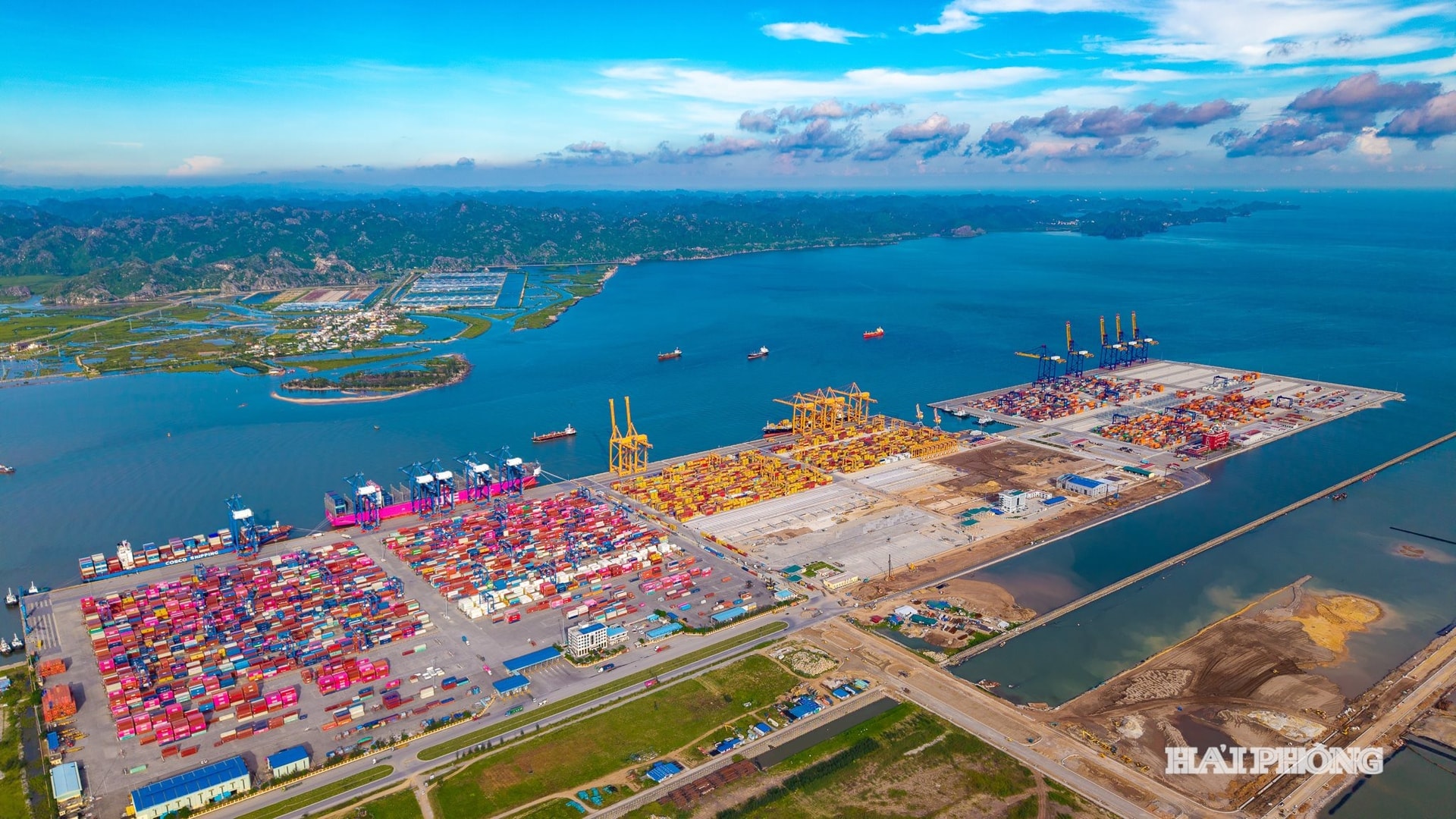
Furthermore, the Dinh Vu dam project, the Cai Trap canal construction, and the cross-island road connecting Cat Hai and Cat Ba islands created a breakthrough in infrastructure, expanding ports and logistics systems, including the expansion of Cat Bi airport and the establishment of the Hai Phong Ship fleet to transport food, agricultural goods, and trade with foreign countries, generating significant revenue and eliminating dependence on central government subsidies.
Along with leading the successful implementation and application of the "product-based contract" mechanism in agriculture, these infrastructure development projects not only created the most vibrant red flame tree blossoms in the city's history but also laid the foundation for the effective promotion and development of investment projects in the construction and operation of logistics infrastructure in the 1,329-hectare Nam Dinh Vu industrial park, seaport, and free trade zone, and the largest port in the country, Lach Huyen, in Hai Phong. In particular, this also serves as a prerequisite for the development of a free trade zone in Hai Phong and contributes to the formation of the country's marine economic sectors.
With its advantageous coastal resources, Vietnam needs to further develop its strategy of expanding its territory towards the East Sea in order to develop its maritime economy and protect national security and defense.
In particular, Hai Phong, with its unique location in Vietnam, has effectively leveraged its existing road, air, sea, and inland waterway connections, and especially its railway system, to connect with other localities and countries in the region.
The city has successfully developed a seaport system comprising 5 port areas with 98 berths of various types and 8 main maritime channels, basically meeting the requirements for receiving large ships. The road transport system basically connects the seaport with industrial zones, service areas, inland port systems, and connects with many northern provinces and cities, as well as the two corridors and one belt connecting Vietnam and China.
Over the past five years, many major projects have been invested in and constructed, effectively serving cargo transportation through the Dinh Vu and Lach Huyen port areas, such as: the Hanoi - Hai Phong expressway, the Tan Vu - Lach Huyen road and bridge, the Hai Phong - Ha Long expressway… At the same time, Hai Phong has focused on investing in external transportation infrastructure connecting Hanoi, Quang Ninh, and Hung Yen. In addition, Cat Bi Airport has been invested in and upgraded to a 4E-class international airport.
Currently, Hai Phong ranks among the top 5 in the country in attracting foreign direct investment (FDI). In 2024, the total registered FDI capital reached US$4.94 billion, exceeding the plan by 145% and increasing by more than 34% compared to the same period of the previous year. With abundant resources, the material, cultural, and spiritual lives of Hai Phong's people have also improved. The average GRDP per capita has continuously increased, reaching US$8,665 in 2024, far exceeding the national average of US$4,700.
With its achievements, on April 28, 2025, on the occasion of the 70th anniversary of the liberation of Hai Phong, the President of Vietnam signed a decision to confer the title of "Heroic City" on Hai Phong.
Currently, following the consolidation of provincial-level administrative units and the two-tiered local government model, Hai Phong is continuing to vigorously implement Resolution 45/2019 of the Politburo on building and developing Hai Phong city until 2030 with a vision to 2045: "Building and developing Hai Phong into a leading seaport city in the country in the cause of industrialization and modernization, a driving force for the development of the Northern region and the whole country with a focus on logistics services."
Furthermore, building on the positive results achieved and inheriting the spirit of innovation, Hai Phong needs to take the lead in implementing Resolution No. 36-NQ/TW on the "Strategy for Sustainable Development of Vietnam's Marine Economy to 2030, with a vision to 2045". Accordingly, by 2030, successful and breakthrough development of marine economic sectors should be prioritized in the following order: marine tourism and services; maritime economy; oil and gas exploration and other marine mineral resources; aquaculture and fisheries; coastal industries; renewable energy; and new marine economic sectors. This strategy must be based on the national plan for the development of regional industrial and logistics linkages, consistent with the national vision for the marine economy.
In the process of reform, the Document of the 11th National Congress identified three strategic breakthroughs: developing high-quality human resources; building a synchronous and modern infrastructure; and especially perfecting the development institutions, always considering this as the "breakthrough of breakthroughs," holding a central position in creating a favorable environment for sustainable socio-economic development.
In reality, the mechanisms and qualities of leadership play a crucial role in improving institutions and social resources in general, determining the quality of the organizational structure. The practical experience of reform in the coastal city of Hai Phong – a frontline city of the country – over 40 years ago, with its fundamental orientations for forming a general reform path for the nation, as expressed in the statement of Party Secretary Doan Duy Thanh: “We are not asking for money, only for a mechanism,” illustrates a lesson: In the process of reform, one of the prerequisites is to reform the governance mechanism and improve the country's institutions.
In the new technological era, the forward-thinking vision of leaders at all levels of government, both central and local, will increasingly play a crucial role in ensuring the success of national reform amidst the rapid development of digital technology and a competitive market economy, as well as geopolitical and social changes worldwide.
---------------
References
1. People's Army Newspaper online, November 29, 2012
2. Government Electronic Newspaper, August 18, 2022
3. Vnexpress online newspaper, May 8, 2025
PEACE OF MINDSource: https://baohaiphong.vn/tam-nhin-doan-duy-thanh-535457.html
![[Image] A brilliant symphony and explosive power in the skies of Da Nang.](https://vphoto.vietnam.vn/thumb/1200x675/vietnam/resource/IMAGE/2026/05/31/1780196945787_anh-man-hinh-2026-05-31-luc-10-08-51.png)












![[Video] Sunset at Lap An Lagoon – Where the sun sets over the fishing nets](https://vphoto.vietnam.vn/thumb/340x192/vietnam/resource/IMAGE/2026/05/31/1780192137701_beach-landscape-sea-water-nature-grass-745871-pxhere-com.jpeg)































































Comment (0)