

The philosophy of prevention is better than cure.
Emphasizing the requirements and tasks set for the Party Committee of the Army and the entire armed forces in the new term, General Secretary To Lam , Secretary of the Central Military Commission, clearly stated that it is necessary to prevent degradation from its very beginnings, from its initial manifestations, and to absolutely not allow it to sprout, develop into degradation, and even higher, into "self-evolution" and "self-transformation"...
Through dialectical thinking and reflection on past experiences, we clearly see that the directives of our Party's highest leader, the head of the Central Military Commission, are both cautionary and reflect strategic guidance. The requirement to prevent degeneration from its very beginnings is a continuation of our ancestors' traditional philosophy of prevention being better than cure. This is also a concretization of Ho Chi Minh's thought and the Party's views and policies on Party building and rectification, applied flexibly, creatively, and appropriately to the demands of the new situation. Preventing degeneration is also a condition for ensuring "internal stability and external peace," "internal tranquility and external stability" in the strategy of building and defending the Fatherland, protecting the Party, and protecting the socialist regime in our country amidst a rapidly changing, complex, and unpredictable global situation...
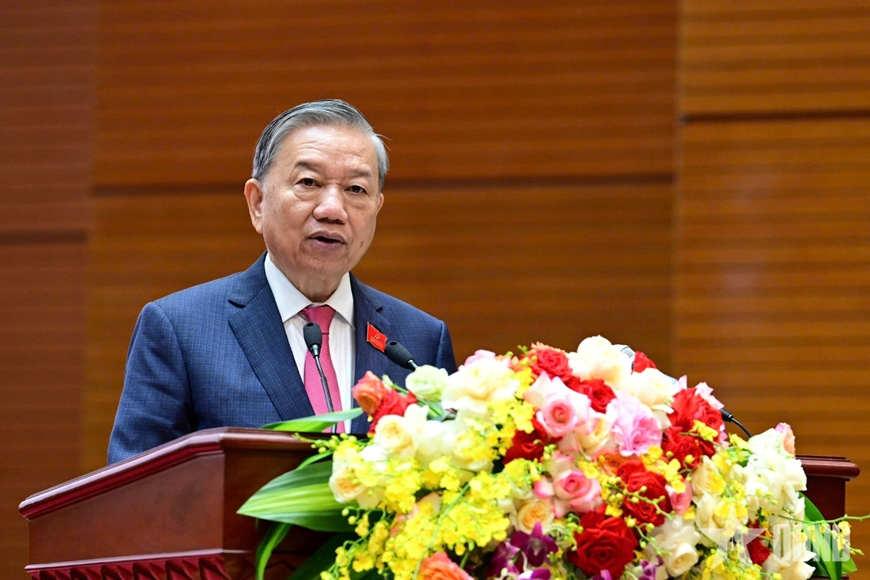 |
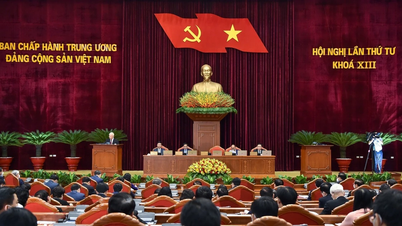
General Secretary To Lam, Secretary of the Central Military Commission, delivers a speech at the 12th Congress of the Party Committee of the Vietnam People's Army, term 2025-2030. Photo: VIET TRUNG |
In the process of building and rectifying the Party, especially during the period of national renewal and integration, the Party's resolutions at each congress have emphasized the role and urgency of preventing and combating degradation. In particular, since the 4th Central Committee Meeting (12th term), the Party has clearly identified 27 manifestations of degradation within the Party. Identifying and naming these manifestations provides a basis for Party committees and organizations at all levels to diagnose and prescribe solutions for the seeds and manifestations of degradation at the grassroots level. From the 4th Central Committee Meeting (12th term) to the present, the Party has implemented an unprecedentedly deep and widespread rectification campaign, strictly dealing with many Party organizations and members who have degraded. A series of major cases have been investigated, concluded, and handled publicly, without any forbidden areas or exceptions, "regardless of who the person is." It is this unwavering resolve that has strengthened the people's trust and reinforced the Party's inherent strength, enabling it to enhance its resilience and protect itself internally and within the political system.
However, with a dialectical scientific methodology, we need to clearly see, and have a responsibility to make it clear to the people and international public opinion, that the Party's approach is not an "internal purge" as distorted narratives claim, but rather a way for the Party to rectify itself and strengthen its internal power. The core of the Party's rectification is to punish one person to save many, to handle one case to warn the entire region and sector. Strict handling is for the purpose of warning, educating, and building a clean political environment, not to harm individuals or organizations. This is the humane nature of the Party, a prominent highlight in Vietnamese political culture. However, to achieve the common goal, we cannot rely solely on punishment. The crucial and decisive factor is prevention at its root, stopping it from the very beginning. Lessons learned from over nine years of implementing Resolution No. 4 of the 12th Central Committee show that, in addition to strengthening the inspection, investigation, and handling of corrupt and law-violating officials and Party members, enhancing early and proactive prevention and control measures is extremely important. In the context of the Party leading the comprehensive restructuring and streamlining of the apparatus, and preparing personnel for Party congresses at all levels leading up to the 14th National Party Congress, preventing and controlling corruption becomes even more crucial. Manifestations of short-term thinking, individualism, parochialism, factionalism, political cunning, superficiality, self-aggrandizement, hypocrisy, vanity, and power ambitions... if not eradicated, will create a favorable environment for corruption to form and develop. Every form of corruption has a starting point. And that starting point, if promptly identified, warned against, and properly educated and deterred, will significantly reduce the negative consequences later on. Preventing degeneration is the strategy to protect the Party from its roots.
Our leading role and responsibilities
Directing the Party Committee of the Army and the entire armed forces, General Secretary To Lam, Secretary of the Central Military Commission, stated: "Ahead of us lies a wide-open horizon, full of opportunities and challenges. How can we successfully achieve the two centenary goals of the country? How can we successfully implement the Resolution of the 14th National Congress of the Communist Party of Vietnam? How can we ensure a peaceful and stable environment for the country; how can we achieve rapid and sustainable socio-economic development; and how can we ensure that the lives of the people are truly free, prosperous, and happy? The army must be the main force in carrying out the above tasks..."
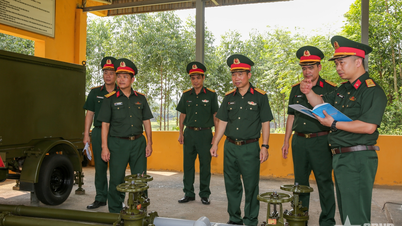
The Army is identified as the main force because it is always under the absolute and direct leadership of the Party in all aspects. The Ho Chi Minh Army has a tradition of unity and solidarity; all officers and soldiers must adhere to strict, self-disciplined discipline, be absolutely loyal, and possess high capabilities. For the Army to be worthy of its leading role, first and foremost, the Party Committee of the Army must be truly clean and strong, and each Party committee and organization within the Army Party Committee must say no to any manifestations of degeneration. In recent years, officers and soldiers throughout the army, especially those working on the ideological and cultural front, including the People's Army Newspaper, have consistently demonstrated their core role and pioneering position in protecting the Party's ideological foundation, combating erroneous viewpoints, and preventing and combating degeneration, "self-evolution," and "self-transformation." The recognition and appreciation from the Party and State leaders, the Central Military Commission, the Ministry of National Defense, and the people's trust have clearly affirmed the leading role of the Army in the struggle to protect the Fatherland and the Party in cyberspace. This is a challenging and arduous battlefront. Success requires not only skill, tactics, and techniques, but more importantly, the soldiers on this front must possess sufficient courage and resilience to resist the attacks and infiltration of harmful and toxic ideologies. To prevent degeneration within the Party Committee of the Army and the entire military, it is not enough to simply apply regulations, rules, or disciplinary measures. The core issue is to detect the seeds of degeneration right from the thinking stage, that is, from the source of all behavior. Ideological degeneration does not appear suddenly. It begins with small changes in perception, such as fluctuations in belief, indifference, lax discipline, militaristic tendencies, self-serving behavior, a reluctance to face difficulties and hardships, formalistic thinking, a focus on achievements, and a discrepancy between words and actions... If these manifestations are not identified and prevented in time, they will lead to very dangerous forms of degradation.
The screening for moral decay within the Party Committee of the Army and the entire armed forces needs to be carried out through a comprehensive approach encompassing various forms and solutions, from education and training to discipline, building a military culture, and above all, setting a shining example by cadres, Party committees, and commanders at all levels. This exemplary conduct must stem from the roots of revolutionary military ethics: honesty, straightforwardness, and the absence of excuses or avoidance of shortcomings. The screening for moral decay should not wait for orders from superiors or intervention from inspection agencies; it needs to be concretized in daily actions, in learning, training, and work. The screening for moral decay in the Army needs to be built and elevated into a cultural behavior, a self-driven need of every Party member, cadre, and soldier, especially Party committees and commanders at all levels. The higher the position and rank of the officer, the more emphasis must be placed on setting a good example. Absolutely no superficial or pretentious thinking or behavior is acceptable.
Preventing the decline in political ideology, moral character, and lifestyle within the Party Committee of the Army and the entire armed forces is both a fundamental political task and an urgent requirement to forge the main force in defending the Fatherland, the Party, the regime, and the cultural and moral values of the Ho Chi Minh Army. The directive of General Secretary To Lam, Secretary of the Central Military Commission, is both a timely reminder and a strategic orientation, reflecting the requirements and trust of the Party, State, and people in the Army in the new era of the nation. Screening for the seeds of decline is the way for each officer and soldier to be worthy of the trust that the Party, State, and people have placed in them, and the legacy passed down by previous generations. Party committees and commanders of agencies and units throughout the army need to incorporate this content into their leadership resolutions and into their studies and activities so that the Party's viewpoints and policies quickly and deeply permeate the lives of the troops, transforming into practical actions...
Source: https://www.qdnd.vn/phong-chong-tu-dien-bien-tu-chuyen-hoa/tam-soat-mam-mong-suy-thoai-1012811















![[Photo] Reception to welcome General Secretary and President To Lam and his wife on their State visit to the Philippines](https://vphoto.vietnam.vn/thumb/1200x675/vietnam/resource/IMAGE/2026/06/01/1780295488620_vna-potal-chieu-dai-chao-mung-tong-bi-thu-chu-tich-nuoc-to-lam-va-phu-nhan-tham-cap-nha-nuoc-toi-philippines-8798060-7855-jpg.webp)





























































Comment (0)