

Tet in the countryside holds a special place in everyone's heart.
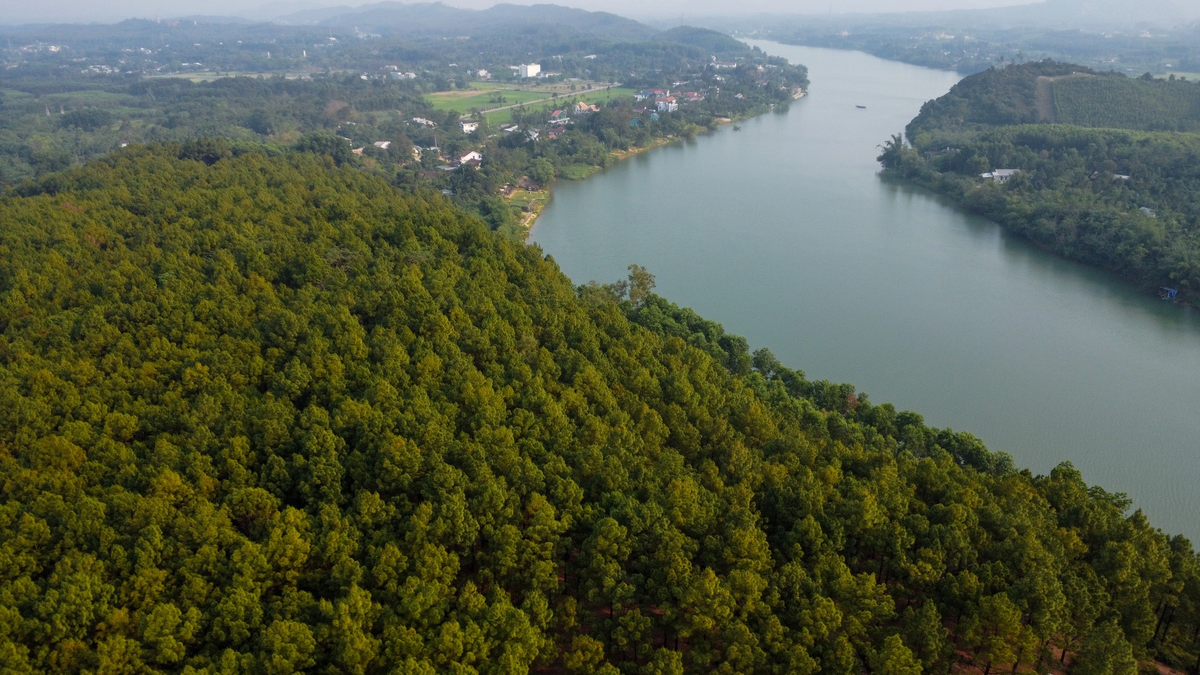
In many places, Tet begins in the hearth. But in my hometown of Le Thuy, the Tet season starts in the clear waters along the banks of the Kien Giang River, where the gentle river meanders through small villages.
About ten days before New Year's Eve, while a thin layer of mist still clung to the water's surface, the entire village gathered at the riverbank to clean up the accumulated debris along the Kien Giang River. Some removed algae, others gathered dry leaves, and still others adjusted the bamboo stakes used to tie boats, which had tilted due to the ebb and flow of the tides. In just one morning, the riverbank brightened, and the surface of the river became as calm as a mirror reflecting the twilight sky of the year's end.
The scenery is both familiar and deeply sacred. The water flows endlessly, carrying the melancholic folk songs of Le Thuy, seemingly echoing from beyond the Truong Son mountain range, seeping into one's soul without one even realizing it. Kien Giang not only irrigates the fields but also carries the rich culture, the breath, and the memories of the countryside. Cleaning the riverbank is also a way of renewing one's own heart before the new year.
 |
| Mango cake has long been an indispensable traditional dessert, especially during the Lunar New Year in Le Thuy - Photo: PV |
But Tet in my hometown doesn't just stop at the riverbank. When the sun rises above the bamboo groves, the whole village disperses to their homes. That's when every household begins cleaning, tidying, and renewing everyday items to welcome the new year. The brick courtyards and fences are sprayed with water and scrubbed clean, the doors are cleaned of dust, old tables and chairs are brought out to dry in the sun to give them a fragrant woody scent, and the sacred three-piece altar is polished to a gleam. The sickles, hoes, and water jars in the backyard are also neatly arranged. All of these are considered beautiful customs to prepare for welcoming ancestors, the most sacred guests on the 30th day of the lunar year.
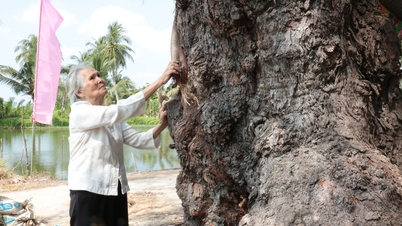
When I was little, every year on the afternoon of the 28th, I would follow my father to the riverbank. Passing through dense clumps of bamboo where the wind rustled, my father would gently place his hand on my shoulder, his voice warm and deep, "Let's go welcome our grandparents home for Tet." Then, he would pedal his bicycle, carrying me to the family cemetery. Once there, he would bend down and light an incense stick at the base of a lush green tree, as if conversing with someone, then call out the names of my paternal grandfather, paternal grandmother, and other deceased relatives, inviting them home for Tet. The incense smoke would mingle with the wind, drifting along like a small path guiding our ancestors back home.
Growing up, I came to understand that for the people of Le Thuy, Tet (Lunar New Year) is not just about meals, wine, tea, candied fruits, and green sticky rice cakes... Tet is also a reunion of the living and the deceased. They meet in the sacred atmosphere of the new beginning of heaven and earth. The living clean the riverbanks, sweep the yards, and tidy up every little corner, while their ancestors are welcomed back with reverence and respect.
Perhaps, Tet in my hometown begins with clean water, tidy houses, and hearts as pure and peaceful as the Kien Giang River flowing through the final days of the year.
Before Tet truly arrives at every home, descendants from all corners of the country begin a familiar journey: returning to visit the graves of their grandparents and ancestors. Without waiting until the 30th day of the lunar month, without waiting for everyone to gather, the Tet of the roots in Le Thuy begins with quiet footsteps on the sandy slopes, the red soil, and the incense sticks placed at the graves of the deceased.
In the days leading up to Tet (Lunar New Year), the cemetery in my hometown is bustling in its own unique way. People from the South, those from the North, some working far from the border, others rushing straight to the cemetery after landing at the airport to visit their deceased loved ones. Typically, people from Le Thuy come in small groups, carrying bouquets of fresh yellow flowers, a little incense, and sometimes even a pot of green tea, as if bringing the warmth of family back to the earth. Each grave is cleaned of dry grass, the mound of earth rounded, and every speck of moss wiped away. Incense sticks burn, their smoke carried by the Kien Giang wind like a thread connecting reality and memory.
There were years when my father praised me for winning awards for being an excellent student, for having my name called out on the family's list of commendations. The joy of my family didn't come from the achievements themselves, but from my mother's eyes and her gentle yet proud smile as she watched her child being diligent and well-behaved.
Talking about Tet (Vietnamese New Year) during my childhood in Le Thuy means talking about a poor Tet. We were so poor that, even after all these years, I still vividly remember the joy of wearing new clothes, admiring myself in the mirror for a long time. With so many children, my parents couldn't afford to buy new clothes for everyone. Some years, my mother would take out old clothes, wash them, and mend them for us. And yet, my siblings and I would jump for joy in those new clothes and run all over the village.
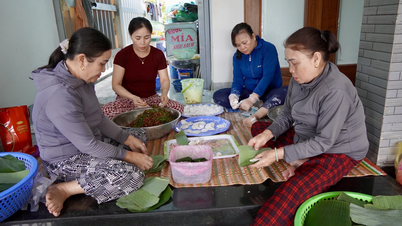
I still remember my mother sitting by the oil lamp, her hands nimbly threading the needle. The thread in her hands felt like a connecting thread, linking us to the simple Tet (Lunar New Year) of those difficult years. My grandmother loved her grandchildren in her own unique way. She made lots of sticky rice cakes so we would have something to eat after the New Year. She was old, but the glutinous rice she chose was always the best, the mung beans were finely ground, and the meat filling, simmered with black pepper, was incredibly fragrant. Every time I unwrapped a cake, the pungent smell of pepper wafted up, and I felt like Tet was opening up a whole world of memories. Only those who have lived in the countryside can understand that the smell of glutinous rice soaking in a basin of water on the porch, the smell of banana leaves washed by the Kien Giang riverbank—sometimes, that is the very soul of Tet.
A warm and joyful Tet holiday.
I remember clearly, every night leading up to Tet (Lunar New Year), we children would patiently wait around the pots of candied ginger, hoping our parents would give us a taste of the spring blessings: even if it was just a little bit of leftover jam or some sugar stuck to the bottom of the bowl, exclaiming, "Oh, how delicious!"… Then, on the nights of the 29th and 30th of the twelfth lunar month, the whole family would gather around the pots of sticky rice cakes (banh tet and banh chung) burning fiercely over the fire. What a warm and cozy atmosphere!
The last meal of the old year is the warmest moment of reunion, a bond that connects family members and expresses reverence to ancestors. Therefore, deep in the subconscious of every person in Le Thuy, there is no one who doesn't remember the New Year's Eve dinner...
In a warm atmosphere, surrounded by fragrant incense smoke, and with a table laden with green sticky rice cakes, pickled onions, and pork sausage, children and grandchildren respectfully report to their grandparents and parents about their good deeds during the year, from studies and work to relationships, filial piety, and even regrets, unfulfilled goals, and hopes for a prosperous and peaceful new year.
The grandparents also reminded their children and grandchildren to uphold the traditions of their homeland and family, while assigning tasks to each person, including visiting and wishing a Happy New Year to the elderly in the family. After the New Year's Eve countdown, the family gathered together to chat.
The morning of the first day of Tet (Lunar New Year) is quite different from ordinary days. Before 8 a.m., the streets are sparsely populated, with no noisy traffic. People in Le Thuy avoid visiting each other early on the first day of Tet, fearing they might be the first to "set foot" in someone else's house. They dedicate the entire first day of Tet to visiting relatives and paying respects to their ancestors. There must always be an adult at home to receive guests. The busiest of the three Tet days is the second, dedicated to visiting friends and reminiscing about the holiday. The third day is considered the day to visit all those who were worth visiting but couldn't.
Before the end of Tet, on the third day, the festive atmosphere gradually fades, and people begin to worry about going back to work and doing business. Depending on each family's circumstances, people in Le Thuy choose the third, fourth, or even the sixth or eighth day to offer sacrifices to their ancestors, usually in the afternoon. After burning the paper offerings, Tet is considered over, and life returns to normal.
The Tet (Lunar New Year) in Le Thuy may not be extravagant or opulent, but it is filled with the rich atmosphere of the traditional Vietnamese New Year. It embodies the soul and traditional culture of the people of Le Thuy!
Ngo Mau Tinh
Source: https://baoquangtri.vn/van-hoa/202602/tet-o-le-thuy-47d58df/






























![[Infographic] Vietnam's Economic Situation Report, Q1 2026: Strong Growth Momentum](https://vphoto.vietnam.vn/thumb/402x226/vietnam/resource/IMAGE/2026/04/04/1775298512042_tang-truong-kinh-te-viet-nam.jpeg)
![[Image] Close-up view of the 10-lane road connecting to Long Thanh Airport](https://vphoto.vietnam.vn/thumb/402x226/vietnam/resource/IMAGE/2026/04/04/1775291871988_ndo_br_1-resize-5690-jpg.webp)











Comment (0)