

Every year, from January to March (lunar calendar), the village communal houses in Vinh Long province become bustling and vibrant with the Hạ Điền and Thượng Điền festivals, and the "Tam Niên đáo lệ Kỳ yên" (Three-Year Festival), aiming to pray for national peace, prosperity, and well-being for the people and villages. This is also a folk belief deeply rooted in the traditional culture of the people of Southern Vietnam in general and Vinh Long in particular, preserved from ancient times and passed down to the present day.
According to "Studying the Culture of Vinh Long (1732-2000)", whenever a village was established, a communal house (dinh) had to be built. The communal house was a place of worship for the tutelary deity, where village officials worked, and also where villagers gathered and participated in festivals. Every year, many festivals took place at these communal houses, including: the Seal-Sealing Ceremony (25th day of the 12th lunar month), the Procession of the Tutelary Deity (30th day of the 12th lunar month), the New Year's Day celebration (held at midnight to bid farewell to the old year and welcome the new year) or on the morning of the first day of the Lunar New Year; the Opening Ceremony (7th day of the 1st lunar month); the Three Great Full Moons (held on the 15th, 7th, and 10th lunar months), similar to Buddhist festivals... but the most important and common were the Lower Field Ceremony, the Upper Field Ceremony, and the Ky Yen Ceremony.
The Lower Field Ceremony is usually held at the beginning of the rainy season, signifying the commencement of plowing and cultivation. It also expresses reverence for the tutelary deity, the god of agriculture, and the gods of clouds, rain, thunder, and lightning, praying for favorable weather and a bountiful harvest. Therefore, it is often called the Lower Field Ceremony for Bountiful Harvests. The Upper Field Ceremony is held at the end of the rainy season, when the crops have yielded results, to worship the god of agriculture, the god of harvest, the god of rain, the god of wind, etc., also aiming to pray for favorable weather and a bountiful harvest, similar to the Lower Field Ceremony.
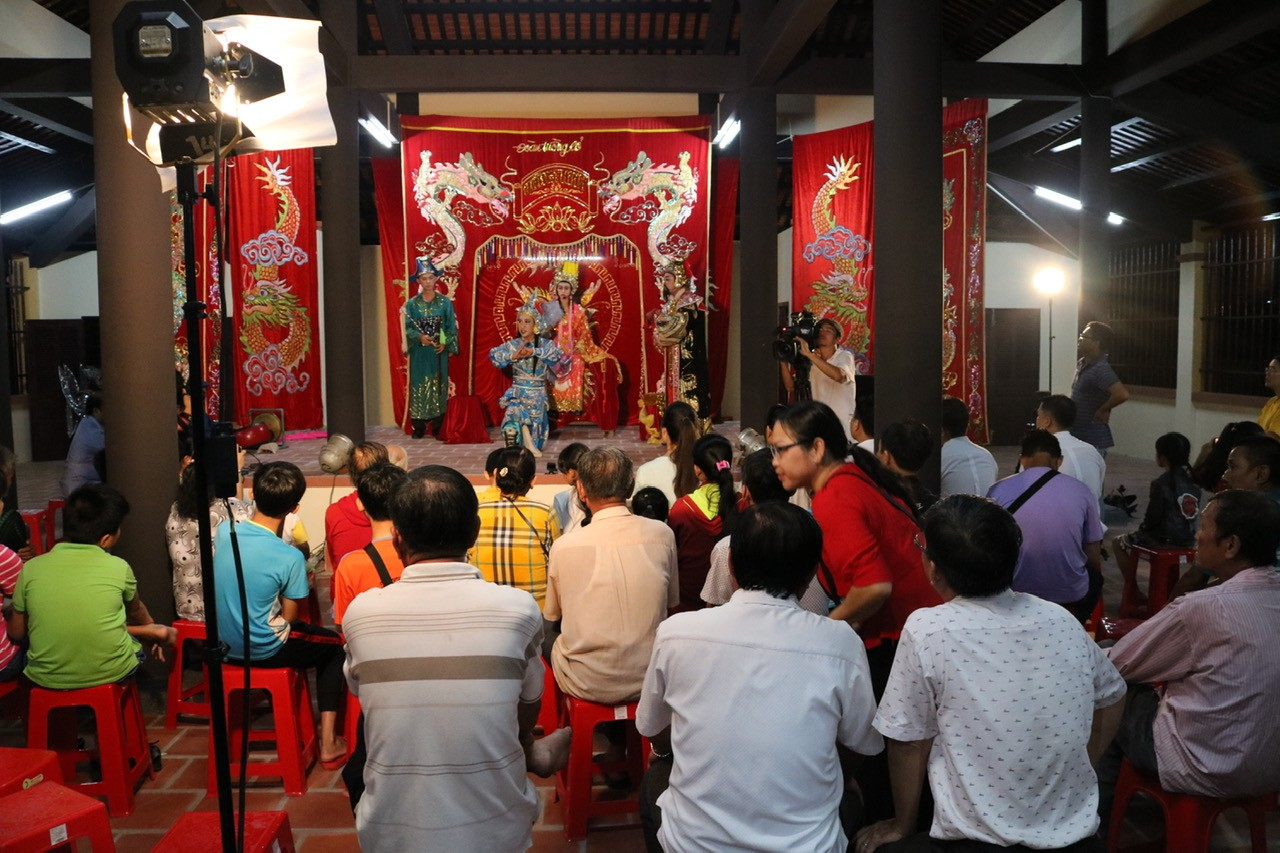
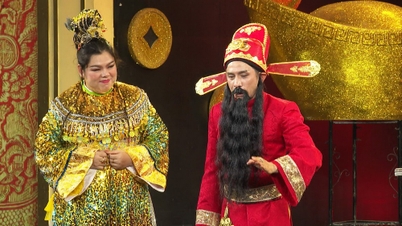
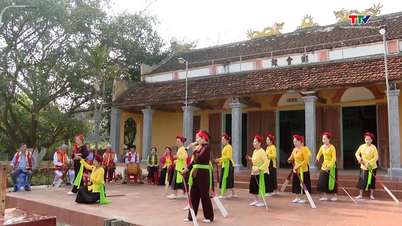
Watch traditional Vietnamese opera at Tan Hanh communal house, Long Ho district, Vinh Long province.
From a religious perspective, the purpose of organizing the two ceremonies, the Lower Field Ceremony and the Upper Field Ceremony, is similar in nature and meaning to the Ky Yen Ceremony. Therefore, many villages use the Lower Field Ceremony or the Upper Field Ceremony as the Ky Yen Ceremony every three years, hence the folk saying "Three years later, the Ky Yen Ceremony is held."
The book Gia Dinh Thanh Thong Chi by Trinh Hoai Duc states, "The Ky Yen ceremony can be held in the spring," meaning in mid-February or mid-March of the lunar calendar each year. The meaning of "spring ceremony" signifies a ritual at the beginning of the year to pray for national peace and prosperity, and for the flourishing of the village. Some temples also hold the ceremony in the autumn, meaning "autumn thanksgiving," a ceremony to express gratitude after the harvest. Sometimes it is held at the end of the year, signifying a year of peace and thanksgiving.
However, in Vinh Long, very few communal temples have the resources to organize such ceremonies. Typically, temples hold the Ky Yen ceremony once every three years, either on the day of the Lower Fields or the Upper Fields. In other years, only two ceremonies are held annually: the Lower Fields ceremony and the Upper Fields ceremony. Of these, the Lower Fields ceremony is usually larger in scale than the Upper Fields ceremony. Due to this difference in scale and nature, the Lower Fields ceremony is organized with more elaborate and larger activities by the Temple Management Board, the Temple Protection Board, and the local people, while the Upper Fields ceremony is more concisely organized.
The Ky Yen festival, held annually, typically lasts two days and one night. Ky Yen is a prayer for peace, so its main purpose is to worship the tutelary deity of the village to pray for national peace and prosperity, and for the well-being and abundance of the community. In the Ky Yen festival, the "ritual" aspect plays a more important role than the "festival" aspect, with the main rituals including: the ceremony of inviting the deity's spirit, the ceremony of worshipping the God of Agriculture, offerings to the shrine and martyrs; the Túc Yết ceremony, the Chánh Tế ceremony, the ceremony of worshipping the ancestors, the deceased members, and the ceremony of escorting the deity's spirit. The communal halls all worship ancestors who contributed to the settlement and establishment of the village or who donated money to build the first public welfare projects, leaving a legacy for future generations. Therefore, the Ky Yen festival program at each communal hall includes rituals to honor these meritorious ancestors, reflecting the principle of "drinking water, remembering the source." Whether short or long, elaborate or simple, the rituals all convey the sincere devotion of the participants.
Besides, the Ky Yen festival also has another meaning: it is the village's commemorative day. On these days, village communal houses often organize many folk games, lion dances, dragon dances, and traditional opera performances to entertain the people. Furthermore, the Ky Yen festival is an opportunity for artisans to showcase their skills through flower arrangements and fruit platters. It is also a chance for gardeners to introduce new fruit varieties, and farmers to showcase delicious rice varieties through their cooking skills, cake-making, and the culinary offerings prepared by women to worship the village guardian deity.
Vinh Long currently has many village communal houses built in the traditional Southern Vietnamese style. Every year, the communal houses in the province solemnly organize the Ky Yen festival with rituals deeply rooted in Southern Vietnamese culture, fulfilling the religious needs of the people and attracting a large number of people from the surrounding areas to worship and participate in the festival.
Text and photos: MINH TRIET (compiled)
* References
- "Exploring the Culture of Vinh Long (1732-2000)", Vinh Long Provincial Propaganda Department, Ho Chi Minh City Literature and Arts Publishing House.
- "Traditional Folk Culture of Southern Vietnamese Communal Houses - Beliefs and Rituals", Huynh Ngoc Trang, Truong Ngoc Tuong, Ho Tuong, Ho Chi Minh City Publishing House, 1993.
Source
![[Photo] Solemn bathing ceremony and Buddha procession in Hue](https://vphoto.vietnam.vn/thumb/1200x675/vietnam/resource/IMAGE/2026/05/31/1780228263543_1-jpg.webp)
![[Photo] Admire the coral "masterpiece" amidst the million-year-old heritage of Dak Lak province.](https://vphoto.vietnam.vn/thumb/1200x675/vietnam/resource/IMAGE/2026/05/31/1780221235105_anh-man-hinh-2026-05-31-luc-16-53-27.png)
![[Photo] The General Secretary, President and his wife begin their state visit to the Philippines.](https://vphoto.vietnam.vn/thumb/1200x675/vietnam/resource/IMAGE/2026/05/31/1780230559452_anh-man-hinh-2026-05-31-luc-19-28-11.png)
![[Image] Hanoi Police officially crowned champions of V-League 2025/2026](https://vphoto.vietnam.vn/thumb/1200x675/vietnam/resource/IMAGE/2026/05/31/1780244769054_ndo_br_039d561b692be875b13a-jpg.webp)


![[Video] Sunset at Lap An Lagoon – Where the sun sets over the fishing nets](https://vphoto.vietnam.vn/thumb/340x192/vietnam/resource/IMAGE/2026/05/31/1780192137701_beach-landscape-sea-water-nature-grass-745871-pxhere-com.jpeg)






















![[Photo] Admire the coral "masterpiece" amidst the million-year-old heritage of Dak Lak province.](https://vphoto.vietnam.vn/thumb/402x226/vietnam/resource/IMAGE/2026/05/31/1780221235105_anh-man-hinh-2026-05-31-luc-16-53-27.png)



























Comment (0)